Modern Mediterranean
The Contemporary Mediterranean Aesthetic
Modern Mediterranean interior design represents a sophisticated evolution of traditional coastal aesthetics, masterfully blending the sun-drenched warmth of Greece, Italy, and Spain with the refined clarity of contemporary minimalism. This style captures what designers call “casual elegance”—spaces that cultivate an atmosphere free from overdone stuffy details seen in typical Mediterranean style, instead embracing a more subtle, streamlined approach that feels both timeless and thoroughly current.
Unlike traditional Mediterranean design with its vibrant hues and busy patterns, the modern approach is more subtle and simple in style, focusing on clean lines, neutral palettes, and carefully curated elements that evoke the region’s essential character without overwhelming the senses. As designers at DKOR Interiors explain, it’s about “seamlessly juxtaposing the comforts of modern living with the rich, and historic old-world elements of the Mediterranean world”—a delicate balance that honors heritage while meeting contemporary lifestyle needs.
The style’s roots trace back centuries to ancient civilizations along the Mediterranean Sea, where Greek architects valued simplicity, proportion, and harmony, while Romans introduced elaborate details like arches, domes, and intricate mosaics. In the 20th century, visionaries like Tobia Scarpa and, much later, contemporary designers like Amber Lewis reimagined these Mediterranean principles with modern sensibilities. Today, particularly in California and coastal regions worldwide, Modern Mediterranean has become synonymous with relaxed sophistication and intentional living.
Modern Mediterranean perfectly embodies the principles of warm minimalism by creating sun-drenched, inviting spaces that feel lived-in yet uncluttered. The style achieves this through strategic use of natural materials, thoughtful color palettes inspired by sea and landscape, and an emphasis on indoor-outdoor flow that connects inhabitants to nature. Every element serves a purpose—whether functional or bringing joy—reflecting a philosophy of intentional living that prioritizes mindfulness, sustainability, and connection to place.
In a world often characterized by excess and distraction, Modern Mediterranean offers a design antidote: spaces that encourage slowing down, savoring simple pleasures, and cultivating a sense of timeless escape. It’s about creating homes that don’t just look beautiful but actively support well-being, foster meaningful connections, and honor our relationship with the natural environment.

Key Elements of Modern Mediterranean Design
Materials: Natural, Durable, and Authentic
Modern Mediterranean design celebrates materials in their most authentic forms, prioritizing those that are locally sourced, sustainably produced, and deeply connected to the coastal environment.
Whitewashed Plaster and Stucco: Smooth plaster walls in warm white or soft ivory create the quintessential Mediterranean backdrop. These textured surfaces reflect the region’s abundant sunlight while providing thermal mass that helps regulate interior temperatures. Modern applications might use low-VOC lime-based plasters that are both eco-friendly and traditionally authentic. The slight texture prevents walls from feeling flat or cold, adding subtle visual interest without pattern or color.
Terracotta Tiles: Terracotta tiles are often applied to modern Mediterranean style interiors… used in kitchens as backsplashes, in the wash rooms or even as decorative on risers of stairs. These warm, earthy tiles made from natural clay bring both practical durability and authentic Mediterranean character. For flooring, large-format terracotta tiles in soft peachy-red tones ground spaces with warmth. Handmade variations show subtle color differences that add depth while maintaining the minimal aesthetic.
Stone: Natural stone—particularly limestone, sandstone, and travertine—appears throughout Modern Mediterranean homes. According to research on Mediterranean architecture, limestone and sandstone are used for walls and flooring due to their durability, thermal properties, and regional availability. Modern applications include stone accent walls creating focal points, honed or brushed stone flooring in neutral tones, stone fireplaces with clean, contemporary surrounds, and stone countertops that bring organic texture to kitchens and baths.
Wood: Sustainably sourced wood is incorporated in beams and carpentry, bringing warmth essential to preventing minimalist spaces from feeling cold. Choose light to medium-toned woods like oak, ash, or pine for furniture and millwork; reclaimed wood beams for ceiling features that add character; olive wood for smaller pieces and accessories, celebrating regional trees; and natural finishes that show wood grain and texture rather than heavy stains.
Wrought Iron and Metal: Traditional wrought iron details transition beautifully into modern design through simplified forms. Use wrought iron for stair railings with clean, simple patterns; light fixtures in geometric or organic forms; window grilles with subtle detailing; and furniture frames in matte black or aged finishes. Brass and bronze fixtures add warmth through hardware, faucets, and lighting. Linen and Natural Textiles: Linen perfectly embodies Modern Mediterranean’s casual elegance. This breathable, natural fiber softens modern spaces through curtains that filter light while maintaining views, upholstery in neutral tones from white to sand to warm gray, bedding that feels luxurious yet relaxed, and table linens that elevate everyday dining. Supplement with cotton canvas, wool, jute, and sisal for varied textures.
Rattan and Woven Materials: Contemporary elements like jute, rattan, and bamboo add depth and warmth to the interiors. These natural materials bring organic texture through woven pendant lights, rattan chairs or headboards, woven baskets for storage, and jute or sisal area rugs layered over hard flooring.

Biophilic Elements: Connecting to Nature and Coastal Landscapes
Biophilic design—integrating nature into built environments—is fundamental to Modern Mediterranean style, reflecting both traditional practices and contemporary understanding of nature’s role in human well-being.
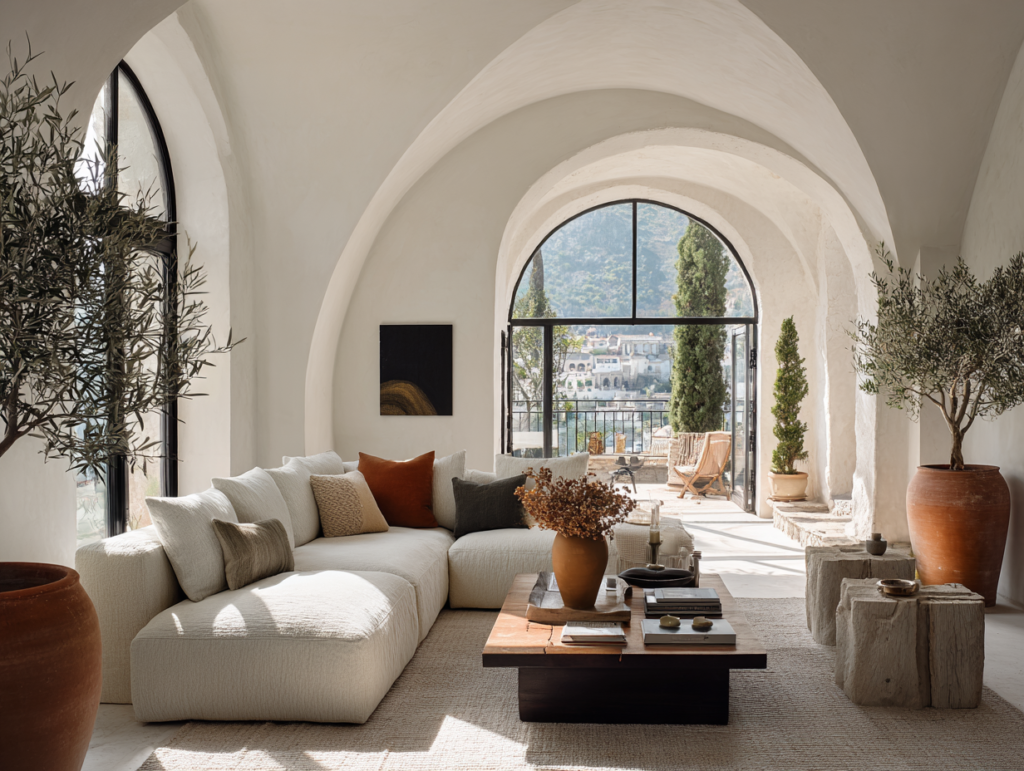
Abundant Natural Light: Large glass windows flood the space with natural light, framing breathtaking views of the Mediterranean landscape and emphasizing the seamless indoor-outdoor connection that defines this design style. Maximize daylight through floor-to-ceiling windows in living areas, clerestory windows bringing light into interior spaces, skylights particularly in kitchens and bathrooms, and glass doors opening to patios, terraces, or courtyards.
Modern window treatments maintain light while providing privacy: sheer linen curtains filtering harsh afternoon sun, simple Roman shades in natural fabrics, wooden shutters with adjustable louvers, or leaving windows bare when privacy allows.
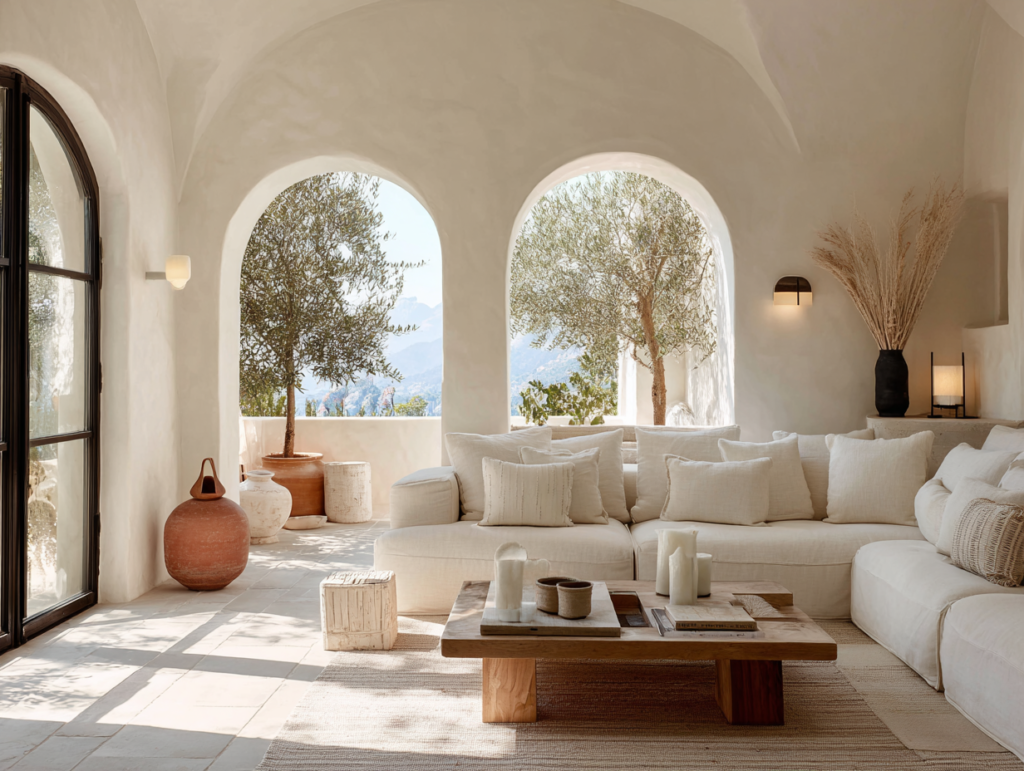
Potted Olive Trees and Mediterranean Plants: Bringing the landscape indoors creates immediate connection to place. Incorporate olive trees in large terracotta pots as statement plants, lemon or orange trees in sunny locations providing fragrance and beauty, lavender and rosemary in kitchen windows offering herbs for cooking, succulents in ceramic pots for low-maintenance greenery, and climbing jasmine or bougainvillea on covered patios.
These plants aren’t merely decorative—they purify air, provide sensory experiences through scent and texture, and create living connections to Mediterranean gardens and groves.
Herb Gardens: Functional and beautiful, kitchen herb gardens embody intentional living. Plant basil, oregano, thyme, and parsley in terra-cotta pots on windowsills or create wall-mounted herb planters in kitchens. These gardens provide fresh ingredients while connecting daily cooking to agricultural traditions.
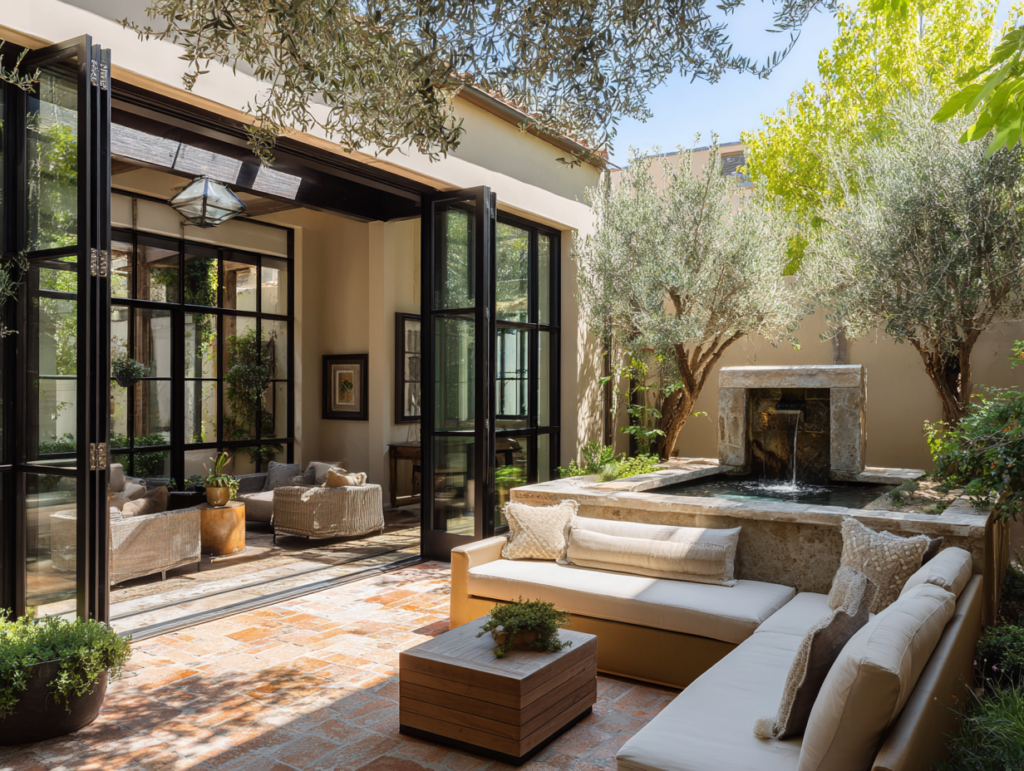
Water Features: In Mediterranean climates where water is precious, water features take on special significance. Mediterranean outdoor décor includes oversized clay pots for plants and decorative tiles for a laid-back and casual look, often accompanied by small fountains. Consider wall-mounted fountains with terracotta or stone construction, simple bubbling water features in courtyards, reflecting pools creating calm focal points, or water-filled ceramic bowls as meditative elements.
Indoor-Outdoor Flow: Perhaps the most defining biophilic element of Modern Mediterranean design is the seamless connection between interior and exterior spaces. A strong connection to the outdoors is essential. Patios, terraces and gardens are natural extensions of the home, designed to enjoy the Mediterranean climate. Create this flow through large sliding or folding glass doors, consistent flooring materials from inside to outside, covered outdoor living rooms with comfortable seating, outdoor kitchens or dining areas, and landscaping visible from main living spaces.

Color Palettes: Sun-Inspired Neutrals with Coastal Accents
The Modern Mediterranean palette draws directly from the coastal landscape—sun-bleached stone, terracotta earth, azure seas, olive groves, and golden sunlight. However, unlike traditional Mediterranean design with its bold, saturated colors, the modern approach uses these hues with restraint and sophistication.
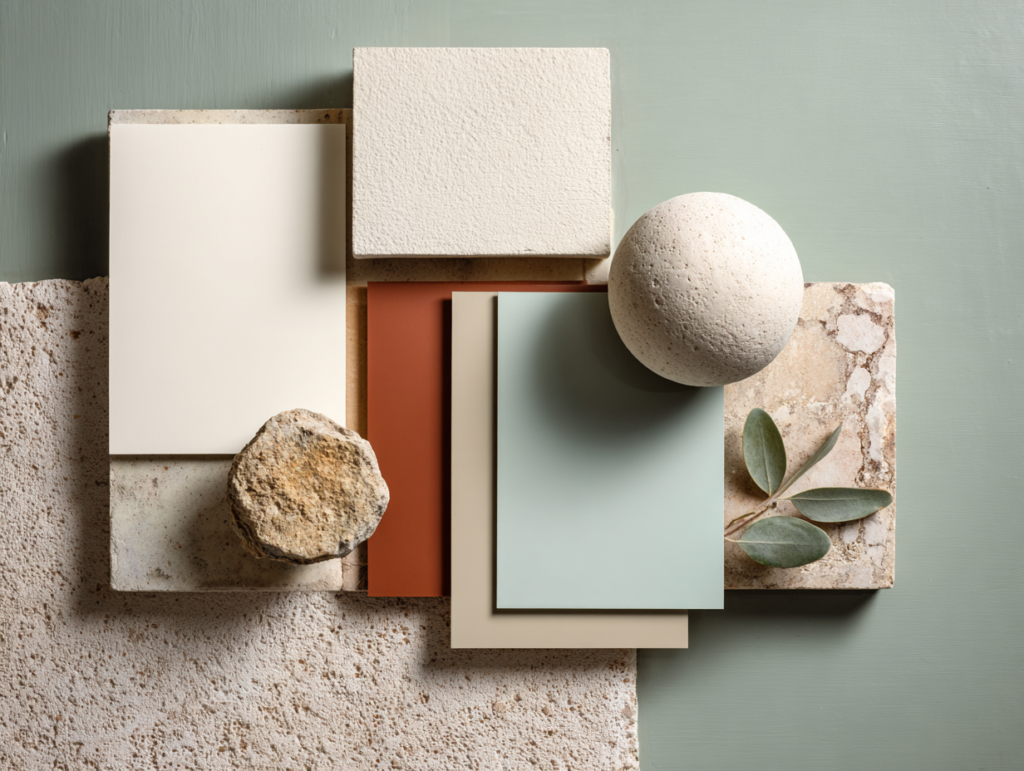
Foundational Neutrals: The colour scheme of a Mediterranean home is foundational to its overall feel. Warm neutrals like sandy beiges, earthy browns, and muted tones create a soft, inviting backdrop. Begin with warm whites and soft ivories for walls and ceilings, creating brightness that reflects abundant light. Layer in sandy beiges and taupes for larger surfaces like upholstery or area rugs, and warm grays with beige or brown undertones for grounding elements.
Earthy Terracotta Tones: Terracotta, from soft peachy-red to deep clay, brings warmth essential to the Mediterranean aesthetic. Use terracotta for flooring tiles creating warm, grounding foundations, accent walls adding focal interest, pottery and ceramics displayed as art, and textiles like throw pillows or blankets adding pops of warmth.
Coastal Blues and Greens: Today modern Mediterranean interiors take a more streamlined approach, featuring clean lines, simplicity in décor, and neutral color palettes infused with pops of coastal color, like azure blue, terracotta, and sun-drenched gold. Use these oceanic hues sparingly as accents: soft blue-gray in textiles or pottery, sage green through plants and occasional pillows, seafoam or aqua in small decorative elements, and deep teal or navy for richer accent pieces.
Golden and Ochre Accents: Sun-drenched yellows and warm ochres add energy without overwhelming. Incorporate through brass or gold-toned metal fixtures, warm wood finishes in honey or golden tones, ochre-colored textiles or artwork, and displayed lemons or citrus as natural accents.
Implementation Strategy: It is best to paint walls lighter colors such as pale white or pale green and incorporate terracotta or azure blue through accessories. This approach maintains the bright, airy feel essential to Modern Mediterranean while allowing personality through carefully chosen accents.
Follow the 70-20-10 rule: 70% warm neutrals (whites, beiges, soft grays) for walls, large furniture, and floors; 20% earthy tones (terracotta, warm wood, stone gray) for secondary furniture and materials; 10% coastal accents (blues, greens, ochre) through textiles, pottery, and decorative elements.

Furniture and Layout: Streamlined Forms with Subtle Mediterranean Character
Modern Mediterranean furniture successfully bridges old and new, combining streamlined contemporary forms with subtle nods to traditional Mediterranean craftsmanship.
Furniture Selection Principles: You’ll find simple, clean silhouetted pieces are prominent in this style of interior design—think metal-framed coffee tables, structured sofas, and streamlined sideboards. However, as designers note, you can still add points of interest – as long as not every piece of furniture is unique and statement, you can introduce a few striking items, such as an antique side table or patterned ottoman.
Key furniture characteristics include clean lines with subtle organic curves softening hard edges, low to medium profiles maintaining horizontal emphasis, natural materials or upholstery in linen, leather, or cotton, mix of modern and traditional pieces creating visual interest, and multifunctional designs supporting minimal living.
Specific Furniture Selections: For seating, choose contemporary sofas in neutral linen with simple lines and comfortable depth, slipcovered furniture allowing easy maintenance and seasonal changes, rattan or woven chairs adding organic texture, leather accent chairs in cognac or natural tan, and built-in banquettes creating cozy dining nooks.
Tables should include solid wood dining tables with clean lines or subtle trestle bases, stone or wood coffee tables with simple forms, console tables in wood or metal for entryways, and extending tables for flexible entertaining.
Storage and surfaces include open shelving in wood or metal displaying pottery and glassware, simple cabinets in natural wood with minimal hardware, woven baskets for concealed storage, and vintage trunks or wooden chests adding character.
Layout Principles: The layout of the rooms is another distinctive feature of the contemporary Mediterranean style. Open and multi-functional spaces are essential to create a sense of continuity and fluidity. Create flowing spaces through open floor plans connecting living, dining, and kitchen areas, furniture arrangement defining zones without walls, conversational groupings encouraging gathering and connection, clear pathways maintaining flow and movement, and generous spacing preventing crowding.
Arched Doorways and Architectural Details: In modern Mediterranean interiors, arched doorways are showstoppers, especially in between rooms that get lots of traffic — like the living room, kitchen, and family room — bringing a sense of openness, flow and elegance to a space. When architecturally possible, incorporate arched doorways between main living areas, arched niches for displaying art or objects, curved mirrors echoing architectural forms, and vaulted or beamed ceilings adding character overhead.

Textures and Patterns: Layered Elements Creating Depth
Texture plays a crucial role in preventing Modern Mediterranean spaces from feeling cold or sterile while maintaining the minimal aesthetic. The key is layering varied textures without introducing excessive pattern or clutter.
Textural Layering Strategy: Combine rough and smooth contrasts—whitewashed plaster walls with smooth stone countertops; textured linen curtains with polished wood floors; rough terracotta tiles with smooth leather seating. Balance hard and soft elements—stone and wood surfaces softened with textiles; metal fixtures balanced with woven materials. Vary visual weight and scale—chunky knit throws with fine linen pillows; substantial wood furniture with delicate pottery.
Wall Textures: Ceramic tiles that are decorated by hand and are characterized by their geometrical patterns and bright colors are often applied to modern Mediterranean style interiors, though modern applications use these more sparingly. Create textural interest through textured plaster or stucco walls showing trowel marks or hand-applied finish, whitewashed brick maintaining texture while achieving light, neutral appearance, stone accent walls in living areas or bedrooms, and limited use of patterned tiles as focal points rather than covering entire surfaces
Pattern Guidelines: Modern Mediterranean favors subtle, organic patterns over bold graphics. Use natural patterns—wood grain, stone veining, and woven textures—as primary patterns; geometric patterns sparingly through simple stripes on textiles, classic tile patterns in limited applications, or subtle Moorish-inspired motifs; avoid busy florals or complex patterns that create visual clutter; when using pattern, limit to 2-3 coordinating patterns maximum.
Mosaic Accents: Traditional Mediterranean mosaic work translates beautifully into modern design through restrained application. Consider small mosaic tile backsplashes in kitchens or baths, mosaic tabletops as accent pieces, decorative mosaic mirrors, or patterned tile risers on stairs creating interest underfoot.
Textile Applications: Layer fabrics thoughtfully: area rugs in jute, sisal, or subtly patterned wool; sheer linen curtains filtering light; varied pillow textures—smooth leather, nubby linen, soft cotton; throws in chunky weaves, lightweight gauze, or soft wool; and table linens in natural fibers adding elegance to dining.
Natural Fiber Rugs: Rugs that feature geometric patterns, or tribal designs, can anchor a room with a touch of Mediterranean texture and colour. Opt for natural fibres like wool or cotton, or use simple jute rugs bringing Mediterranean character. Layer smaller patterned rugs over larger neutral rugs for visual interest without overwhelming.

Embracing Mediterranean-Inspired Intentional Living
Modern Mediterranean interior design offers more than an aesthetic—it provides a philosophy for contemporary living that balances beauty with purpose, tradition with innovation, and simplicity with warmth. By fusing the sun-drenched elegance of coastal Mediterranean regions with the clarity and restraint of modern minimalism, this style creates homes that actively support well-being, foster connection to nature, and honor sustainable practices.
The enduring appeal of Modern Mediterranean lies in its celebration of what truly matters: natural light that energizes and uplifts, organic materials that ground and comfort, open spaces that breathe and flow, handcrafted elements that tell stories, and thoughtful curation that prioritizes meaning over accumulation. As designer Nicole Bozzani beautifully expresses, the warm color palette, natural materials, and thoughtfully chosen decor create a welcoming and cozy environment… making inhabitants and guests feel instantly at ease.
In embracing Modern Mediterranean design, we’re not simply decorating spaces—we’re cultivating a lifestyle rooted in intentionality. Every choice becomes an opportunity to support sustainability through eco-friendly materials, honor craftsmanship by selecting handmade pieces, connect with nature through biophilic design, practice mindfulness by curating rather than accumulating, and create sanctuary spaces that restore rather than deplete.
As you develop your own Modern Mediterranean sanctuary, remember that authenticity comes from understanding the style’s essence rather than rigidly following rules. Start with the fundamentals—abundant light, natural materials, neutral palettes with earthy accents—and let your space evolve organically. Honor the Mediterranean emphasis on indoor-outdoor living, whether through actual patio doors or simply positioning furniture to face windows and nature. Invest in fewer, higher-quality pieces that bring joy and will last for years.
Modern Mediterranean beautifully complements other warm minimalist styles featured on warmminimalism.com. Like Scandinavian design, it prioritizes natural materials and abundant light. Like Japandi, it honors craftsmanship and wabi-sabi imperfection. Like Organic Modern, it celebrates biophilic elements and curves. Like Rustic Modern, it balances contemporary and traditional. Like Desert Modern, it respects place and sustainable practices. Each style offers a different lens on the same fundamental truth: that beautiful, meaningful homes support intentional, mindful living.
Ready to bring Mediterranean serenity into your life? Explore complementary design styles on warmminimalism.com, join our newsletter for sustainable living tips and design inspiration, or share your own Modern Mediterranean space in our community gallery. Your home can become the peaceful, sun-kissed sanctuary you deserve—one intentional choice at a time.
Join the Circle of Warmth
Sign up for the Warm By Design newsletter on warm, intentional living.