Rustic Modern
Where Rustic Warmth Meets Modern Simplicity
Rustic Modern interior design represents one of the most compelling evolutions in contemporary home aesthetics—a thoughtful fusion of rustic, nature-inspired elements with the clean lines and intentional simplicity of modern minimalism. This style transcends fleeting trends to offer something deeper: a design philosophy that honors heritage and craftsmanship while embracing the clarity and purpose of contemporary living.
The term “Rustic Modern” gained cultural prominence in the early 1960s, but the style truly flourished in the 21st century, particularly between 2011 and 2012 when it took off in southern California, with commercial establishments like bars and restaurants leading the way. What began as a design movement in hospitality and retail spaces quickly captured the imagination of homeowners seeking interiors that feel both grounded and sophisticated.
Today, Rustic Modern has evolved into a cornerstone of warm minimalism—a design approach that prioritizes simplicity without sacrificing warmth, comfort, or soul. Unlike stark minimalism that can feel cold or impersonal, Rustic Modern creates nurturing environments through the strategic use of organic textures, natural materials, and thoughtfully curated elements. It’s minimalism with a heartbeat, spaces that breathe with life while remaining uncluttered and serene.
The growing popularity of Rustic Modern reflects our collective yearning for authenticity in an increasingly digital world. As rustic interiors evolved as a way of living during the 19th century in the United States, where settlers harnessed their resourcefulness to create functional yet charming interiors, today’s interpretation honors that same spirit of resourcefulness while meeting contemporary needs for sustainability, flexibility, and mindful living.
This style embodies intentional living—the practice of making conscious, purposeful choices about what we bring into our homes and how we design our spaces. Every reclaimed wood beam, every handwoven textile, every piece of furniture tells a story and serves a purpose. Rustic Modern asks us to slow down, to value quality over quantity, and to create homes that support our well-being while treading lightly on the earth.

Key Elements of Rustic Modern Design
Materials: The Foundation of Rustic Modern Authenticity
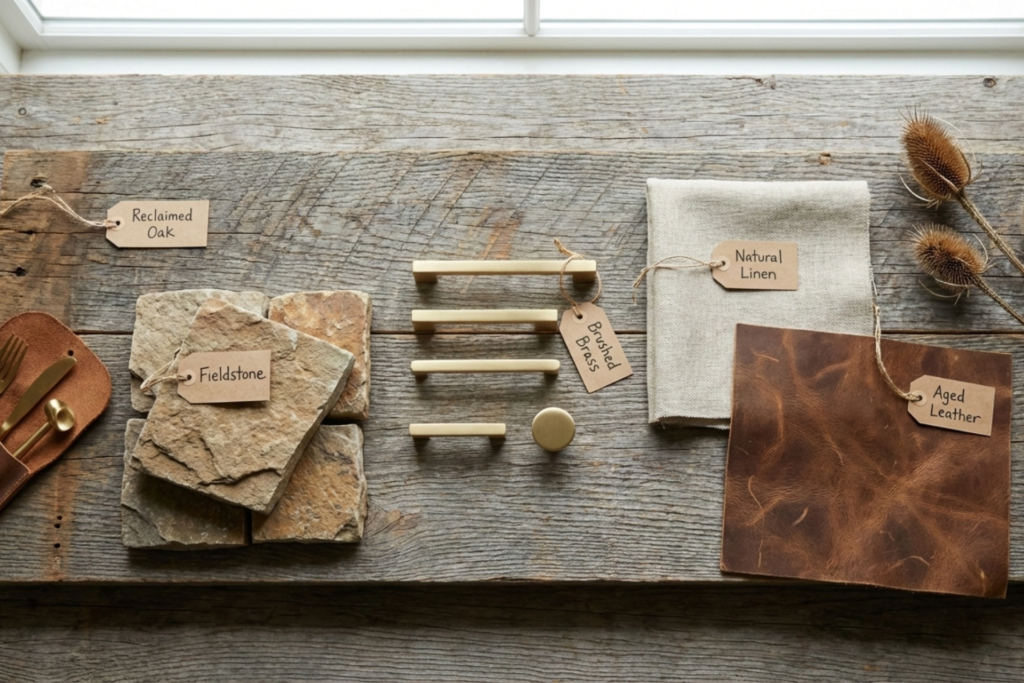
Reclaimed and Natural Woods: Wood is the cornerstone of Rustic Modern design, but not just any wood—reclaimed, salvaged, and sustainably-sourced timber with visible history and character. According to research published by the U.S. Department of Agriculture’s Forest Service, the energy used to produce new framing lumber and wood flooring is 11 to 13 times greater than the energy used to make the same products from reclaimed wood.
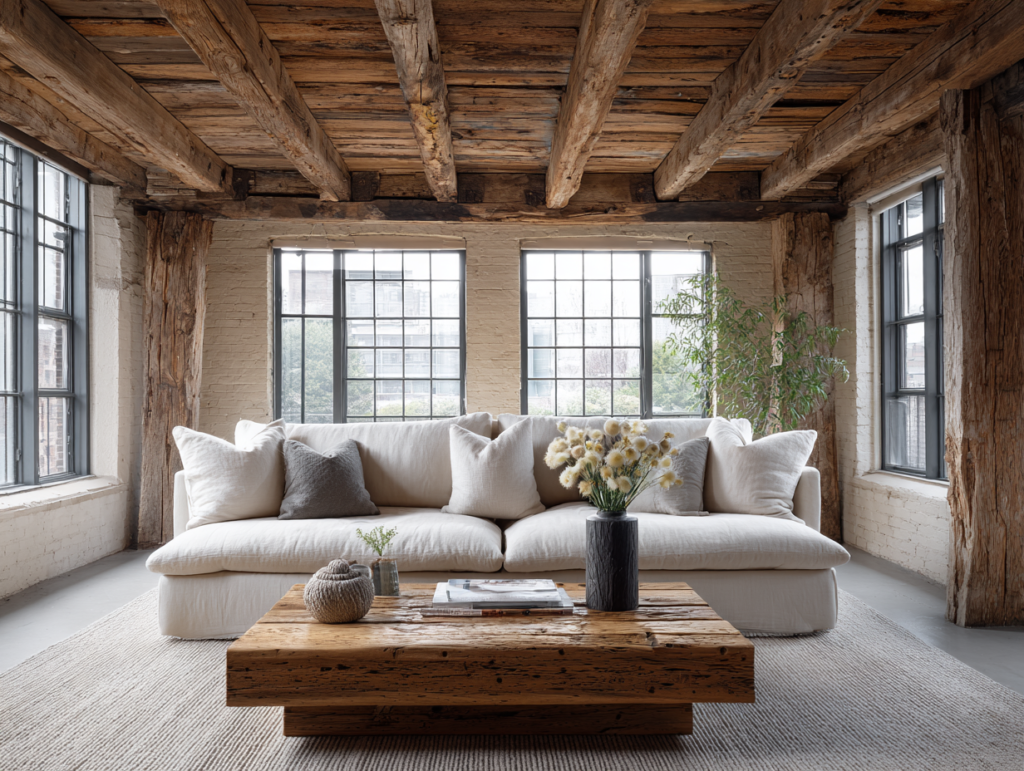
Popular choices include barn wood with weathered patina and nail holes that tell stories; oak, walnut, and chestnut with rich grain patterns; reclaimed teak from old buildings or boats; and rough-sawn lumber that shows authentic tool marks. These materials can be used for flooring (wide-plank reclaimed wood in varied tones), accent walls (vertical or horizontal planks with natural finish), ceiling beams (exposed structural elements or decorative additions), and furniture (dining tables, coffee tables, shelving with live edges or rustic character).
When selecting reclaimed wood, look for Forest Stewardship Council (FSC) certification or work with reputable salvage suppliers who can verify the wood’s origin and ensure it’s been properly cleaned and treated.
Stone and Concrete: Natural stone brings earthy, grounding texture to Rustic Modern spaces. Consider flagstone or slate for flooring, providing durability with natural variation; granite or soapstone for countertops, offering practical surfaces with organic beauty; stacked stone for fireplace surrounds or accent walls, creating dramatic focal points; and river rock or fieldstone for exterior or bathroom applications.
Concrete—particularly board-formed concrete that shows wood grain texture—bridges rustic and modern aesthetics perfectly. Board-formed concrete brings a raw, organic quality created by imprinting the grain of wooden boards into concrete during the pouring process, working beautifully in various design styles from industrial to contemporary-rustic.
Metal Accents: Metal provides the “modern” element in Rustic Modern, offering clean lines and industrial edge while maintaining warmth through material choice. Incorporate wrought iron or blackened steel for stair railings, curtain rods, and furniture frames; brushed brass or bronze for cabinet hardware, faucets, and light fixtures; copper for range hoods, sinks, or decorative accents that develop beautiful patina; and weathered or aged finishes rather than high-polish chrome, which can feel too contemporary.
Natural Textiles: Fabrics bring softness and comfort essential to warm minimalism. Choose linen in natural, oatmeal, or warm gray for curtains, bedding, and upholstery; wool for throws, rugs, and pillows, providing warmth and texture; cotton canvas and duck for durable upholstery; leather in cognac, tan, or chocolate for accent chairs and sofas; and jute, sisal, or seagrass for area rugs that add organic texture underfoot.
Avoid synthetic fabrics, heavily processed textiles, or overly formal materials like silk taffeta that conflict with the casual, natural aesthetic.

Biophilic Elements: Integrating Nature for Well-Being
Biophilic design—the practice of connecting building occupants to nature—is central to Rustic Modern’s approach to warm minimalism. Incorporating biophilic design elements like reclaimed wood into interior spaces helps meet criteria outlined by standards that focus on enhancing human health and well-being through sustainable building practices.
Maximizing Natural Light: Large windows and glass doors that blur indoor-outdoor boundaries; clerestory windows that bring light deep into interiors while maintaining privacy; skylights for overhead natural illumination; and minimal window treatments, favoring sheer linen curtains or simple Roman shades that filter rather than block light.
Living Plants and Greenery: Incorporate potted trees like fiddle-leaf figs or indoor palms for vertical interest; succulents and cacti in handmade ceramic pots; herb gardens in kitchen windows or on countertops; and living walls or vertical gardens as dramatic focal points (particularly effective in modern minimalist spaces that need organic softening).
Choose planters in natural materials—terracotta, concrete, wood, or ceramic—rather than plastic or highly decorative containers.
Natural Views and Landscape Connection: Position furniture to face windows and views; create outdoor living spaces that extend interior rooms; use consistent flooring materials from inside to outside to blur boundaries; and landscape with native plants that connect to the local environment.
Water Features: Small indoor fountains with stone or copper construction; outdoor ponds or streams visible from interior spaces; and natural wood or stone vessels filled with water for meditative focal points.

Color Palettes: Earthy Neutrals with Purposeful Accents
The Rustic Modern color palette draws directly from nature, emphasizing warm neutrals as a foundation with earthy accents for depth and personality.
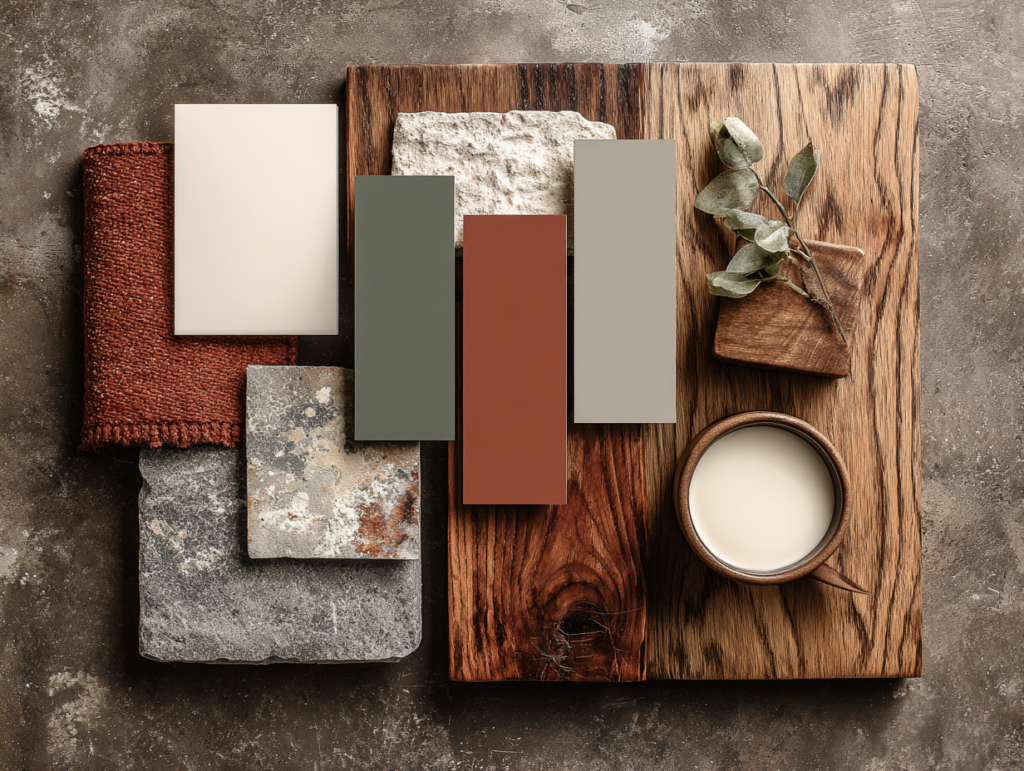
Foundation Neutrals: Warm whites and creams (off-white, ivory, eggshell) for walls and ceilings, creating bright, airy backdrops; soft grays with warm undertones (greige, taupe, warm stone) for larger surfaces; and warm beiges and tans (sand, biscuit, camel) that echo natural wood tones. Earthy Accent Colors: Terracotta and clay reds for textiles, pottery, and accent walls; forest green and sage for pillows, throws, and plants; warm browns from honey to espresso for wood furniture and leather; charcoal and deep gray for metal accents and stone elements; and rust orange and burnt sienna sparingly for energetic pops.
Implementation Strategy: Paint walls in warm white or soft greige to maximize light and create a neutral canvas. Use warm wood tones (medium to dark) for flooring, furniture, and beams to ground the space. Layer in stone gray through concrete, natural stone, or metal elements. Add warmth through terracotta, rust, or forest green in textiles and accessories. Maintain a 60-30-10 ratio: 60% neutral base, 30% natural wood/stone, 10% accent colors.
Designers note that modern rustic is still relevant with earthy, warm color palettes and layers of textures through textiles, confirming this approach aligns with current design thinking.

Furniture and Layout: Mixing Old and New with Intention
Furniture Selection Principles: Rustic Modern furniture successfully marries rustic character with modern form through clean lines with organic materials—a sleek sofa frame in natural linen or leather; mix of vintage and contemporary—antique farm table with modern metal chairs; low-profile modern pieces that maintain horizontal lines; and multifunctional furniture that serves multiple purposes, reducing overall quantity.
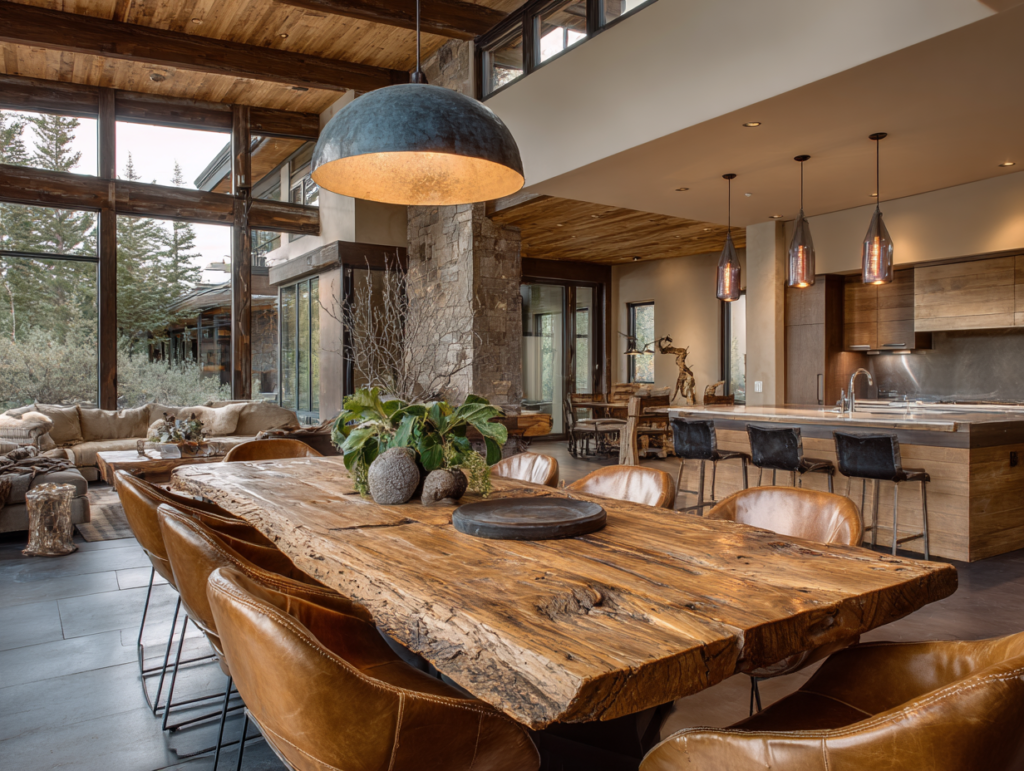
Specific Furniture Pieces: For seating, choose contemporary sofas and sectionals in neutral linen, leather, or performance fabrics with simple lines; vintage leather armchairs or modern interpretations with aged leather; wooden benches with clean lines for dining or entryways. Tables should include reclaimed wood dining tables with live edges or rustic character paired with modern chairs; modern coffee tables in wood, metal, or stone with simple geometric forms; console tables in reclaimed wood with metal bases or clean-lined wood designs.
Storage solutions include open shelving in reclaimed wood or metal; modern cabinetry in natural wood with minimal hardware; vintage trunks or wooden boxes for concealed storage; and built-in benches or window seats with hidden storage.
Layout Principles: Open floor plans that allow spaces to flow while maintaining definition through furniture arrangement rather than walls; zoning with area rugs, lighting, or subtle furniture placement to define living, dining, and work areas; conversation-focused arrangements with seating facing each other or views; breathing room with generous space between furniture pieces—resist filling every corner; and connection to outdoors by orienting layouts toward windows, gardens, or outdoor living spaces.
An open floor plan is a hallmark of rustic interior design since it emphasizes the idea of spaciousness and connectivity making indoors more functional, creating ideal conditions for contemporary living.

Textures and Patterns: Creating Depth Without Overwhelming
Texture is perhaps the most critical element in preventing Rustic Modern spaces from feeling cold or sterile. Minimalism in 2025 isn’t about stripping everything down—it’s about embracing simplicity with warmth and texture through creamy beiges, terracotta accents and organic materials like raw wood and stone.
Textural Layering Strategy: Combine rough and smooth contrasts—weathered wood beams against smooth plaster walls; rustic stone fireplace with polished concrete floors; rough linen curtains with smooth leather seating. Mix hard and soft elements—metal and wood furniture balanced with plush textiles; stone surfaces softened with woven rugs and fabric seating. Vary scale and weight—chunky knit throws with fine linen pillows; massive wood beams with delicate pottery; substantial furniture with lightweight woven accents.
Pattern Guidelines: Rustic Modern favors subtle, natural patterns over bold graphics. Use organic patterns like wood grain, stone veining, and natural fiber weaves as primary patterns; geometric patterns sparingly—simple stripes, windowpane checks, or subtle grids on textiles; avoid busy florals, complex damasks, or trendy graphics; and when using pattern, limit to 2-3 coordinating patterns maximum to maintain minimalist sensibility.
Textile Applications: Layer area rugs (jute or sisal base with smaller sheepskin or vintage kilim overlays); stack pillows in varied textures (chunky knit, smooth leather, nubby linen); drape throws over furniture (cable knit wool, woven cotton, soft mohair); and hang simple curtains (natural linen, light cotton, or leave windows bare if privacy permits).

Creating Your Rustic Modern Sanctuary
Rustic Modern interior design offers a compelling vision for contemporary living—one that honors the past while embracing the present, values sustainability alongside beauty, and creates homes that nurture both people and planet. By fusing the warmth and authenticity of rustic elements with the clarity and purpose of modern minimalism, this style achieves what many design approaches cannot: spaces that feel simultaneously grounded and sophisticated, edited yet inviting, minimal yet soulful.
The enduring appeal of Rustic Modern lies in its alignment with intentional living. In choosing reclaimed materials, we reduce environmental impact while preserving history. In curating fewer, higher-quality pieces, we create homes that support mindfulness rather than consumption. In bringing natural materials and biophilic elements into our spaces, we honor our innate need for connection to the natural world. Every choice becomes an opportunity to live more deliberately, to support craftspeople and sustainable practices, and to create environments that enhance rather than detract from our well-being.
As you embark on creating your own Rustic Modern sanctuary, remember that this style is not about perfection but about purpose. It’s not about following rules but about honoring what matters to you—whether that’s sustainability, craftsmanship, connection to nature, or simply creating a home that feels like a refuge from the complexity of modern life.
Start small. Begin with one reclaimed wood piece, one room painted in warm neutrals, one collection of handmade pottery. Allow your space to evolve organically, adding elements thoughtfully over time rather than rushing to completion. Rustic Modern, like all aspects of warm minimalism, rewards patience and intentionality.
As you continue exploring design styles that embody warm minimalism, consider how Rustic Modern complements other approaches on warmminimalism.com. Scandinavian design shares the emphasis on natural materials and minimalist clarity. Japandi brings similar respect for craftsmanship and wabi-sabi imperfection. Organic Modern echoes the biophilic focus and natural palette. Modern Mediterranean celebrates earthy materials and indoor-outdoor living. Desert Modern honors place and sustainable practices. Each style offers a different lens on the same fundamental truth: that beautiful, meaningful homes support intentional, mindful living.
Ready to begin your Rustic Modern journey? Explore these complementary styles on warmminimalism.com, join our newsletter for design inspiration and sustainable living tips, or share your own Rustic Modern space in our community gallery. Your home is waiting to become the sanctuary you deserve.
Join the Circle of Warmth
Sign up for the Warm By Design newsletter on warm, intentional living.