
Desert Modern
The Essence of Desert Modern Style
Desert Modern interior design represents a harmonious marriage between the stark beauty of arid landscapes and the refined simplicity of modernist architecture. Born from the mid-20th century Palm Springs architectural movement, this distinctive style has evolved into a philosophy that perfectly embodies warm minimalism—a design approach that celebrates simplicity without sacrificing comfort, connection, or soul.
Emerging primarily in the 1940s and 1950s in the American Southwest, particularly in California’s Coachella Valley, Desert Modern was pioneered by visionary architects including Albert Frey, Richard Neutra, E. Stewart Williams, and William Krisel. These innovators adapted modernist principles to desert conditions, creating structures that responded to extreme temperatures, intense sunlight, and the magnificent, unforgiving landscape. The style represented a refreshing departure from the ornate Hollywood Regency and Art Deco designs that preceded it, embracing instead a pared-back aesthetic that found beauty in simplicity and functionality.
At its core, Desert Modern embodies the principles of warm minimalism by emphasizing clean lines and uncluttered spaces while infusing warmth through natural textures, earthy colors, and biophilic elements. This style promotes intentional living—a mindful approach to design that encourages purposeful choices, reduces visual and physical clutter, and fosters a deep connection to nature and place. Unlike cold minimalism, which can feel sterile, Desert Modern creates serene, inviting environments that enhance well-being while honoring the dramatic landscape that inspired it.
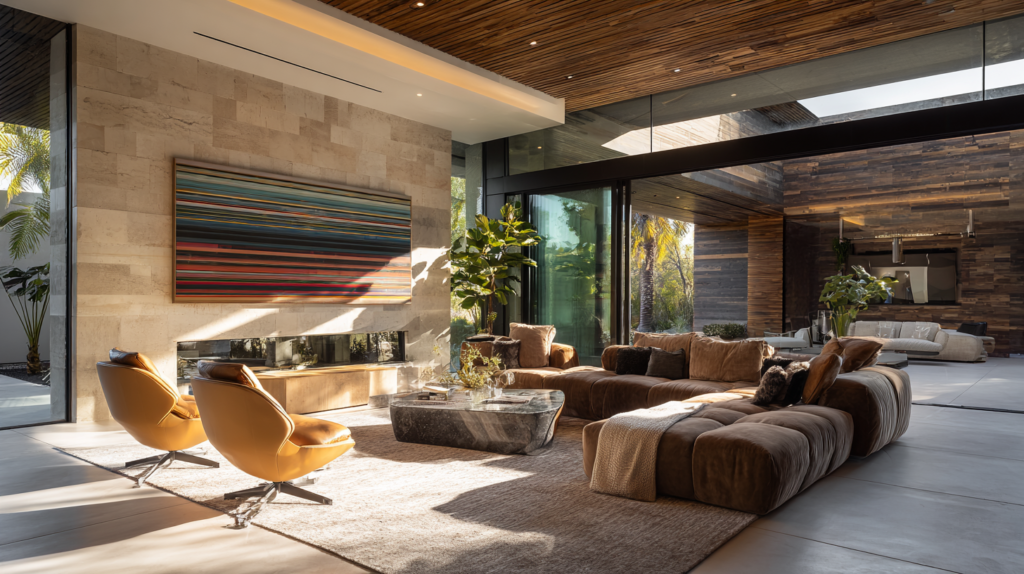
Key Elements of Desert Modern Design
Color Palettes: Earth, Sky, and Sunset
The Desert Modern color palette is a love letter to the arid landscape, drawing inspiration from sandy dunes, terracotta cliffs, sage-dotted hillsides, and the ever-changing desert sky.
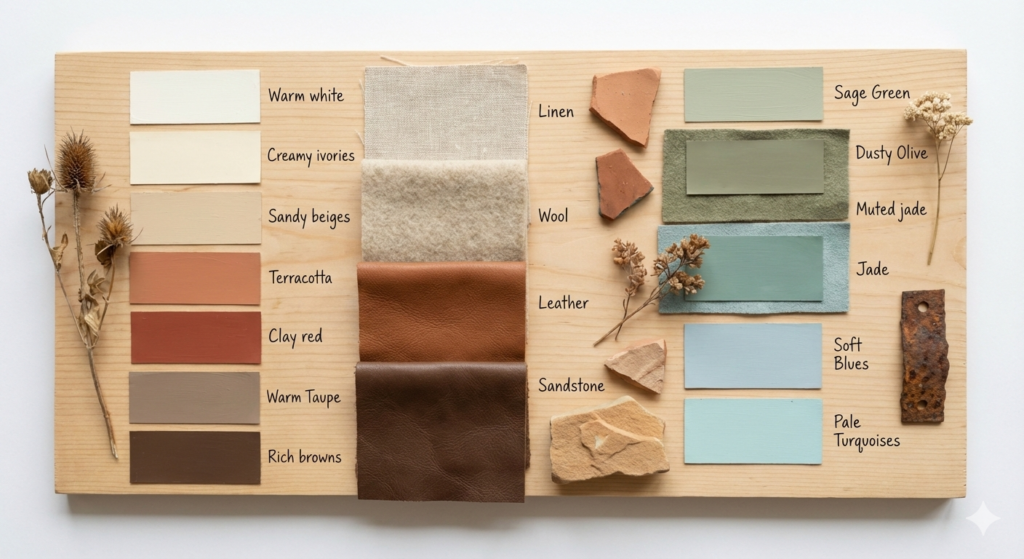
Foundation Colors: Begin with warm whites, creamy ivories, and sandy beiges as your base. These light, reflective tones maximize natural light, create an airy atmosphere, and provide a serene backdrop that keeps spaces feeling calm and uncluttered.
Earth Tones: Layer in terracotta, clay red, warm taupe, and rich browns. These grounding colors add depth and warmth without overwhelming the minimalist aesthetic. Terracotta, in particular, has become synonymous with Desert Modern design, evoking the traditional adobe structures of the Southwest.
Botanical Accents: Incorporate sage green, dusty olive, and muted jade inspired by desert vegetation. These soft greens bring life to neutral palettes while maintaining the subdued, sophisticated feel characteristic of the style.
Sky-Inspired Hues: Soft blues and pale turquoises reminiscent of cloudless desert skies can be used sparingly as refreshing accents, particularly in textiles, artwork, or pottery.
Sunset Pops: For visual interest, introduce warm ochre, burnt orange, or deep rust as accent colors in pillows, throws, or statement pieces. These vibrant hues mirror the spectacular desert sunsets and add personality without disrupting the overall calm.
Implementation Tips:
- Paint walls in warm white or sand tones to reflect abundant natural light
- Use terracotta or earth-toned tiles for flooring to ground the space
- Select furniture upholstery in neutral linen or leather in camel or tan
- Add color through carefully chosen textiles, pottery, and art
• • Follow the 60-30-10 rule: 60% neutral base, 30% earth tones, 10% accent colors
Materials: Natural, Durable, and Authentic
Modern design celebrates materials in their most authentic forms, prioritizing those that are locally sourced, sustainably harvested, and deeply connected to the desert environment.
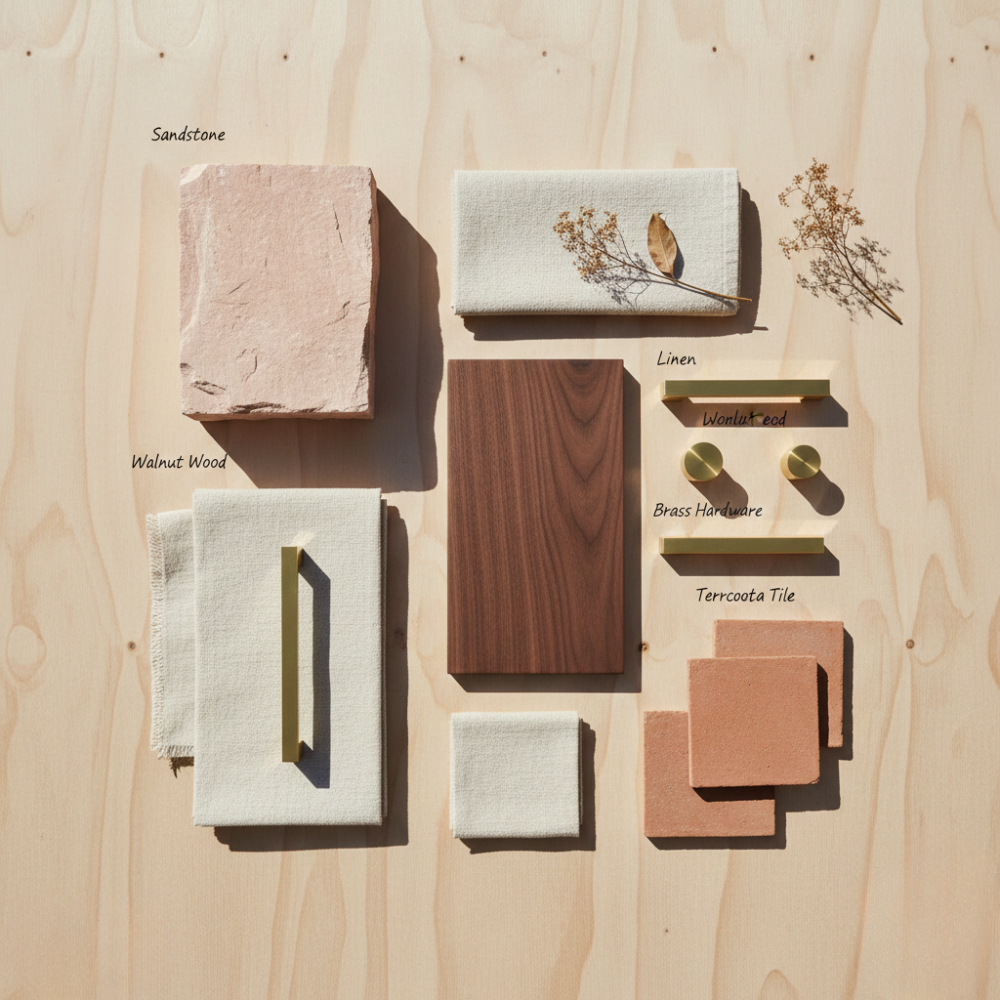
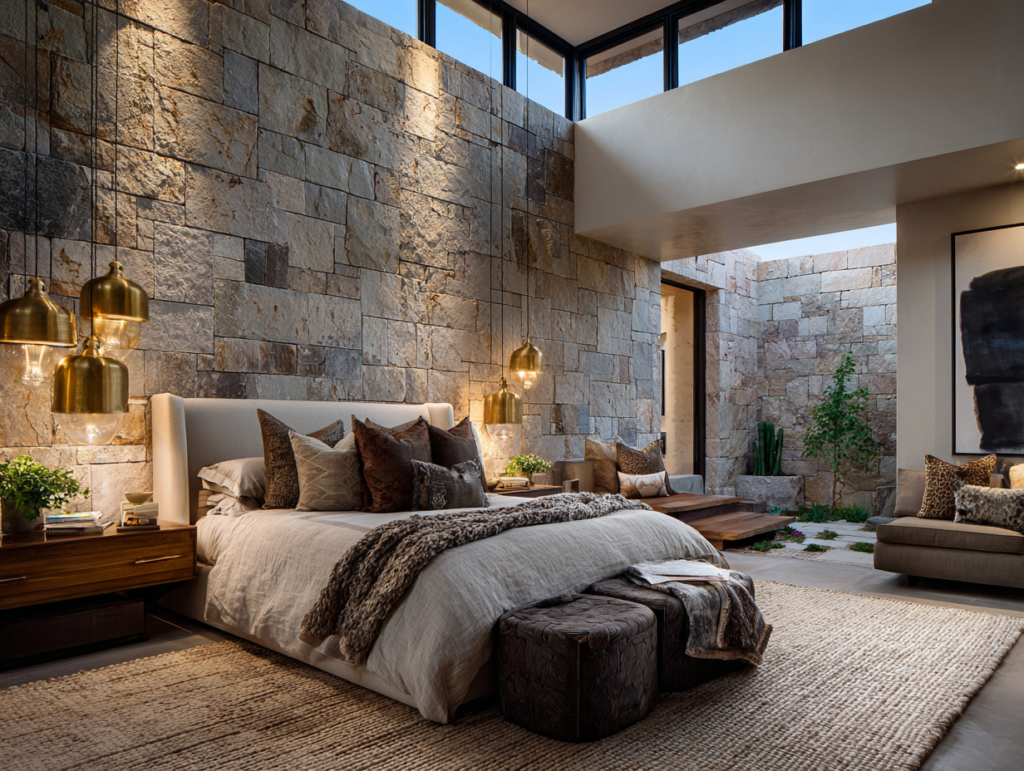
Stone: Natural stone like sandstone, travertine, limestone, and granite brings textural richness and thermal mass. These materials regulate temperature naturally, absorbing heat during the day and releasing it at night. Use stone for flooring, accent walls, fireplace surrounds, or kitchen countertops. The natural variations in color and texture add visual interest while maintaining a grounded, organic feel.
Wood: Select woods with prominent, beautiful grain like walnut, teak, oak, and pine. Desert Modern favors lighter-toned woods or those with warm undertones. Wood adds warmth and softness to spaces dominated by harder materials like stone and steel. Use wood for furniture, ceiling beams, cabinetry, and shelving. Reclaimed wood adds character while supporting sustainability goals.
Adobe and Rammed Earth: These traditional desert building materials offer unparalleled thermal properties and authentic regional character. Adobe—made from sand, clay, water, and straw—and rammed earth walls provide excellent insulation and create beautiful, organic textures. Modern applications can use these materials for accent walls or exterior cladding.
Metal Accents: Incorporate brass, copper, bronze, or weathered steel for warmth and industrial edge. Brushed or aged finishes feel more appropriate than polished chrome. Use metal in light fixtures, cabinet hardware, stair railings, and furniture legs. Copper, in particular, develops a beautiful patina over time.
Natural Textiles: Choose linen, cotton, wool, jute, and hemp for upholstery, window treatments, and accessories. These breathable, natural fabrics work beautifully in desert climates and add softness to minimalist spaces. Avoid synthetic materials and heavy fabrics like velvet or thick wool that can feel out of place in warm environments.
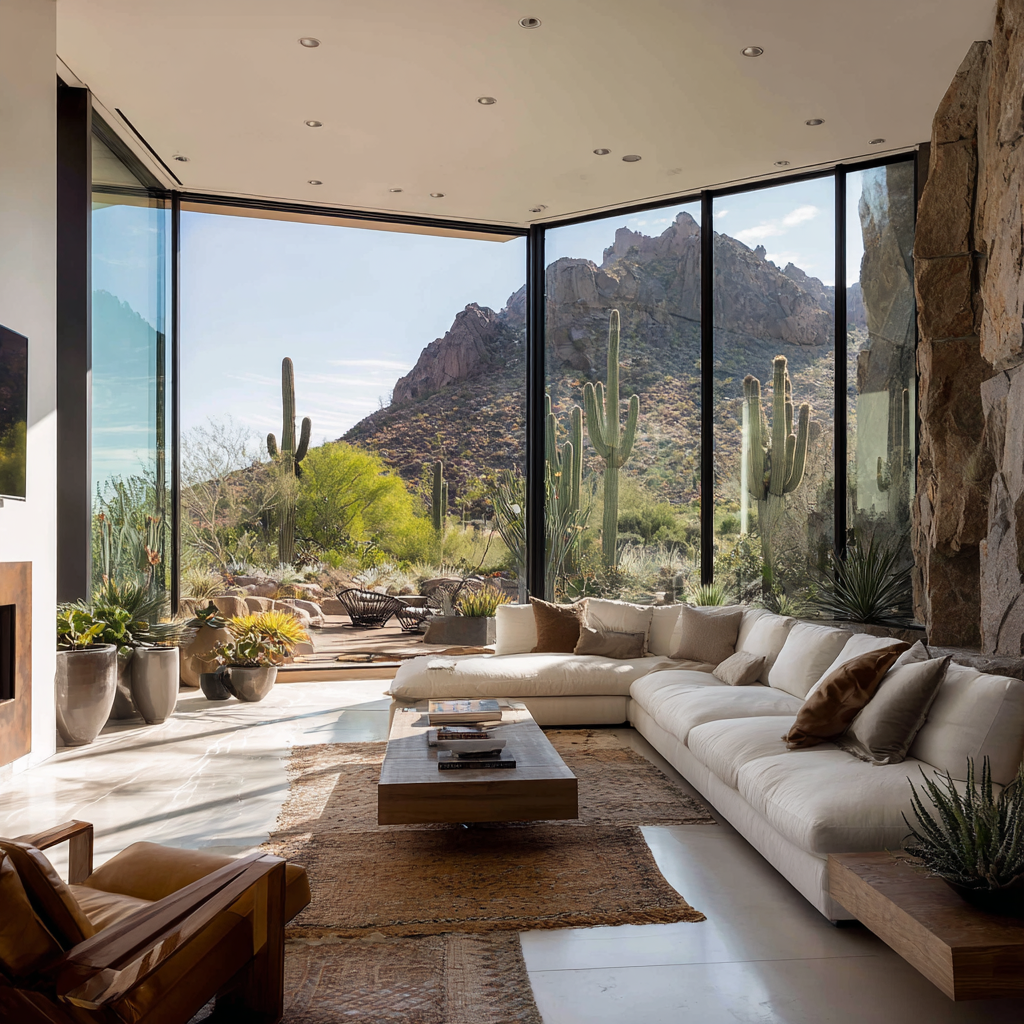
Glass: Large expanses of glass are essential to Desert Modern design, connecting interiors to the landscape. Use floor-to-ceiling windows, clerestory windows for privacy with light, skylights for overhead illumination, and glass doors that open to outdoor spaces.
Biophilic Elements: Blurring Indoor-Outdoor Boundaries
The integration of nature is perhaps the most defining characteristic of Desert Modern design, reflecting its roots in mid-century modernism’s emphasis on indoor-outdoor living.
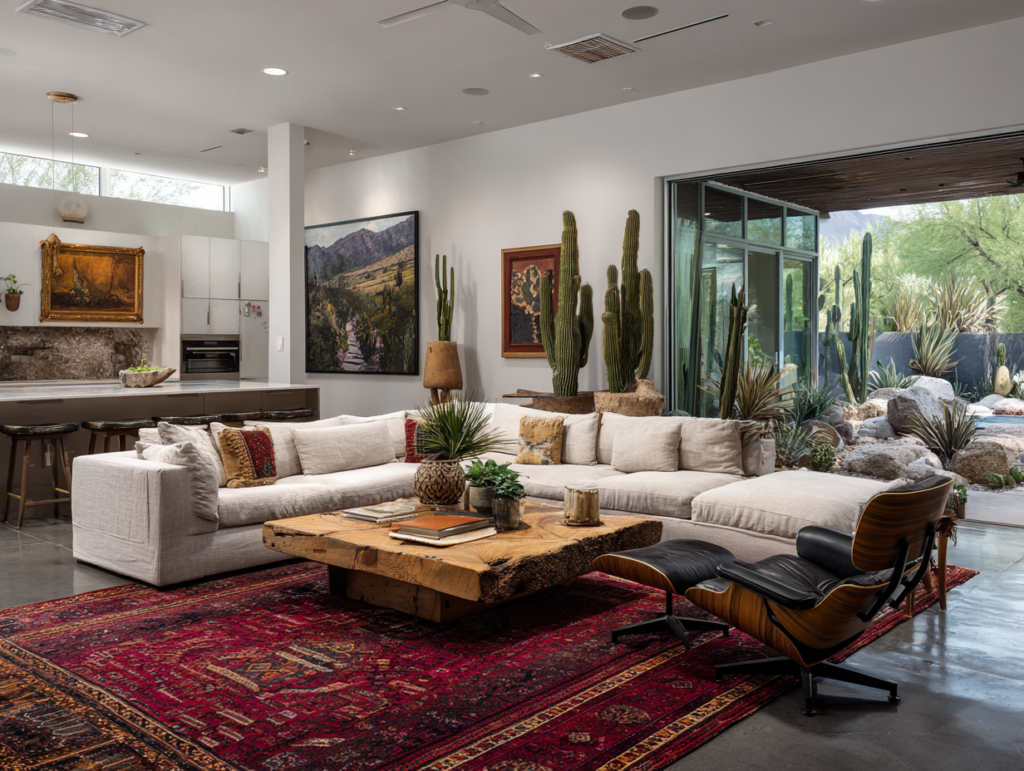
Expansive Glazing: Floor-to-ceiling windows and sliding glass doors are non-negotiable. These large openings dissolve boundaries, frame dramatic views, flood interiors with natural light, and create what architect Rick Joy calls “single-aperture views”—carefully positioned openings that capture specific landscape features or lighting events.
Desert Plants: Incorporate drought-tolerant, low-maintenance plants that thrive in arid conditions:
- Cacti (saguaro, barrel, prickly pear) for iconic desert character
- Succulents (aloe, agave, echeveria) for varied textures and forms
- Desert trees (palo verde, mesquite) for outdoor shade
- Native flowering plants (desert marigold, brittlebush) for seasonal color
Group plants of varying heights and textures to create visual interest. Place larger specimens in corners or near windows, and cluster smaller plants on shelves or tables.
Water Features: In a landscape defined by scarcity, water becomes precious and meditative. Small fountains, reflecting pools, or even a shallow dish of water can create calming sounds, humidify dry air, and serve as focal points that evoke desert oases.
Natural Light Maximization: Design for light throughout the day:
- East-facing windows capture morning sun
- South-facing clerestory windows provide consistent, indirect light
- West-facing windows frame dramatic sunsets
- Skylights bring overhead illumination to interior spaces
- Light-colored walls and floors reflect and amplify natural light
Outdoor Living Spaces: Extend living areas outdoors with covered patios, pergolas, fire pits, outdoor kitchens, and comfortable seating. These spaces become essential in desert climates, usable during temperate months and providing shaded retreats during intense heat.
Furniture Types and Layout: Low-Profile and Intentional
Desert Modern furniture embodies the style’s core principles: clean lines, natural materials, functionality, and comfort without excess.
Furniture Characteristics:
- Low Profile: Sofas, chairs, and tables sit low to the ground, creating horizontal lines that mirror the flat desert horizon and make rooms feel more spacious
- Organic Forms: Gentle curves and rounded edges soften the geometric minimalism
- Mid-Century Influence: Iconic pieces like Eames lounge chairs, Noguchi tables, and Saarinen tulip chairs fit seamlessly into Desert Modern interiors
- Natural Finishes: Favor light to medium wood tones, natural leather (tan, cognac, camel), and upholstery in linen or cotton
- Multifunctionality: Choose pieces that serve multiple purposes to maintain uncluttered spaces—ottomans with storage, extending dining tables, nesting side tables
Specific Furniture Selections:
- Seating: Low-profile sofas with clean lines in natural linen; leather accent chairs in cognac or tan; woven rattan or wicker chairs for textural variety; built-in banquettes or window seats
- Tables: Solid wood coffee tables with simple legs; live-edge dining tables celebrating wood’s natural form; concrete or stone side tables for industrial texture
- Storage: Floating shelves in light wood; minimal wood cabinets with integrated handles; woven baskets for concealed storage
- Beds: Platform beds in light wood or upholstered in natural linen; low-profile frames that emphasize horizontal lines
Layout Principles:
- Open Floor Plans: Remove unnecessary walls to create flowing, connected spaces. This enhances light distribution, facilitates indoor-outdoor connection, and reduces visual clutter.
- Zoning Without Walls: Define areas using furniture arrangement, area rugs, lighting changes, or subtle level changes rather than physical barriers.
- Conversation Clusters: Arrange seating to encourage interaction and face toward views or focal points like fireplaces.
- Breathing Room: Leave generous space between furniture pieces. Don’t fill every corner—negative space is a design element in itself.
• • Symmetry and Balance: Create visual calm through balanced arrangements, though asymmetry can be used intentionally for interest.
Lighting and Textures: Creating Depth and Atmosphere
Lighting and texture work together to create the warmth and visual interest essential to preventing minimalist spaces from feeling cold or sterile.
Natural Lighting Strategies:
- Maximize Daylight: Position living spaces to receive abundant natural light throughout the day
- Control Harsh Sun: Use sheer linen curtains, bamboo shades, or exterior overhangs to diffuse intense afternoon sun without blocking views
- Highlight Views: Frame dramatic landscape features or specific light events through carefully positioned windows
- Skylights and Clerestories: Bring light into interior spaces while maintaining privacy
Artificial Lighting:
- Layered Approach: Combine ambient, task, and accent lighting for flexibility and mood
- Warm Color Temperature: Choose bulbs in 2700-3000K range for cozy warmth, avoiding harsh cool white
- Statement Fixtures: Pendant lights in geometric brass, copper, or natural materials like rattan become sculptural focal points
- Recessed Lighting: Use for clean, unobtrusive ambient light
- Table and Floor Lamps: Add warmth and flexibility with lamps in natural materials—wood, ceramic, linen shades
- Dimmers: Essential for adjusting atmosphere from bright daytime to intimate evening
Textural Layering: Desert Modern relies on textural variety to create depth and visual interest within a restrained color palette:
- Rough/Smooth Contrast: Pair rough stone walls with smooth leather seating; textured linen with polished wood
- Hard/Soft Balance: Balance hard surfaces (stone, concrete, wood) with soft textiles (throws, pillows, rugs)
- Woven Elements: Incorporate jute rugs, rattan baskets, macramé wall hangings, and woven textiles for organic texture
- Natural Imperfections: Embrace materials that show natural variation—wood grain, stone veining, hand-thrown pottery
• • Layered Textiles: Layer rugs (jute under sheepskin), pile pillows in varied fabrics, drape throws over seating
Accessories and Decor: Minimal but Meaningful
In Desert Modern design, every accessory should earn its place. This isn’t about deprivation but about curating a collection of meaningful objects that enhance rather than clutter.
Guiding Principles:
- Quality Over Quantity: Select fewer, higher-quality pieces that will last and bring joy
- Functional Beauty: Choose items that serve a purpose—beautiful bowls, sculptural vases, handsome storage
- Natural Materials: Favor ceramic, wood, stone, woven fibers, and other organic materials
- Artisan Craftsmanship: Support handmade pieces that show the maker’s hand
Specific Accessories:
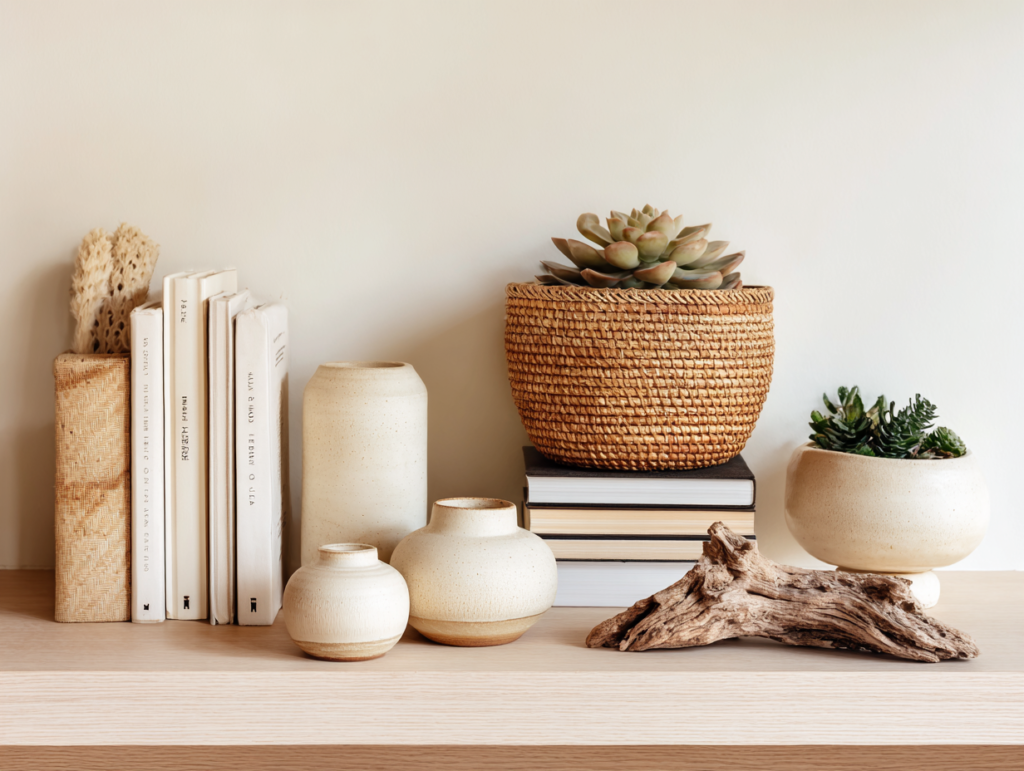
- Pottery and Ceramics: Hand-thrown vessels in earthy glazes; sculptural vases; decorative bowls
- Woven Baskets: For storage and texture; vary sizes and place strategically
- Artwork: Abstract pieces inspired by desert landscapes; photography of desert flora/fauna; minimal line drawings; natural fiber wall hangings
- Textiles: Throw blankets in chunky knit or woven patterns; pillows in varied textures and subtle patterns; vintage Southwestern textiles as wall hangings
- Books: Stack design, architecture, and photography books on coffee tables
- Natural Objects: Driftwood, interesting stones, dried desert botanicals, bleached animal skulls (if ethical)
- Sculptural Pieces: Wood or stone sculptures with organic forms; metal art pieces
Styling Tips:
- Group in Odd Numbers: Arrange accessories in groups of three or five for visual balance
- Vary Heights: Create visual interest by grouping items of different heights
- Negative Space: Leave plenty of empty space—not every surface needs decoration
- Rotate Seasonally: Keep displays fresh by rotating accessories rather than accumulating more
• • One Statement Piece: Let one bold item anchor a room rather than competing focal points
Creating Your Desert Modern Sanctuary
Desert Modern interior design offers a compelling vision for contemporary living—one that honors simplicity without sacrificing warmth, embraces minimalism without becoming cold, and creates beauty through restraint and connection to nature. As a manifestation of warm minimalism, it demonstrates that reducing excess and choosing intentionally doesn’t mean deprivation; rather, it creates space for what truly matters.
Whether you live in the Southwest desert or simply resonate with the philosophy, Desert Modern principles can transform your home into a sanctuary that supports well-being, reflects your values, and connects you to the natural world. Start with small changes—a fresh coat of warm white paint, a carefully chosen plant, the removal of unnecessary clutter—and let the style evolve organically in your space.
Remember that the goal isn’t perfection or strict adherence to rules, but creating an environment that feels authentic to you while embodying the core principles: connection to nature, sustainable choices, visual calm, textural warmth, and intentional living. Your Desert Modern home should be a personal oasis—a place where you feel grounded, inspired, and truly at home.
Ready to begin your Desert Modern journey? Explore our other style guides on warmminimalism.com, join our newsletter for design inspiration and tips, or share your own Desert Modern space in our community gallery.
Join the Circle of Warmth
Sign up for the Warm By Design newsletter on warm, intentional living.