
Japandi
Serene Fusion of East and West
In a world that increasingly craves simplicity without sacrificing warmth, Japandi design emerges as the perfect answer—a harmonious marriage of Japanese minimalism and Scandinavian functionality that creates spaces of profound serenity and soulful beauty. More than just an aesthetic trend, Japandi represents a thoughtful design philosophy rooted in centuries-old traditions, where the Japanese concept of wabi-sabi (finding beauty in imperfection and transience) intertwines with the Scandinavian notion of hygge (creating cozy contentment). The result is an interior style that feels both refined and lived-in, minimal yet nurturing—spaces that breathe with intention while wrapping inhabitants in quiet comfort.
The term “Japandi” itself is a portmanteau that only gained widespread recognition around 2016, yet the relationship between Japanese and Nordic design traditions stretches back over 150 years. When Scandinavian designers first traveled to Japan in the late 1800s after the country opened its borders, they discovered striking parallels: both cultures valued simplicity, celebrated masterful craftsmanship, revered natural materials, and maintained a profound respect for the connection between humans and nature. This cultural exchange, particularly evident in Danish furniture design and ceramic crafts, laid the groundwork for what would eventually become a globally recognized interior design movement.
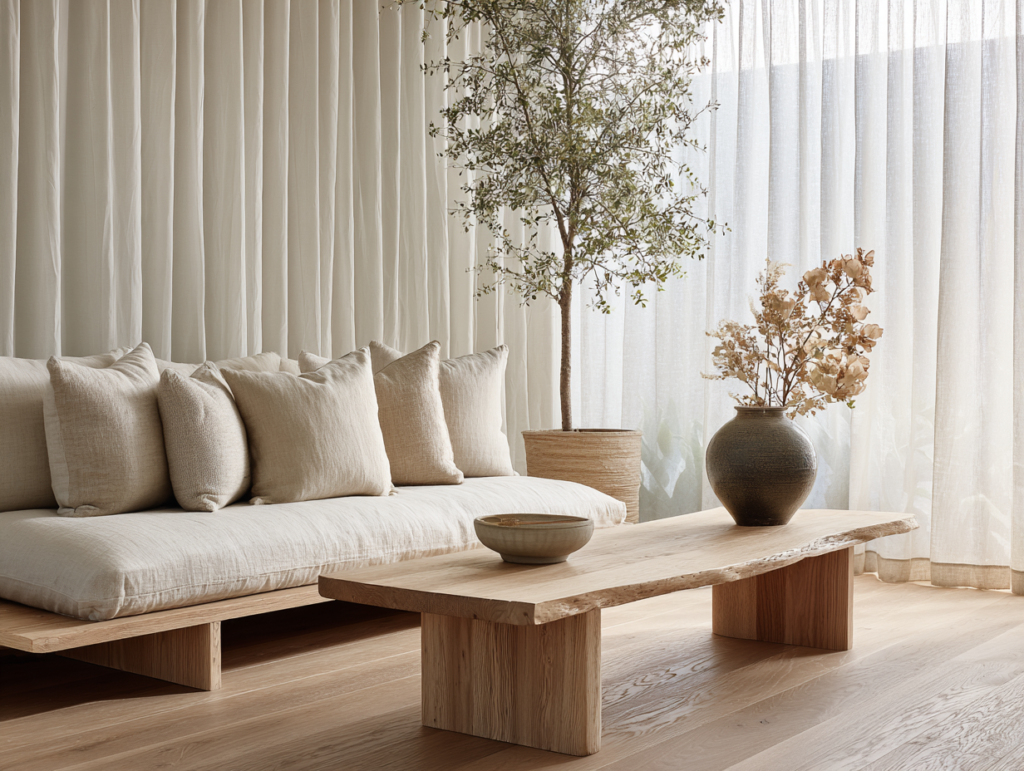
Why is Japandi trending now? The answer lies in our collective yearning for balance. Following years of maximalist excess and the stress of fast-paced modern living, people are gravitating toward environments that promote mental clarity and emotional well-being. The COVID-19 pandemic accelerated this shift, transforming homes into sanctuaries where every element needed to serve both practical and psychological purposes. Japandi’s fusion of Japanese zen principles with Scandinavian coziness offers exactly this: spaces that calm the mind while nurturing the soul, environments that feel uncluttered yet warm, minimal yet inviting.
For those embracing warm minimalism, Japandi provides the ideal framework. Unlike stark minimalism that can feel cold or sterile, Japandi softens clean lines with natural textures, organic materials, and thoughtful imperfections. It’s minimalism with a heartbeat—where every carefully chosen piece contributes to an atmosphere of serene abundance rather than ascetic deprivation. This approach aligns seamlessly with intentional living, the practice of making mindful choices that prioritize quality over quantity, sustainability over disposability, and authenticity over perfection. In a Japandi home, each object tells a story, serves a purpose, and reflects a commitment to living with awareness and respect for both the environment and one’s inner peace.
Key Elements of Japandi Design
Understanding Japandi requires examining its fundamental building blocks—the materials, colors, textures, and design principles that collectively create its distinctive atmosphere. Each element serves both aesthetic and philosophical purposes, contributing to spaces that feel grounded, harmonious, and timelessly elegant.
Materials: Natural, High-Quality, and Sustainable
At the heart of Japandi design lies an unwavering commitment to natural, organic materials that connect inhabitants to the earth and age gracefully over time. Wood reigns supreme as Japandi’s foundational material, though the style’s bicultural roots create interesting distinctions: Japanese traditions favor darker, richer woods like mahogany and walnut, while Scandinavian design gravitates toward lighter tones such as oak, ash, beech, and pine. Japandi beautifully blends both, often featuring light wood floors paired with darker wooden furniture, or vice versa, creating visual depth while maintaining cohesion through shared grain textures and honest, minimally processed finishes.
Beyond conventional timber, bamboo brings sustainable versatility—rapidly renewable, structurally strong, and aesthetically aligned with both Japanese and Nordic sensibilities. It appears in everything from flooring to blinds to furniture frames. Rattan, wicker, and cane add woven texture and organic curves, perfect for light fixtures, chairs, or storage baskets that soften angular spaces. Stone and ceramics ground interiors with tactile weight and natural variation; think rough-hewn stone countertops, hand-thrown ceramic vases with imperfect glazes, or stone vessels for plants. Even metals, when present, lean toward matte finishes in brass, copper, or blackened steel that develop patina rather than demanding perpetual shine.
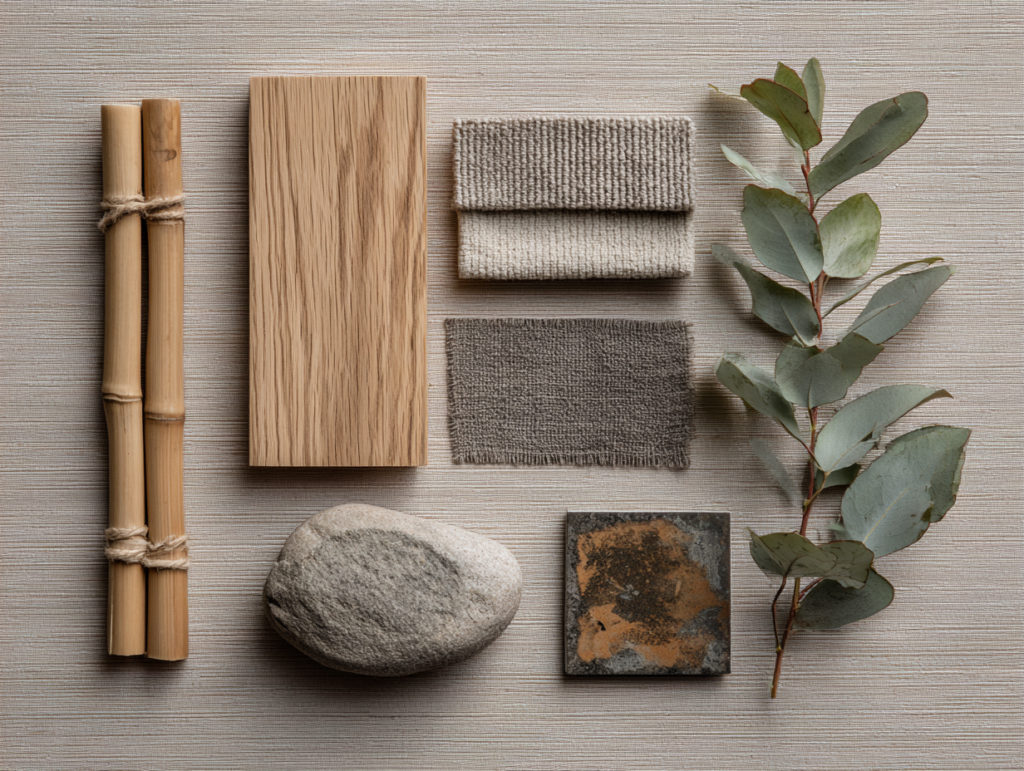
Textiles embrace natural fibers exclusively: linen for its beautiful wrinkles and breathability, cotton and hemp for their organic softness, wool for warmth and texture, and rice paper for traditional shoji-inspired screens that diffuse light beautifully. These materials share common traits—they’re renewable, biodegradable, improve with use, and carry subtle imperfections that reinforce wabi-sabi principles. The tactile pleasure of running hands over raw wood grain, smooth stone, or woven linen becomes part of the sensory experience Japandi cultivates, creating environments that engage all senses while maintaining visual tranquility.
Biophilic Elements: Bringing Nature Indoors
Japandi’s connection to nature extends beyond materials to incorporate living elements that blur boundaries between interior and exterior spaces. This biophilic approach recognizes humans’ innate need for contact with natural environments, supporting mental health by reducing stress, improving air quality, and creating restorative atmospheres.
Indoor plants serve as sculptural elements in Japandi interiors, chosen for structural form as much as greenery. Favorites include bonsai trees (miniature artworks representing Japanese horticultural tradition), fiddle-leaf figs and rubber plants (bold statement plants with architectural presence), snake plants and ZZ plants (low-maintenance verticals), ferns (soft, organic shapes), and potted trees like ficus that bring substantial natural presence. Plants appear in handcrafted ceramic vessels, rough stone planters, or woven baskets, never in plastic pots—the containers themselves become design objects honoring the living material they hold.
Natural light is zealously maximized. Large, unobstructed windows frame outdoor views, becoming “living artwork” that changes with seasons and weather. Scandinavian heritage particularly emphasizes this, born from countries where daylight is precious during winter months. Sheer curtains or bamboo blinds filter rather than block light, while mirrors strategically placed multiply illumination. When artificial lighting is necessary, it mimics natural sources through warm color temperatures, layered sources (pendant lights, floor lamps, table lamps, candles), and materials like rice paper or linen that diffuse rather than glare.
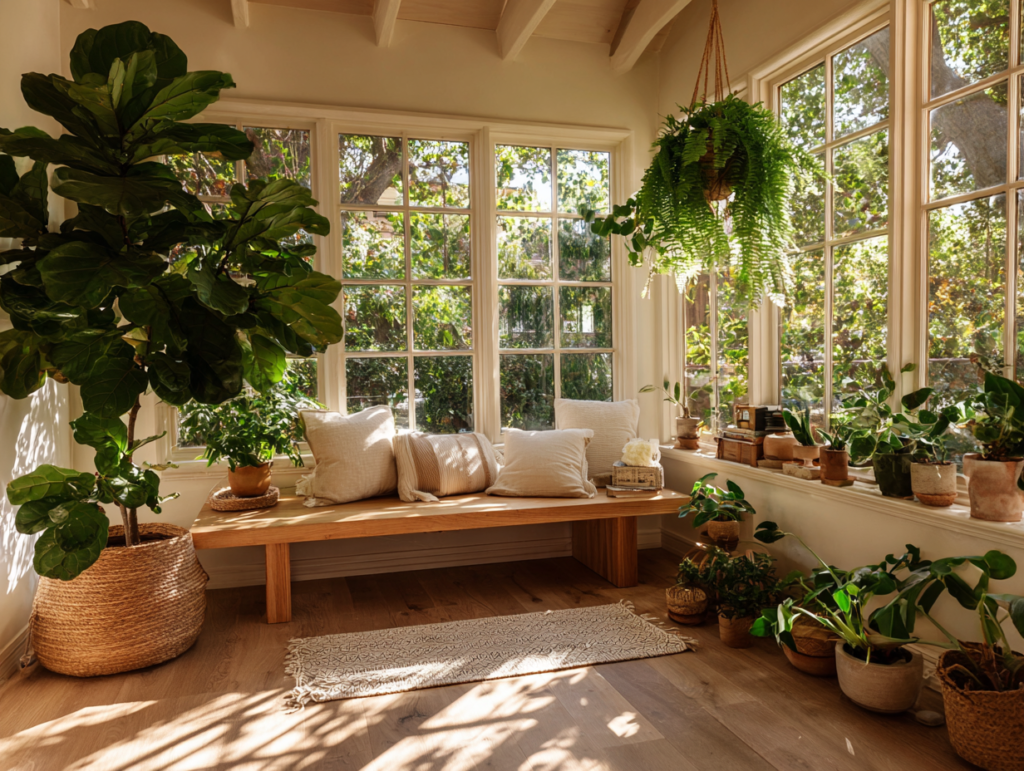
Organic shapes echo natural forms throughout furnishings and accessories—rounded edges on tables, river stones as decorative objects, curved pendant lights resembling seed pods, asymmetrical ceramic vessels. Even architectural elements can incorporate nature: exposed wooden beams, stone accent walls, or water features (a simple bamboo fountain, a shallow stone basin) that introduce soothing sounds alongside visual interest. The goal is creating a seamless continuum where nature doesn’t just influence design but actively participates in the living space.
Color Palettes: Muted Sophistication Inspired by Nature
Japandi’s color story whispers rather than shouts, drawing from earth and sky to create palettes that calm rather than stimulate. The foundation consists of neutral tones: soft whites and creams, warm beiges and taupes, gentle grays ranging from dove to charcoal, and natural blacks (never stark but slightly softened). These aren’t cold or sterile neutrals; they carry warmth through undertones—creams with hints of pink or yellow, grays with brown or blue bases, beiges that lean toward sand or mushroom.
Japanese influences introduce deeper, richer tones: clay and terracotta, chocolate brown, charcoal, and even black used as grounding accents rather than overwhelming expanses. Scandinavian contributions keep things lighter overall but allow for muted accent colors: sage and forest greens (echoing foliage), soft blues and dusty navy (reflecting sky and water), ochre and mustard (warm earth tones), and occasional rust or burnt orange (autumn leaves). These accents appear sparingly—a single cushion, a ceramic vase, a piece of artwork—providing visual interest without disrupting serenity.
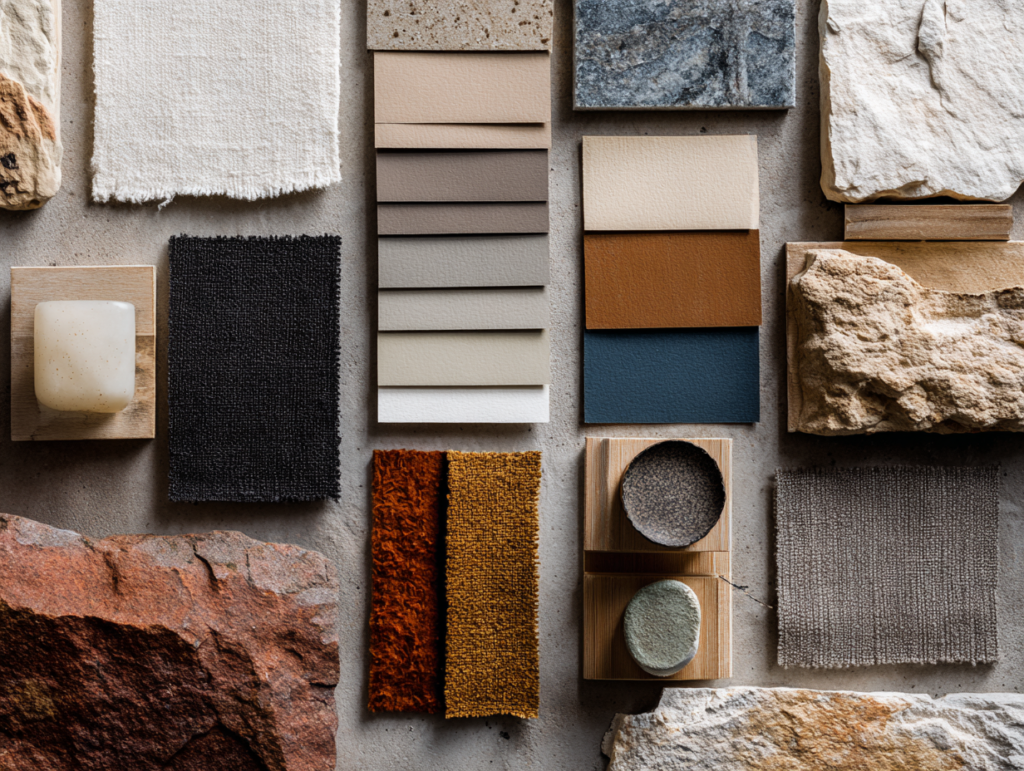
Japandi’s color story whispers rather than shouts, drawing from earth and sky to create palettes that calm rather than stimulate. The foundation consists of neutral tones: soft whites and creams, warm beiges and taupes, gentle grays ranging from dove to charcoal, and natural blacks (never stark but slightly softened). These aren’t cold or sterile neutrals; they carry warmth through undertones—creams with hints of pink or yellow, grays with brown or blue bases, beiges that lean toward sand or mushroom.
Japanese influences introduce deeper, richer tones: clay and terracotta, chocolate brown, charcoal, and even black used as grounding accents rather than overwhelming expanses. Scandinavian contributions keep things lighter overall but allow for muted accent colors: sage and forest greens (echoing foliage), soft blues and dusty navy (reflecting sky and water), ochre and mustard (warm earth tones), and occasional rust or burnt orange (autumn leaves). These accents appear sparingly—a single cushion, a ceramic vase, a piece of artwork—providing visual interest without disrupting serenity.
The key principle is nature-derived subtlety. Japandi rejects anything fluorescent, highly saturated, or artificially bright. Colors should feel as though they could exist in a sunrise, a forest clearing, or a stone riverbed. This restraint prevents visual overwhelm, allowing attention to rest on textures, forms, and the interplay of light and shadow rather than competing color statements. The result is timeless—Japandi palettes never feel dated because they reference timeless natural phenomena rather than fleeting color trends.
Wabi-Sabi Influences: Celebrating Imperfection and Authenticity
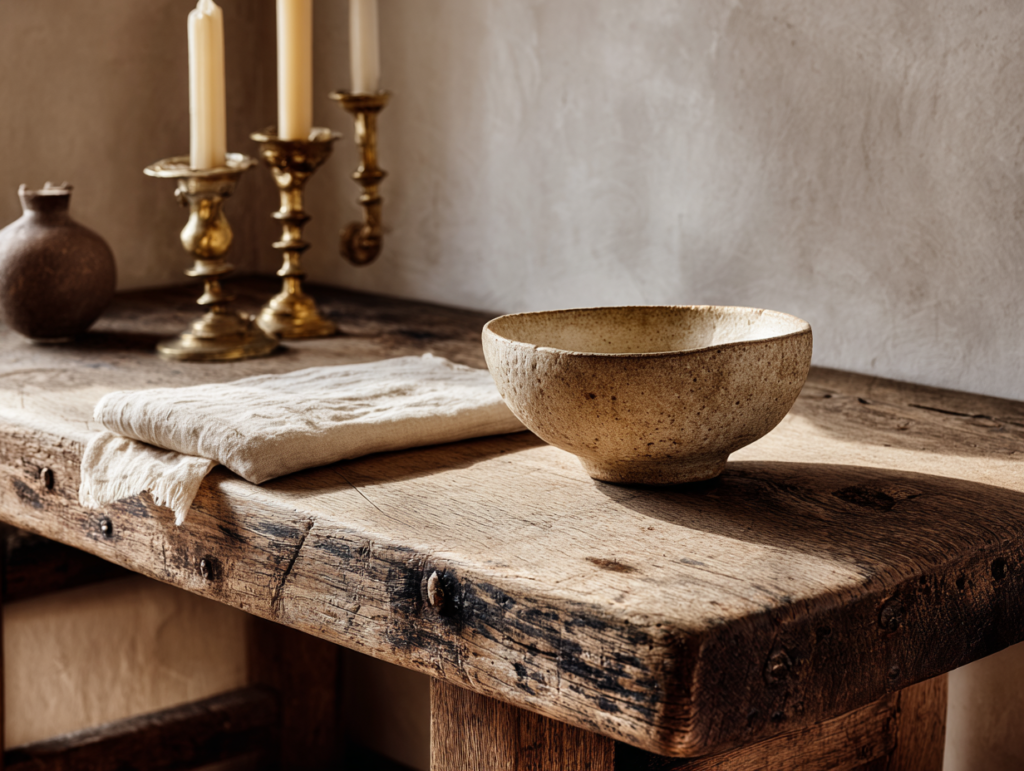
Perhaps Japandi’s most philosophically distinctive element, wabi-sabi transforms “flaws” into features and aging into enhancement. This aesthetic celebrates the beauty of imperfection: pottery with uneven edges or reactive glazes, textiles with natural slubs and variations, wood furniture showing knots and grain irregularities, walls with textured plaster or limewash rather than perfect paint. These aren’t defects to hide but character to highlight.
Handcrafted objects embody wabi-sabi’s values. Mass-produced items, no matter how well-designed, lack the subtle uniqueness that comes from human hands—the slight asymmetry of a hand-thrown bowl, the visible chisel marks on a wooden sculpture, the irregular stitching on embroidered textiles. Japandi spaces prioritize artisan goods, supporting local craftspeople while ensuring each object possesses individuality. The Japanese art of kintsugi (repairing broken pottery with gold lacquer) perfectly exemplifies this philosophy—rather than discarding damaged items, their breaks become honored history, literally golden veins of experience.
Aged patinas tell stories of time and use. A leather chair that’s developed a soft sheen from years of sitting, a wooden table marked by gentle scratches and water rings, vintage furniture showing honest wear—these aren’t signs of neglect but proof of life lived. Japandi design intentionally incorporates reclaimed wood, vintage pieces, and materials that evolve beautifully. This creates spaces that feel established and comfortable rather than showroom-pristine, environments where inhabitants can relax without fear of “ruining” perfection because imperfection is already welcomed and valued.
Furniture and Layout: Clean Lines with Functional Restraint
Japandi furniture strikes a balance between Japanese low-profile aesthetics and Scandinavian ergonomic comfort. Low-lying pieces create visual calm and spatial openness: platform beds close to the floor, low-slung sofas and lounge chairs, coffee tables at minimal height. This horizontal emphasis, deeply rooted in Japanese tradition, makes rooms feel larger and more grounded. However, unlike purely Japanese interiors where floor seating dominates, Scandinavian influences ensure adequate support and comfort—cushioned chairs, sofas with proper back support, beds high enough for aging bodies.
Clean, simple lines define forms, avoiding ornate carving, excessive curves, or decorative flourishes. A Japandi dining table is simply a beautiful plank of wood on elegant legs; a chair is a thoughtful composition of supportive structure without unnecessary embellishment. This minimalism highlights material quality and craftsmanship—when there’s no decoration to distract, the wood grain, joinery, and proportions must be excellent.
Multifunctional design maximizes utility: storage beds, expandable tables, modular seating that reconfigures for different occasions. Every piece earns its place through purpose, never just visual filler.
Layout and spatial flow embrace Japanese concepts of ma (negative space) and Scandinavian open-plan living. Rooms aren’t crammed with furniture but allow generous breathing room between pieces, clear pathways for movement, and empty corners that let eyes rest. Furniture floats in space rather than pushing against walls, creating dimensional interest. Sliding shoji-inspired panels or screens divide areas without building permanent walls, maintaining flexibility and openness. The goal is rooms that adapt to life’s needs while preserving tranquil spaciousness.
Textures and Patterns: Layered Subtlety
While Japandi’s visual restraint might suggest monotony, its masterful layering of textures creates rich sensory depth. Smooth plaster walls contrast with rough stone accents; glossy ceramics juxtapose matte wood finishes; soft wool throws drape over smooth leather seating; woven rattan lampshades filter light onto polished floors. This textural variety engages the eye and hand, providing visual interest without color chaos. Every surface invites touch, creating intimate relationships between inhabitants and their environment.
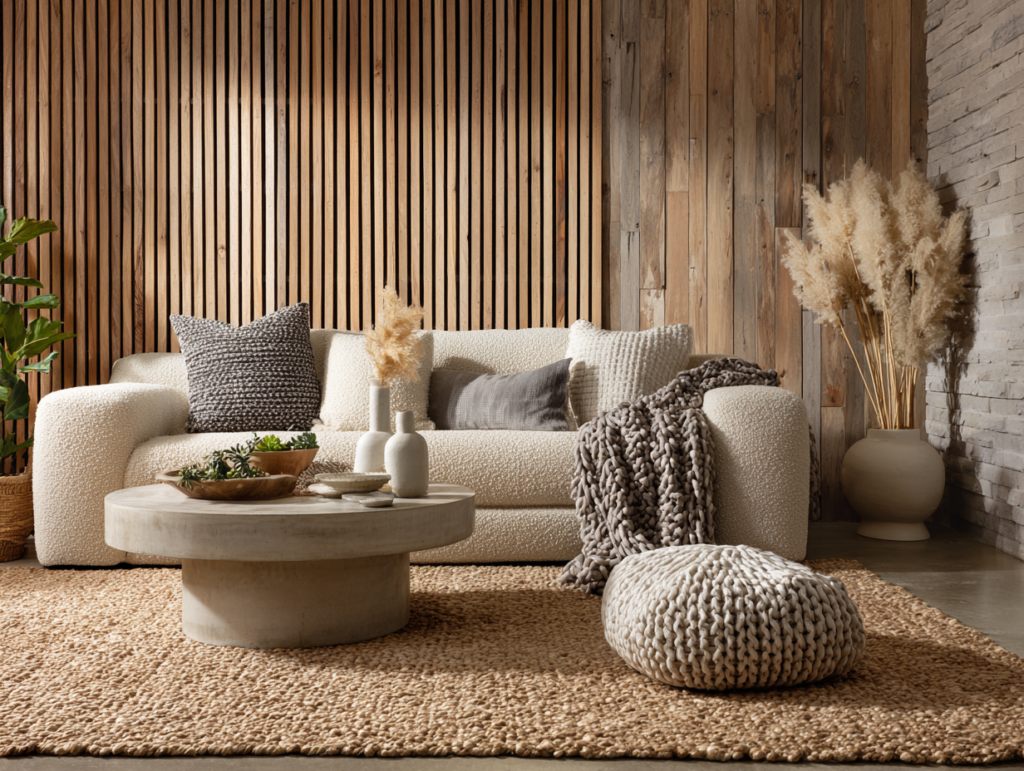
Patterns, when present, are equally restrained. Geometric simplicity dominates: subtle stripes, grid patterns, simple checks, or traditional Japanese motifs like waves, clouds, or botanical silhouettes rendered minimally. Scandinavian-inspired textiles might feature small-scale repeats in neutral tones. Patterns never compete for attention but provide gentle visual rhythm. Often, the natural “patterns” of wood grain, stone veining, or linen weave provide all the visual interest needed, reinforcing the connection to organic sources while maintaining Japandi’s essential calm.
Embracing Balance Through Cross-Cultural Harmony
Japandi design offers far more than aesthetic appeal—it presents a comprehensive approach to creating homes that actively support balanced, intentional lifestyles. By merging Japanese minimalism’s emphasis on simplicity, natural materials, and wabi-sabi’s embrace of imperfection with Scandinavian design’s focus on functionality, comfort, and hygge’s cozy warmth, this style achieves what neither tradition could alone: spaces that feel both refined and nurturing, minimal yet abundant, serene yet alive.
The enduring relevance of Japandi lies in its philosophical depth. It challenges our culture’s obsession with perfection, inviting us instead to appreciate authenticity and transience. It counters consumerism’s excess by promoting mindful curation and sustainable choices. It addresses modern stress by creating environments that calm rather than stimulate. In essence, Japandi design becomes a daily practice of intentional living—every interaction with handcrafted objects, natural materials, and thoughtfully arranged spaces reinforces values of quality, sustainability, and presence.
As you explore Japandi style, consider how it complements other warm minimalist approaches featured on warmminimalism.com. Scandinavian design shares Japandi’s Nordic roots, offering additional insights into hygge principles and light-maximizing strategies. Organic Modern similarly celebrates natural materials and biophilic elements while allowing slightly more contemporary edge. Modern Mediterranean brings warm earth tones and textural richness that align beautifully with Japandi’s material palette. Rustic Modern honors aged patinas and reclaimed materials, echoing wabi-sabi’s appreciation for weathered beauty. Desert Modern embraces neutral tones and minimal ornamentation while connecting to arid landscapes.
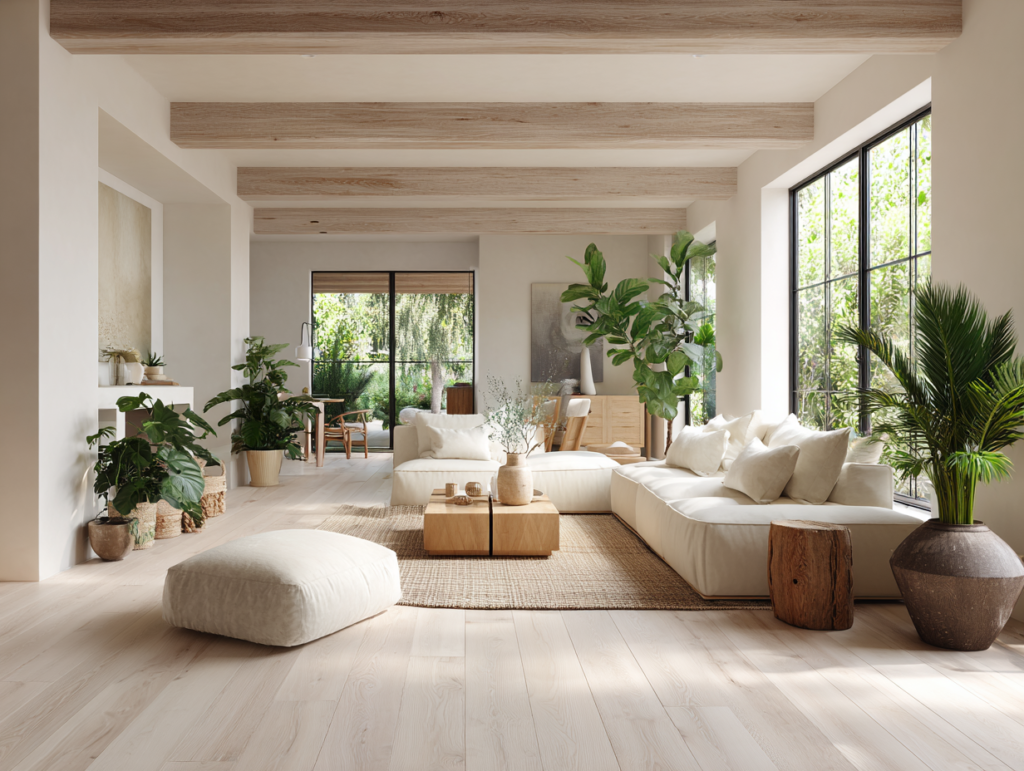
Each style offers unique perspectives on achieving warm minimalism and intentional living, yet they share fundamental values: respect for natural materials, commitment to sustainability, appreciation for craftsmanship, and dedication to creating homes that nurture rather than drain. By understanding these connections, you can thoughtfully blend elements across styles, crafting a personalized aesthetic that honors your specific needs, climate, and cultural context while maintaining the serene, grounded quality that defines warm minimalist living.
Whether you’re drawn to Japandi’s specific fusion or exploring the broader landscape of mindful design, the essential message remains: our homes profoundly shape our daily experience, influencing mood, relationships, creativity, and well-being. By approaching interior design as a practice of intentionality—choosing each element with care, prioritizing quality and meaning, connecting to nature, and embracing imperfection—we create not just beautiful spaces but supportive environments for living with purpose, peace, and contentment. Welcome to Japandi, where East meets West, and minimalism finds its warmest expression.
Ready to begin your Japandi journey? Explore these complementary styles on warmminimalism.com, join our newsletter for design inspiration and sustainable living tips, or share your own Japandi space in our community gallery. Your home is waiting to become the sanctuary you deserve.
Join the Circle of Warmth
Sign up for the Warm By Design newsletter on warm, intentional living.