
Organic Modern
Nature-Inspired Elegance in Warm Minimalism and Intentional Living
In an era where our lives have become increasingly disconnected from the natural world, Organic Modern design emerges as a compelling response—a design philosophy that doesn’t just bring nature indoors but weaves it into the very fabric of our living spaces. This sophisticated aesthetic represents the elegant fusion of organic, nature-inspired forms with modern minimalism’s clean structure, creating environments that feel simultaneously grounded and serene, alive yet uncluttered.
At its heart, Organic Modern is about fluidity and authenticity. Picture curved wooden furniture that mimics the gentle roll of hillsides, natural stone surfaces reminiscent of riverbeds, and abundant greenery that breathes life into neutral-toned spaces. This style celebrates the imperfect beauty of raw materials—the unique grain of walnut wood, the textured surface of handmade ceramics, the irregular patterns of natural fibers—while maintaining the crisp lines and intentional simplicity that define modern design.
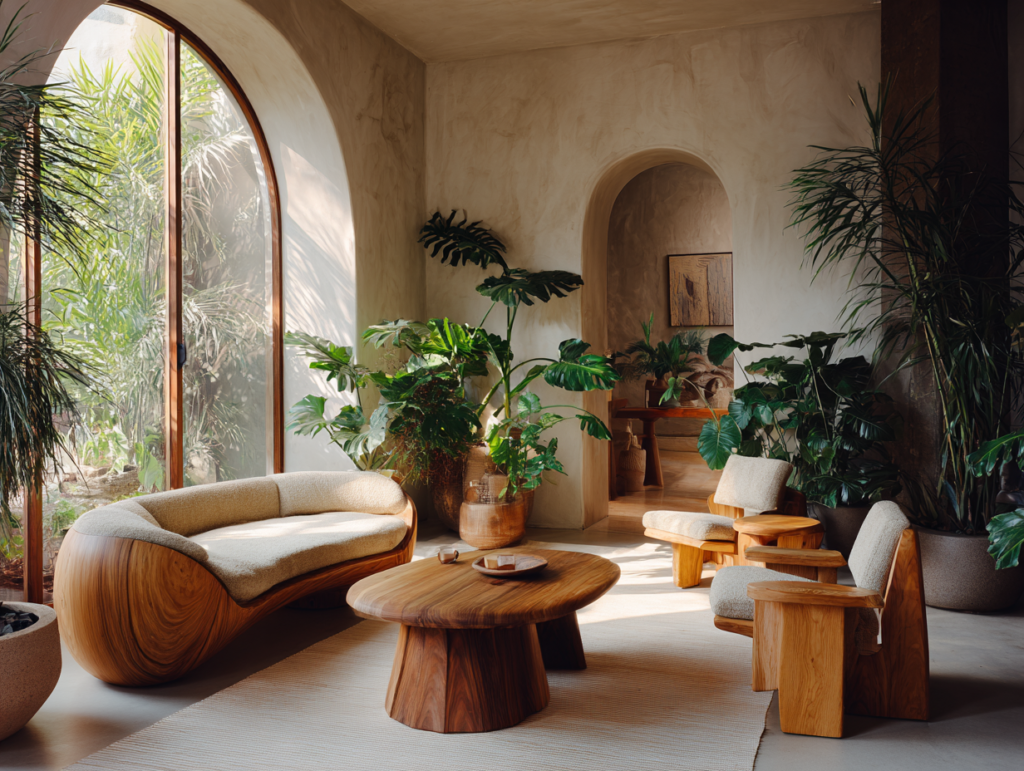
The origins of Organic Modern trace back to the mid-20th century, particularly the landmark 1941 MoMA exhibition “Organic Design in Home Furnishings,” which explored the tension between handcrafted, nature-inspired pieces and mass production. This foundational moment established a central tenet: respect for natural materials and their inherent characteristics. As environmental consciousness grew through the latter half of the century, the movement evolved, incorporating sustainability principles and biophilic design concepts that recognize our innate need to connect with nature.
Today, Organic Modern is experiencing a renaissance, and its popularity is no accident. In our digitally saturated, fast-paced world, people are craving spaces that offer respite—environments that promote well-being, reduce stress, and foster genuine connection. This style resonates deeply because it addresses these needs while remaining relevant to contemporary aesthetics. It’s not merely about following a trend; it’s about creating homes that nurture both body and spirit.
For those embracing warm minimalism, Organic Modern offers the perfect framework. It takes minimalism’s decluttered foundation and infuses it with warmth through natural textures, earthy color palettes, and tactile materials that invite touch. The result? Spaces that feel cozy and grounded rather than stark and cold—homes that embrace simplicity without sacrificing comfort or soul.
Equally important is how Organic Modern embodies intentional living. Every element serves a purpose: furniture is chosen for both function and its connection to nature, materials are selected with environmental impact in mind, and spaces are designed to promote mindfulness and well-being. This approach encourages us to slow down, make conscious choices, and create environments that align with our values—whether that’s sustainability, health, or simply living more harmoniously with the natural world.
Key Elements of Organic Modern Design
Materials: The Foundation of Authenticity
Material selection lies at the heart of Organic Modern design, with a strong emphasis on sustainable, natural options that bring both environmental consciousness and tactile richness to spaces.
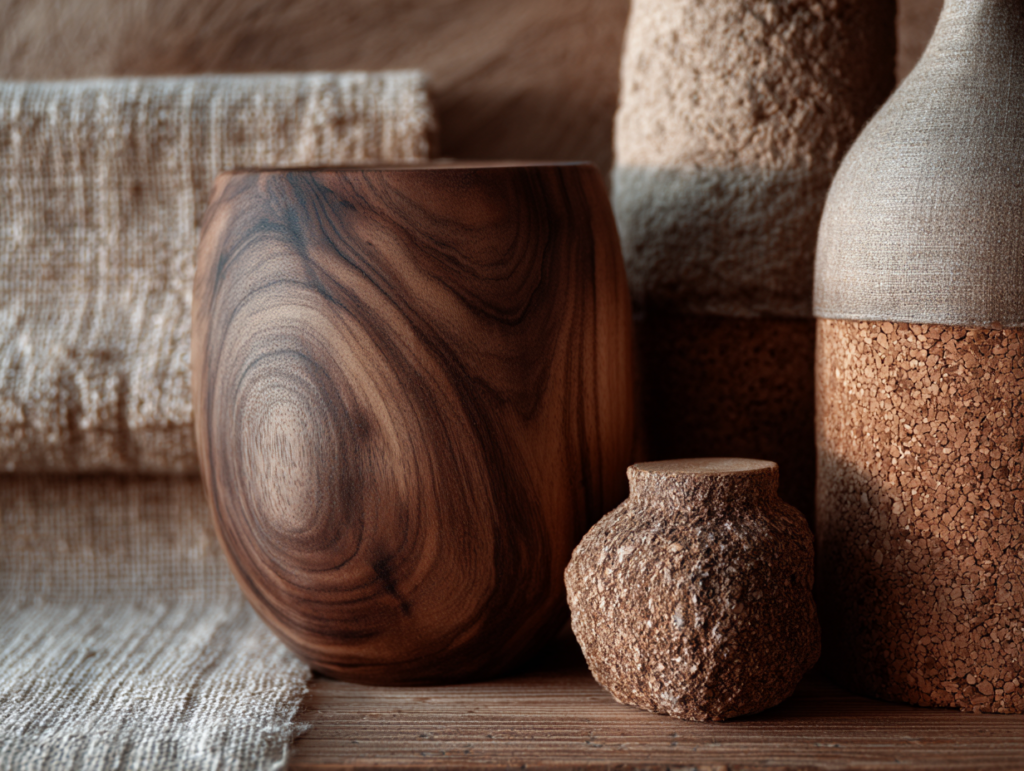
Wood serves as the cornerstone material, particularly in its raw, less-processed forms. Species like walnut, teak, oak, and ash are favored for their distinctive grains and warm tones. Live-edge pieces—where the natural contour of the tree is preserved—exemplify the Organic Modern philosophy, celebrating nature’s imperfect beauty. Reclaimed wood brings added sustainability and character, with its weathered patina telling stories of previous lives.
Stone and minerals ground spaces with their primordial presence. Marble, travertine, slate, and terrazzo bring nature’s artistry indoors through their unique veining and color variations. These materials work particularly well in kitchens and bathrooms but can be incorporated throughout homes via coffee tables, fireplace surrounds, or decorative accents.
Organic fabrics are essential for textiles, with cotton, linen, hemp, and wool leading the way. These natural fibers are breathable, biodegradable, and often produced with lower environmental impact than synthetics. Linen, in particular, has become synonymous with Organic Modern—its subtle texture and natural wrinkles embody the style’s embrace of imperfection. For those seeking certifications, look for GOTS (Global Organic Textile Standard) or OEKO-TEX labels.
Cork, bamboo, and rattan offer sustainable alternatives with unique aesthetic qualities. Cork provides natural warmth underfoot and excellent acoustic properties. Bamboo grows rapidly without depleting resources, making it ideal for furniture and flooring. Rattan and cane bring texture and a handcrafted quality that feels both timeless and contemporary.
Artisanal ceramics and handmade pieces add soul to Organic Modern spaces. Pottery with visible throwing marks, hand-carved wooden bowls, and woven baskets celebrate craftsmanship and the human touch—elements often lost in mass production. These pieces also support maker communities and small-batch production.
When selecting materials, prioritize those that are recycled, reclaimed, or rapidly renewable. Consider the full lifecycle: Can it be composted or recycled at end of life? Was it produced locally, reducing transportation emissions? Does it off-gas harmful VOCs? These questions ensure your material choices align with intentional, sustainable living principles.
Biophilic Elements: Bringing Nature Indoors
Biophilic design—the integration of nature into built environments—is central to Organic Modern. Research consistently demonstrates that exposure to natural elements reduces stress, improves cognitive function, enhances mood, and even accelerates healing.
[Image: A green wall installation with various plant species, natural light streaming through large windows, and water feature in an organic modern interior]
Live plants are non-negotiable in Organic Modern spaces. From large statement plants like fiddle leaf figs and monsteras to smaller succulents and trailing pothos, greenery adds vitality, improves air quality, and creates visual connections to the outdoors. Consider varying heights, textures, and leaf shapes for maximum impact. Green walls or vertical gardens take this concept further, transforming entire surfaces into living, breathing focal points.
Natural light maximization is perhaps the most impactful biophilic intervention. Exposure to natural light regulates circadian rhythms, reduces depression and anxiety, and enhances overall well-being. Expansive windows, skylights, glass doors, and strategic mirror placement all increase light penetration. When artificial lighting is necessary, choose fixtures that mimic natural light’s color temperature and quality.
Water elements engage our auditory senses and add humidity to dry interior environments. Small tabletop fountains, wall-mounted water features, or even aquariums create soothing soundscapes reminiscent of streams or rainfall. The presence of water has been linked to increased feelings of tranquility and lower stress levels.
Textured surfaces that mimic landscapes provide indirect connections to nature. Think plaster walls with subtle imperfections echoing cliff faces, stone accent walls suggesting canyon stratum, or wood paneling reminiscent of forest groves. These analogues trigger the same psychological responses as direct nature contact, according to biophilic design principles.
Views and visual connections to outdoor spaces blur boundaries between inside and out. Frame garden views through strategically placed windows, create sight lines to patios or balconies, or position seating to maximize outdoor vistas. Even in urban settings, views of street trees or distant parks provide meaningful nature connections.
Color Palettes: Nature’s Nuanced Neutrals
The Organic Modern color palette draws directly from the natural world, favoring muted, sophisticated tones that promote tranquility and balance.
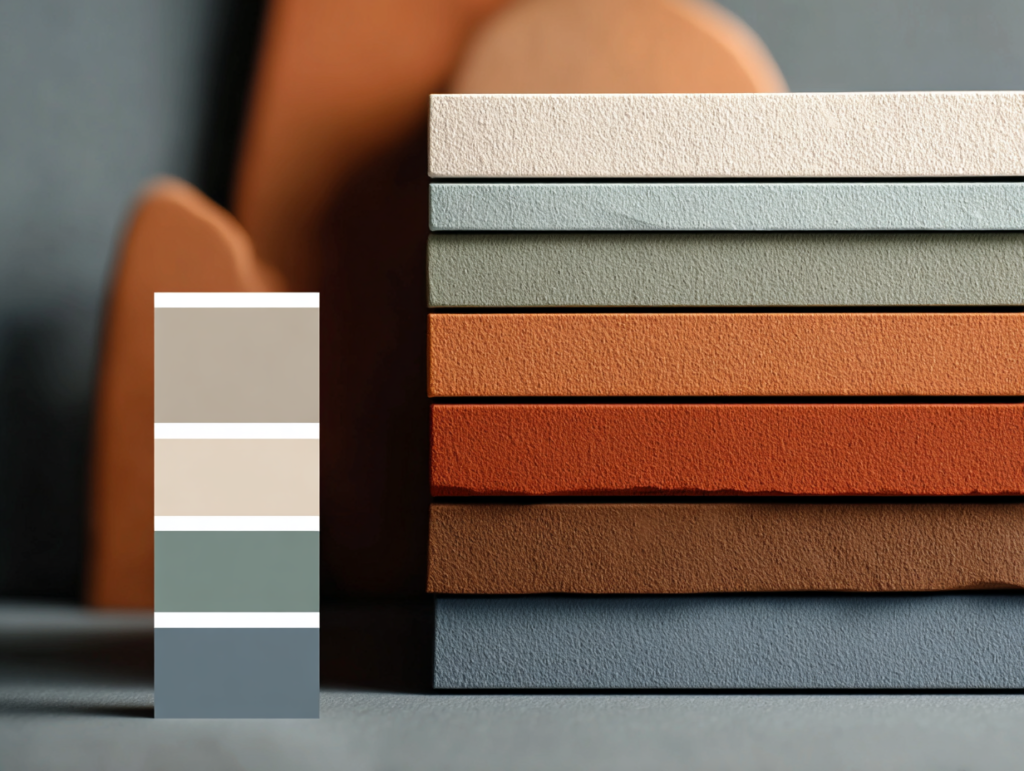
The foundation consists of warm neutrals—creamy whites, beiges, taupes, and grays with warm undertones. These create airy, spacious feelings while avoiding the coldness of stark white or cool gray. Think “Even Better Beige,” “Blank Canvas,” or “Nutshell” tones that evoke sand, stone, and natural plaster.
Earthy greens ranging from soft sage to deeper olive bring freshness and vitality. These shades reference foliage, moss, and meadows, providing calming yet invigorating accents. Pair with wood tones for organic richness or with lighter neutrals for subtle sophistication. Terracotta, rust, and burnt orange add warmth and depth without overwhelming. These clay-inspired hues work beautifully as accent colors—in throw pillows, ceramics, or art—injecting personality while maintaining the overall calm aesthetic. They’re particularly effective in spaces that receive abundant natural light.
Muted blues and dusty pinks can be incorporated sparingly for softer, more nuanced palettes. These tones reference twilight skies, desert sunsets, and flower petals, adding gentle color interest while preserving the nature-connected feel.
Blacks and deep charcoals serve as grounding agents, providing contrast and definition. Use these darker tones in furniture legs, light fixtures, or accent pieces to anchor lighter palettes and create visual hierarchy.
The key is layering these colors thoughtfully. Start with a neutral base on walls and large surfaces, introduce mid-tones through furniture and textiles, and add depth with darker or more saturated accents. Avoid overly bright or synthetic-looking colors—the palette should feel as though it could exist in nature.
Furniture and Layout: Form Follows Nature
Organic Modern furniture strikes a delicate balance between sculptural beauty and functional simplicity, with curved lines and organic shapes taking center stage.
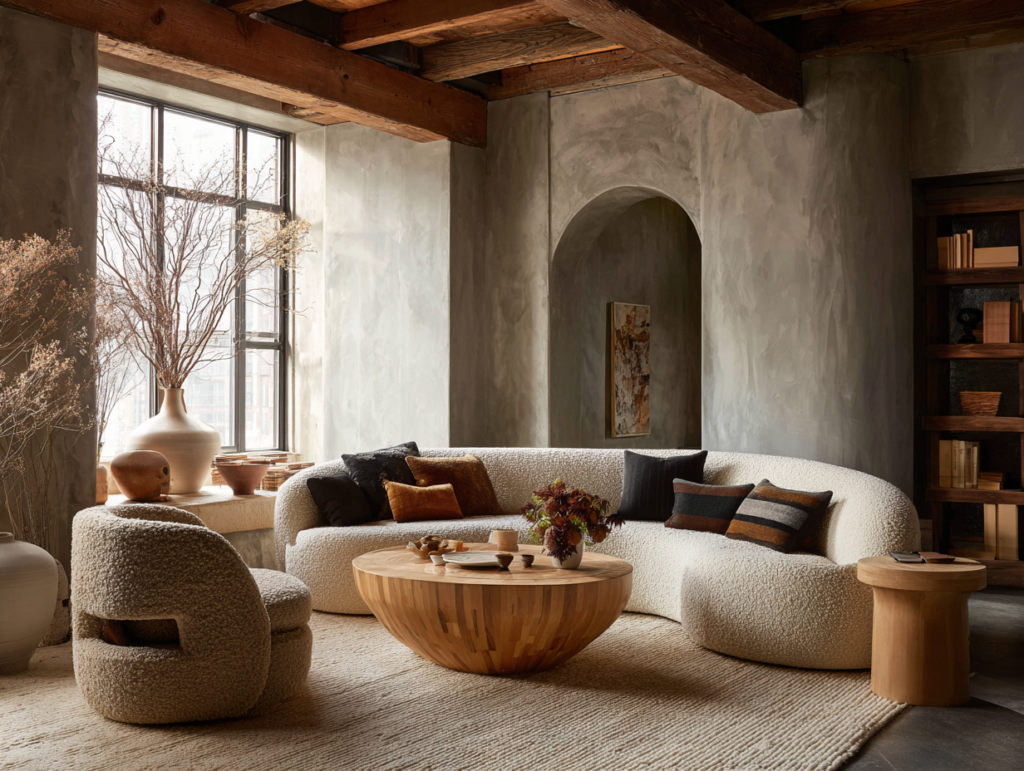
Curvilinear forms are the hallmark of Organic Modern seating. Sofas with rounded backs and arms, kidney-shaped chairs, and circular ottomans all introduce softness that contrasts beautifully with architectural straight lines. These pieces aren’t just aesthetically pleasing—research shows curved furniture enhances comfort by cradling the body and creates psychological safety through the absence of sharp edges.
Sculptural tables serve as functional art. Coffee tables with organic pedestal bases, dining tables with live edges, and side tables featuring asymmetrical tops all celebrate natural forms. Materials like carved wood, smooth stone, or molded plywood showcase both craftsmanship and nature’s irregularity.
Open, flowing layouts prevent spaces from feeling cluttered or cramped. Organic Modern embraces negative space—the empty areas between furniture—as essential to design. This approach allows each piece to breathe and creates natural pathways that guide movement through rooms. Arrange furniture to facilitate conversation and connection while maintaining openness.
Multi-functional pieces align with intentional living principles. Benches with storage, nesting tables, and ottomans that convert to seating all maximize utility while minimizing excess. This efficiency reduces consumption and keeps spaces uncluttered.
Low-profile furniture can create intimate, grounded atmospheres. Platform beds, low sofas, and floor cushions encourage relaxation and draw the eye horizontally, making rooms feel more expansive.
When selecting furniture, prioritize quality over quantity. A few well-chosen, beautifully crafted pieces will serve you better—both aesthetically and practically—than numerous mediocre items. Look for timeless designs that won’t feel dated, and consider the longevity of construction and materials.
Textures and Patterns: Subtle Complexity
Layering textures prevents Organic Modern spaces from feeling flat or monotonous, adding depth and visual interest while maintaining the style’s inherent calm.
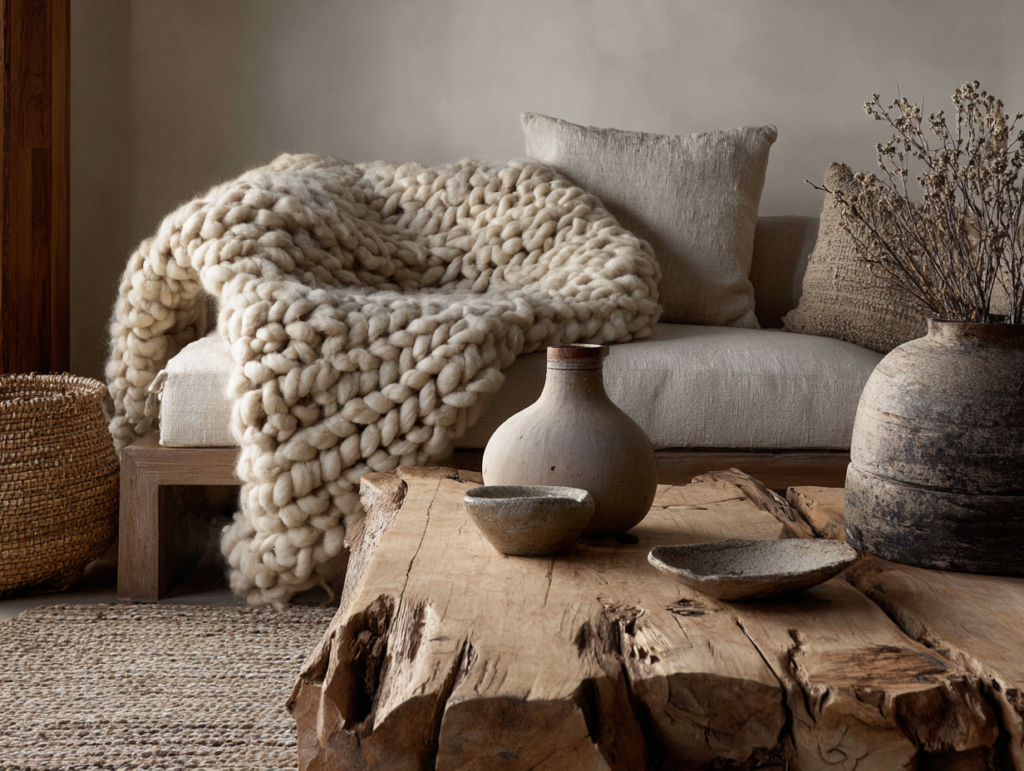
Varied wood textures create richness through contrast. Combine smooth, finished surfaces with rough-hewn or wire-brushed pieces. Mix wood species—perhaps walnut shelving with oak flooring and teak accents—to add subtle color and grain variations.
Woven elements bring artisanal texture. Jute rugs, rattan light fixtures, wicker baskets, and macramé wall hangings all add handcrafted warmth. These pieces also reference traditional crafts, connecting us to human making traditions.
Soft textiles in natural fibers invite touch and add coziness. Layer linen curtains with cotton cushions, wool throws, and perhaps a sheepskin rug. The key is mixing smooth and nubby, lightweight and chunky, to create tactile diversity.
Stone and ceramic textures provide contrast to softer elements. Smooth marble countertops, rough travertine side tables, glazed pottery, and matte terracotta all bring mineral qualities that ground spaces.
Organic patterns, when used, should be subtle and nature-inspired. Think abstract representations of leaves, soft geometric patterns reminiscent of honeycomb or tree rings, or the natural variations in materials like terrazzo or wood grain. Avoid busy, synthetic-looking prints that disrupt the calm aesthetic.
The art of texture layering lies in restraint. Add enough variety to create interest but not so much that the space feels chaotic. Each texture should complement others, creating a cohesive whole that engages the senses without overwhelming them.
Your home is your sanctuary—a place that should restore and inspire you daily. By embracing Organic Modern principles, you’re not just creating a beautiful space; you’re cultivating an environment that honors nature, promotes well-being, and reflects your commitment to intentional, sustainable living. Welcome to a design philosophy where every curve, every texture, and every carefully chosen piece tells a story of connection, authenticity, and respect for the natural world that sustains us all.
Ready to bring Organic Modern serenity into your life? Explore complementary design styles on warmminimalism.com, join our newsletter for sustainable living tips and design inspiration, or share your own Organic Modern space in our community gallery. Your home can become the peaceful, sun-kissed sanctuary you deserve—one intentional choice at a time.
Join the Circle of Warmth
Sign up for the Warm By Design newsletter on warm, intentional living.