Desert Modern Style
Desert Modern Style: Where Light and Landscape Lead
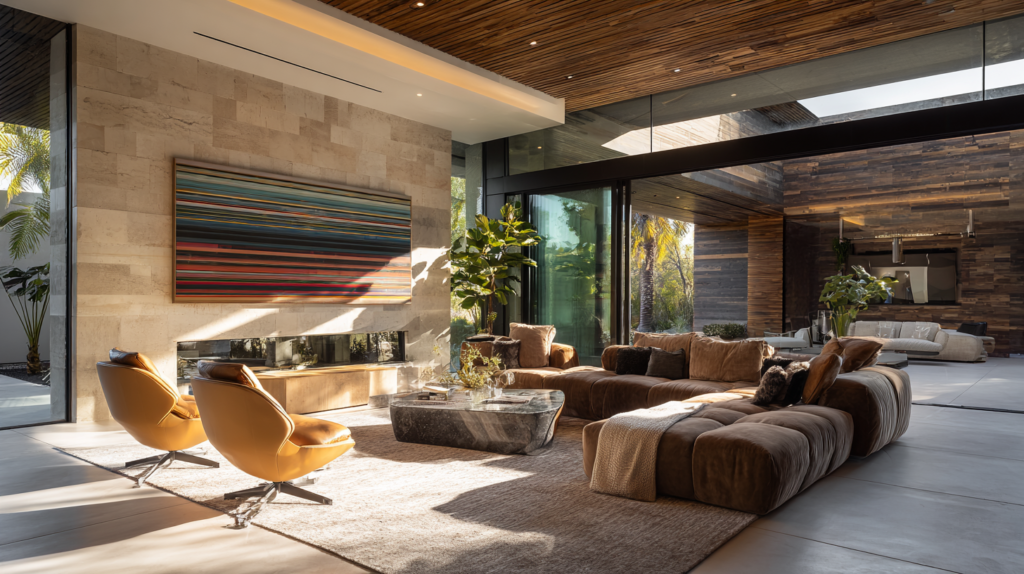
Desert Modern style is shaped by openness.
It is a style born from vast horizons, warm earth tones, and architecture that responds to sun rather than spectacle.
At its best, it feels both grounded and expansive — a quiet balance between shelter and sky.
Where some interiors try to contain attention, Desert Modern allows it to wander.
Walls soften into light.
Colors echo the land.
Materials feel sun-warmed rather than polished.
There is a stillness to it.
Not empty.
Just unhurried.
And in that stillness, many people find something rare:
Mental spaciousness.
Where Desert Modern Style Comes From
Desert Modern draws inspiration from mid-century architecture in arid regions — especially Palm Springs California, the American Southwest and parts of Mexico — where homes were designed in conversation with climate and terrain.
Large panes of glass blurred the boundary between indoors and outdoors.
Flat planes and geometric forms responded to strong sunlight.
Materials like stucco, concrete, stone, and warm wood reflected the environment rather than competing with it.
Over time, designers refined the aesthetic — simplifying ornamentation and allowing light, shadow, and texture to become the primary visual language.
The result is a style that feels architectural yet deeply connected to nature.
It is modernism softened by landscape.
The Core Elements That Make Desert Modern Style Feel Like Home
Desert Modern is not flashy.
It is elemental.
It works through restraint, warmth, and openness.
Sun-Warmed Neutral Palettes
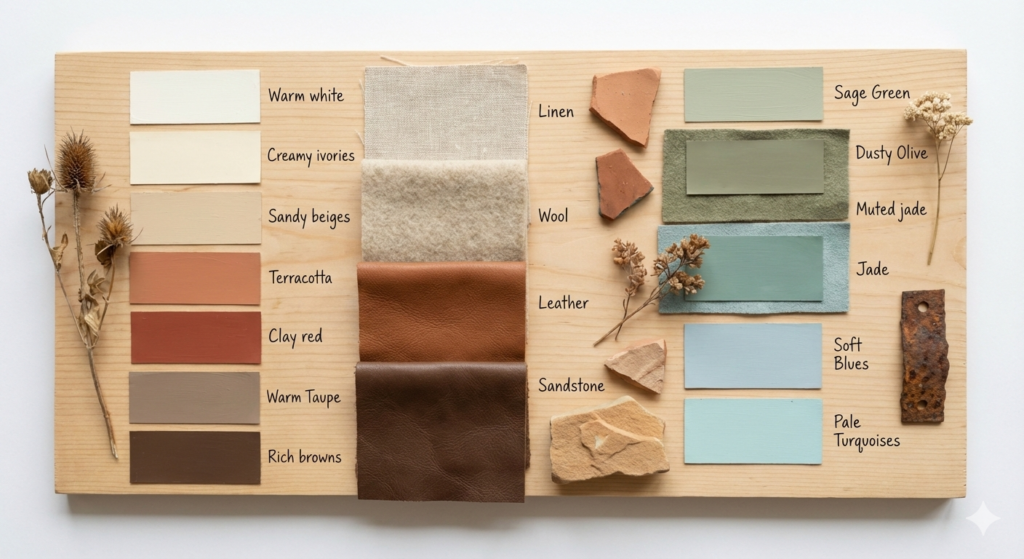
Think:
- sandy beige
- warm white
- clay
- soft rust
- muted ochre
- dusty sage
These colors feel drawn from terrain rather than trend.
They create visual continuity — and continuity creates calm.
Textural, Earth-Based Materials
Plaster walls.
Concrete floors.
Stone accents.
Raw wood.
Woven fibers.
These materials absorb light differently throughout the day — making the room feel alive without adding visual noise.
Texture replaces decoration.
And that simplicity feels intentional.
Strong, Clean Architectural Lines
Desert Modern often features bold geometry:
Horizontal lines.
Rectangular forms.
Open layouts.
But these lines are softened by light and material.
The effect is structured — yet never cold.
Minimal Styling With Sculptural Presence
Instead of many small objects, Desert Modern favors fewer, larger forms.
A sculptural chair.
A substantial table.
A single ceramic vessel.
This creates visual rest.
The eye settles.
The room feels composed.
Desert Modern Through the Lens of Warm Minimalism
Warm Minimalism is about creating homes that support emotional clarity.
Desert Modern does this through spaciousness.
Where some styles comfort through layering, Desert Modern comforts through openness.
It teaches that not every surface needs filling.
Not every corner needs styling.
Light can be enough.
Air can be enough.
Space itself can be a design element.
Through this lens, Desert Modern becomes less about aesthetic and more about psychological relief.
It offers room to think.
Room to breathe.
Room to simply be.
How to Bring Desert Modern Style Into Your Home
You don’t need panoramic views to begin introducing this atmosphere.
Often, it starts with subtraction rather than addition.
Simplify Surfaces
Clear visual clutter from countertops and shelves.
Let architecture speak first.
Choose One Textural Material
A plaster finish.
A stone bowl.
A woven rug.
Material depth creates warmth without excess.
Scale Up, Not Out
Instead of many small accessories, choose one sculptural piece.
Presence feels calmer than accumulation.
Embrace Warm Neutrals
If your space leans gray or cool, shift toward earth-based tones.
The temperature of color changes the entire emotional experience of a room.
Allow Space to Exist
Resist filling empty areas immediately.
Sometimes the calm you’re looking for is already there — hidden beneath visual noise.
Why People Are Drawn to Desert Modern Style
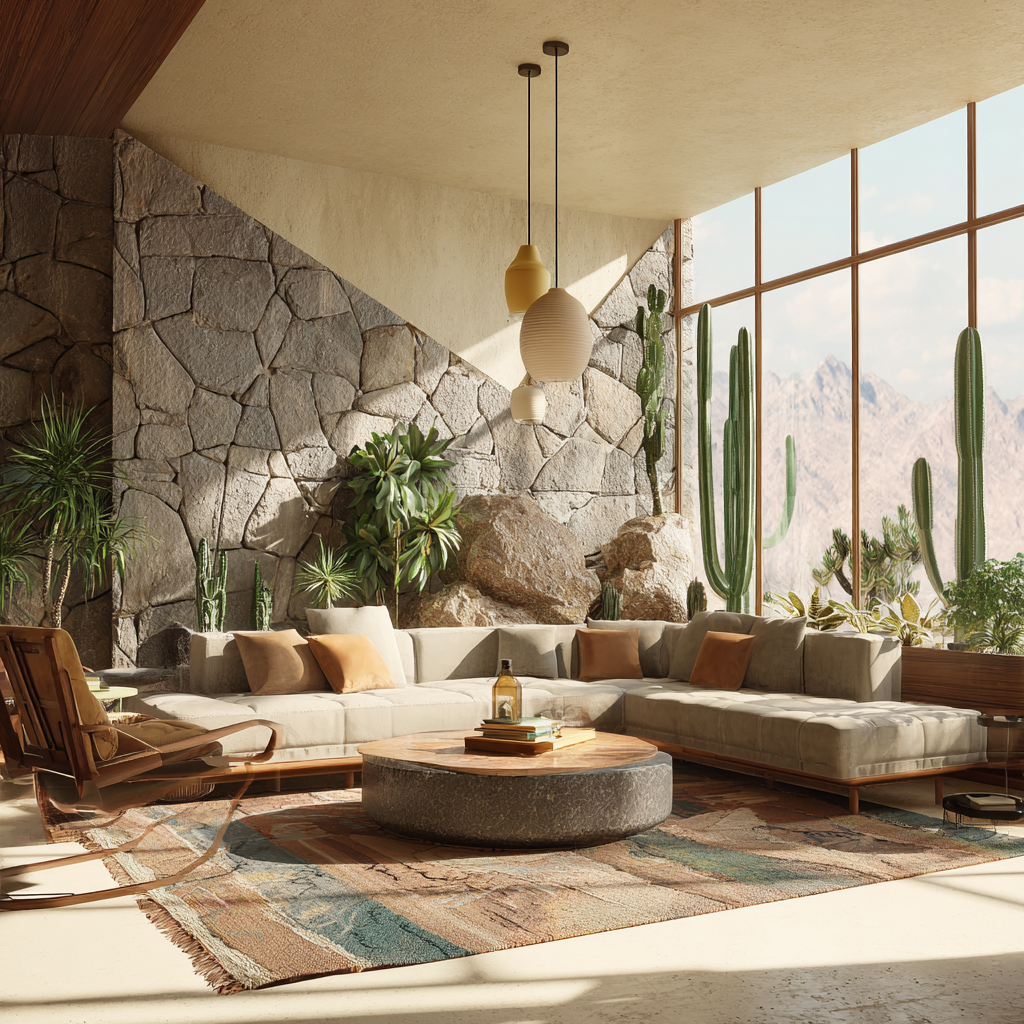
Many are drawn to this style during seasons when life feels overstimulated.
Desert Modern offers contrast.
It feels:
- spacious
- grounded
- architecturally strong
- quietly dramatic
- emotionally clarifying
It doesn’t demand attention.
It commands calm.
And in a culture of constant input, that clarity feels almost luxurious.
Common Questions
Is Desert Modern too stark?
Not when balanced with warm tones and natural materials.
Can it work in colder climates?
Yes — especially when warmth is layered through texture and lighting.
Does it require large spaces?
No. Even small rooms can benefit from simplified styling and earth-based palettes.
Is it the same as minimalism?
It shares restraint — but Desert Modern emphasizes warmth, land, and light rather than strict reduction.
Want to Explore Further?
If the spacious calm of Desert Modern resonates with you, you may also enjoy:
- Modern Mediterranean — for warmth shaped by light and relaxed elegance.
- Scandinavian Design — where clarity and brightness create a sense of ease.
- Japandi — for grounded serenity expressed through thoughtful restraint.
Together, these styles explore different dimensions of openness — from architectural stillness to light-filled comfort.
A Quiet Guiding Thought
Desert Modern reminds us that spaciousness is not emptiness.
It is possibility.
When we allow light to move freely through a room…
we often allow it to move more freely through ourselves as well.
And sometimes, that openness is exactly what we’ve been craving.
Ready to begin your Desert Modern journey? Explore our other style guides on warmminimalism.com, join our newsletter for design inspiration and tips, or share your own Desert Modern space in our community gallery. Your home is waiting to become the sanctuary you deserve.
Join the Circle of Warmth
A quiet letter on warm, intentional living — delivered occasionally.