Ma: The Beauty of Negative Space 間
On the wisdom of emptiness, and the spaces that let us breathe.
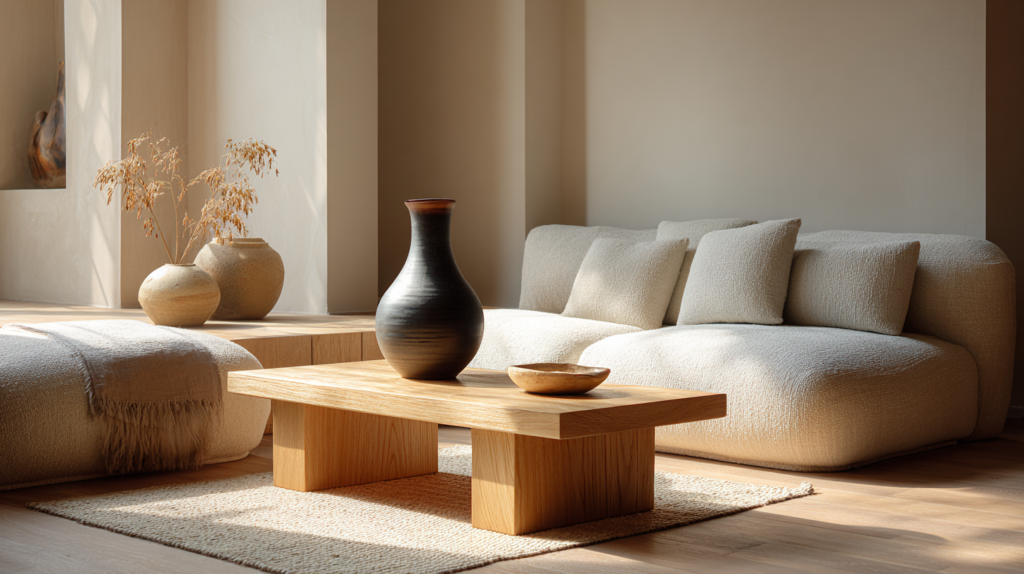
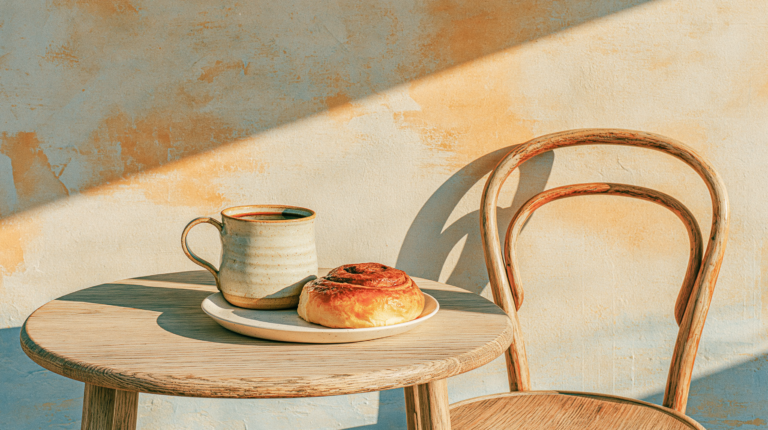
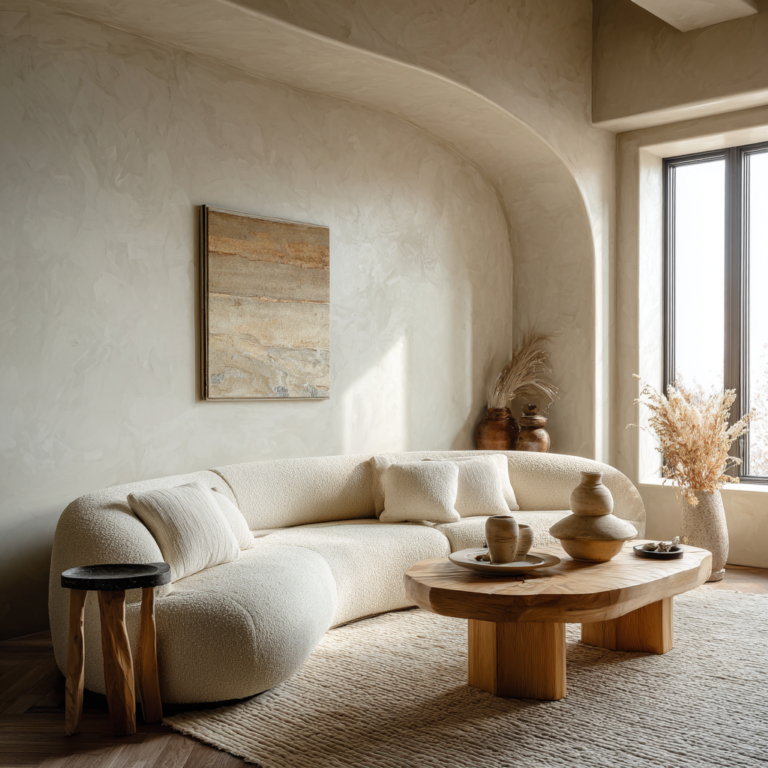
Imagine a room with very little in it. A low table of pale oak, its grain running quietly from one end to the other. A single window, uncurtained, letting the morning come in at its own pace. One dried stem in a narrow vessel on the floor. Nothing on the walls. And yet — the room is not empty in the way a forgotten room is empty. It is alive. Something is present in the spaciousness itself: a quality of attention, of care, of intention. The emptiness has been chosen.
Most of us have felt this, even if we have not had words for it. A room that breathes. A shelf with one thing on it that feels more complete than a shelf crowded with ten. A pause in a conversation that carries more meaning than the words on either side of it. In Japanese, there is a word for precisely this — for the kind of emptiness that is not absence but presence, not lack but gift.
That word is ma (間). And it may be one of the most quietly important concepts you will encounter in thinking about how to live well at home.
The History of Ma
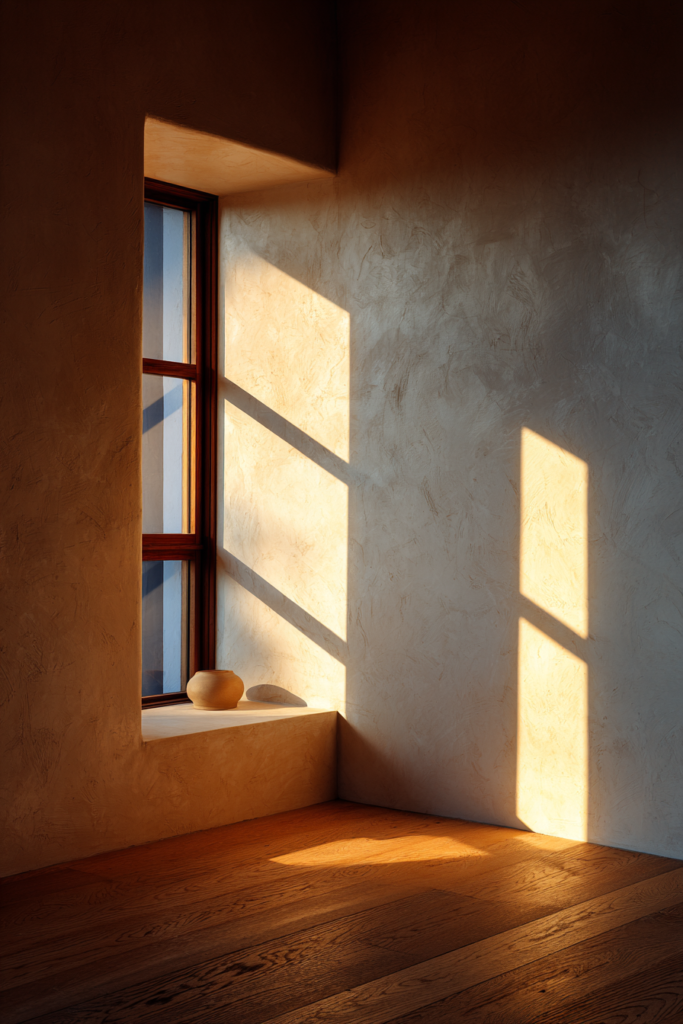
Ma does not translate neatly. The character itself — 間 — shows moonlight filtering through the gap between two door panels. It is a word that has always lived at the edge of what language can hold: it means interval, gap, pause, space, timing, room, and something more than all of these. It names the quality of a threshold, the breath between notes in music, the silence that makes a sentence land.
Its roots run deep into Japanese culture, woven through architecture, music, theater, poetry, and the martial arts. In traditional Japanese architecture, ma referred literally to the rooms of a house — the spatial intervals between structural elements, the proportional relationships that gave a building its quality of feeling. A room was not simply a container; it was a relationship between its boundaries and the space they held.
In Noh theater, ma describes the charged pauses between movements — moments of stillness so laden with meaning that audiences often experience them as the most powerful
passages in a performance. In Japanese music, the space between notes is considered as compositionally significant as the notes themselves. In ikebana — the art of flower arrangement — what is not placed is as deliberate as what is.
In the martial arts, ma-ai (間合い) names the critical distance between two practitioners — the interval that determines whether a movement is possible, too early, or too late. It is spatial and temporal at once: a relationship, not a fixed measure. Zen practice deepened all of this. In the spare interiors of Zen temples, in the raked gravel of karesansui gardens, in the contemplative silence of the tea room, ma was made visible — and liveable.
What Ma Means
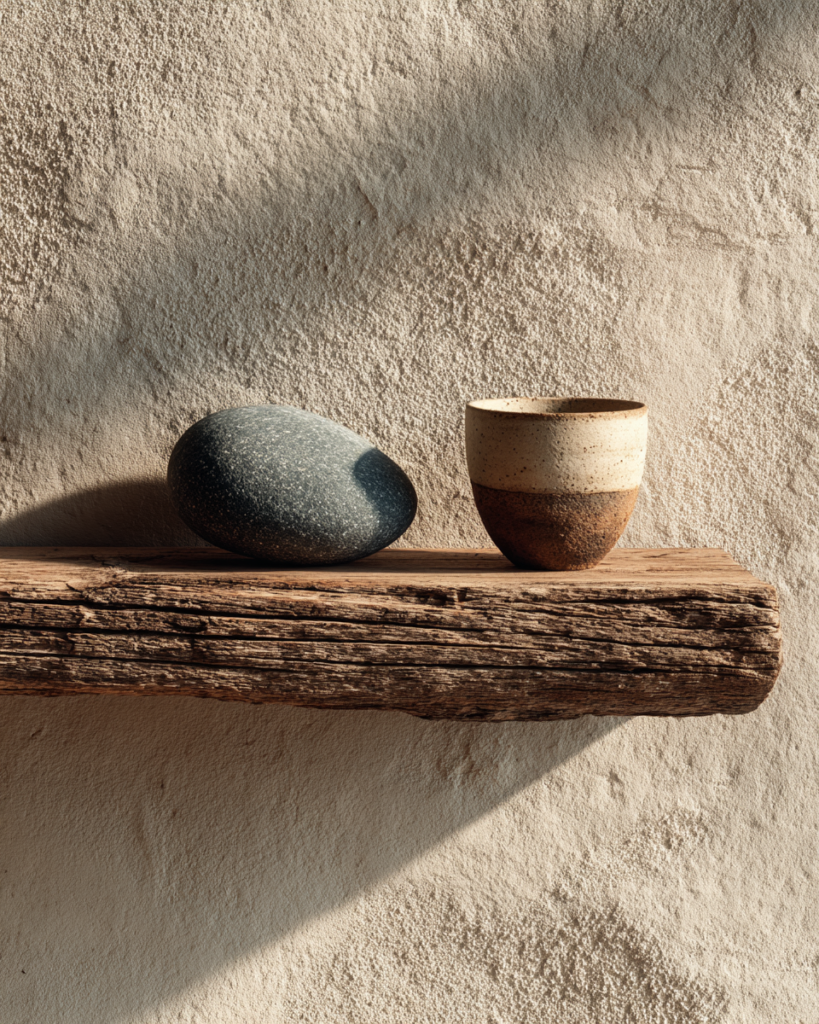
Ma is often translated as “negative space,” and this is useful — but incomplete. In art and design, negative space is the area around and between subjects. In ma, the interval itself is the subject. It is not a backdrop for the things that matter. It is part of what matters.
Think of music. A single note, sustained, tells you something. But a note followed by silence, then another note — that silence is where the meaning lives. The pause carries the feeling forward. Without it, the music loses its shape. The same is true of rooms, of conversations, of a well-arranged shelf. What we leave out determines what we allow in.
“Ma is not something that is created by compositional elements — it is the thing that takes shape between them.”
— Arata Isozaki, architect
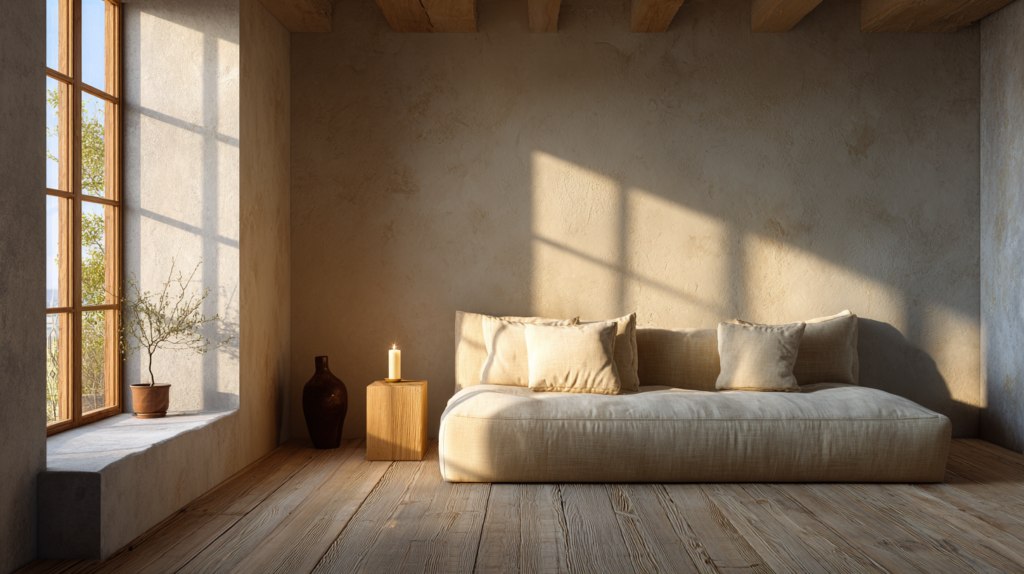
Isozaki, one of Japan’s most celebrated architects, understood ma as generative — not as the absence of design but as its most active element. A wall left bare does not fail to be interesting. It holds space. It gives the eye somewhere to rest, and in resting, to truly see what else is present.
Ma also carries a temporal dimension. It is not only about physical space but about the quality of pauses in time: the moment of stillness before a decision, the quiet between tasks, the unhurried morning before the day begins to press. These temporal intervals are just as much a form of ma as an empty corner in a room.
“Empty space is not nothing. It is a living silence — full of potential.”
— Kakuzo Okakura, The Book of Tea
Okakura Kakuzo, writing in 1906 in his beautiful meditation on Japanese aesthetics, argued that the Japanese teacup — deliberately left half-empty — was the only way to invite the guest to fill it with imagination. The incomplete gesture, the space not fully occupied: these are not failures of intention. They are invitations.
When did you last walk into a room and feel, without knowing exactly why, that you could exhale? What did that room hold — and what did it leave out?
Spatial ma
間 — space
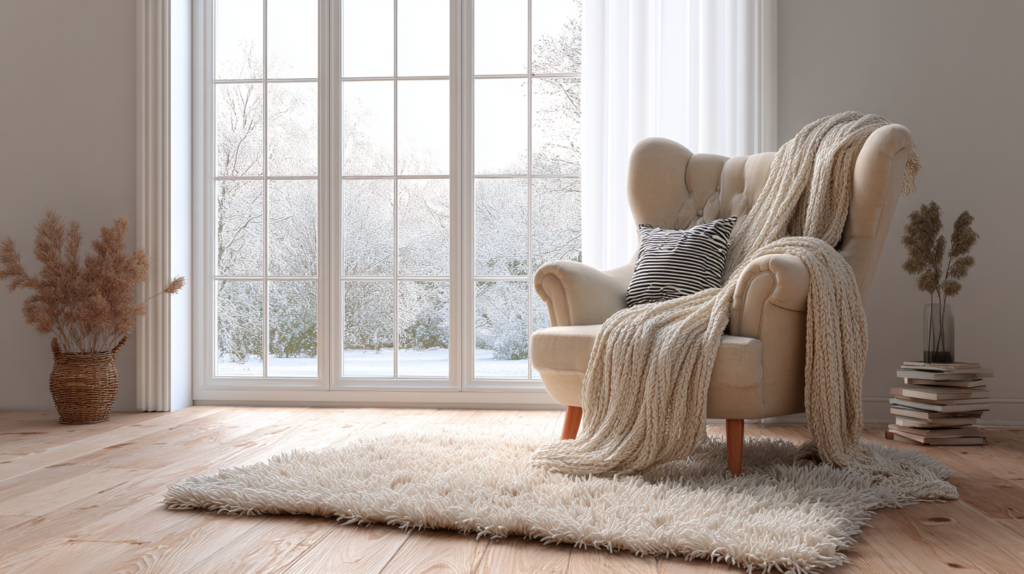
The physical interval between objects, walls, and surfaces — the breathing room that gives each element its presence.
Temporal ma
間 — pause
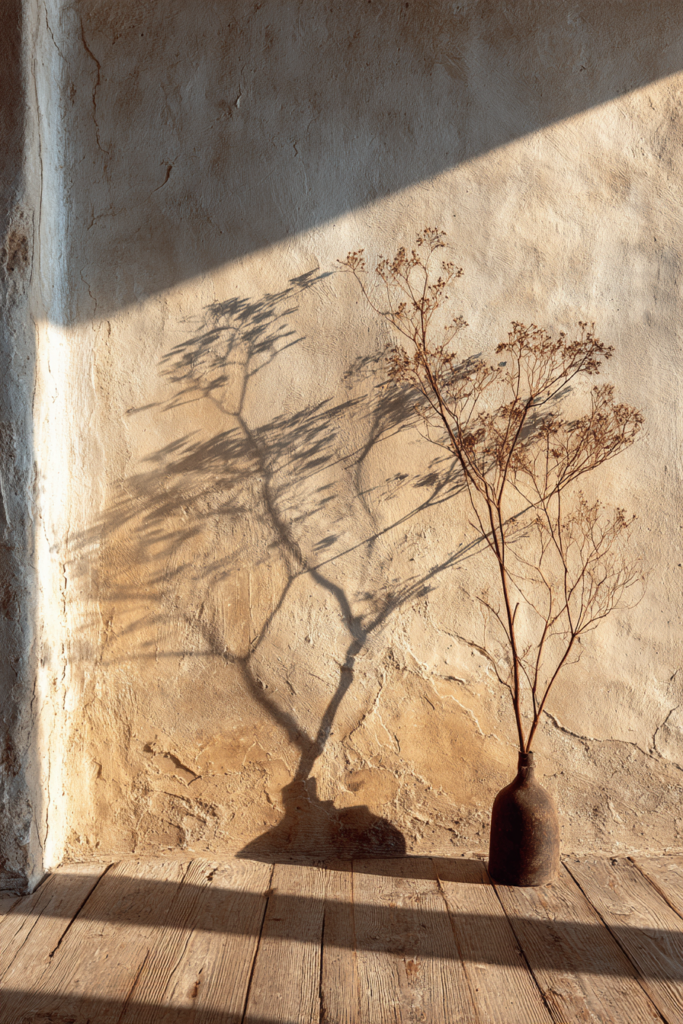
The meaningful pause in time — between tasks, conversations, seasons — that allows experience to settle and meaning to form.
Ma-ai
間合い — interval
The relational distance between things — the quality of space that determines whether connection, movement, or meaning is possible.
Visual ma
間 — negative space
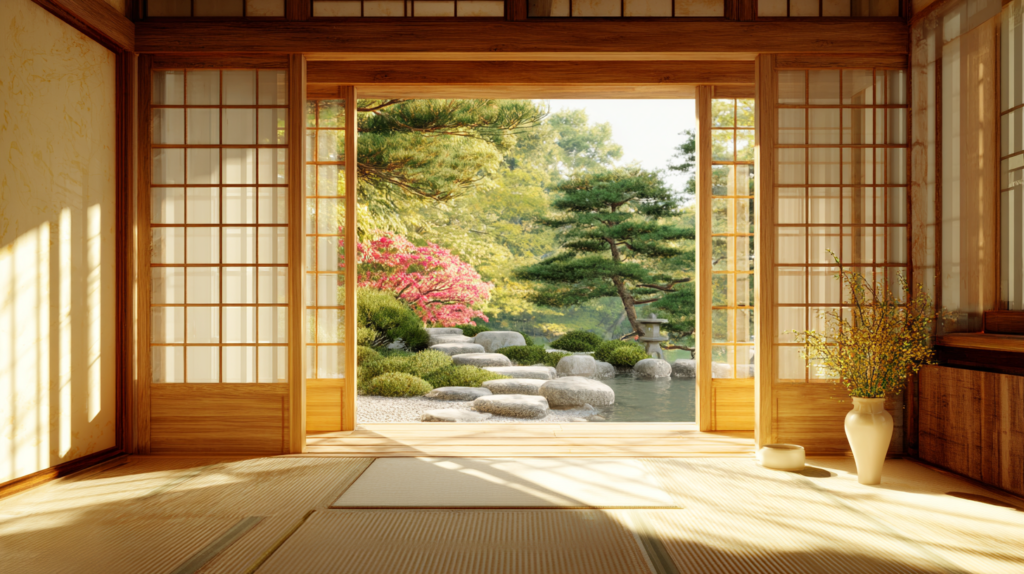
In art and design, the deliberate unoccupied area that gives a composition its structure, clarity, and sense of ease.
Ma’s Relevance to Warm Minimalism
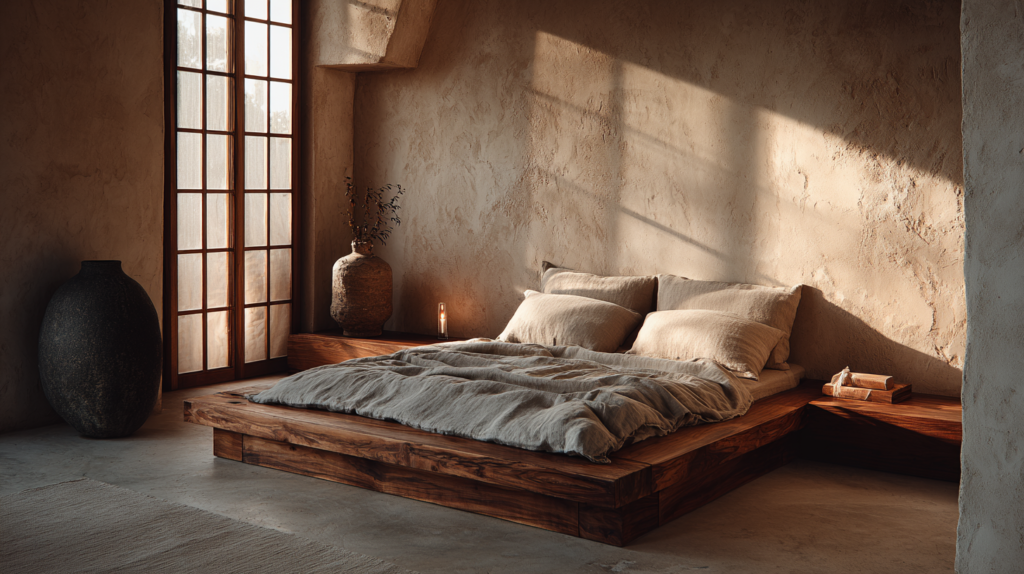
Warm Minimalism does not pursue emptiness for its own sake — not as an aesthetic statement, not as a performance of restraint. What it reaches toward is something more specific: spaces that support the nervous system, that allow the eye to settle and the mind to follow. Ma is the philosophical name for that quality. And learning to see through its lens changes how you approach every room.
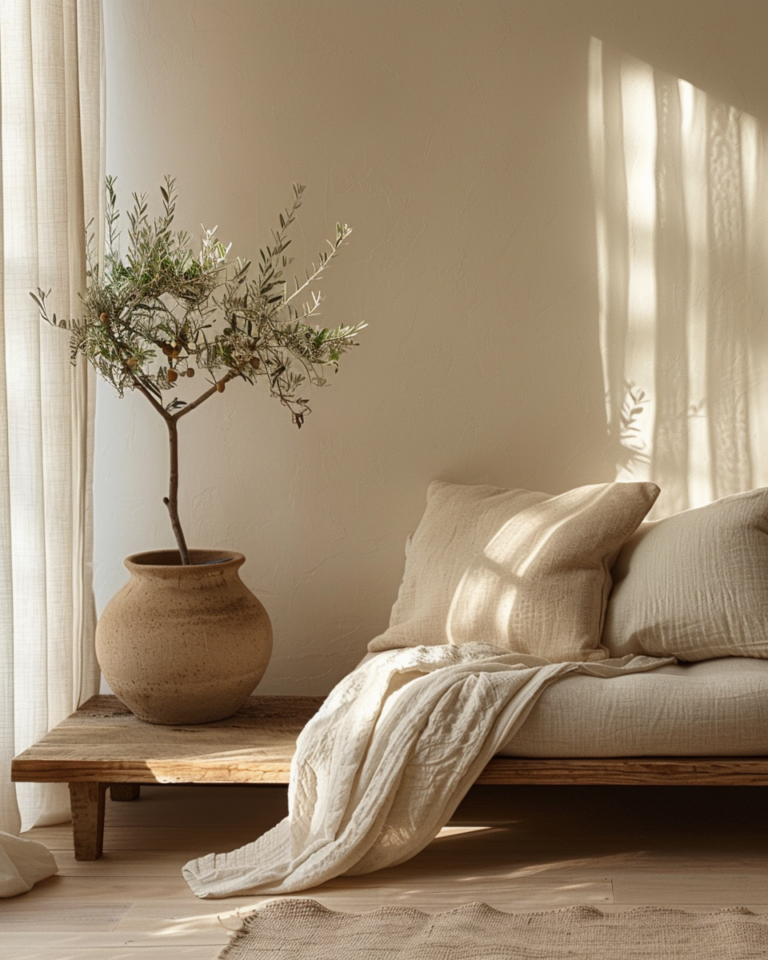
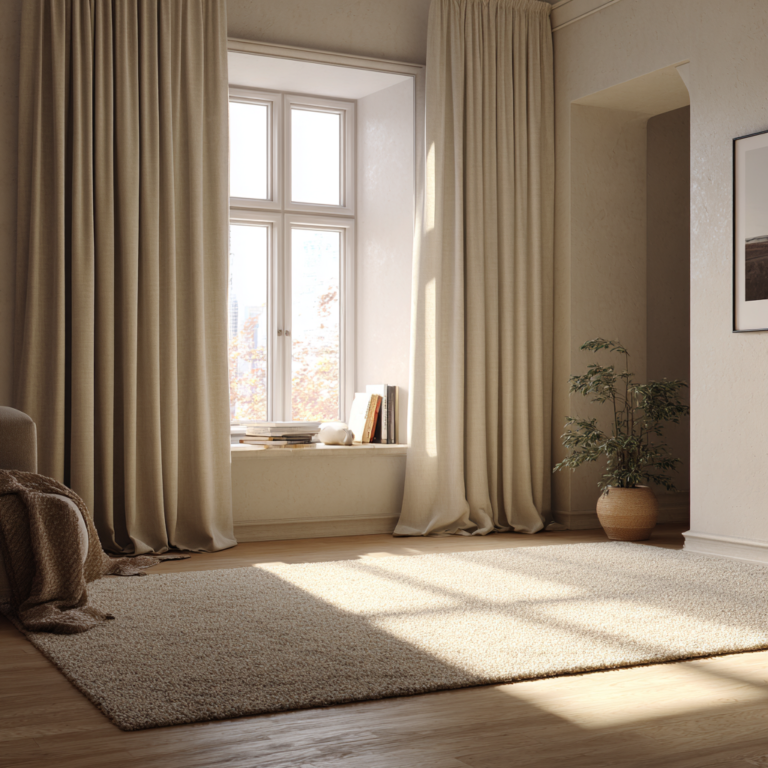
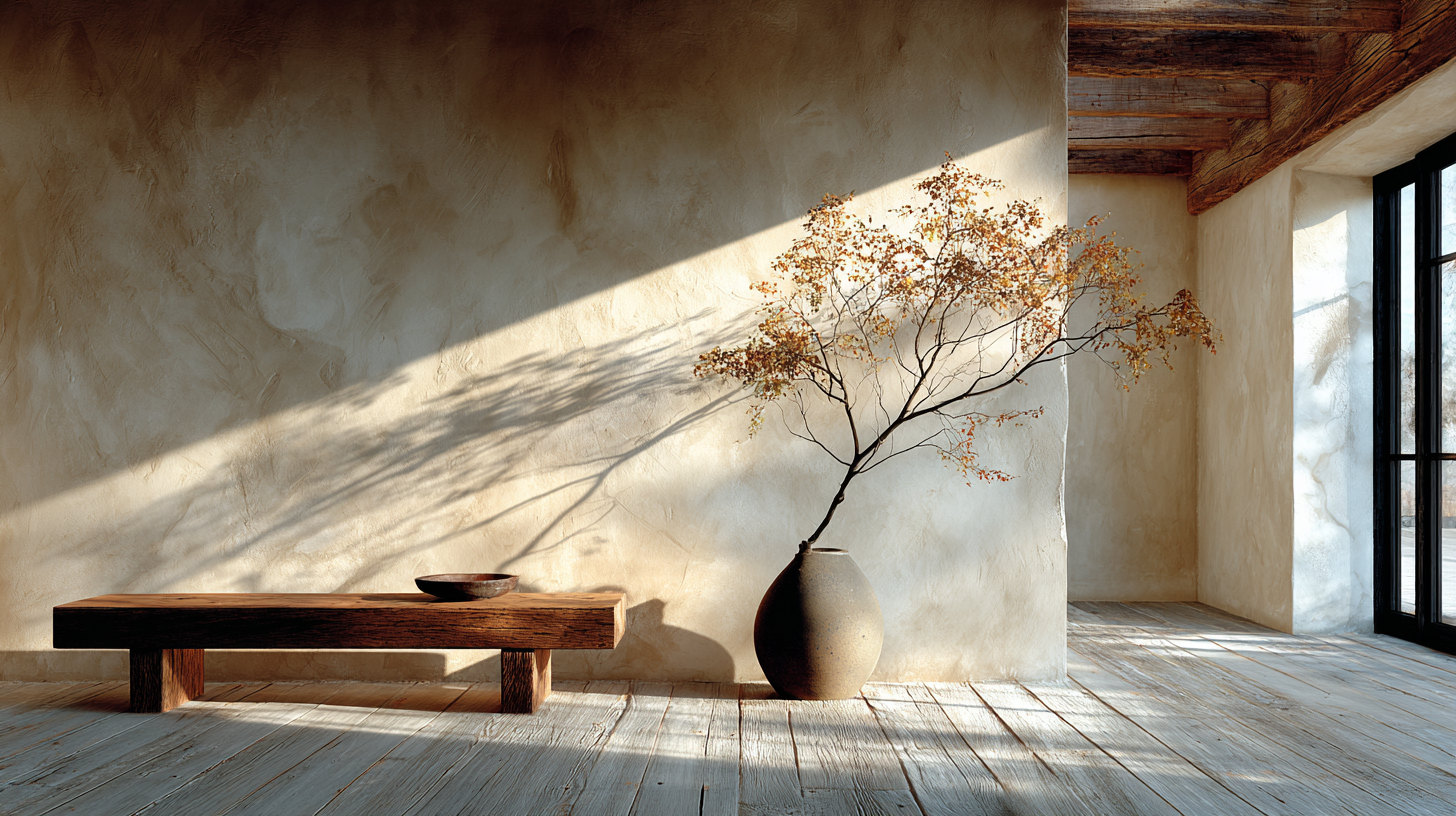
Consider light. A room with fewer objects allows light to travel further, to pool on the floor, to cast the kind of long afternoon shadows that feel almost like a presence in themselves. Shadow, in Japanese aesthetics, is not the absence of light — it is its companion, its shape, the thing that gives light meaning. When we crowd a room, we deprive ourselves of this. We fill the space that light was meant to move through.
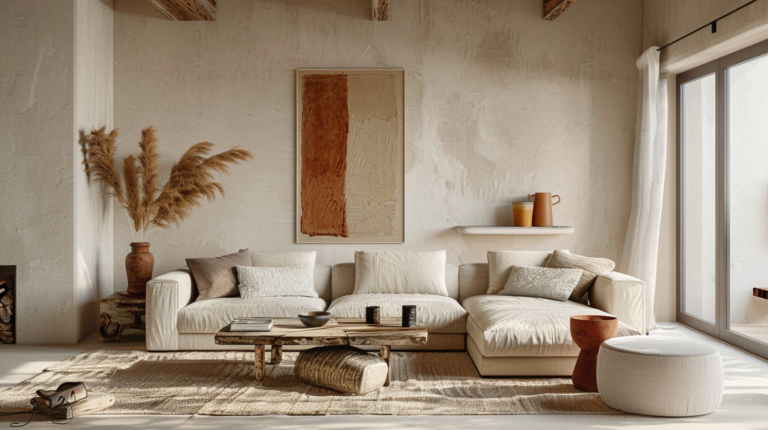
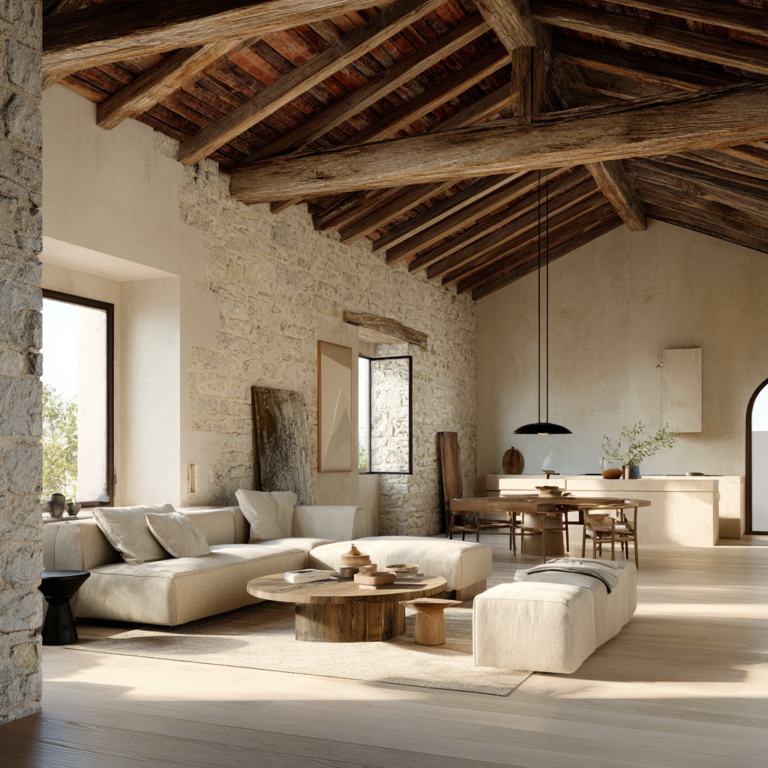
Consider furniture arrangement. Much of Western interior design teaches us to fill a room — to anchor every corner, to create symmetry through abundance. Ma suggests something different: generous intervals between pieces, so that each one can be experienced as a whole. A sofa placed away from the wall. A side table with nothing on three of its four surfaces. A reading chair positioned so that the space around it feels chosen, not accidental. These are not empty spaces — they are the architecture of ease.
What would it mean to treat the empty wall beside your bed not as a failure to decorate, but as a deliberate act of care — space given to silence, to morning light, to your own thoughts?
Decluttering, through the lens of ma, becomes something different from tidying. It is not about achieving a particular look. It is about revealing space that was already there, waiting. When you remove what does not serve — what simply occupies — the objects that remain begin to speak. They gain weight and presence. A single bowl on a shelf becomes something worth looking at. A coat hook with one coat on it feels dignified. Ma teaches that curation is a form of respect: for the objects, for the space, and for the people who move through it.
Ma extends into daily life as readily as it does into physical space. The pause between finishing one task and beginning the next. The morning without a phone in hand. The meal eaten without a screen nearby, the attention given wholly to taste and texture and the quality of that particular hour. These are temporal forms of ma — intervals that allow experience to land before the next thing arrives.
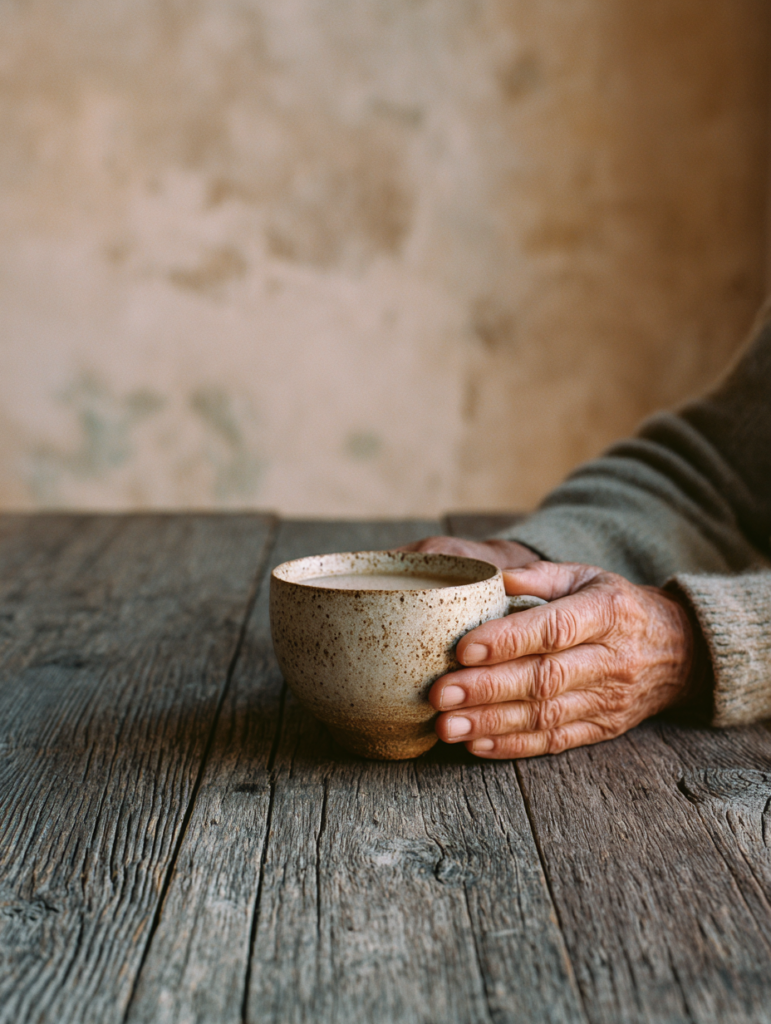
Practically, this might mean: leaving one wall in a room entirely bare, and noticing how the room changes over a week. Removing everything from a surface and returning only what you genuinely reach for. Sitting in a room before deciding what it needs, rather than beginning with acquisition. Designing pauses into your day the same way you would design breathing room into a shelf arrangement — with intention, with generosity, with trust that space is not nothing.
The Space Between
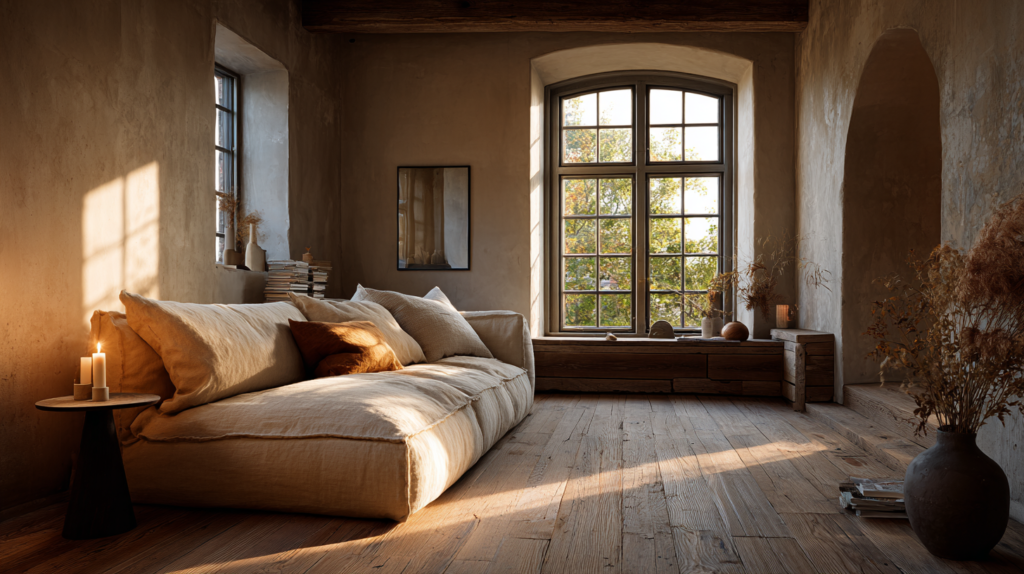
Ma asks us to trust in what is not there. This is, in its quiet way, a radical proposal. We live in a world that relentlessly fills — screens, surfaces, schedules, shelves. To leave space, in any form, is an act of gentle resistance. It is the decision to value the interval as much as what it contains.
In our homes, this trust translates into rooms that feel like exhales. Into arrangements that give each object room to be itself. Into walls that hold light rather than compete with it. Into the particular quality of stillness that arises, almost without effort, when we stop adding and begin to let what remains find its full expression.
A warm minimalist home shaped by ma is not a spare home. It is a composed one — alive in the intervals, generous in its silences, human in its imperfection. A home that holds space for your actual life rather than asking you to perform around its contents.
This is what the concept of ma, at its deepest, offers: not a design principle, but a way of seeing. Once you begin to notice the quality of intervals — in rooms, in days, in conversations — you cannot stop. And slowly, almost imperceptibly, the spaces you inhabit begin to reflect what you most need: room to breathe, room to be, room to come home to yourself.
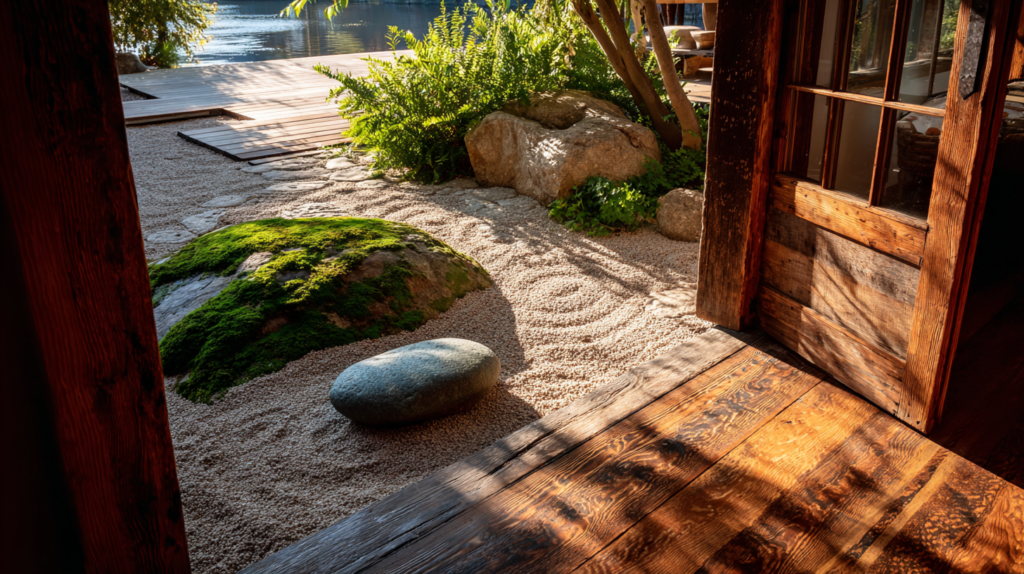
Four ways to invite ma into your home and life
- 4. The next time a wall or corner feels “unfinished,” ask whether it might be finished in the truest sense — offering light, silence, and breathing room to everything around it.
Join the Circle of Warmth
A quiet letter on warm, intentional living — delivered occasionally.