What Your Home Sounds Like
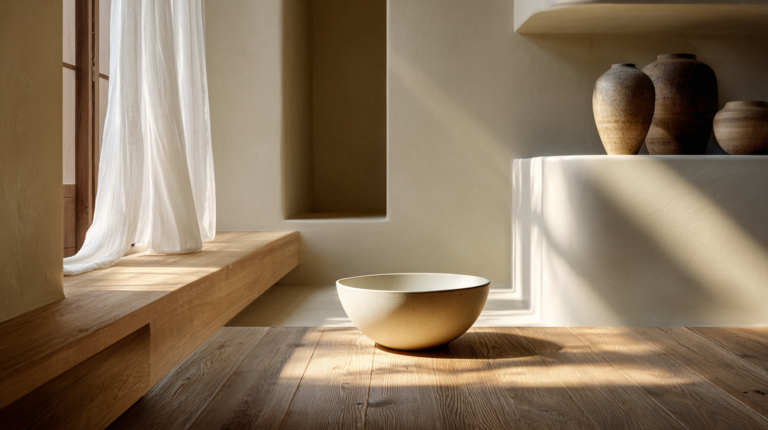
There is a particular quality of quiet that some homes have and others don’t. You’ve probably felt it without being able to name it — stepping into a room and noticing, somewhere in the body before the mind catches up, that something here is different. Something is easier.
It isn’t silence exactly. It’s more like the absence of friction.
We spend a great deal of time thinking about how our homes look. The color of a wall, the weight of a fabric, the way a piece of furniture sits in a corner. But the acoustic experience of a home — the way sound moves through it, absorbs into it, or bounces off of it — quietly shapes how we feel inside it every single day, largely without our awareness.
This is worth paying attention to.
What Hard Surfaces Do to a Room
Think of a space dominated by hard materials: concrete floors, bare walls, large expanses of glass. These surfaces are beautiful in photographs. They read as clean, uncluttered, modern. But sound behaves differently in them. It travels fast, reflects back, and accumulates. Voices feel slightly louder than they should. The clink of a coffee cup on a counter carries farther than expected. There is an edge to the air that’s difficult to locate but impossible to ignore.
Over time, this kind of acoustic environment asks something of the nervous system. Not dramatically — it isn’t loud in any conventional sense — but there is a low-level alertness that hard, reflective spaces tend to produce. A subtle readiness. The body doesn’t fully settle.
This isn’t an argument against stone countertops or polished concrete. It’s an invitation to notice what else is in the room alongside them.
What Softness Actually Does
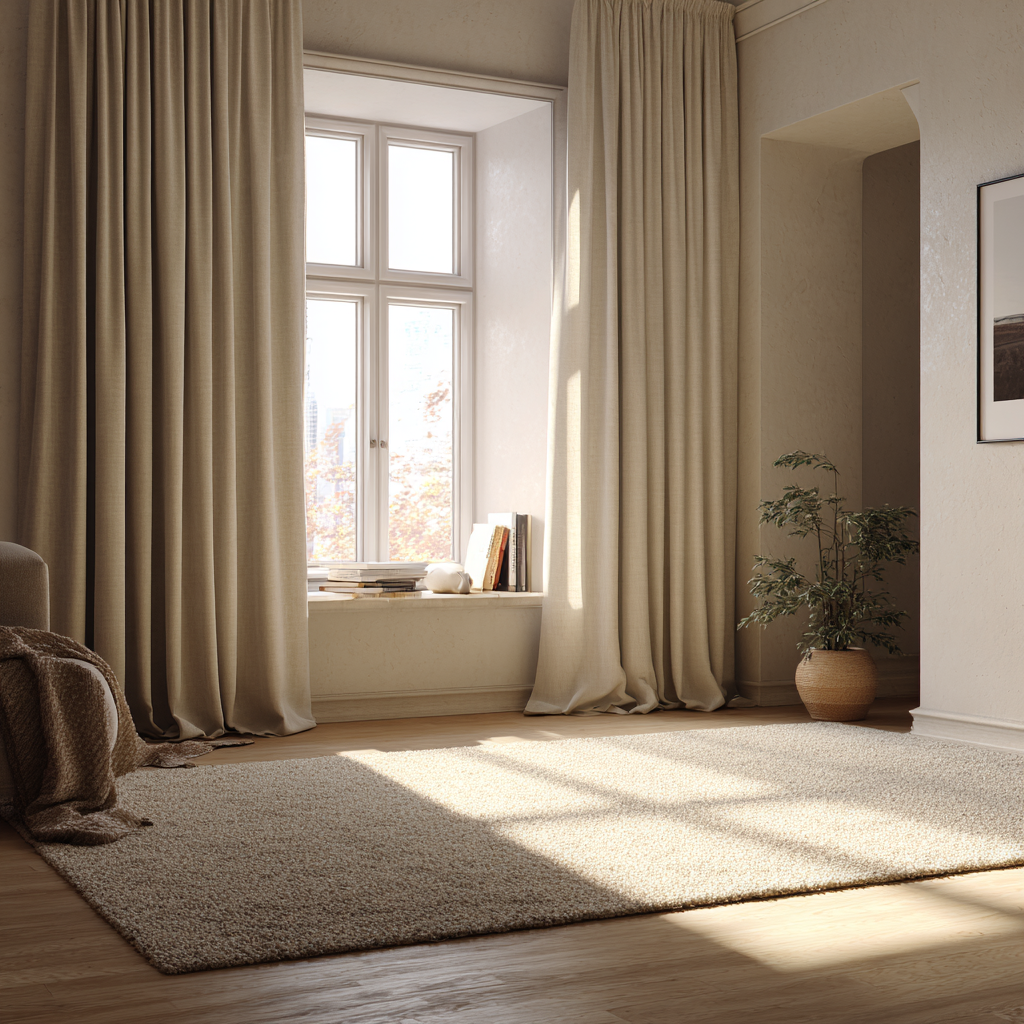
Soft materials — curtains that puddle gently onto the floor, a wool rug laid over wood, linen cushions that have been lived against — do something more than create visual warmth. They absorb sound. They slow it down. They take the edge off.
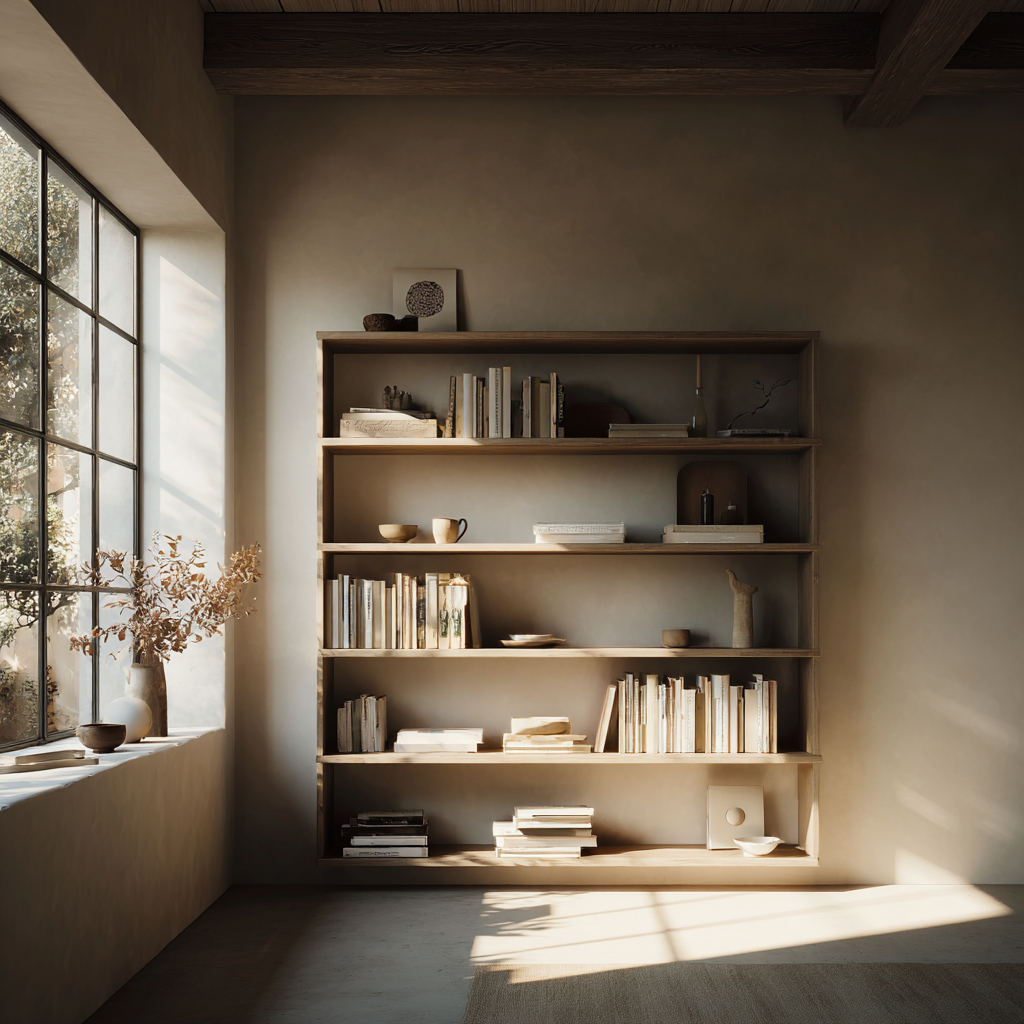
This is why a furnished room feels different from an empty one even before a single object has been chosen for its appearance. The furniture itself, the textiles, the books on a shelf — all of it is quietly participating in the acoustic life of the space. A bookcase on a hard wall is not just a place to keep books. It is also, in a small but meaningful way, making the room calmer.
When a room feels inexplicably peaceful, softness is often part of the reason — and it’s rarely the first thing we credit.
The Sounds We Don’t Notice We’re Hearing
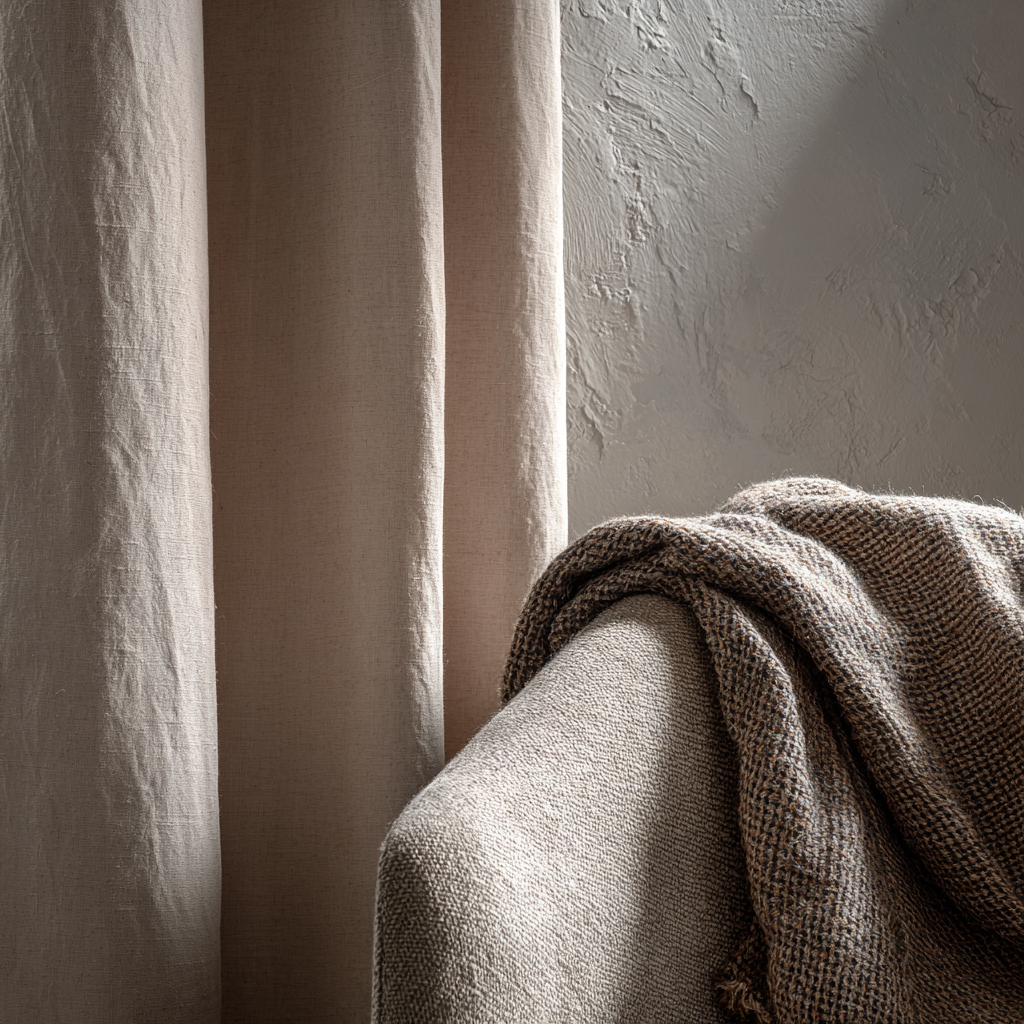
Beyond material and surface, there is another layer to consider: the ambient sounds that furnish a home beneath our conscious awareness. The hum of a refrigerator. The particular quality of wind through an old window frame. The way rain sounds on a skylight versus a shingled roof. Traffic filtered through heavy curtains versus a bare pane of glass.
These sounds form a kind of background score to daily life. Most of the time we aren’t listening to them. But they are there, shaping the emotional texture of a room in ways that are subtle and cumulative.
It’s worth spending a few minutes simply listening to your home. Not to fix anything immediately — just to hear what’s actually there. You may find sounds you’ve stopped noticing that are worth addressing. You may find sounds you love that deserve to be protected.
The hum of a kettle. The soft fall of light rain. A clock that ticks without urgency. These are small acoustic gifts, and a home that holds them gently is doing something quiet and important.
Designing With Your Ears
This doesn’t require an acoustics consultant or a renovation. It asks only for a slight expansion of attention — bringing the ears into decisions that the eyes usually make alone.
A few places to begin:
If a room feels relentless rather than restful, consider what’s absorbing sound and what isn’t. A rug, heavier curtains, or even a throw draped over a chair can shift the acoustic quality noticeably.
If you’re choosing between two flooring options and one feels cold in a way you can’t quite explain, the acoustic difference may be part of what you’re sensing. Warmth is not only visual or tactile. It is also the way a room holds sound.
If you find yourself lowering your voice in a particular space — or raising it — the room is telling you something worth listening to.
And if a room already feels right, notice why. Notice what’s in it. The answer may be as simple as a linen curtain catching the afternoon, a soft rug underfoot, and a shelf of well-worn books — all of them quietly doing their work, all of them making the room feel like somewhere a person could rest.
A Home That Holds You
The homes that stay with us — the ones we remember as feeling genuinely good to be inside — tend to have this quality of acoustic ease without our ever being able to put a name to it. We called them cozy, or peaceful, or warm. We said they had good energy, or that we just felt comfortable there.
What we were often feeling, at least in part, was a room that wasn’t working against us sonically. A room that absorbed rather than reflected. That held sound gently rather than throwing it back.
This is a quiet form of care in a home. Not dramatic, not expensive, not visible in any obvious way. But felt — almost immediately, somewhere beneath the level of conscious thought.
Your home has a sound. It’s worth knowing what it is.
Next time you walk into a room, try closing your eyes for a moment before you open them. What you hear — and what you don’t — is telling you something real.
We would love to see how you are bringing clarity and warmth into your own home. Share your warm minimalist spaces in our community gallery and let your home’s unique story inspire others.
Join the Circle of Warmth
A quiet letter on warm, intentional living — delivered occasionally.