Warm Minimalism vs Japandi: What’s the Difference in Design Philosophy?
Warm minimalism is a design philosophy focused on calm and intentional living, while Japandi is a specific interior style blending Japanese and Scandinavian aesthetics.
Warm minimalism and Japandi are often mentioned together in modern interior design conversations. Many people searching for warm minimalism vs Japandi are really trying to understand how the two ideas relate and whether they represent the same design philosophy.
In recent years, two design ideas have captured the imagination of homeowners seeking calmer, more meaningful living spaces: warm minimalism and Japandi design.
At first glance, they can appear almost identical. Both embrace natural materials, simple forms, and quiet, uncluttered spaces that promote a sense of calm. Both reject excess in favor of thoughtful restraint.
But while they share many visual similarities, they are not the same concept.
Warm minimalism is best understood as a design philosophy—a way of thinking about how a home should support emotional well-being, intentional living, and everyday comfort.
Japandi, by contrast, is a specific interior design style that blends Scandinavian functionality with Japanese aesthetics.
Understanding the relationship between the two reveals something important: Japandi can be seen as one of the most beautiful expressions of warm minimalism in practice.
| Warm Minimalism | Japandi |
| A broader design philosophy focused on calm, intentional homes | A specific interior design style |
| Can appear across many styles (Scandinavian, Mediterranean, Organic Modern) | Blends Japanese and Scandinavian design traditions |
| Emphasizes emotional warmth and livable comfort | Emphasizes restraint, craftsmanship, and balance |
| Flexible and adaptable to different aesthetics | Has a recognizable visual identity |
What Is Warm Minimalism?
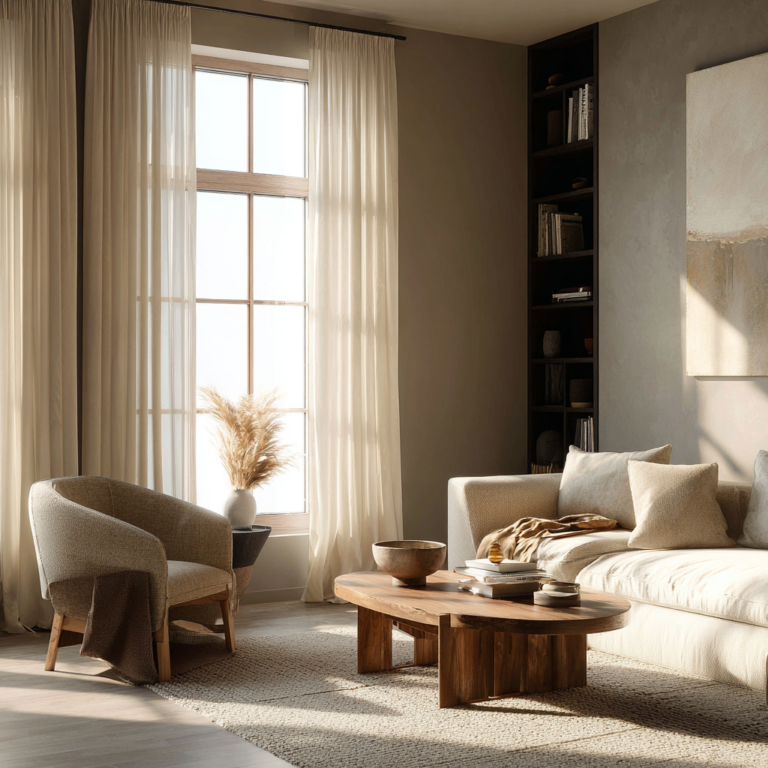
Warm minimalism is a design philosophy centered on creating spaces that feel calm, grounded, and welcoming without unnecessary clutter or visual noise.
Unlike stark minimalism, which sometimes feels cold or overly austere, warm minimalism introduces softness through:
- natural materials
- gentle lighting
- earthy color palettes
- meaningful objects
The goal is not simply to remove things from a room, but to create space for what truly matters.
A warm minimalist home often emphasizes:
- light-filled rooms
- tactile textures like linen, wool, and wood
- comfortable furniture that invites rest
- thoughtful objects that hold personal meaning
Instead of striving for perfection, warm minimalism encourages homes that feel lived-in, peaceful, and authentic.
For a deeper exploration of the philosophy, see the guide:
→ What Is Warm Minimalism?
What Is Japandi Design?
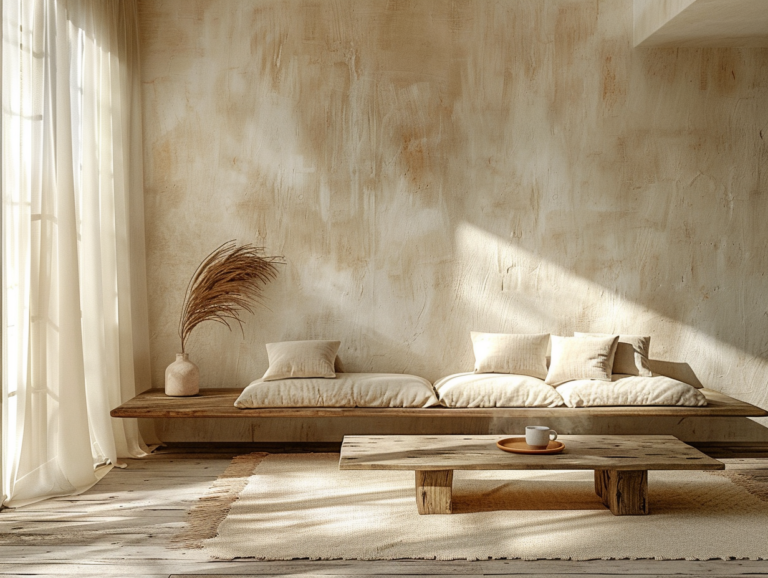
Japandi is a modern interior style that combines Japanese aesthetics with Scandinavian design principles.
The name itself blends the two influences:
Japanese + Scandi = Japandi
This style merges the Japanese appreciation for simplicity and craftsmanship with the Nordic focus on comfort and functionality.
Typical elements of Japandi interiors include:
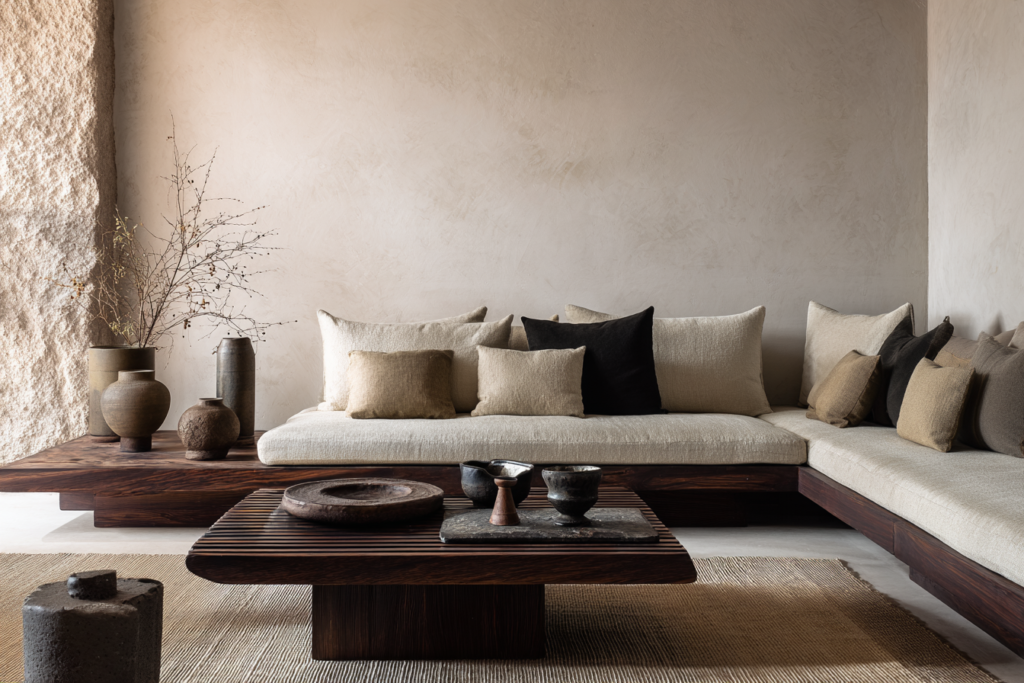
- low-profile furniture
- natural woods like oak and walnut
- handcrafted ceramics
- neutral color palettes with earthy tones
- simple, uncluttered spaces
Where Scandinavian design leans toward cozy warmth and light tones, Japanese interiors introduce structure, restraint, and quiet elegance.
The result is a style that feels both calm and grounded, balancing softness with thoughtful simplicity.
You can explore this style in greater depth in the guide:
→ A Complete Guide to Japandi Design
Why Japandi Aligns Naturally With Warm Minimalism
Japandi fits beautifully within the philosophy of warm minimalism because it reflects many of the same values.
Both approaches emphasize:
- simplicity without sterility
- natural materials and craftsmanship
- calm, uncluttered spaces
- intentional design choices
Part of this harmony comes from the deeper philosophical roots of Japanese aesthetics.
Traditional Japanese design has long been influenced by Zen philosophy, which values environments that support clarity, mindfulness, and quiet reflection. In such spaces, unnecessary distractions are removed so that attention can rest on the present moment.
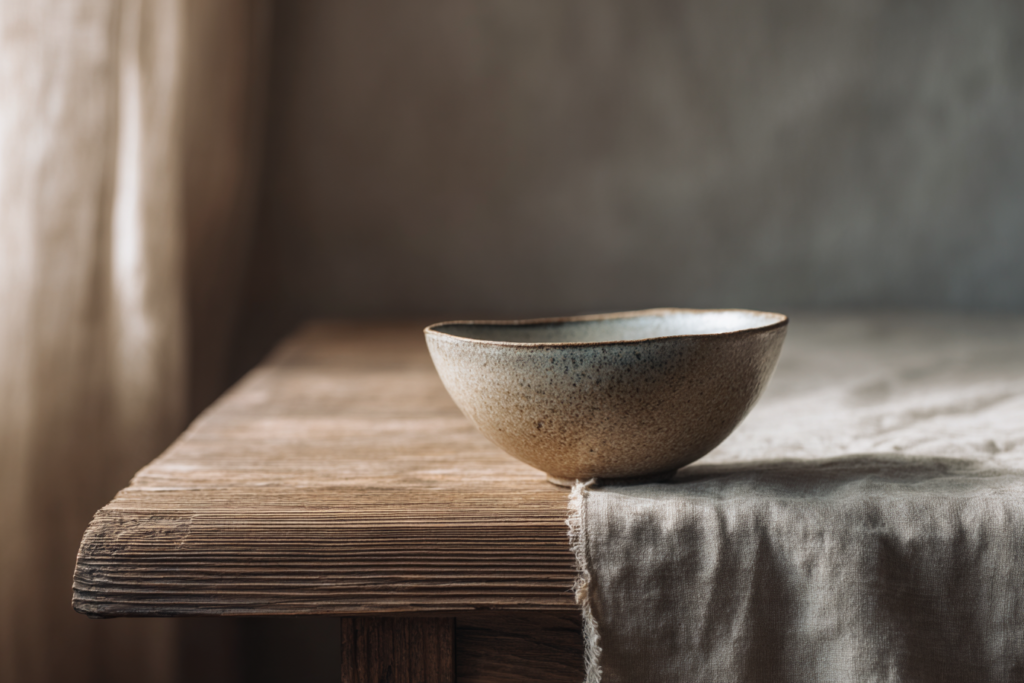
Closely related is the concept of wabi-sabi, an aesthetic philosophy that finds beauty in imperfection, natural materials, and the quiet passage of time.
A hand-thrown ceramic bowl, a wooden table that develops a patina over years of use, or linen fabric that softens with age all embody this sensibility.
When these ideas merge with Scandinavian principles—such as functionality, comfort, and democratic design—the result is a style that feels deeply aligned with warm minimalism.
Japandi interiors do not simply aim to look minimal.
They aim to feel peaceful, intentional, and grounded in nature.
Where Warm Minimalism and Japandi Differ
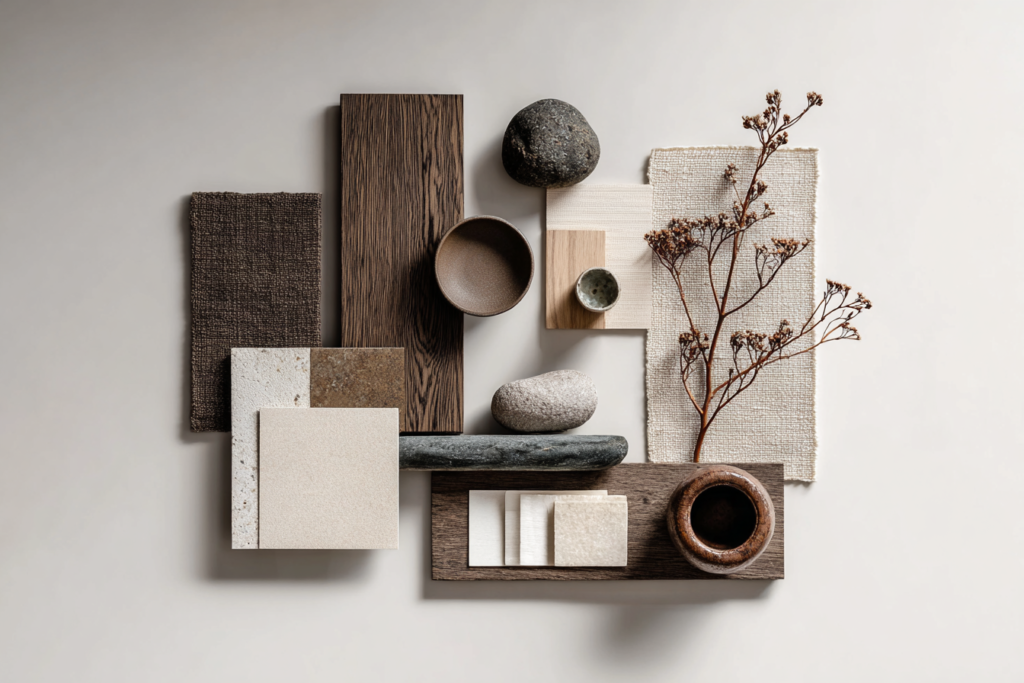
Although Japandi expresses many warm minimalist principles, the two ideas are not identical.
The key difference lies in scope and origin.
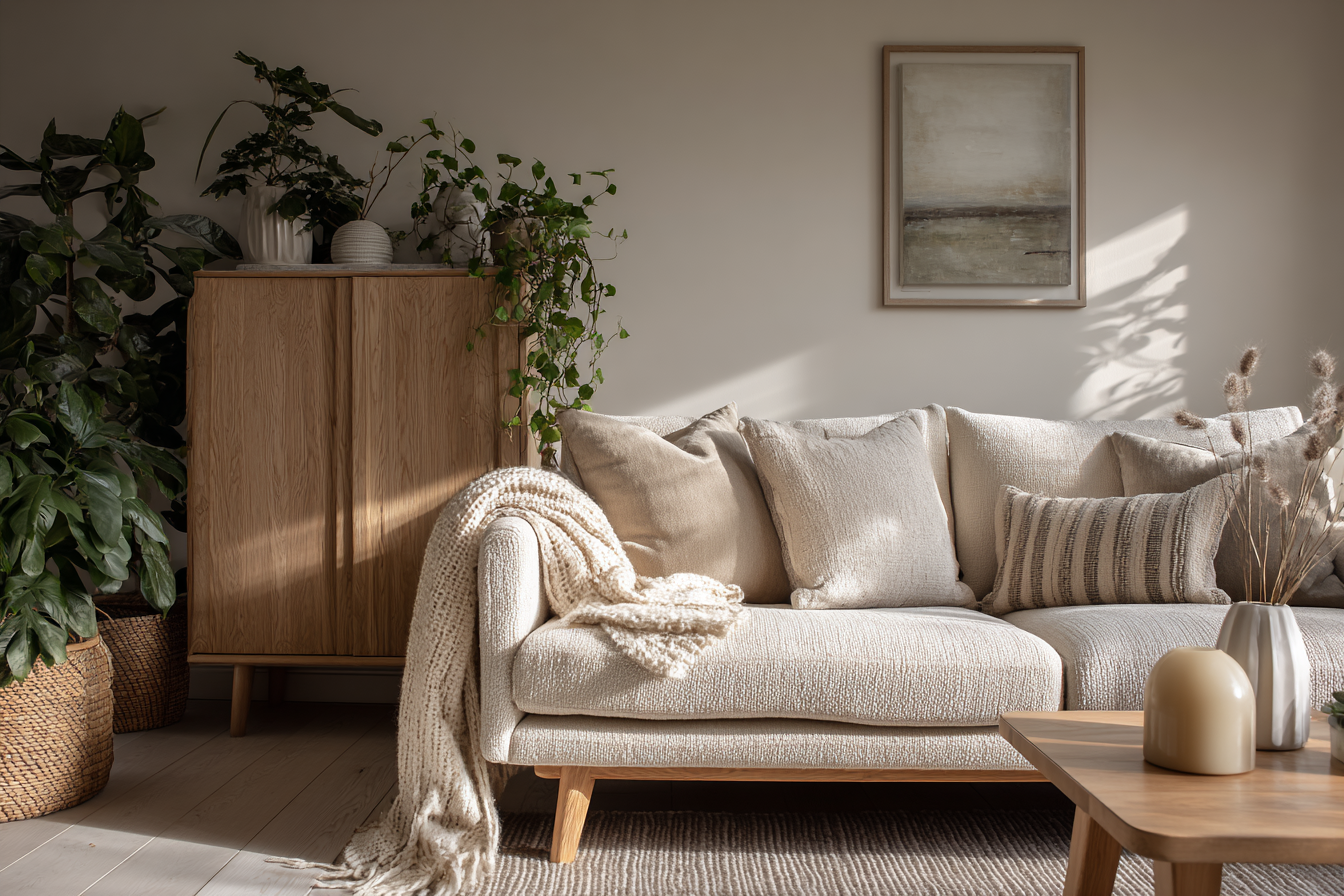
Warm minimalism is a broader philosophy that can appear in many styles of interior design.
Japandi is a specific aesthetic tradition with recognizable visual characteristics.
Warm minimalism may include styles such as:
Each of these approaches interprets the same underlying philosophy through different cultural influences, materials, and landscapes.
Japandi, however, remains rooted in the dialogue between Japanese and Nordic design traditions.
In this sense, Japandi can be seen as one of the most refined and balanced expressions of warm minimalism, but it is not the only one.
Other Styles That Express Warm Minimalism
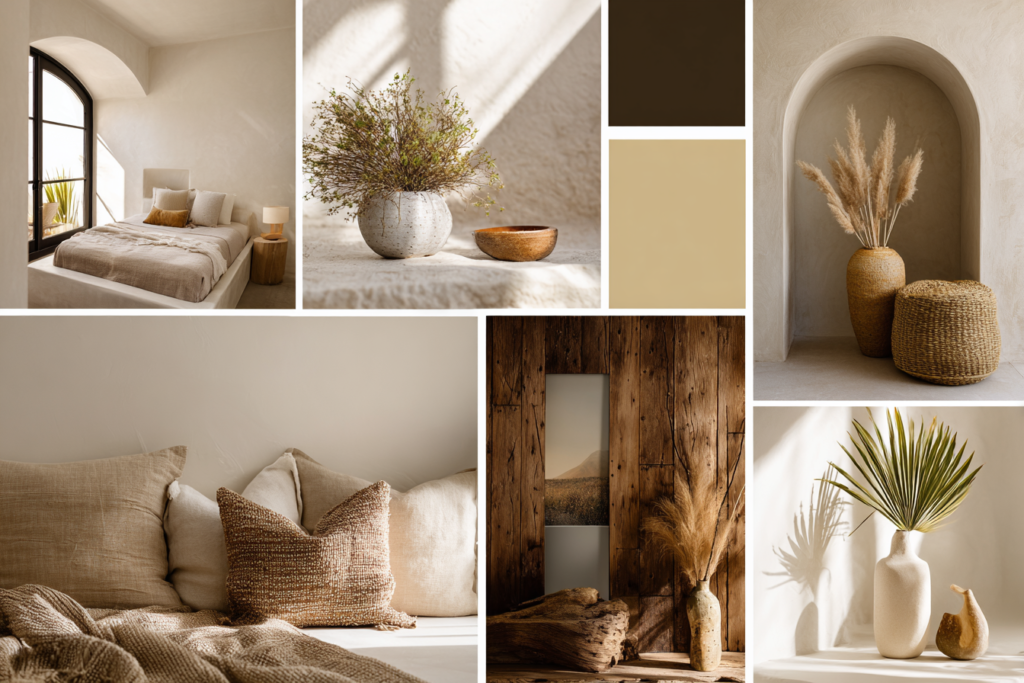
Warm minimalism is not confined to a single aesthetic.
Instead, it acts as a guiding philosophy that can appear in several design styles, each shaped by different regions and cultural traditions.
Examples include:
Scandinavian Design
Light-filled spaces, pale woods, and cozy textures rooted in Nordic living.
Organic Modern
Contemporary interiors softened by natural materials and sculptural forms.
Modern Mediterranean
Sun-washed interiors featuring warm stone, plaster walls, and earthy textures.
Rustic Modern
Clean architectural lines balanced with reclaimed wood and handcrafted materials.
Desert Modern
Minimalist architecture shaped by desert landscapes and natural light.
Each style offers a different interpretation of the same underlying goal: creating homes that feel calm, meaningful, and deeply human.
Designing a Home That Feels Calm and Intentional
Both warm minimalism and Japandi remind us that a home does not need excess to feel beautiful.
Through thoughtful design, natural materials, and intentional restraint, interior spaces can become environments that nurture well-being rather than overwhelm the senses.
Whether expressed through the refined balance of Japandi design or through other interpretations of warm minimalism, the underlying idea remains the same:
A well-designed home should quietly support the rhythms of everyday life.
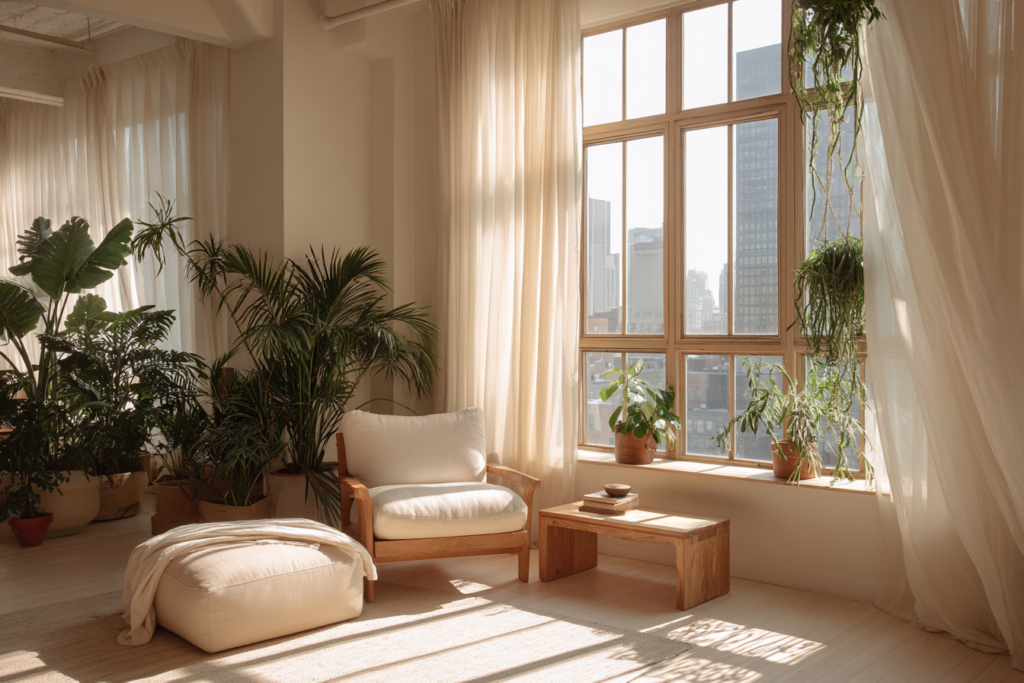
It should invite rest, encourage presence, and provide a sense of calm in a world that often moves too quickly.
Join the Circle of Warmth
A quiet letter on warm, intentional living — delivered occasionally.