6 Styles Within Warm Minimalism — And How to Know Which One Is Yours
Warm minimalism is often misunderstood as a single aesthetic.
A palette.
A furniture type.
A certain kind of light.
But in truth, warm minimalism is not one look. It is a way of relating to space.
It is the decision to create rooms that support rather than stimulate.
To value atmosphere over accumulation.
To choose materials that feel steady instead of performative.
Because of that, warm minimalism can take different visual forms.
It moves through certain design languages — each one expressing warmth and restraint in its own tone.
These are not categories to commit to.
They are pathways.
And you may already lean toward one without realizing it.
Before Choosing a Style, Notice This
Choosing a direction for your home is rarely about identity.
It is about resonance.
Instead of asking,
What style do I want?
A more useful question might be:
What kind of atmosphere allows me to feel most like myself?
Some people feel calmer in pale light and soft wood.
Others feel grounded in deeper tones and heavier textures.
Some exhale in open, sun-washed spaces.
Others settle into rooms with quiet structure and shadow.
Warm minimalism simply gives those instincts a language.
Below are six expressions that often embody its philosophy.
1. Scandinavian Warm Minimalism
Light as a source of calm.
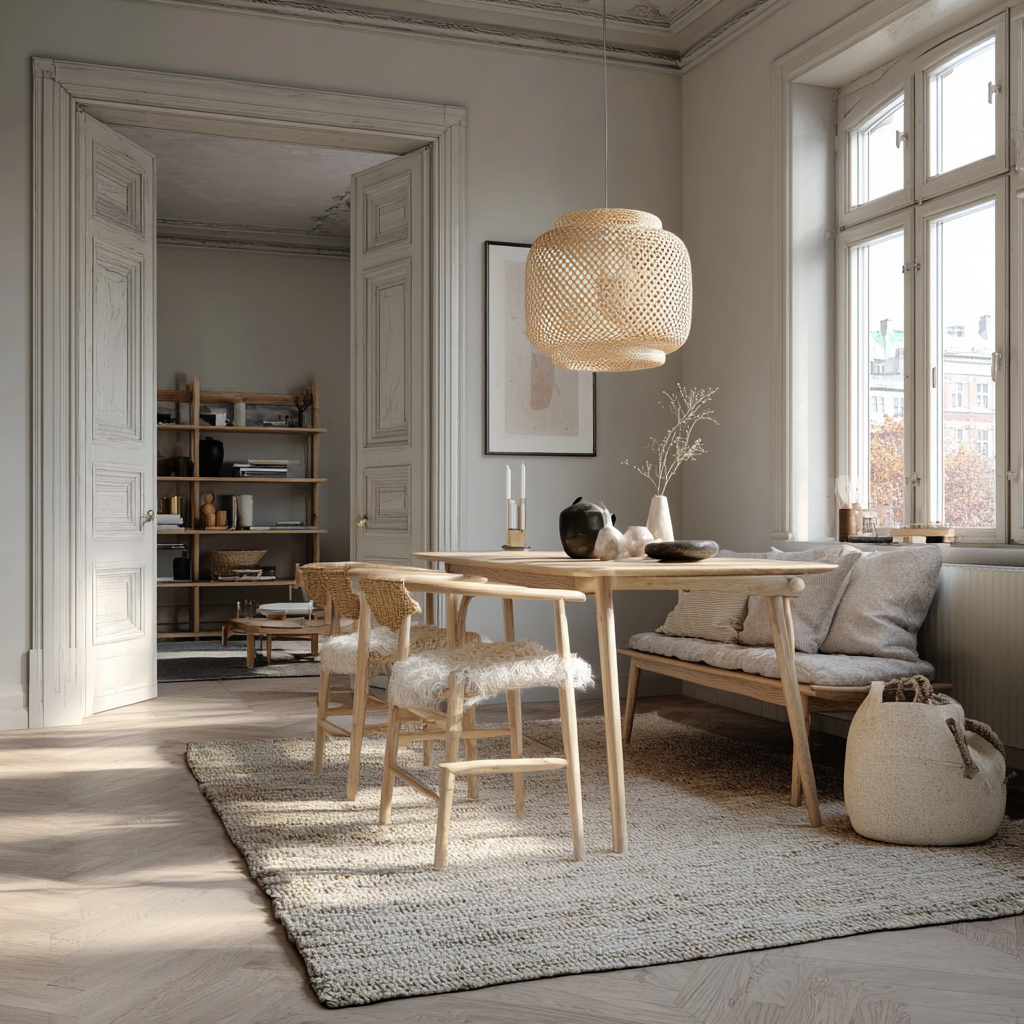
Scandinavian interiors lean toward brightness and clarity.
Pale woods.
Soft white walls.
Functional forms.
Textiles that soften rather than decorate.
The calm here comes from visual breathing room — but never starkness. The warmth is subtle, often carried through texture: wool, linen, natural grain.
You may feel drawn to this direction if you crave simplicity, gentle light, and a sense of quiet ease.
If this atmosphere resonates, you can explore it more deeply here:
Scandinavian Warm Minimalism →
2. Japandi Warm Minimalism
Stillness with intention.
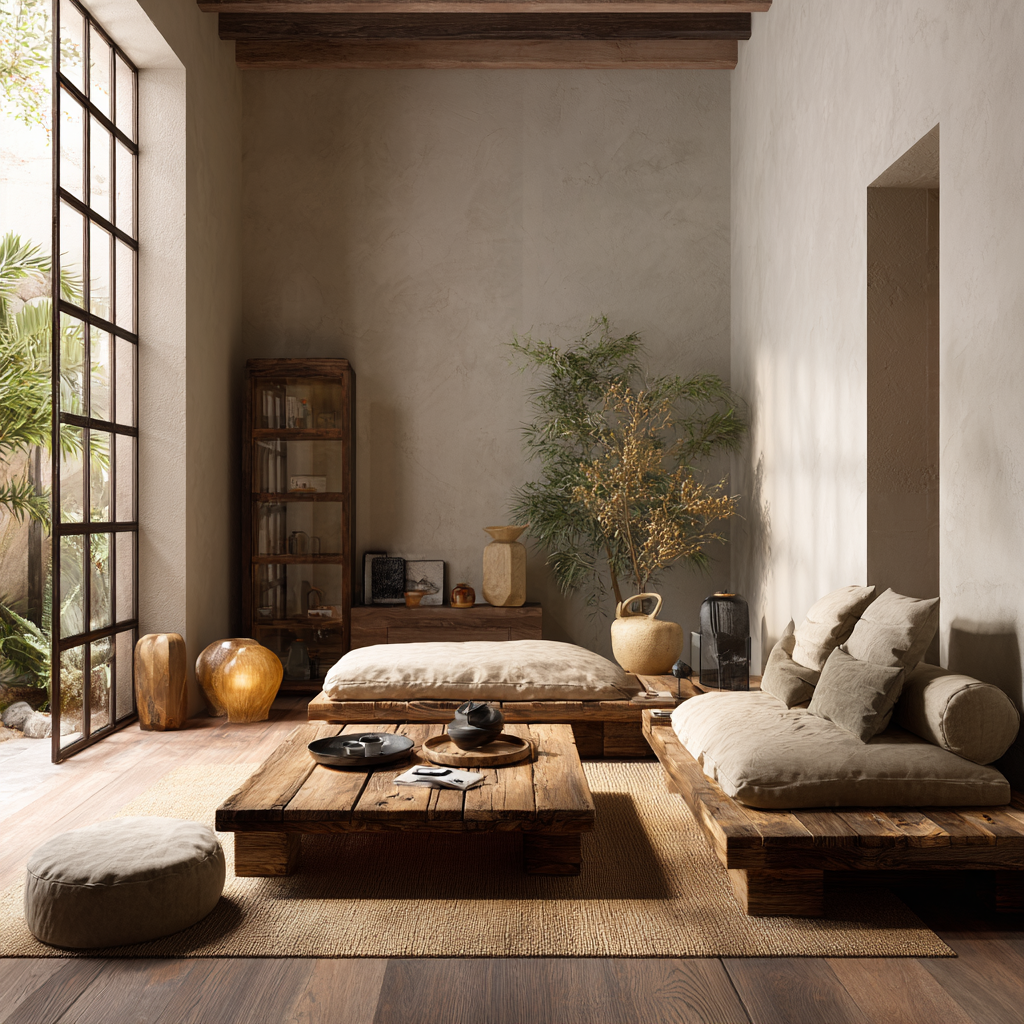
Japandi blends Japanese restraint with Scandinavian warmth.
Lower silhouettes.
Intentional emptiness.
Natural materials with visible integrity.
Darker woods alongside muted neutrals.
The calm here feels grounded — almost meditative.
You may feel drawn to Japandi if you find comfort in discipline, proportion, and purposeful space.
Explore further:
Japandi Warm Minimalism →
3. Organic Modern
Soft structure and textural warmth.
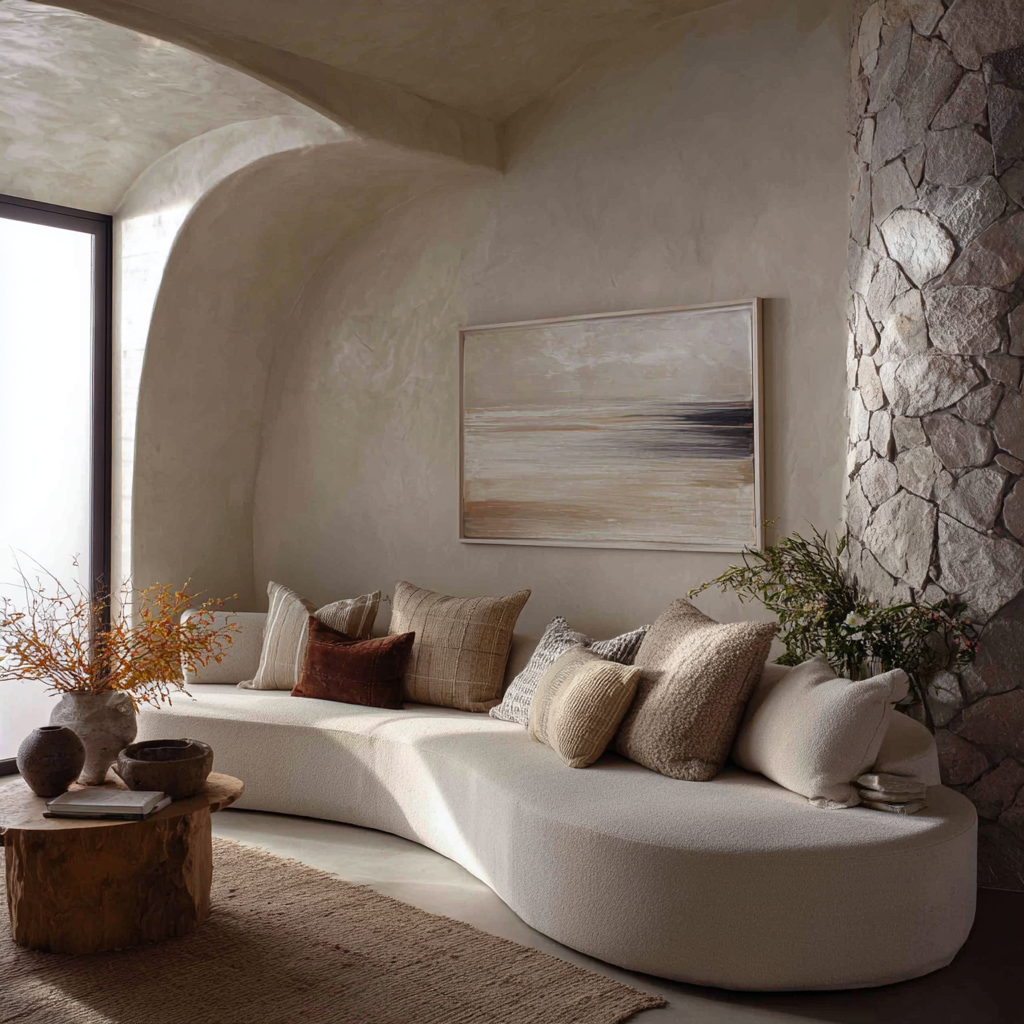
Organic modern interiors soften minimalism through form and material.
Curved lines.
Textured plaster.
Stone and wood.
Layered neutrals with depth.
It feels composed, but not rigid. Refined, but not sharp.
If you want minimalism without edges — structure without severity — this may feel natural.
Explore further:
Organic Modern →
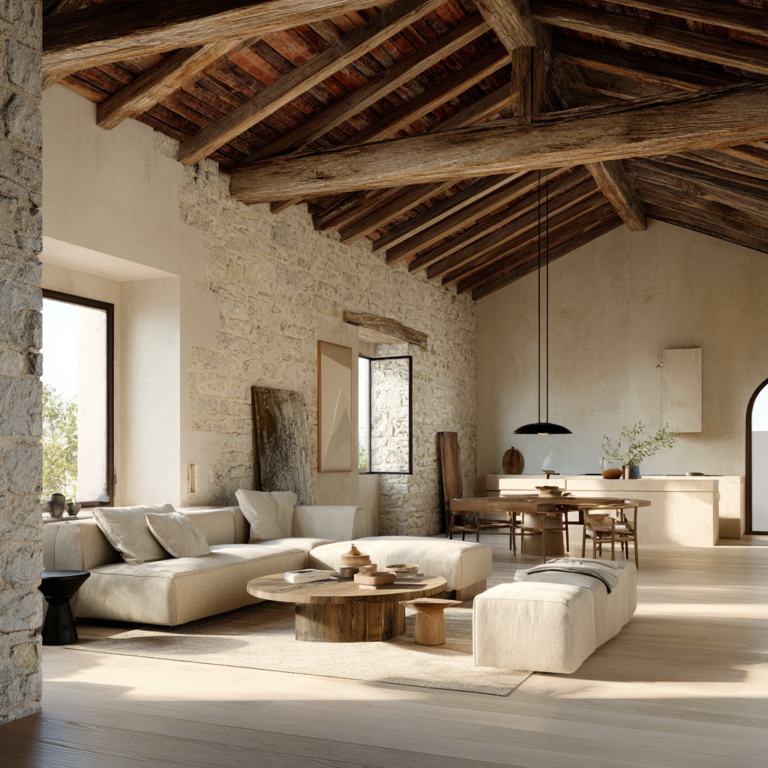
4. Modern Mediterranean
Sun-warmed restraint.
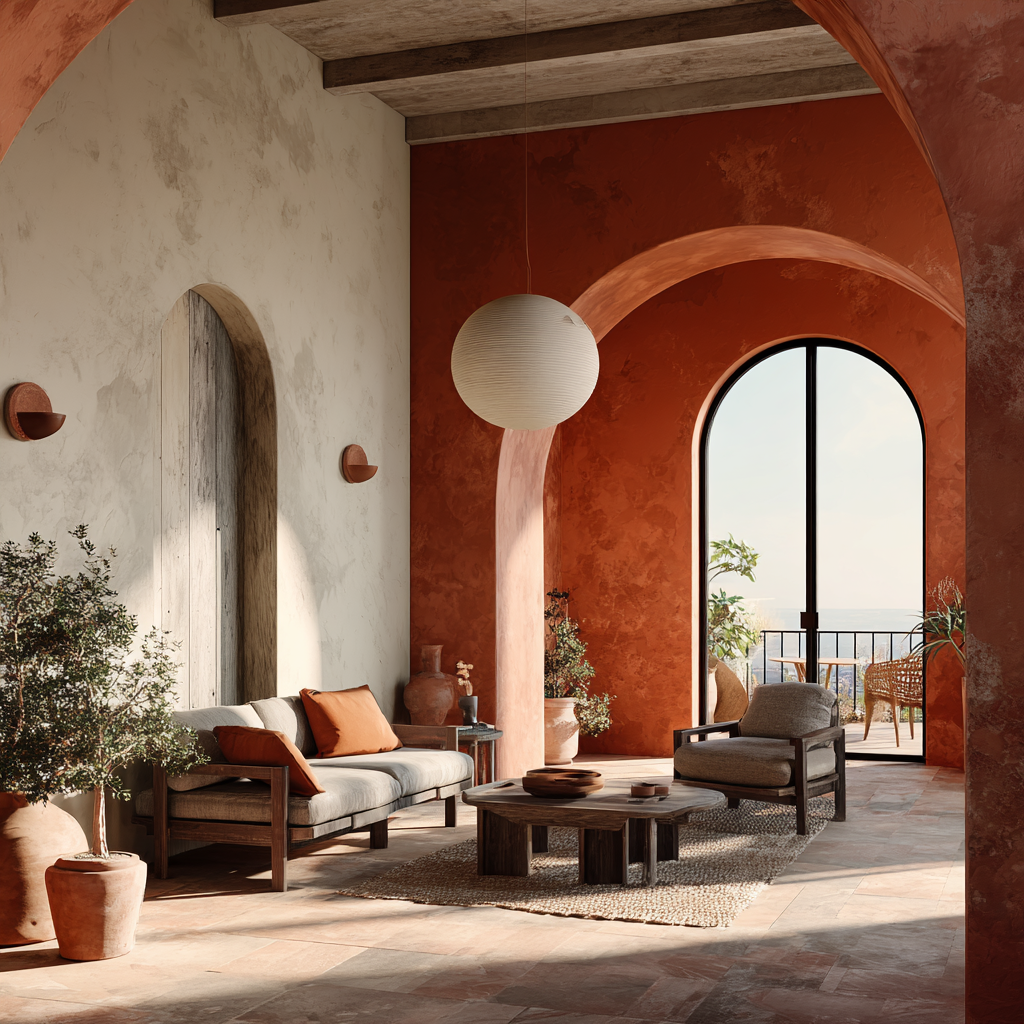
Modern Mediterranean spaces carry warmth through light and history.
Limewash walls.
Soft arches.
Terracotta undertones.
Shadow as a design element.
The calm here feels sun-warmed and relaxed — never ornate, never heavy.
You may resonate with this direction if you crave warmth with restraint, and softness with heritage.
Explore further:
Modern Mediterranean →
5. Rustic Modern
Grounded comfort.
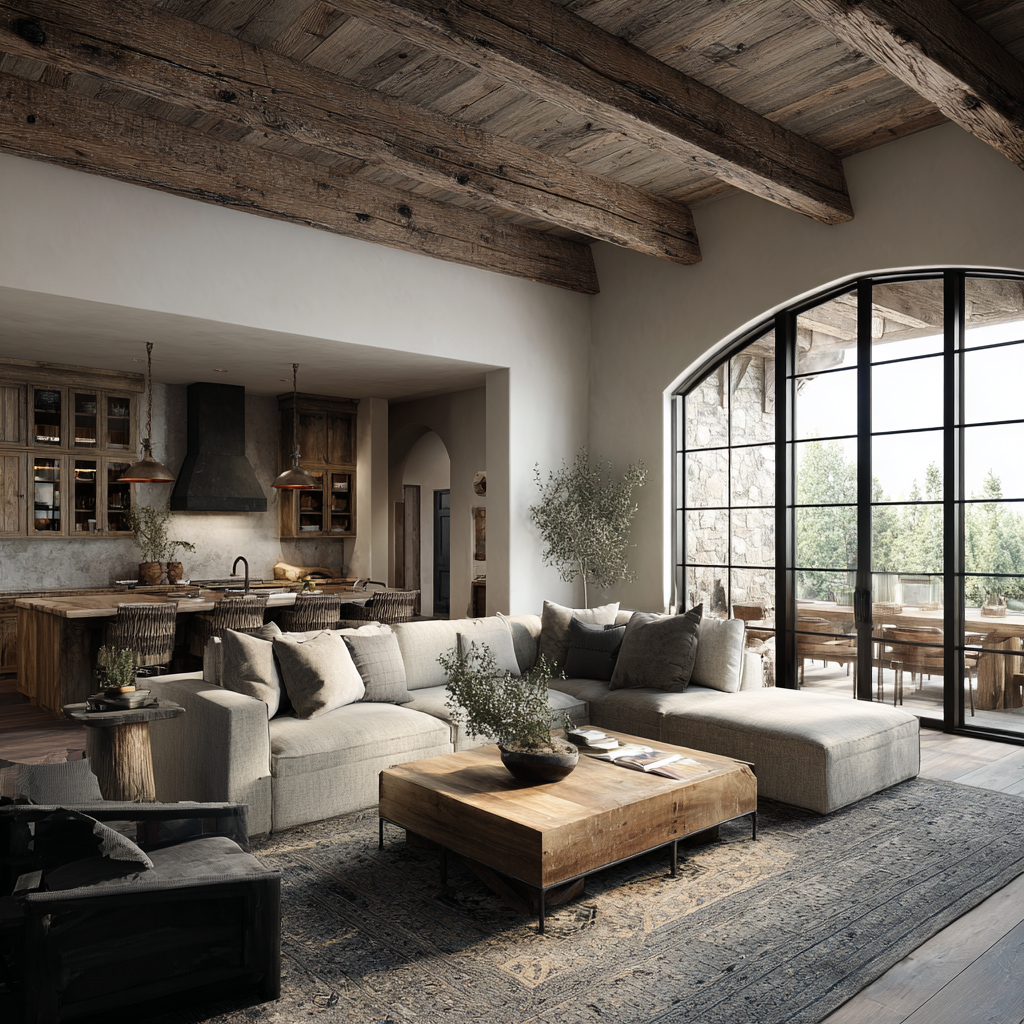
Rustic modern leans into material honesty.
Heavier woods.
Worn textures.
Structural clarity.
Minimal ornamentation.
The calm here feels rooted — steady and solid.
If you feel safest in spaces that feel substantial and grounded, this may be your pathway.
Explore further:
Rustic Modern →
6. Desert Modern
Expansive stillness.
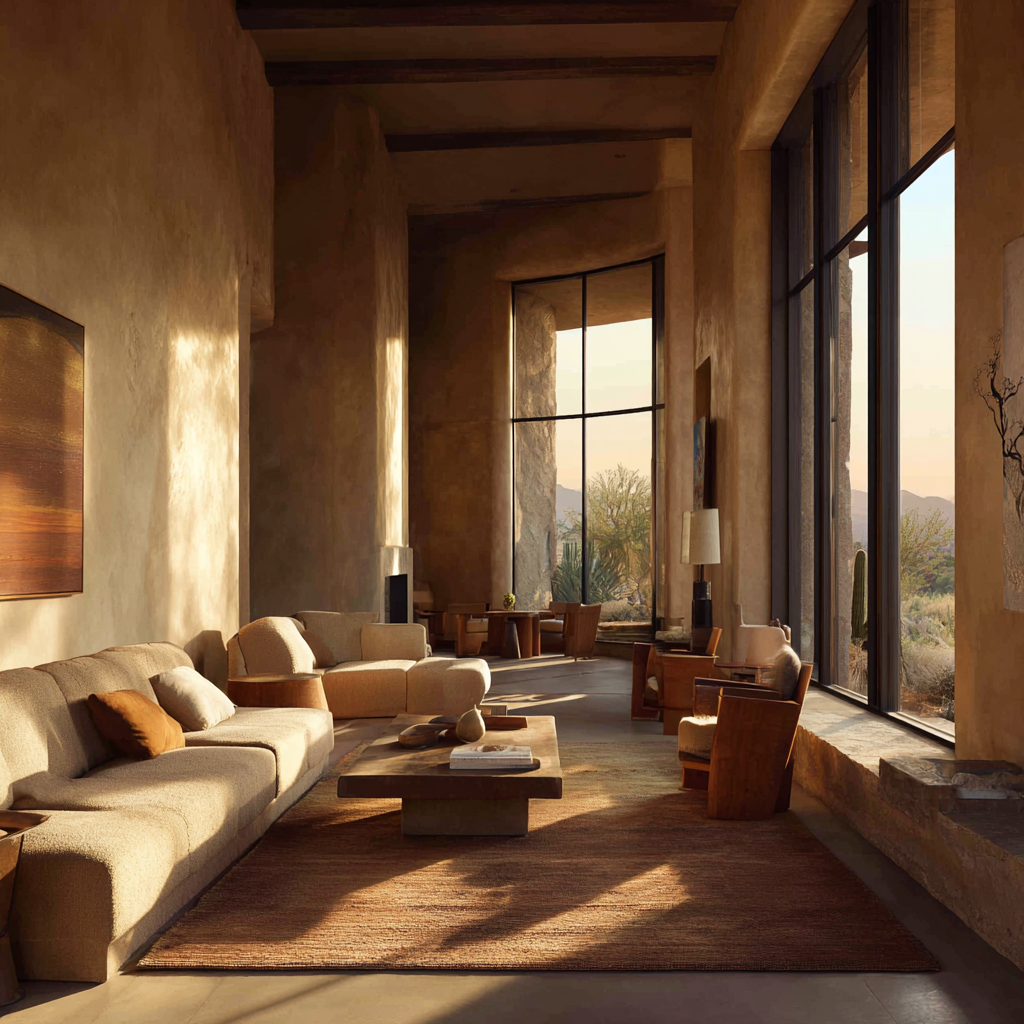
Desert modern expresses warmth through openness.
Earth tones.
Strong architectural lines.
Minimal ornamentation.
Sunlight as a defining presence.
The calm here feels expansive — like horizon and sky translated into a room.
You may lean this way if you find ease in openness and restraint, with warmth drawn from the land itself.
Explore further:
Desert Modern →
You Don’t Have to Choose Rigidly
You may recognize yourself in more than one.
You may shift over time.
Warm minimalism is not about committing to a label.
It is about noticing which atmosphere allows you to exhale.
Once you begin paying attention to that feeling — the direction becomes clearer.
And from there, the design decisions tend to follow naturally.
Because before choosing a style, it helps to recognize the shift that is already happening.
If you’re still orienting yourself, you may find it helpful to begin here:
What Is Warm Minimalism? →
7 Signs You’re Ready for Warm Minimalism →
Because before choosing a style, it helps to recognize the shift that is already happening.
Join the Circle of Warmth
Sign up for the Warm By Design newsletter on warm, intentional living.