What Is Warm Minimalism? The Design Style That Helps You Feel Better at Home
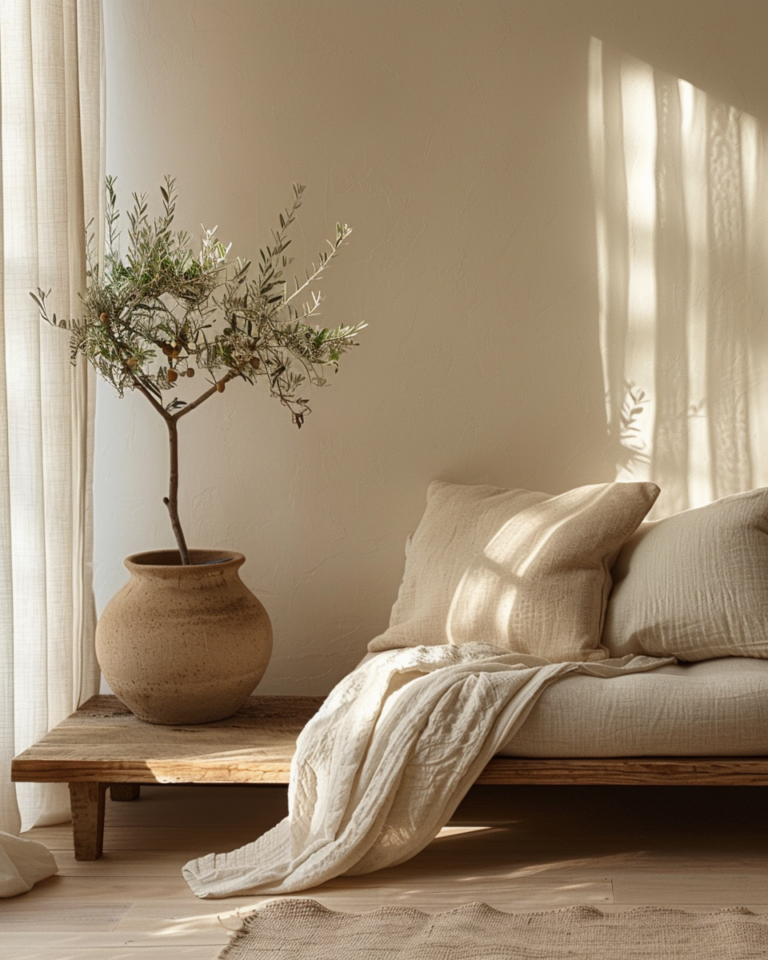
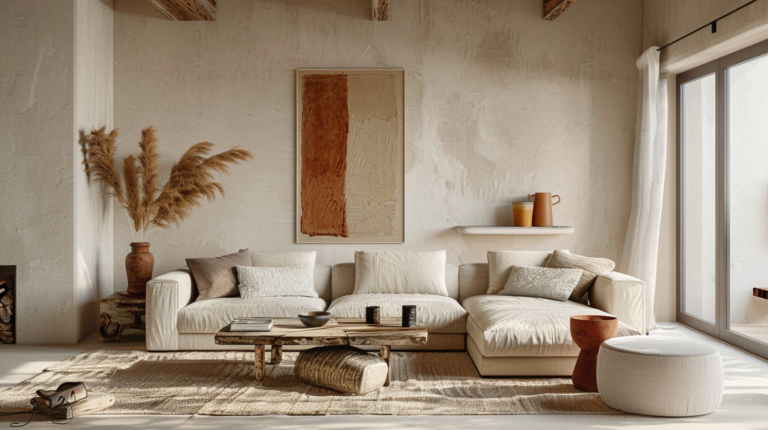
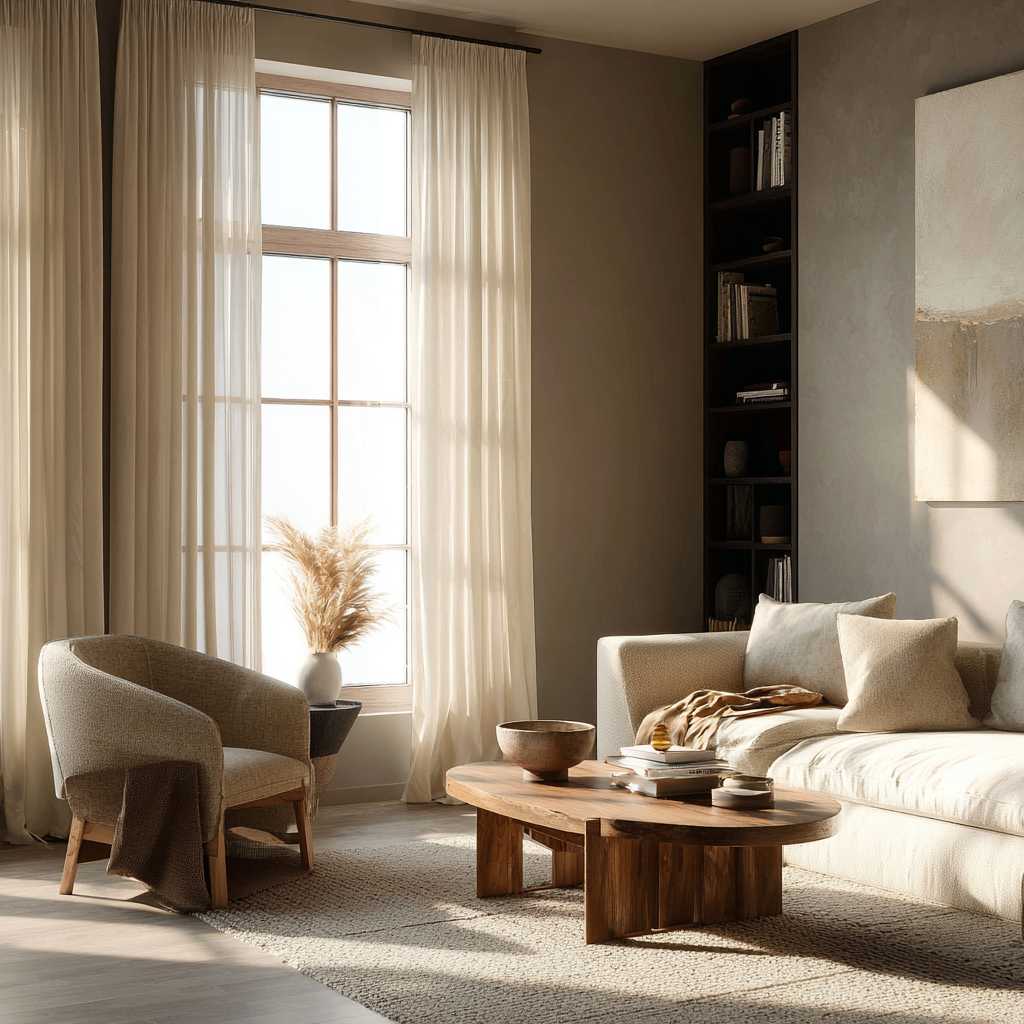
Warm minimalism is a design approach that blends simplicity with comfort, natural materials, and spaces that feel calm rather than sterile.
It wasn’t meant to feel empty, sterile, or untouchable. And yet for many people, that’s exactly what it became — white walls, hard lines, and rooms that looked beautiful in photographs but didn’t always feel good to live in.
Over the past decade, more and more homeowners have moved toward simplicity — only to realize they didn’t want less feeling. They wanted less noise.
That difference matters.
Warm minimalism emerged as a response to that tension. It keeps the clarity and calm of minimalism but softens it with texture, warmth, and natural materials. It creates space without stripping away comfort. It allows a home to breathe without making it feel bare.
Warm minimalism isn’t about owning as little as possible.
It’s about keeping what feels aligned — and letting go of what doesn’t.
It is simplicity designed for real life.
What Is Warm Minimalism?
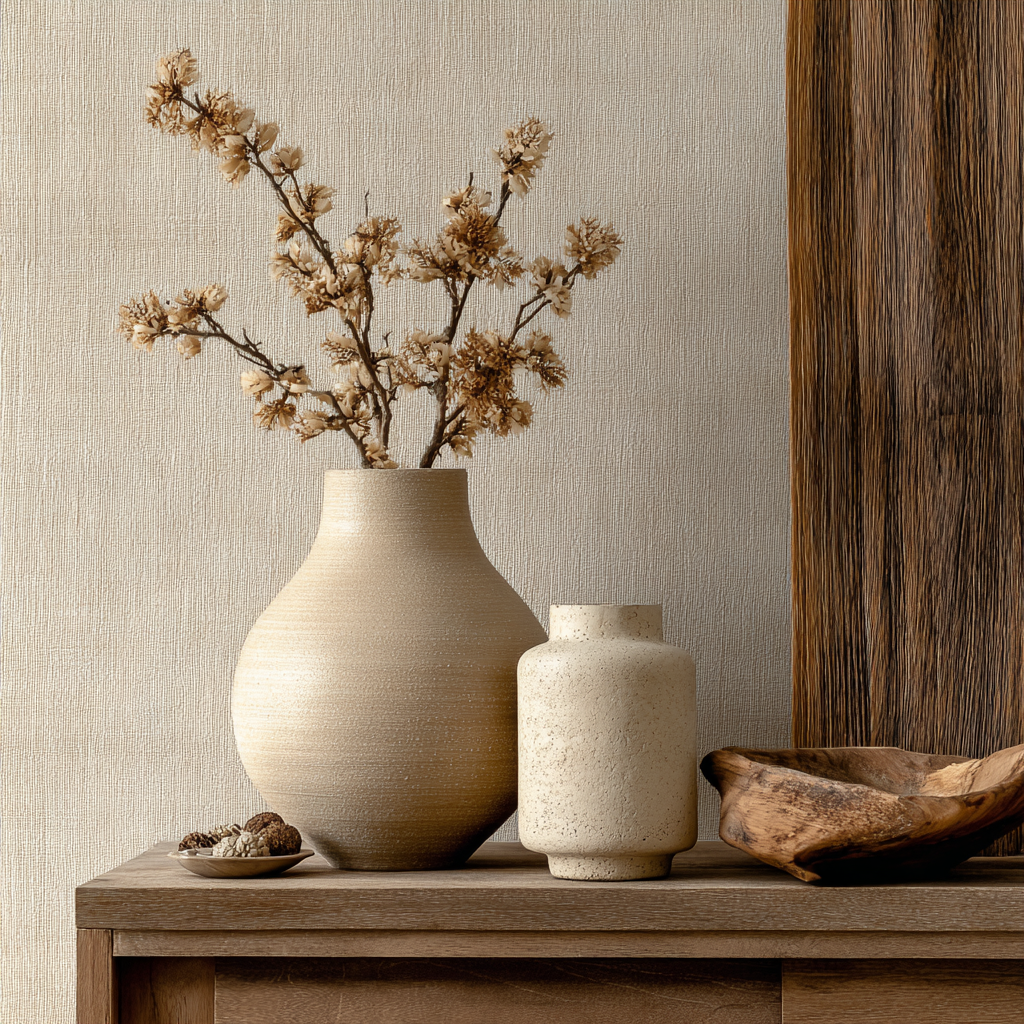
Warm minimalism is a design approach that blends the simplicity of minimalism with the comfort and softness of natural materials.
It focuses on:
- Clean lines
- Intentional spaces
- Neutral palettes
But instead of stark white and sharp contrast, it leans into:
- Warm whites
- Soft taupes
- Sand tones
- Natural wood
- Linen
- Stone
- Clay
The result is a space that feels calm — but not cold.
A room can be uncluttered and still feel inviting. It can be simple and still feel alive.
Warm minimalism is minimalism that understands the nervous system.
It reduces visual noise without removing emotional warmth.
Why Traditional Minimalism Feels Cold to Some People
Traditional minimalism often emphasizes stark contrast and visual emptiness.
White walls.
Black accents.
Very little texture.
Very few objects.
For some, that feels peaceful.
For others, it feels unfinished.
Humans are sensory beings. We respond to texture, softness, and warmth. When a space lacks those elements, it can feel emotionally distant — even if it looks visually clean.
Warm minimalism acknowledges that comfort matters.
It keeps:
✔ The clarity
✔ The simplicity
✔ The intentionality
But it reintroduces:
✔ Natural materials
✔ Layered lighting
✔ Organic shapes
✔ Soft transitions
It’s minimalism that feels lived in — not staged.
The Core Principles of Warm Minimalism
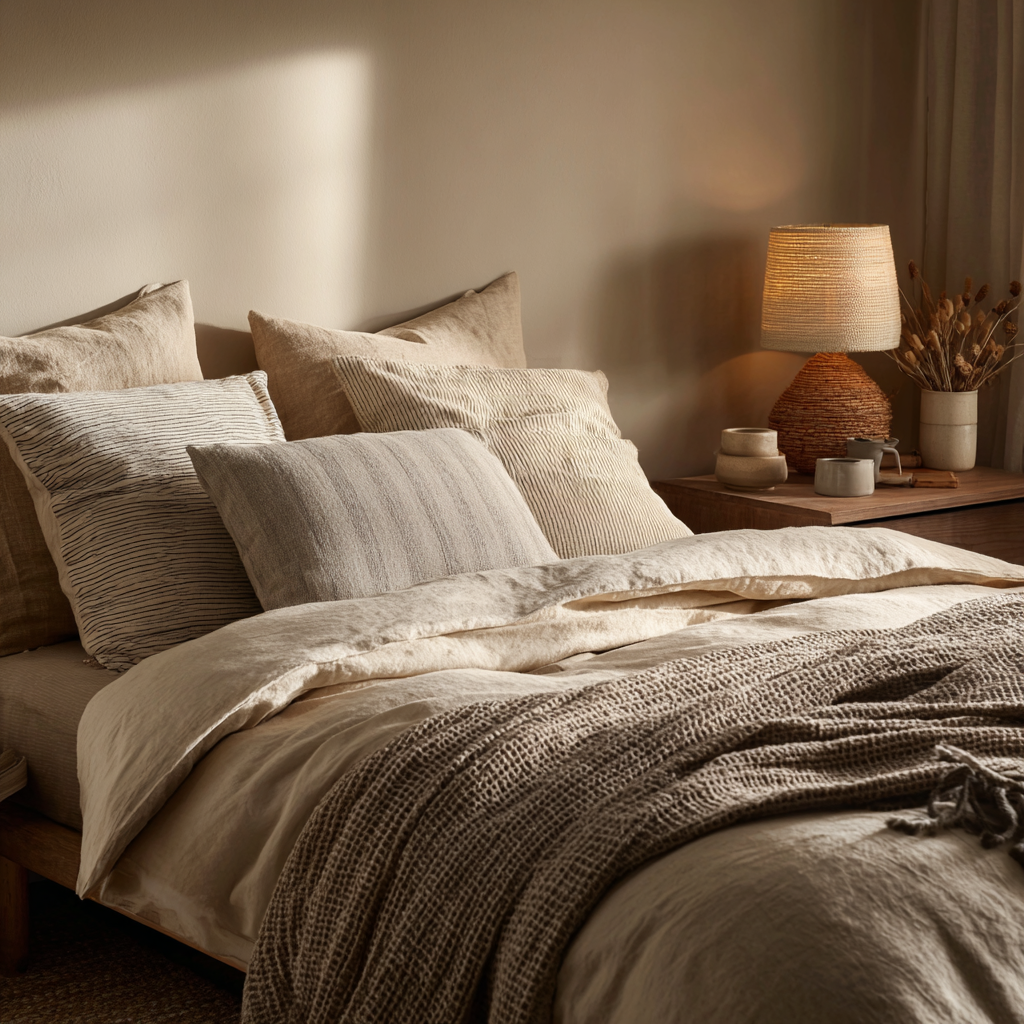
Warm minimalism isn’t random. It follows clear design principles.
Warm Neutral Color Palettes
Think cream, oat, sand, mushroom, clay, soft greige. Avoid harsh, blue-toned whites.
Natural Materials
Wood. Linen. Wool. Stone. Ceramic. Rattan. Materials that age well and feel grounded.
Soft Lighting
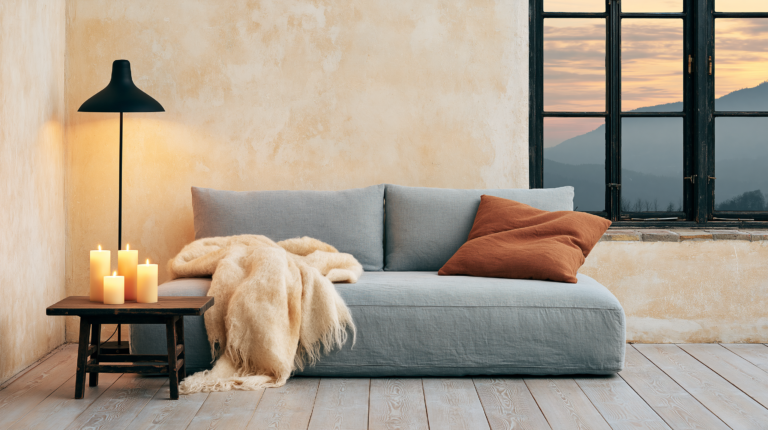
Layered lighting over overhead glare. Warm bulbs instead of cool white.
Intentional Negative Space
Not emptiness — breathing room.
Fewer, Better Pieces
Quality over quantity. Objects chosen with care.
Emotional Comfort
If it doesn’t feel good, it doesn’t belong.
Warm minimalism is not about aesthetic perfection.
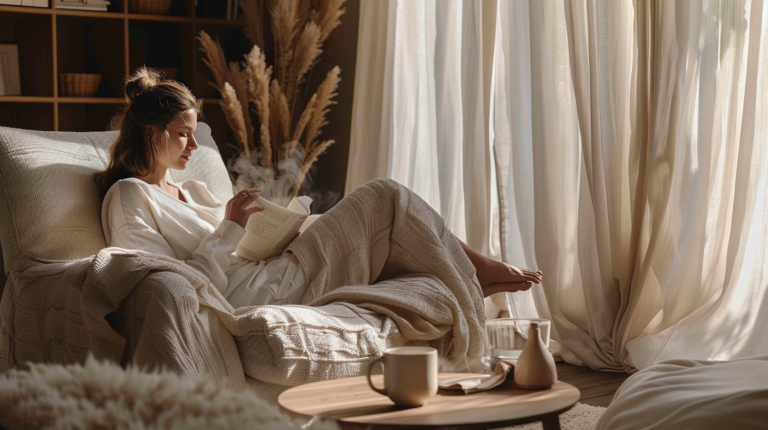
It’s about how the space makes you feel when you walk into it at the end of a long day.
Scandinavian Design: A Light-Filled Path to Warm Minimalism
Scandinavian interiors are one of the most accessible expressions of warm minimalism.
They emphasize:
- Simplicity
- Function
- Natural light
- Pale wood tones
- Soft neutral palettes
At their best, Scandinavian spaces feel airy yet grounded — uncluttered yet human.
Where traditional minimalism can feel stark, Scandinavian design introduces:
- Cozy layering
- Warm wood
- Everyday practicality
- Soft texture
It brings warmth through lightness.
If warm minimalism is the destination, Scandinavian design is one beautiful route there — one that leans toward brightness, softness, and quiet comfort.
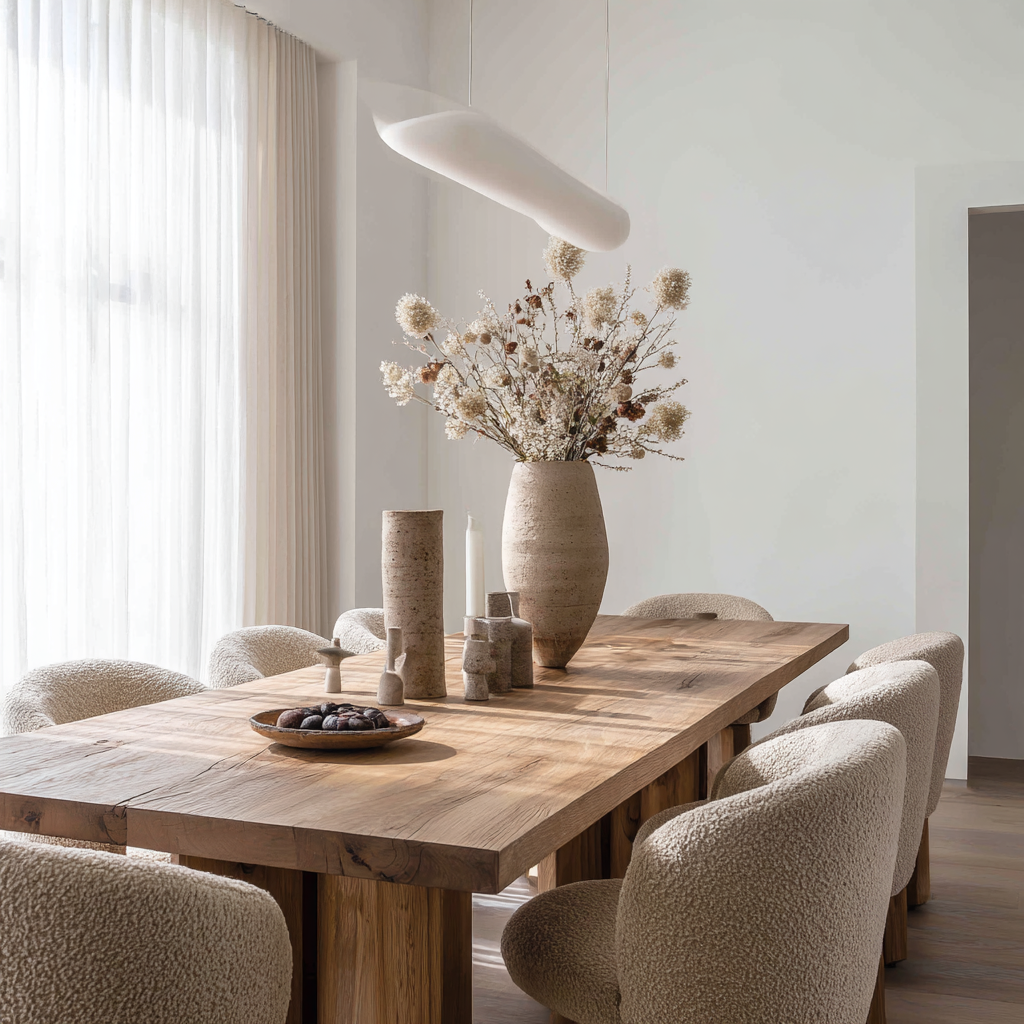
Japandi: A Grounded, Intentional Expression of Warm Minimalism
Japandi blends Japanese restraint with Scandinavian warmth.
It often includes:
- Richer wood tones
- Clean silhouettes
- Handcrafted ceramics
- Thoughtful negative space
Japandi expresses warm minimalism in a deeper, more grounded way.
The warmth comes from:
- Natural materials
- Hand-made textures
- Earth-toned palettes
- Strong yet balanced contrast
It feels quiet. Intentional. Refined.
Where Scandinavian warmth feels airy and light, Japandi warmth feels steady and rooted.
Both create calm.
Both reduce noise.
Both soften minimalism.
They simply speak in different tones.
Warm minimalism is not one look.
It is a feeling expressed through many aesthetics.
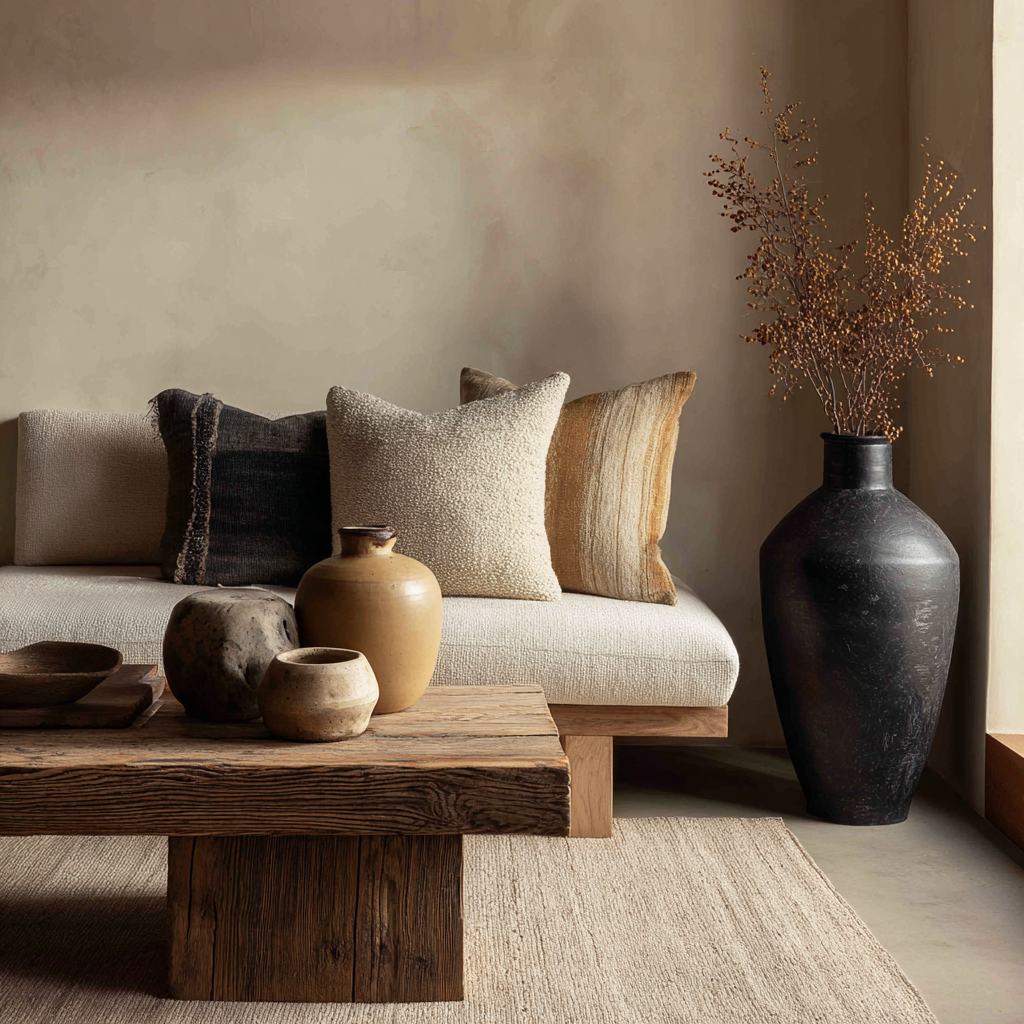
How to Create a Warm Minimalist Home
You don’t need to start over.
Begin gently.
Declutter With Compassion
Remove what doesn’t serve you — not what doesn’t photograph well.
Adjust Your Lighting
Switch to warm bulbs (2700K–3000K). Add lamps. Turn off overhead glare.
Add Texture
Layer linen throws, woven baskets, wool rugs.
Choose Cohesive Neutrals
Stay within a warm tonal family.
Replace, Don’t Add
Instead of buying more, upgrade what you already use.
The goal isn’t a magazine-ready room.
It’s a room that lets your shoulders drop.
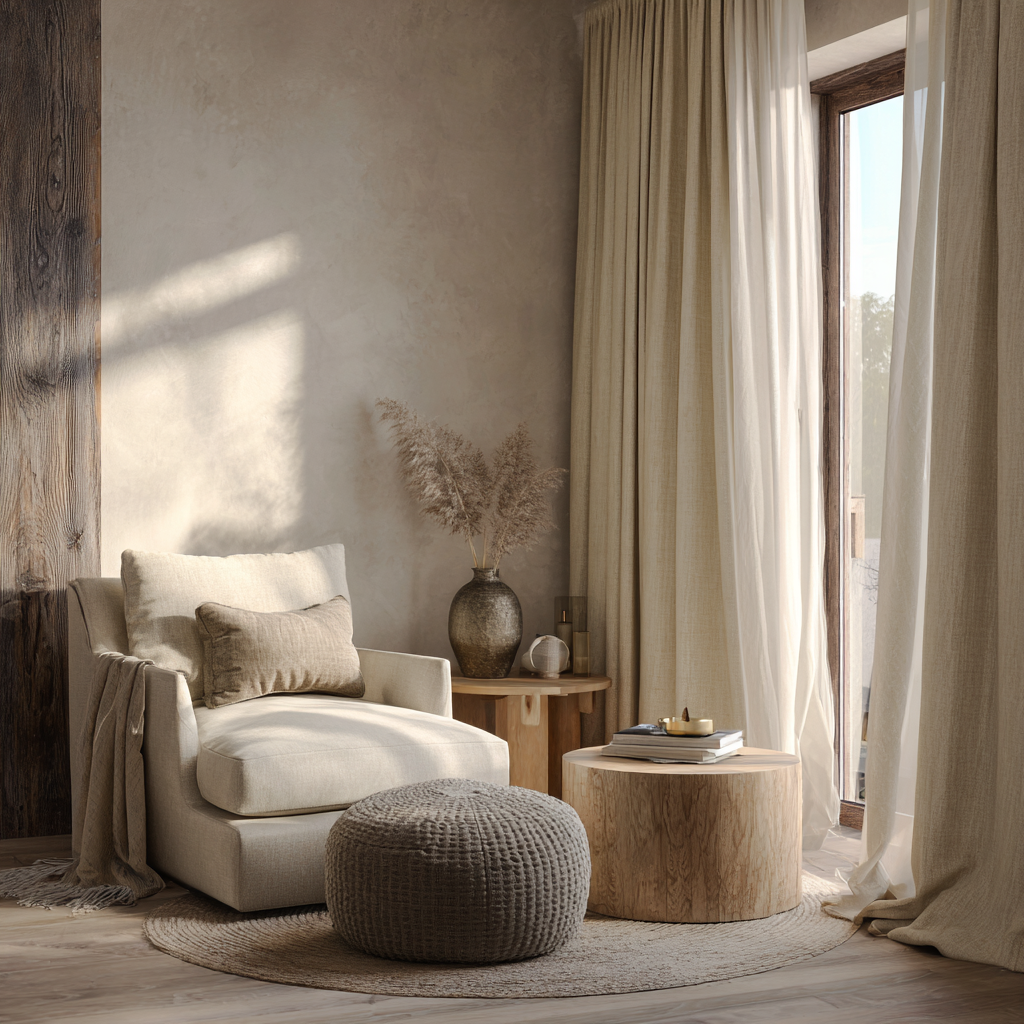
Why Warm Minimalism Feels So Good
Clutter increases cognitive load.
Harsh lighting increases stress.
Visual chaos keeps the nervous system alert.
Warm minimalism does the opposite.
It creates visual rhythm.
Soft contrast.
Calm repetition.
Gentle light.
Your brain reads the space as safe.
And when your home feels safe, your body relaxes.
That is the real purpose of warm minimalism.
Not trends.
Not perfection.
Not performance.
Relief.
The Design Styles That Express Warm Minimalism
Warm minimalism isn’t a single aesthetic. It’s a philosophy that appears across several design traditions, each interpreting warmth and simplicity in a slightly different way.
Some of the most recognizable expressions of warm minimalism include:
• Scandinavian design — bright spaces, pale woods, and functional simplicity
• Japandi — a fusion of Japanese restraint and Scandinavian comfort
• Organic Modern — sculptural forms and strong connections to nature
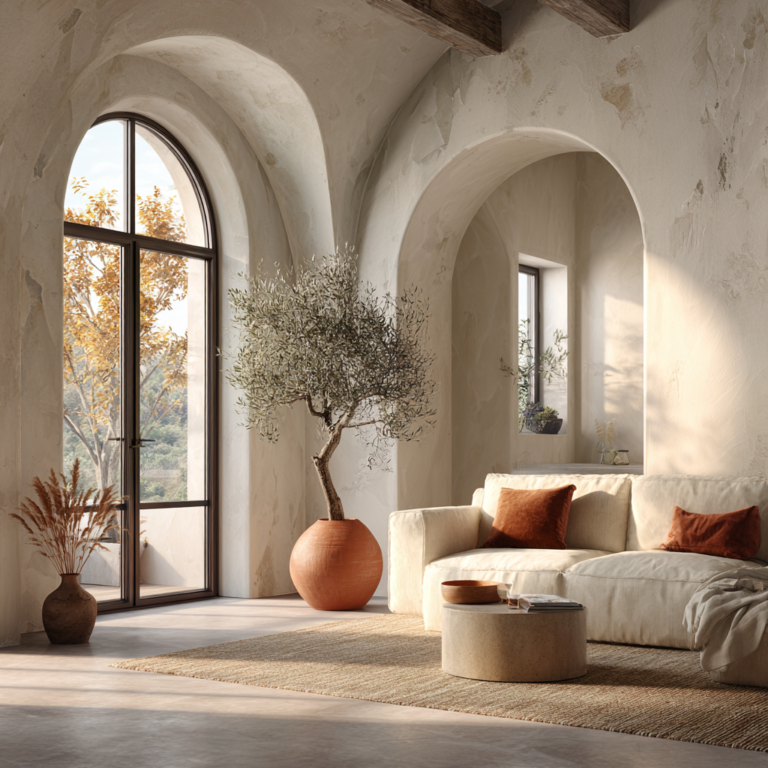
• Modern Mediterranean — sun-washed interiors, plaster textures, and natural stone
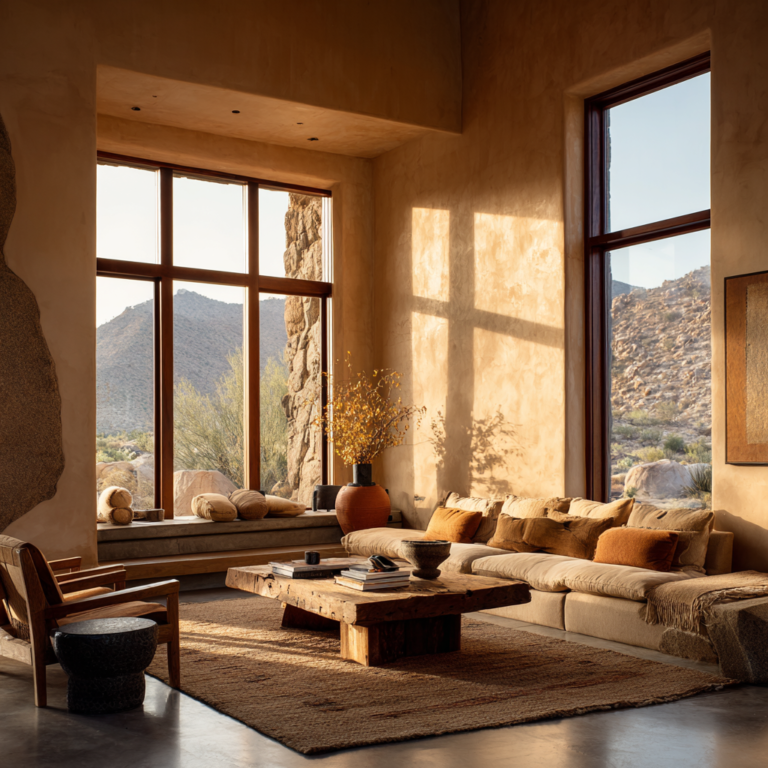
• Rustic Modern — minimal structure softened with raw materials and warmth
You can explore these approaches in the full Warm Minimalism Styles Guide.
Is Warm Minimalism Right for You?
Warm minimalism might be right for you if:
- You love simplicity but not stark spaces
- You crave calm but also comfort
- You want your home to feel like an exhale
- You value quality over quantity
- You believe beauty should feel livable
If minimalism once felt too rigid — warm minimalism may feel like coming home.
A Home That Feels Like Relief
A home should not feel like a showroom.
It should not feel like a performance.
It should not feel like a place you are trying to impress from.
It should feel like a soft landing.
Warm minimalism is not about strict rules or aesthetic purity. It is about alignment. It is about choosing less — but choosing better. It is about removing what distracts so you can notice what matters.
It asks a simple question:
Does this space let you breathe?
If the answer is yes, you are already practicing warm minimalism.
Because at its heart, this style is not about how a room looks.
It is about how you feel when you walk into it.
And when your shoulders drop, when the noise quiets, when your home feels steady instead of stimulating — that is the moment design becomes something deeper than decoration.
It becomes care.
Join the Circle of Warmth
A quiet letter on warm, intentional living — delivered occasionally.