A Complete Guide to Modern Mediterranean Design for Calm, Intentional Living
Modern Mediterranean Design: Coastal Serenity Meets Warm Minimalism and Intentional Living
Modern Mediterranean design represents a sophisticated evolution of traditional coastal aesthetics, masterfully blending the sun-drenched warmth of Greece, Italy, and Spain with the refined clarity of contemporary minimalism.
This style captures what designers call “casual elegance”—spaces that cultivate an atmosphere free from overdone stuffy details seen in typical Mediterranean style, instead embracing a more subtle, streamlined approach that feels both timeless and thoroughly current.
Unlike traditional Mediterranean design with its vibrant hues and busy patterns, the modern approach is more subtle and simple in style.
It focuses on clean lines, neutral palettes, and carefully curated elements that evoke the region’s essential character without overwhelming the senses.
As designers at DKOR Interiors explain, it’s about “seamlessly juxtaposing the comforts of modern living with the rich, and historic old-world elements of the Mediterranean world.”
A delicate balance.
Honoring heritage while meeting contemporary lifestyle needs.
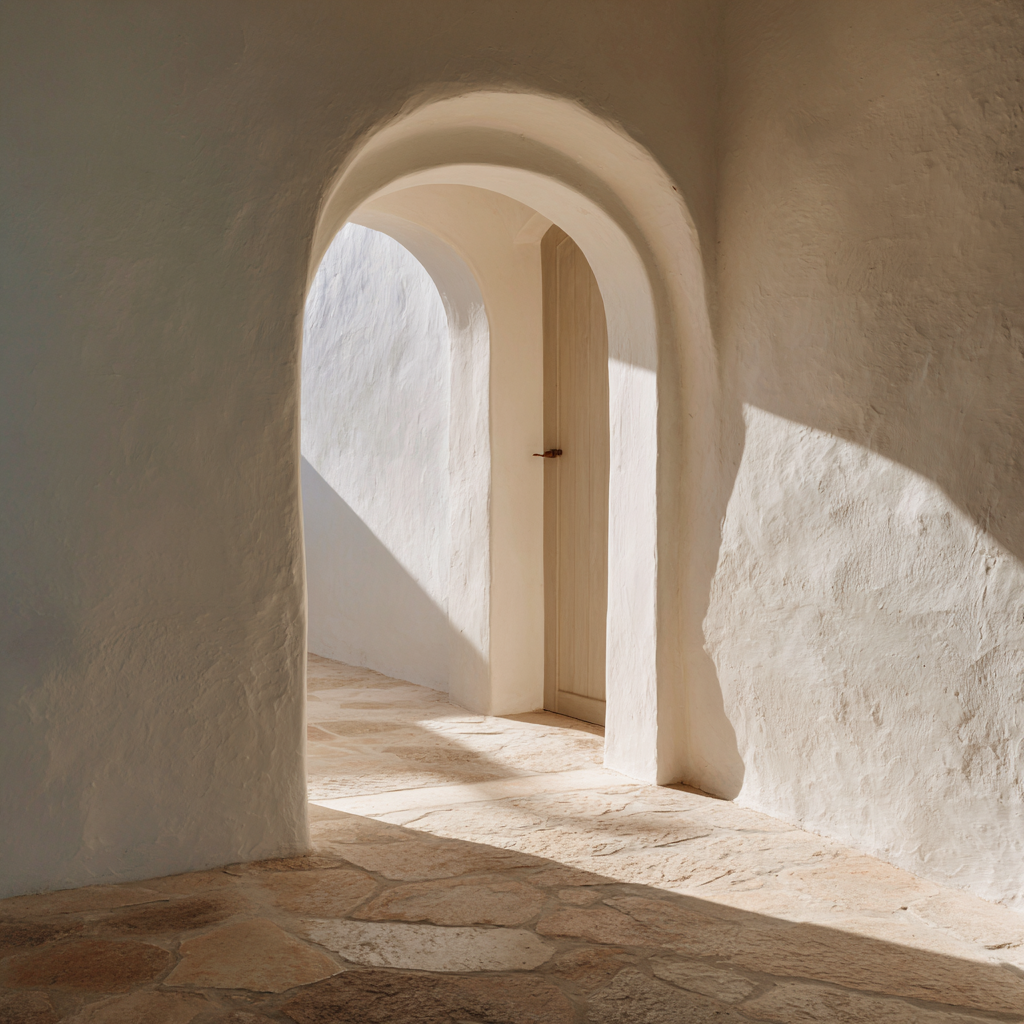
The style’s roots trace back centuries to ancient civilizations along the Mediterranean Sea.
Greek architects valued simplicity, proportion, and harmony.
Romans introduced elaborate details like arches, domes, and intricate mosaics.
In the 20th century, designers like Tobia Scarpa and later Amber Lewis reimagined these principles with modern sensibilities.
Today, particularly in California and coastal regions worldwide, Modern Mediterranean has become synonymous with relaxed sophistication and intentional living.
Modern Mediterranean perfectly embodies the principles of warm minimalism.
It creates sun-drenched, inviting spaces that feel lived-in yet uncluttered.
Every element serves a purpose—whether functional or bringing joy—reflecting a philosophy of intentional living that prioritizes mindfulness, sustainability, and connection to place.
In a world characterized by excess and distraction, Modern Mediterranean offers an antidote:
Spaces that encourage slowing down.
Savoring simple pleasures.
Cultivating a sense of timeless escape.
How Modern Mediterranean Design Embodies Warm Minimalism and Intentional Living
The Synergy of Mediterranean Warmth and Modern Restraint
Modern Mediterranean achieves a remarkable balance between organic coastal warmth and contemporary minimal clarity.
This synergy creates nurturing, soulful environments that avoid the coldness sometimes associated with strict minimalism.
Light-Filled Openness
Contemporary Mediterranean interiors focus on natural light and open planning.
Large windows, clerestories, and skylights flood spaces with sunshine.
This is not merely aesthetic.
It supports circadian rhythms, improves mood, and reduces energy consumption.
Organic Forms Softening Modern Lines
Clean silhouettes define the style.
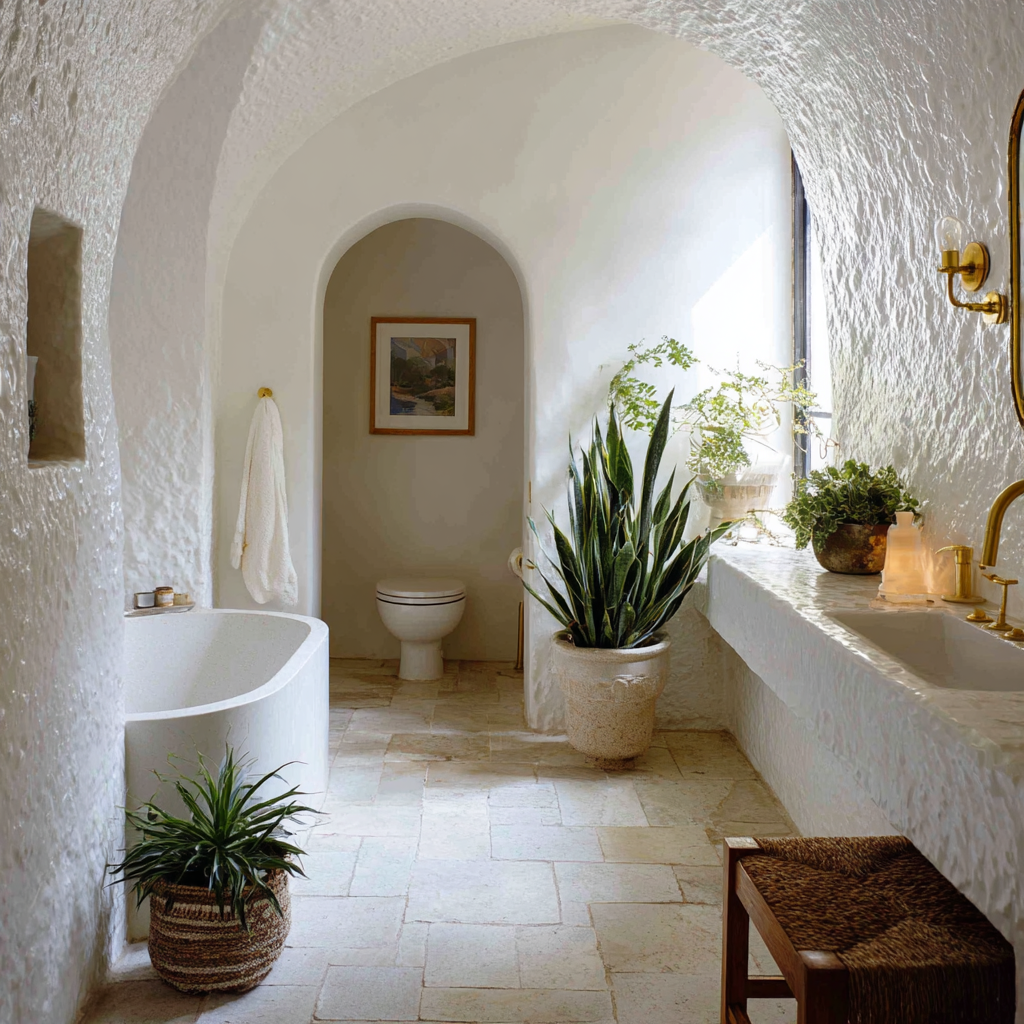
But arches, rounded edges, curved mirrors, and flowing textiles soften geometry.
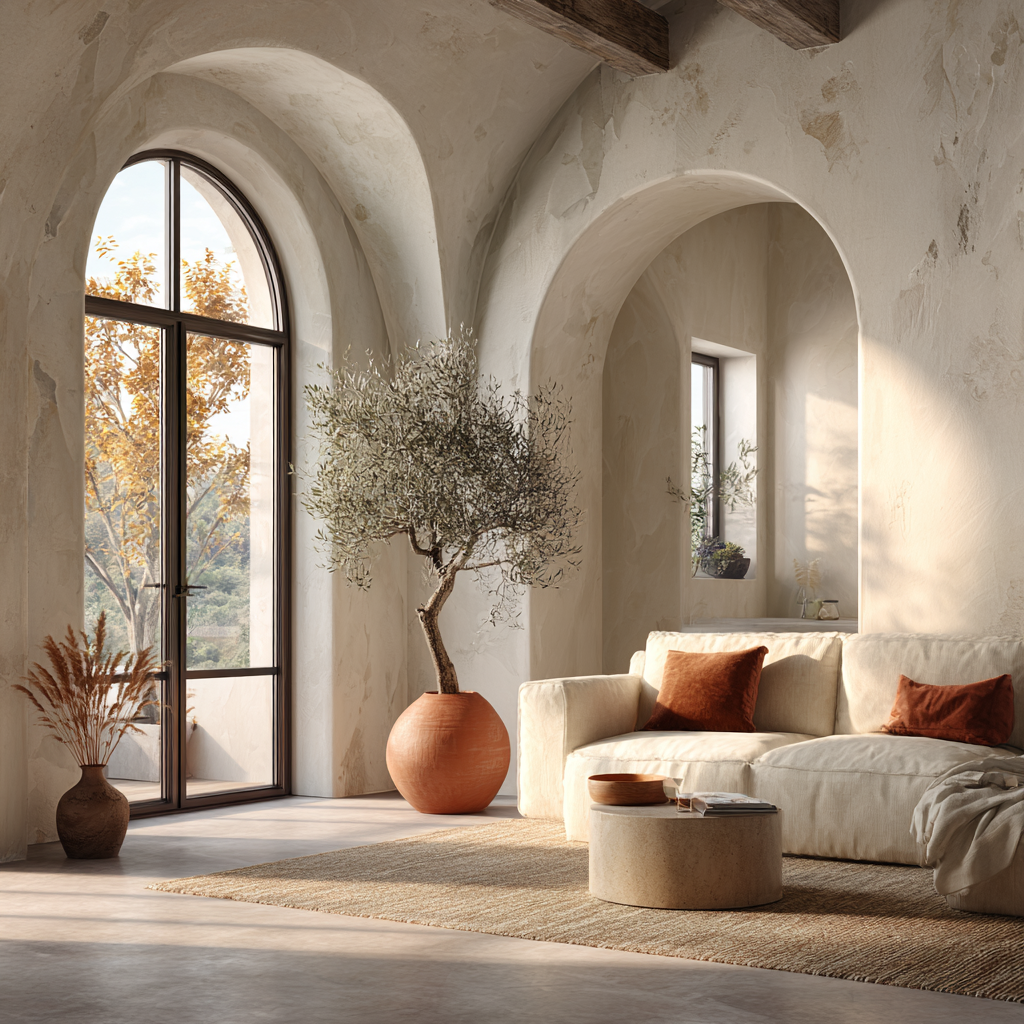
Arched doorways bring openness, flow, and elegance.
The atmosphere becomes calm rather than rigid.
Natural Materials Creating Tactile Warmth
Extensive use of stone, wood, terracotta, linen, and rattan creates warmth impossible to replicate with synthetic materials.
Jute, rattan, and bamboo add depth and softness.
These materials bring sensory richness without visual clutter.
Curated Rather Than Cluttered
Not everything needs to be a showstopper.
Allow one antique table or handcrafted ceramic piece to stand out.
Intentional curation replaces excess decoration.
Intentional Living Through Mediterranean-Inspired Design
Eco-Conscious Material Sourcing
Mediterranean architecture has long prioritized locally sourced materials.
Limestone, sandstone, sustainably sourced wood, clay, and lime plasters reduce carbon footprint and enhance authenticity.
Modern adaptations include reclaimed wood, organic fabrics, and energy-efficient lighting.
Choosing sustainable materials fosters healthier living spaces and reduces harmful chemicals.
Passive Climate Design
Thick walls, white façades, cross-ventilation, high ceilings, and shaded terraces reduce dependence on artificial cooling.
Design works with the climate.
Not against it.
Timeless Design Over Trends
Modern Mediterranean avoids fleeting trends.
Its timeless appeal ensures spaces remain relevant for years.
This aligns directly with intentional living—investing in quality that lasts.
Key Elements of Modern Mediterranean Design
Materials: Natural, Durable, and Authentic
Whitewashed Plaster and Stucco
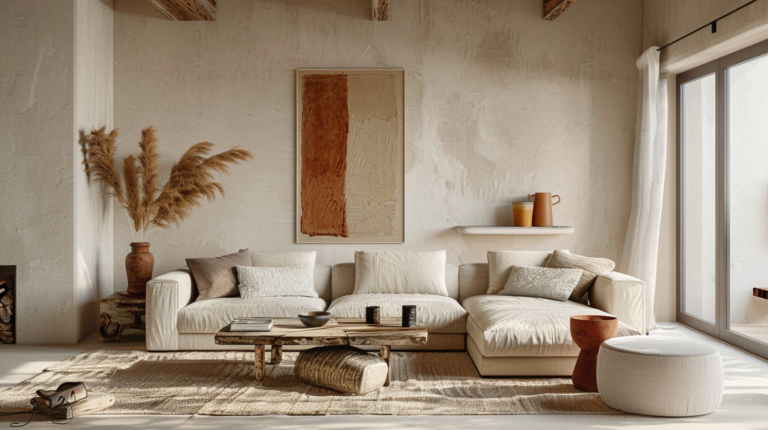
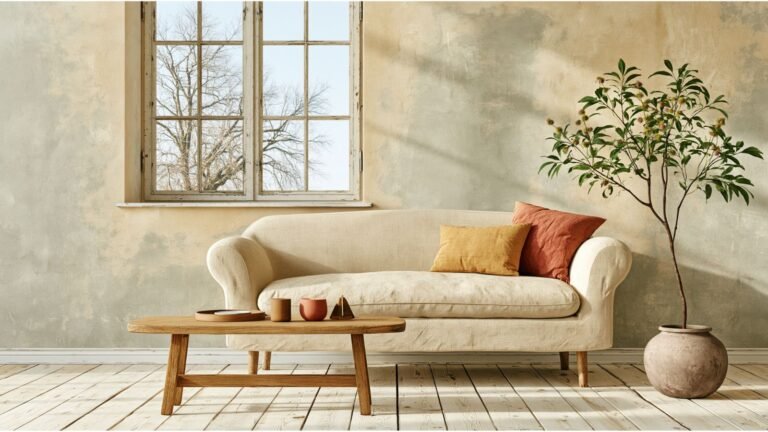
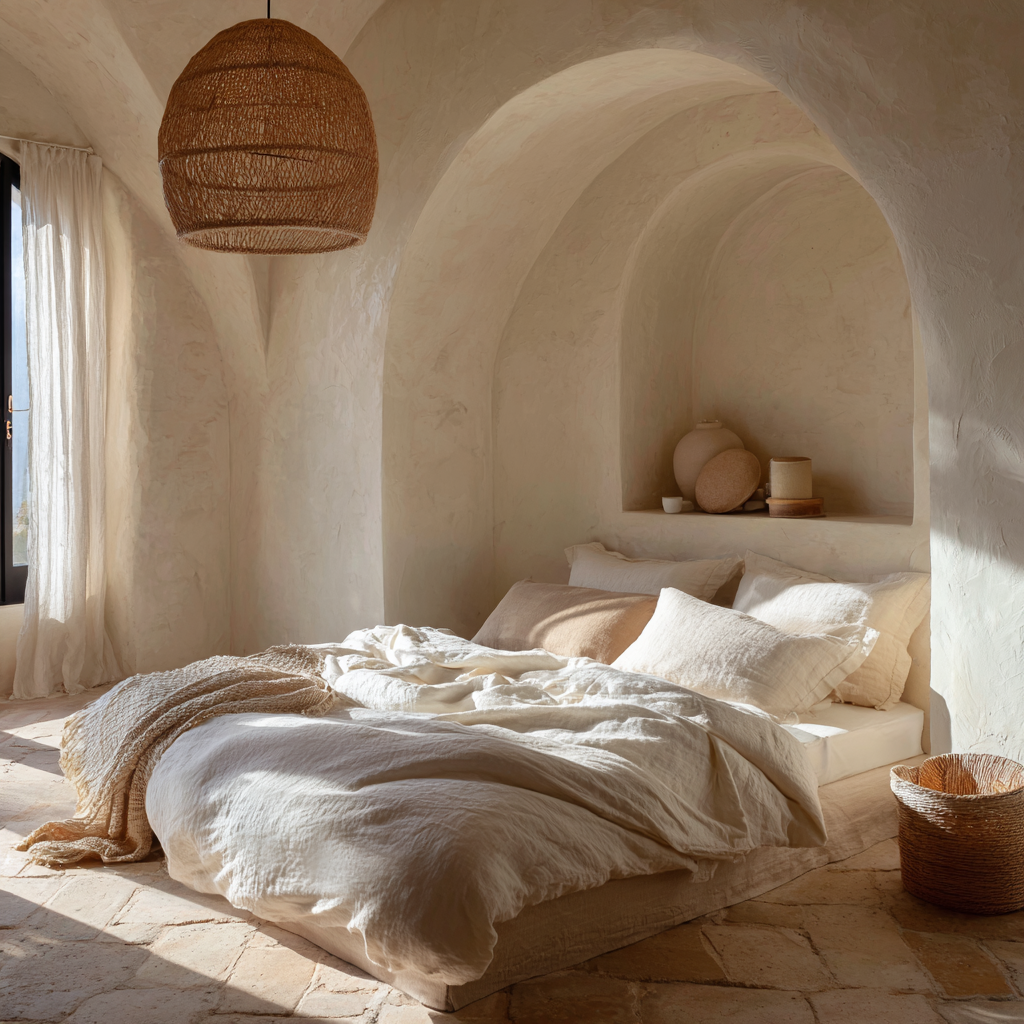
Smooth plaster walls in warm white or soft ivory create the quintessential backdrop.
Textured surfaces reflect light while adding subtle visual interest.
Low-VOC lime-based plasters enhance sustainability.
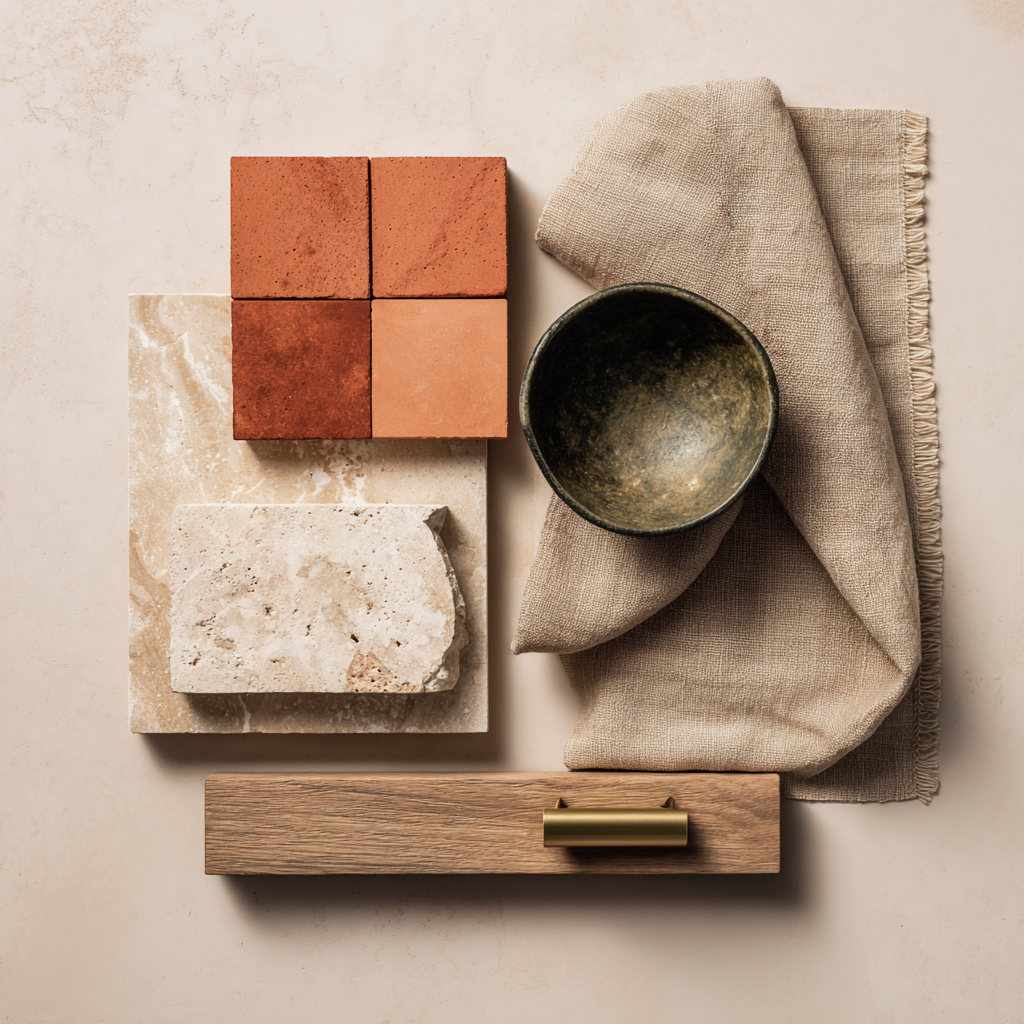
Terracotta Tiles
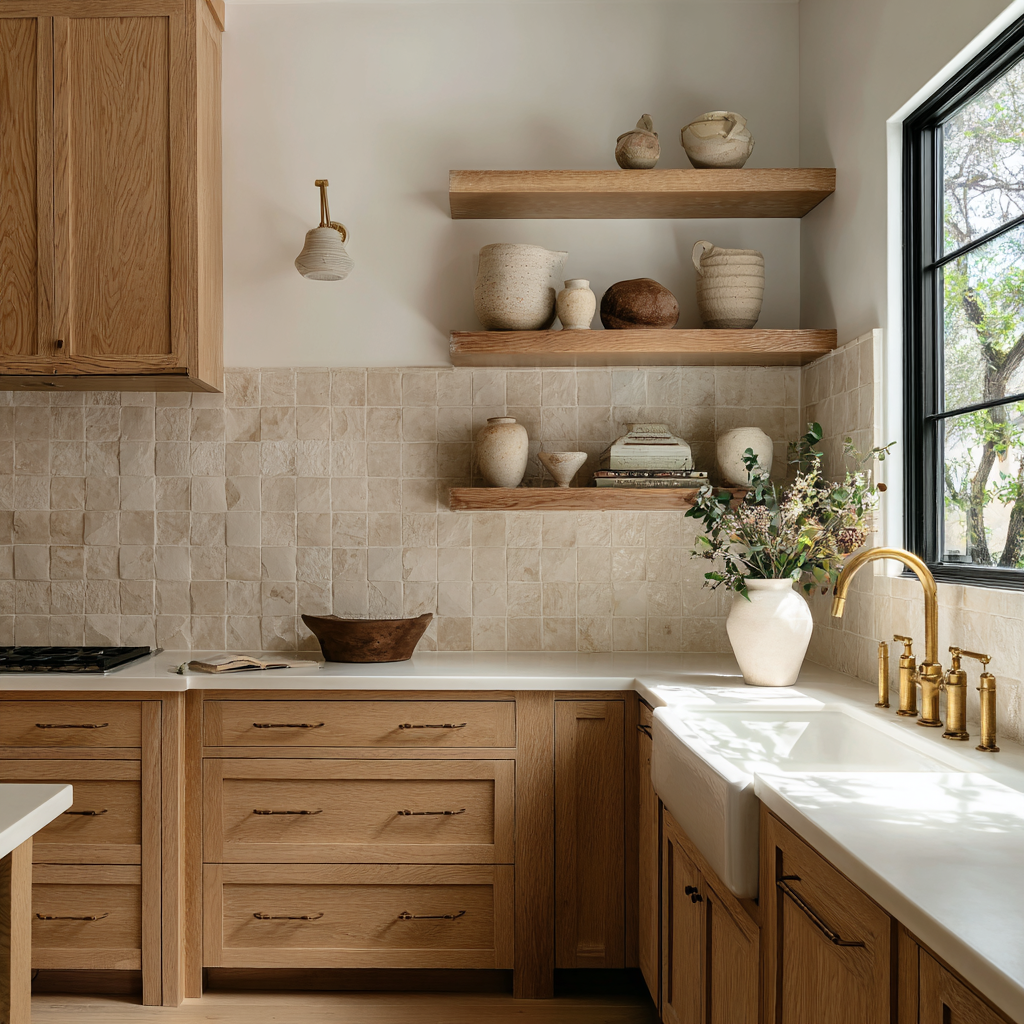
Terracotta tiles appear in kitchens, bathrooms, stair risers, and flooring.
Their earthy tones ground spaces with warmth.
Handmade variations add depth without chaos.
Stone
Limestone, sandstone, and travertine are used for walls and floors.
Stone countertops and fireplaces bring grounding mineral presence.
Wood
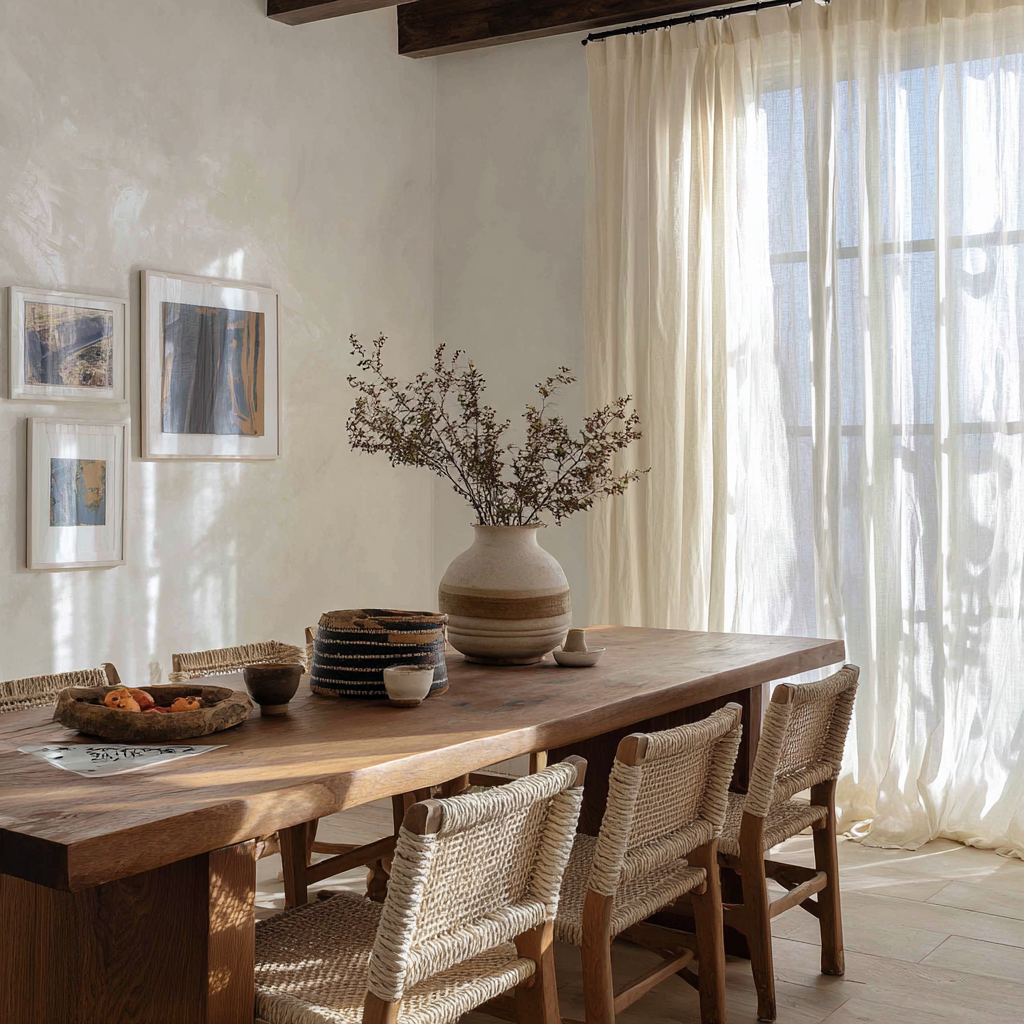
Light to medium-toned woods such as oak and ash dominate.
Reclaimed beams add character.
Natural finishes preserve grain and texture.
Wrought Iron and Metal
Wrought iron railings, geometric light fixtures, and matte black accents balance organic materials.
Brass and bronze hardware add warmth.
Linen and Natural Textiles
Linen softens modern edges.
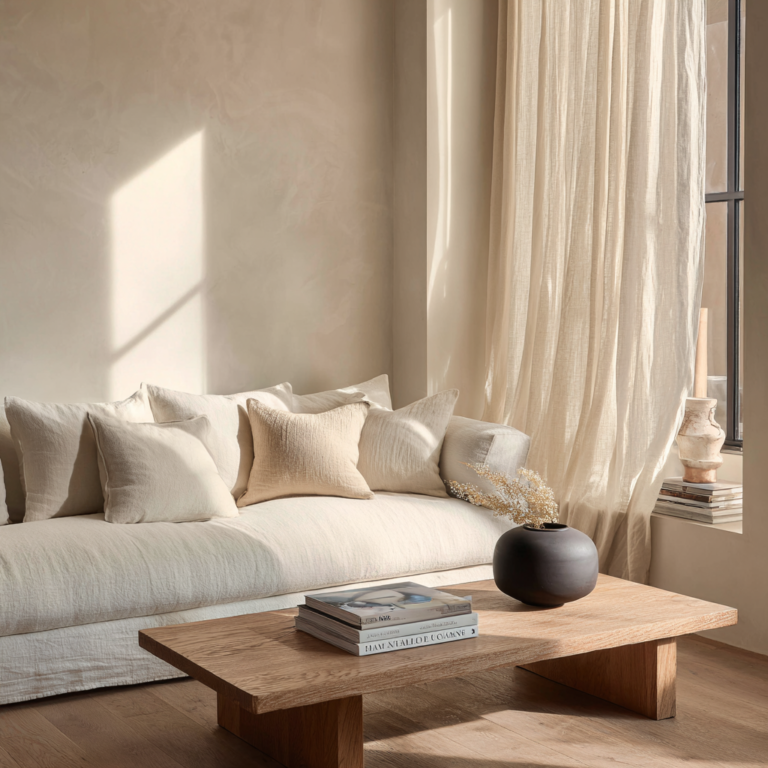
Used for curtains, upholstery, bedding, and table linens.
Supplement with cotton, wool, jute, and sisal.
Biophilic Elements: Connecting to Coastal Landscapes
Abundant Natural Light
Floor-to-ceiling windows frame outdoor views.
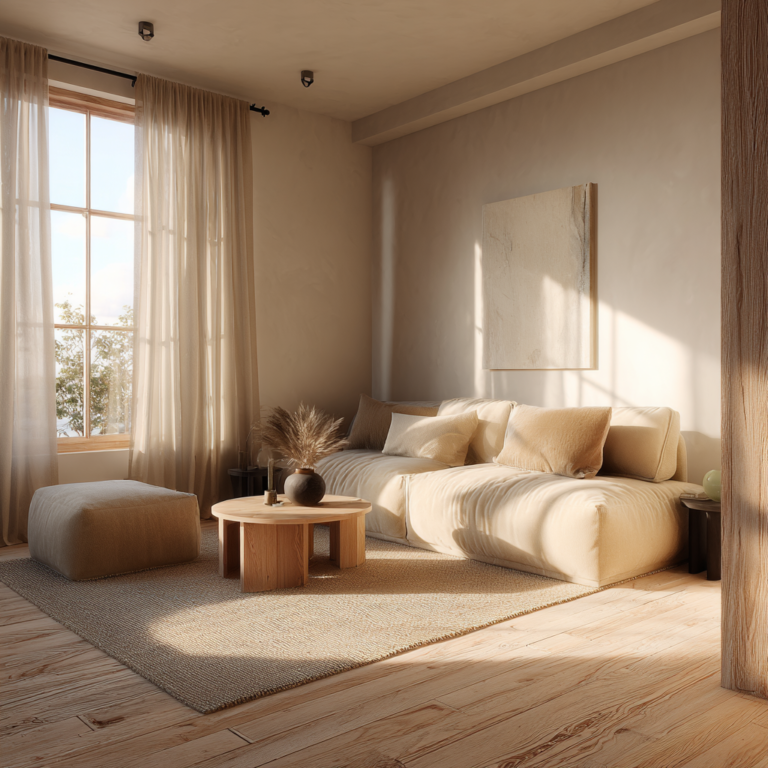
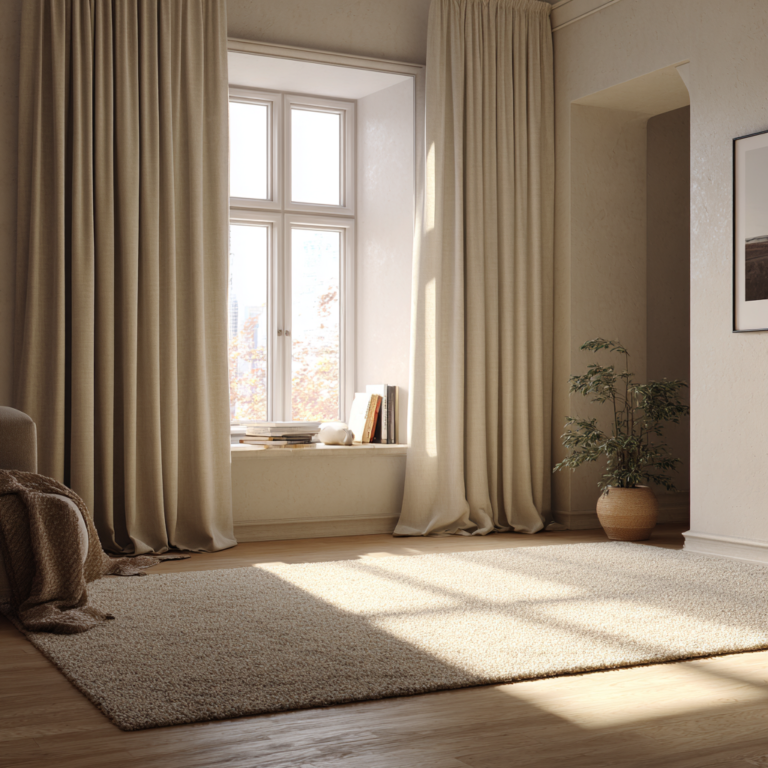
Sheer linen curtains diffuse harsh afternoon sun.
Wooden shutters offer adjustable control.
Mediterranean Plants
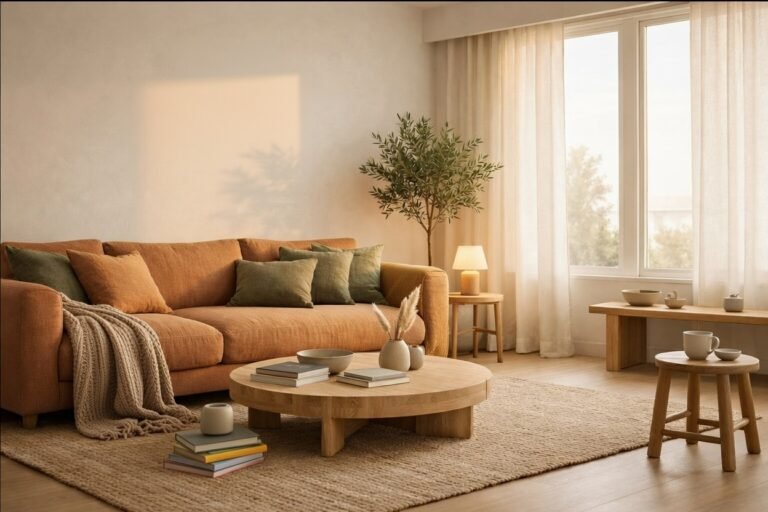
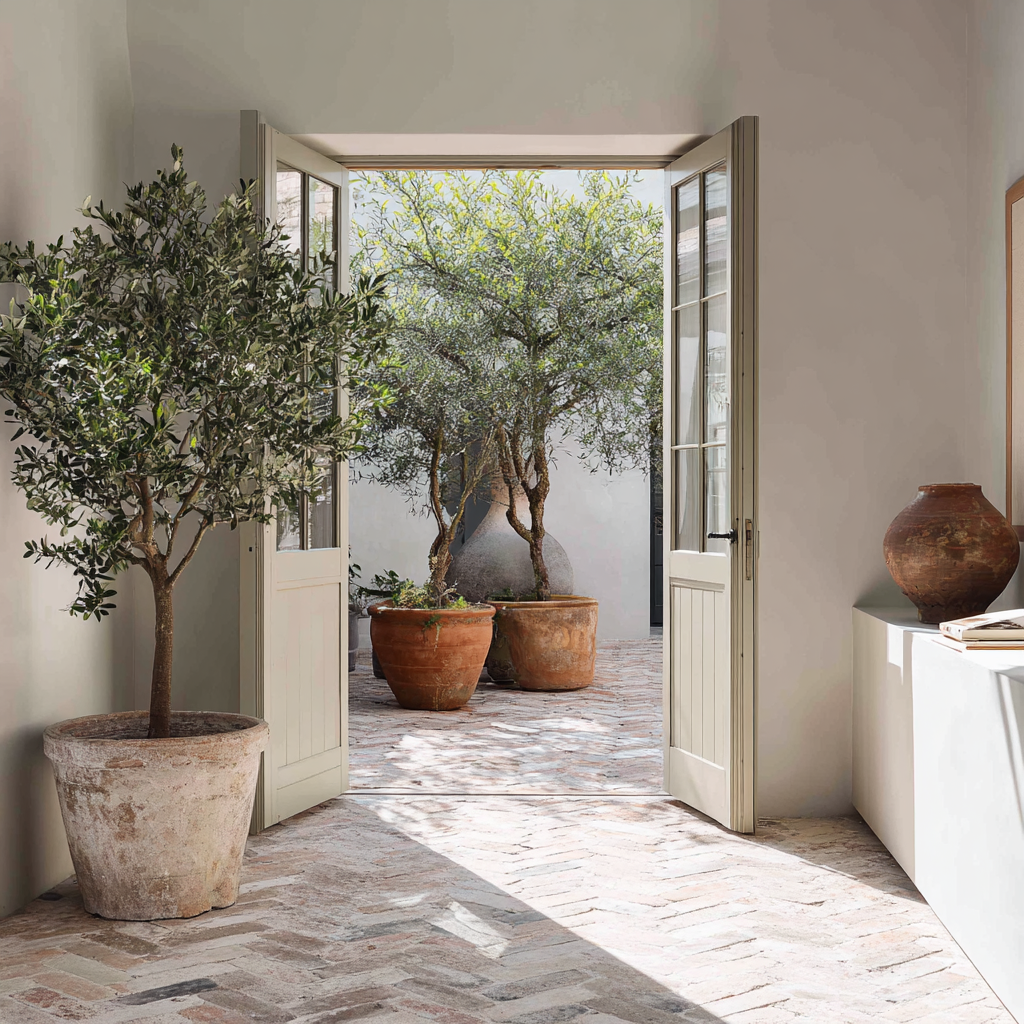
Olive trees, lemon trees, lavender, rosemary, succulents.
These plants purify air and add living beauty.
Herb gardens embody functional elegance.
Indoor-Outdoor Flow
Large sliding doors connect patios and terraces to living spaces.
Consistent flooring materials extend visual continuity.
Covered outdoor seating areas expand living space.
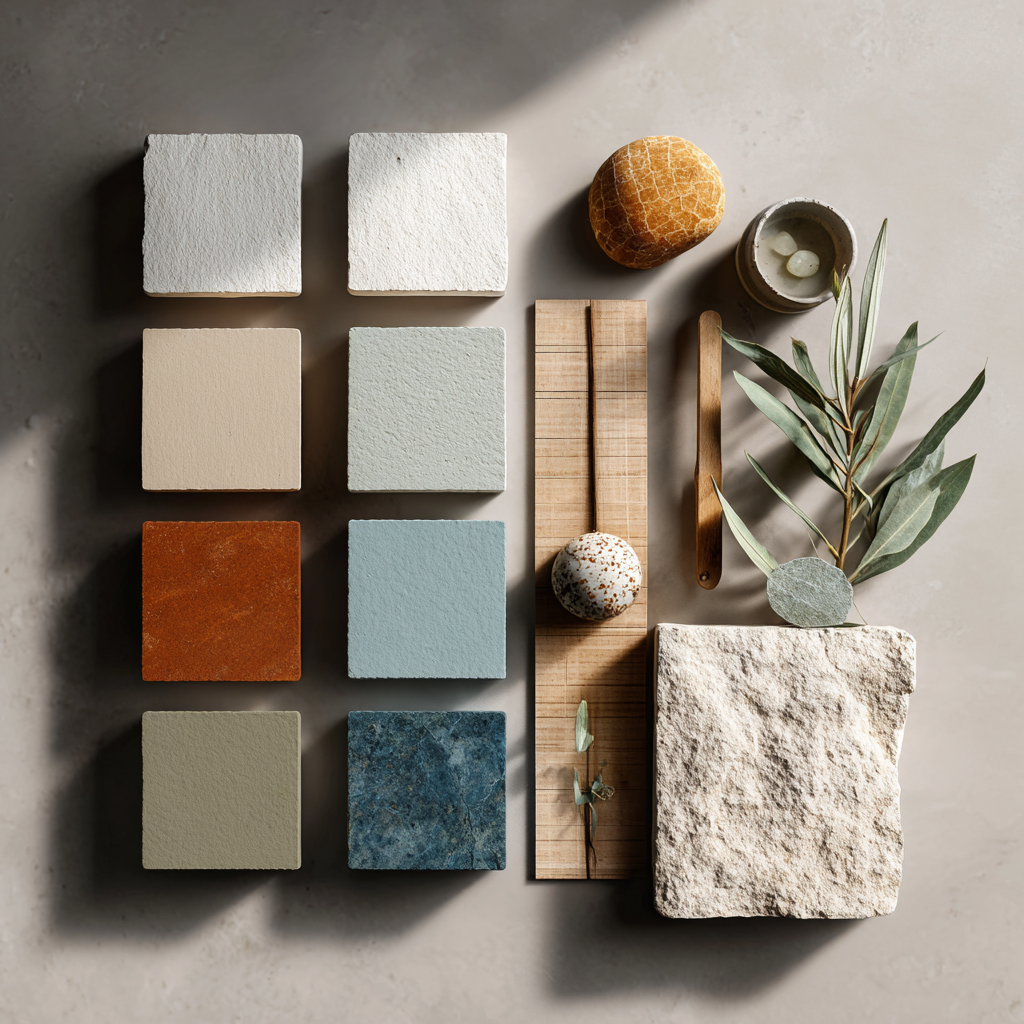
Color Palette: Sun-Inspired Neutrals
The palette draws from:
• Sun-bleached stone
• Terracotta earth
• Azure sea
• Olive groves
• Golden sunlight
Foundation Neutrals
Warm whites, sandy beiges, earthy browns.
Used on walls and large surfaces.
Terracotta Tones
Peachy-red to deep clay.
Used in flooring, pottery, textiles.
Coastal Blues and Greens
Soft blue-gray, sage, seafoam.
Used sparingly as accents.
Golden Accents
Brass fixtures, warm woods, ochre textiles.
Furniture and Layout: Streamlined Forms with Subtle Character
Furniture Selection
Clean silhouettes dominate.
Mix modern pieces with a few traditional accents.
Low to medium profiles maintain horizontal emphasis.
Natural upholstery in linen or leather.
Architectural Details
Arched doorways.
Vaulted ceilings.
Exposed beams.
Curved mirrors.
Layout Principles
Open floor plans.
Furniture defines zones rather than walls.
Generous spacing prevents crowding.
Conversation-focused arrangements.
Textures and Patterns: Layered but Restrained
Combine rough and smooth contrasts:
• Plaster walls
• Smooth stone countertops
• Linen curtains
• Polished wood floors
Limit patterned tiles to focal areas.
Use natural fiber rugs.
Layer fabrics thoughtfully.
Avoid visual clutter.
Practical Tips for Incorporating Modern Mediterranean
Step 1: Establish Neutral Foundations
Paint walls warm white or pale beige.
Use large neutral rugs if repainting is not possible.
Step 2: Introduce Natural Materials
Add one substantial material element—stone, terracotta, reclaimed wood.
Let it anchor the room.
Step 3: Emphasize Indoor-Outdoor Flow
Position furniture toward windows.
Use sheer curtains.
Add plants near doorways.
Step 4: Layer Textures
Linen, jute, woven baskets, ceramic pieces.
Keep colors neutral with small coastal accents.
Embracing Mediterranean-Inspired Intentional Living
Modern Mediterranean design offers more than aesthetic beauty.
It balances tradition with innovation.
Simplicity with warmth.
Restraint with comfort.
By prioritizing natural light, organic materials, and thoughtful curation, this style creates homes that restore rather than overwhelm.
It supports sustainable choices.
It encourages mindful consumption.
It celebrates everyday living.
Modern Mediterranean complements:
• Scandinavian Design lightness
• Japandi Design craftsmanship
• Organic Modern Design biophilia
• Rustic Modern Design authenticity
• Desert Modern Design restraint
Each style expresses the same philosophy:
A home should feel good to live inside.
Join the Circle of Warmth
A quiet letter on warm, intentional living — delivered occasionally.