A Complete Guide to Desert Modern Design for Calm, Intentional Living
Warm Minimalism in Arid Landscapes
The Essence of Desert Modern Style
Desert Modern design represents a harmonious marriage between the stark beauty of arid landscapes and the refined simplicity of modernist architecture.
Born from the mid-20th century Palm Springs architectural movement, this distinctive style has evolved into a philosophy that perfectly embodies warm minimalism—a design approach that celebrates simplicity without sacrificing comfort, connection, or soul.
Emerging primarily in the 1940s and 1950s in the American Southwest, particularly in California’s Coachella Valley, Desert Modern was pioneered by visionary architects including Albert Frey, Richard Neutra, E. Stewart Williams, and William Krisel.
These innovators adapted modernist principles to desert conditions.
They created structures that responded to extreme temperatures, intense sunlight, and the dramatic desert landscape.
The style represented a departure from ornate Hollywood Regency and Art Deco designs.
Instead, it embraced a pared-back aesthetic rooted in functionality and restraint.
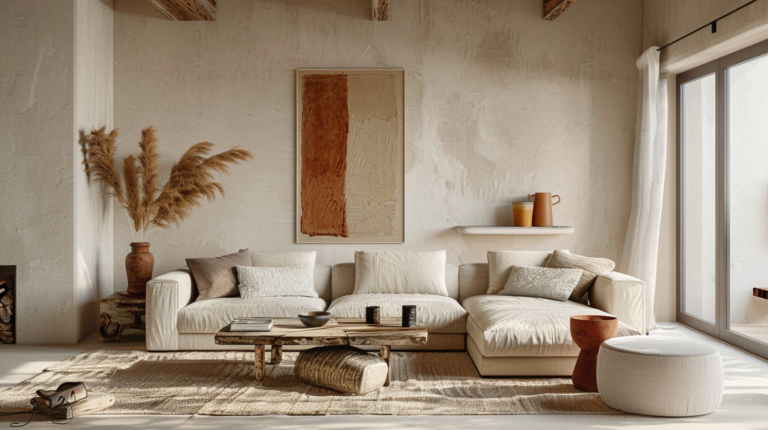
At its core, Desert Modern emphasizes clean lines and uncluttered spaces while infusing warmth through natural textures, earthy colors, and biophilic elements.
Unlike cold minimalism, which can feel sterile, Desert Modern design creates serene, inviting environments that enhance well-being while honoring the landscape that inspired it.
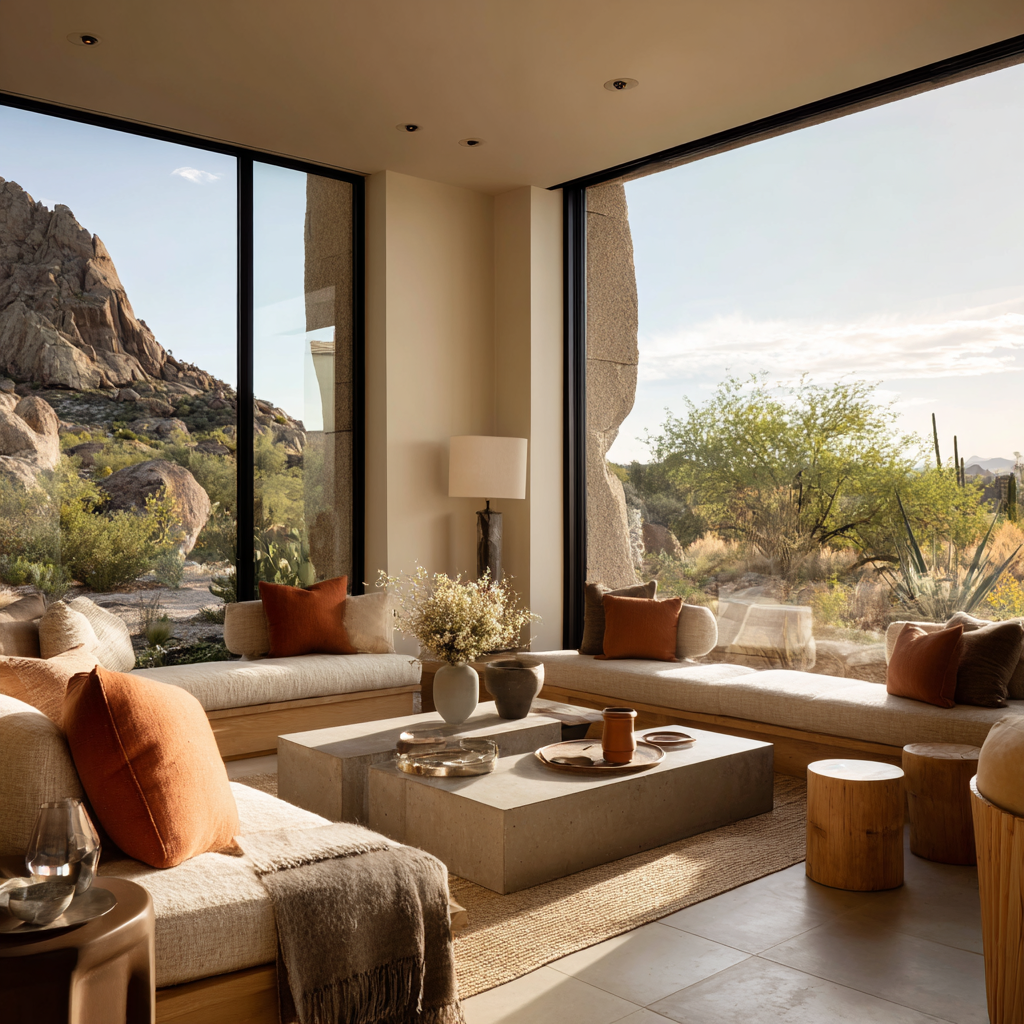
Core Principles of Desert Modern Design in Warm Minimalism
Biophilic Design: Integrating Nature for Calm and Connection
Desert Modern design is fundamentally biophilic.
It actively incorporates nature to foster human well-being.
Research demonstrates that biophilic design reduces stress, lowers blood pressure and heart rate, improves cognitive function, and enhances mental health.
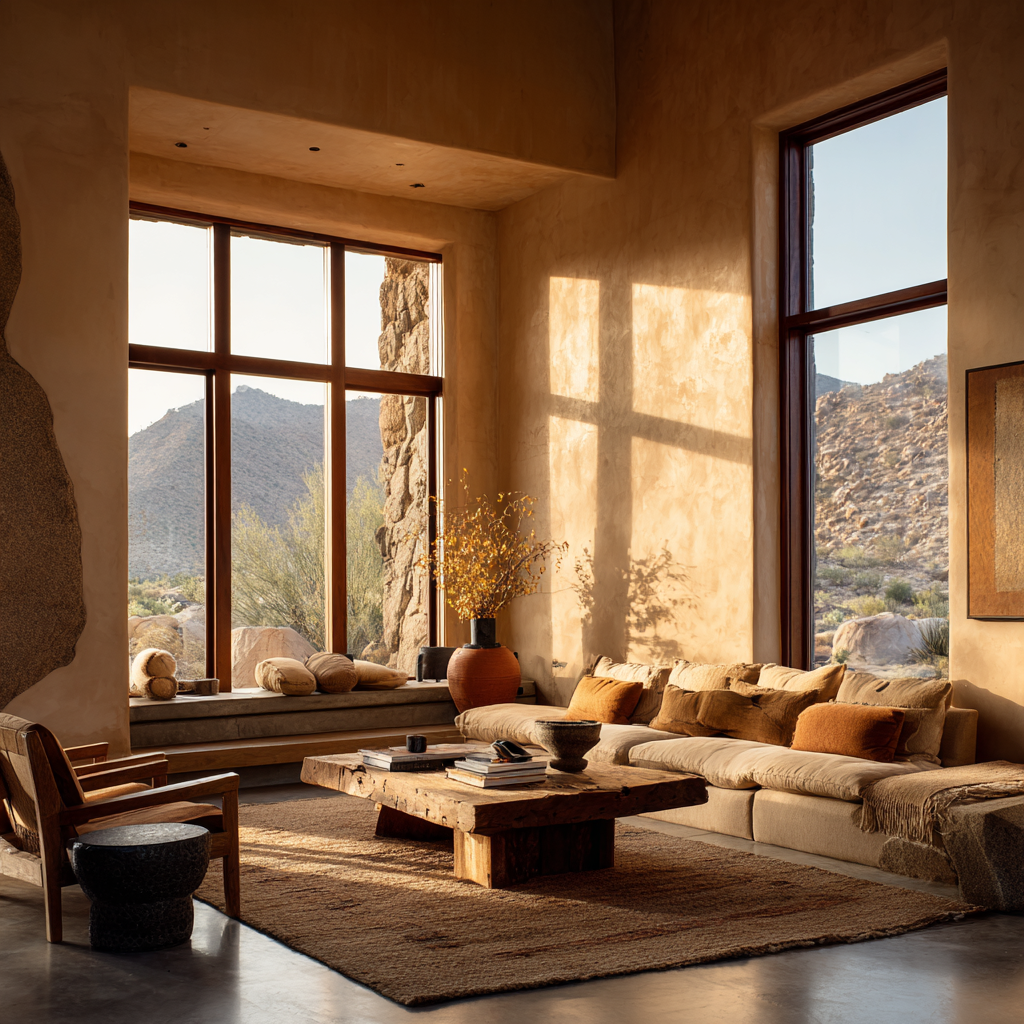
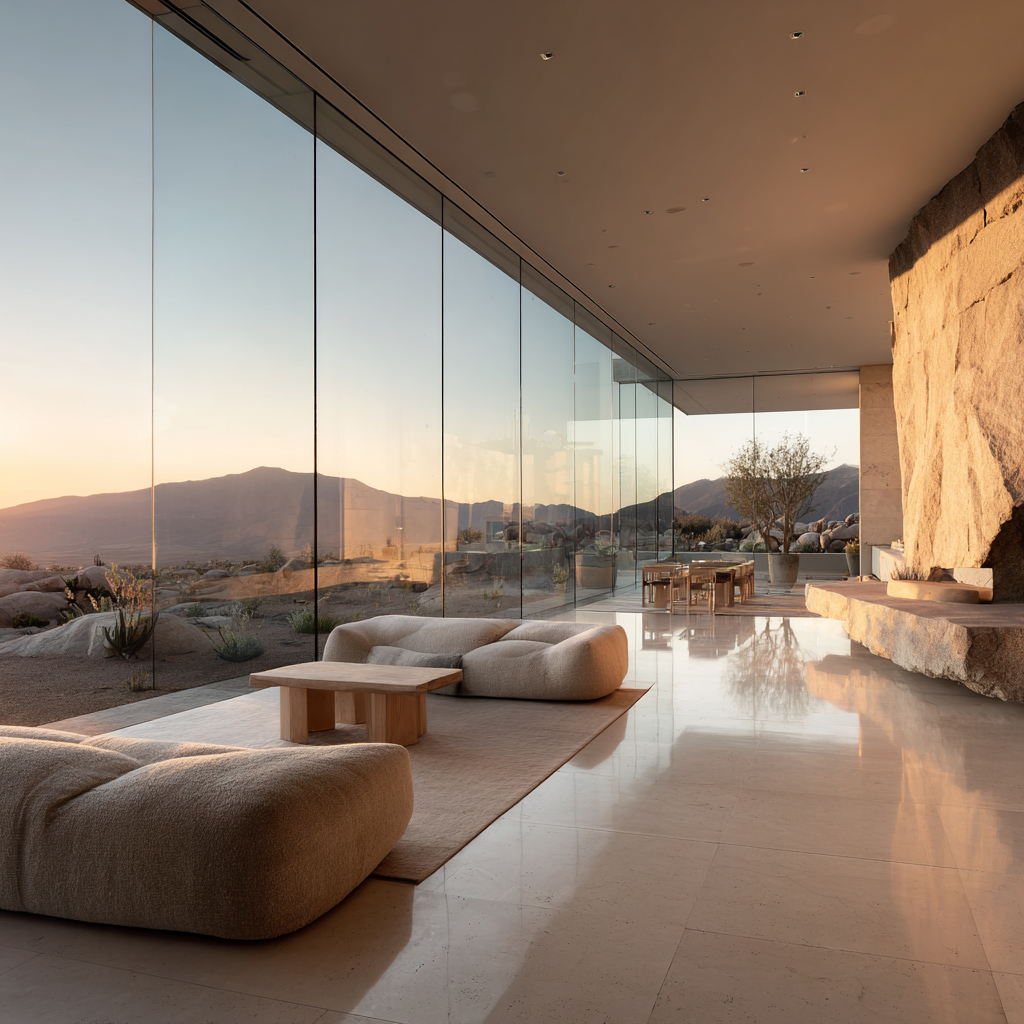
In Desert Modern interiors, biophilic principles manifest through expansive glazing that dissolves boundaries between indoors and outdoors.
Large windows provide visual connection to landscape.
Strategic placement of drought-tolerant plants reinforces this connection.
Natural materials echo surrounding terrain.
Visual access to nature reduces anxiety and supports attentiveness.
Wood with visible grain has been shown to relax the autonomic nervous system.
Water features increase feelings of tranquility.
This approach supports warm minimalism’s goal of intentional living.
Spaces become restorative rather than overstimulating.
Sustainability: Eco-Conscious Choices for Mindful Living
Sustainability is foundational to Desert Modern design.
The harsh desert climate historically required resource-conscious solutions.
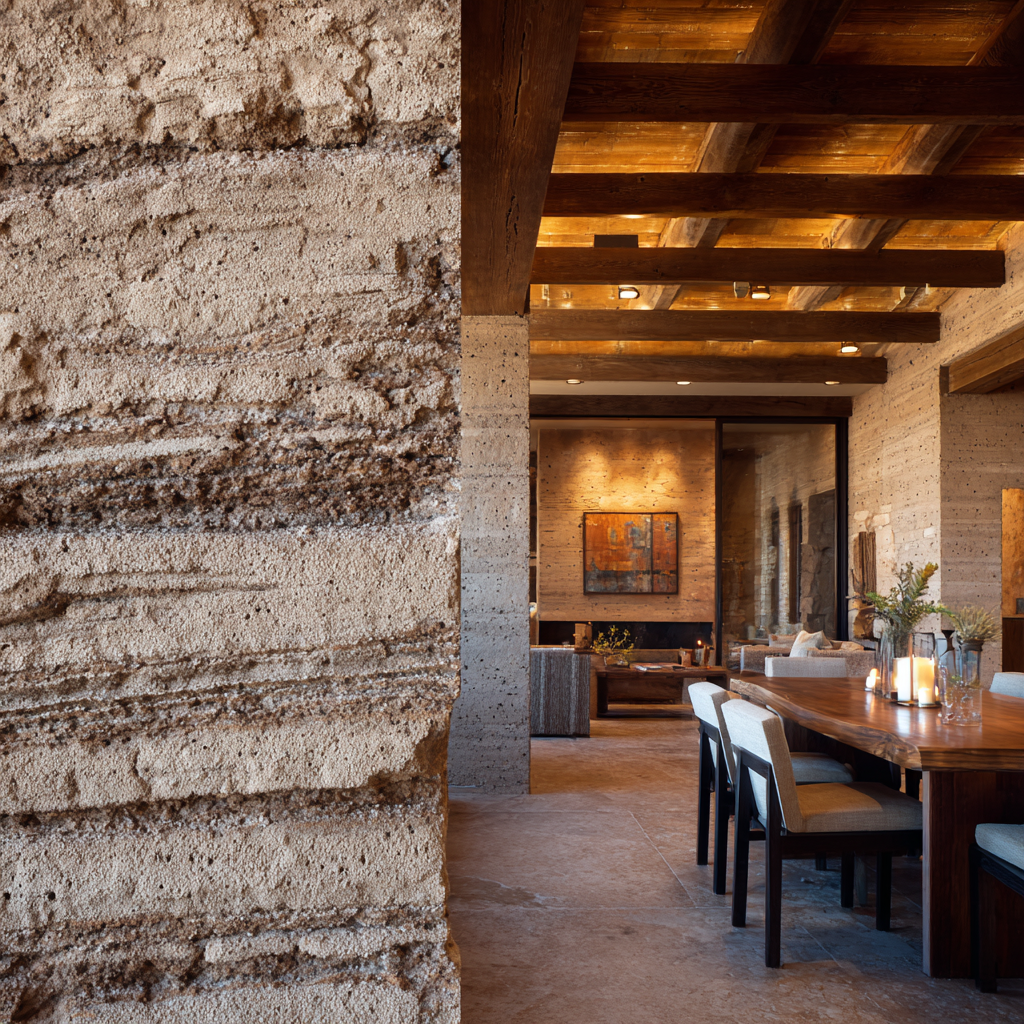
Ancient builders used adobe and rammed earth for thermal performance.
These materials kept interiors cool during the day and warm at night.
Today’s Desert Modern honors this wisdom.
Key sustainable practices include:
Using locally sourced materials to reduce emissions.
Implementing passive cooling strategies through strategic window placement.
Incorporating solar panels and energy-efficient systems.
Selecting drought-tolerant landscaping.
Materials like rammed earth, adobe, reclaimed wood, and recycled metal minimize environmental impact while creating authentic connections to place.
Low-VOC paints and natural materials improve indoor air quality.
Thoughtful orientation maximizes daylight, supporting circadian rhythms.
Emotional Warmth: Creating Serenity in Harsh Environments
Despite its minimalist aesthetic, Desert Modern does not sacrifice warmth.
The desert landscape itself—with its golden light and expansive horizons—inspires tranquility.
Desert Modern interiors capture this atmosphere through warm neutrals and layered textures.
Reduction of clutter creates mental breathing room.
Open floor plans encourage flow and reduce visual noise.
This simplicity is not deprivation.
It is intentional restraint.
Key Elements of Desert Modern Design
Color Palettes: Earth, Sky, and Sunset
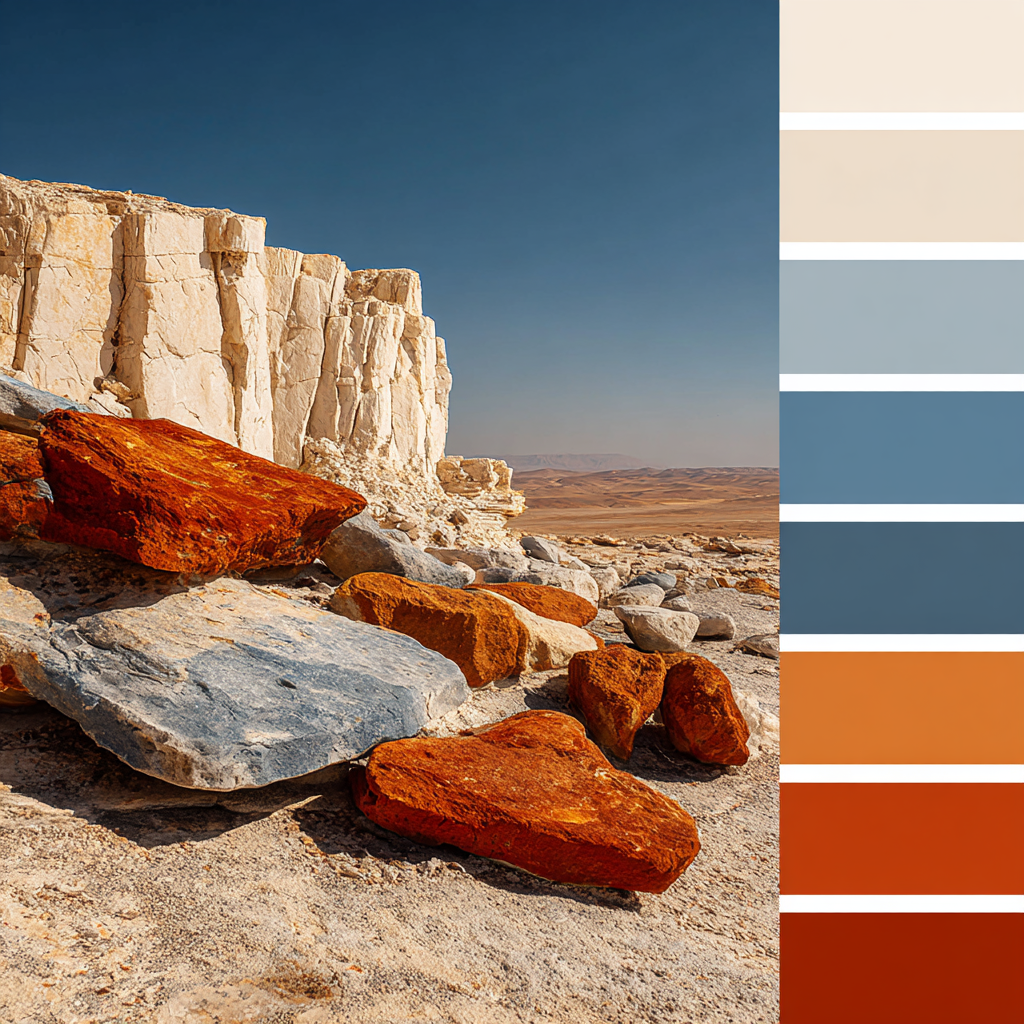
The Desert Modern color palette draws from sandy dunes, terracotta cliffs, sage hillsides, and desert skies.
Foundation Colors
Warm whites.
Creamy ivories.
Sandy beiges.
These light tones reflect abundant sunlight and create an airy atmosphere.
Earth Tones
Terracotta.
Clay red.
Warm taupe.
Rich browns.
These colors ground the space.
Terracotta is especially iconic.
Botanical Accents
Sage green.
Dusty olive.
Muted jade.
Inspired by desert vegetation.
Sky-Inspired Hues
Soft blues.
Pale turquoise.
Used sparingly in textiles or artwork.
Sunset Pops
Ochre.
Burnt orange.
Deep rust.
Used in pillows, pottery, or accent pieces.
Implementation Tips
Paint walls in warm white or sand tones.
Use terracotta or earth-toned tiles for flooring.
Choose neutral upholstery in linen or leather.
Follow the 60-30-10 rule:
60% neutral base
30% earth tones
10% accent colors
Materials: Natural, Durable, and Authentic
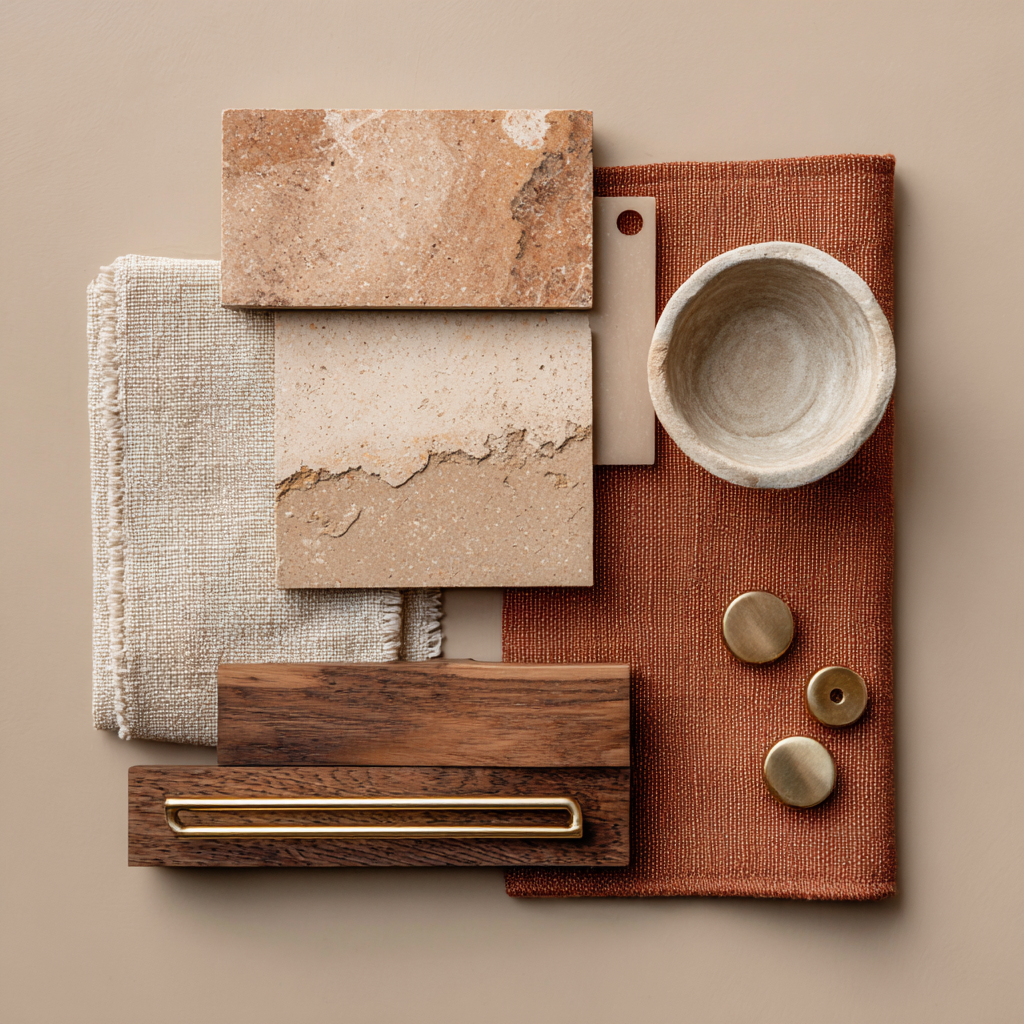
Stone
Sandstone, travertine, limestone, granite.
Stone regulates temperature and adds textural richness.
Used for flooring, walls, fireplaces, and countertops.
Wood
Walnut, teak, oak, pine.
Visible grain preferred.
Used for furniture, beams, cabinetry, shelving.
Reclaimed wood supports sustainability goals.
Adobe and Rammed Earth
Provide thermal mass and organic texture.
Used for accent walls or exterior cladding.
Metal Accents
Brass.
Copper.
Bronze.
Weathered steel.
Prefer brushed or aged finishes over polished chrome.
Natural Textiles
Linen.
Cotton.
Wool.
Jute.
Hemp.
Avoid heavy synthetic fabrics.
Biophilic Elements: Blurring Indoor-Outdoor Boundaries
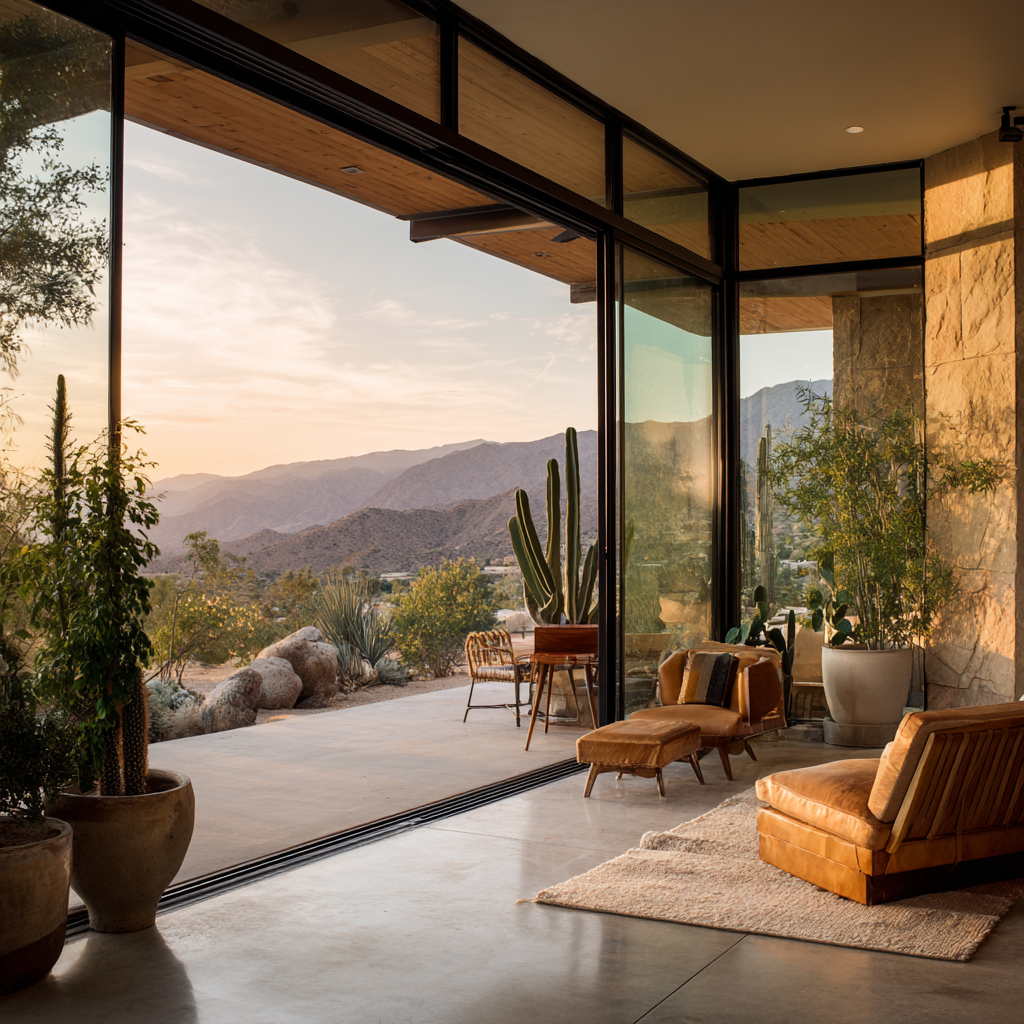
Expansive Glazing
Floor-to-ceiling windows.
Sliding glass doors.
Clerestory windows.
Skylights.
These dissolve boundaries and frame views.
Desert Plants
Cacti (saguaro, barrel, prickly pear).
Succulents (aloe, agave).
Desert trees (palo verde, mesquite).
Grouped at varying heights.
Planters in terracotta or ceramic.
Water Features
Small fountains.
Reflecting pools.
Stone vessels.
Water introduces sound and humidity.
Outdoor Living Spaces
Covered patios.
Pergolas.
Fire pits.
Outdoor kitchens.
Indoor and outdoor spaces become continuous.
Furniture Types and Layout
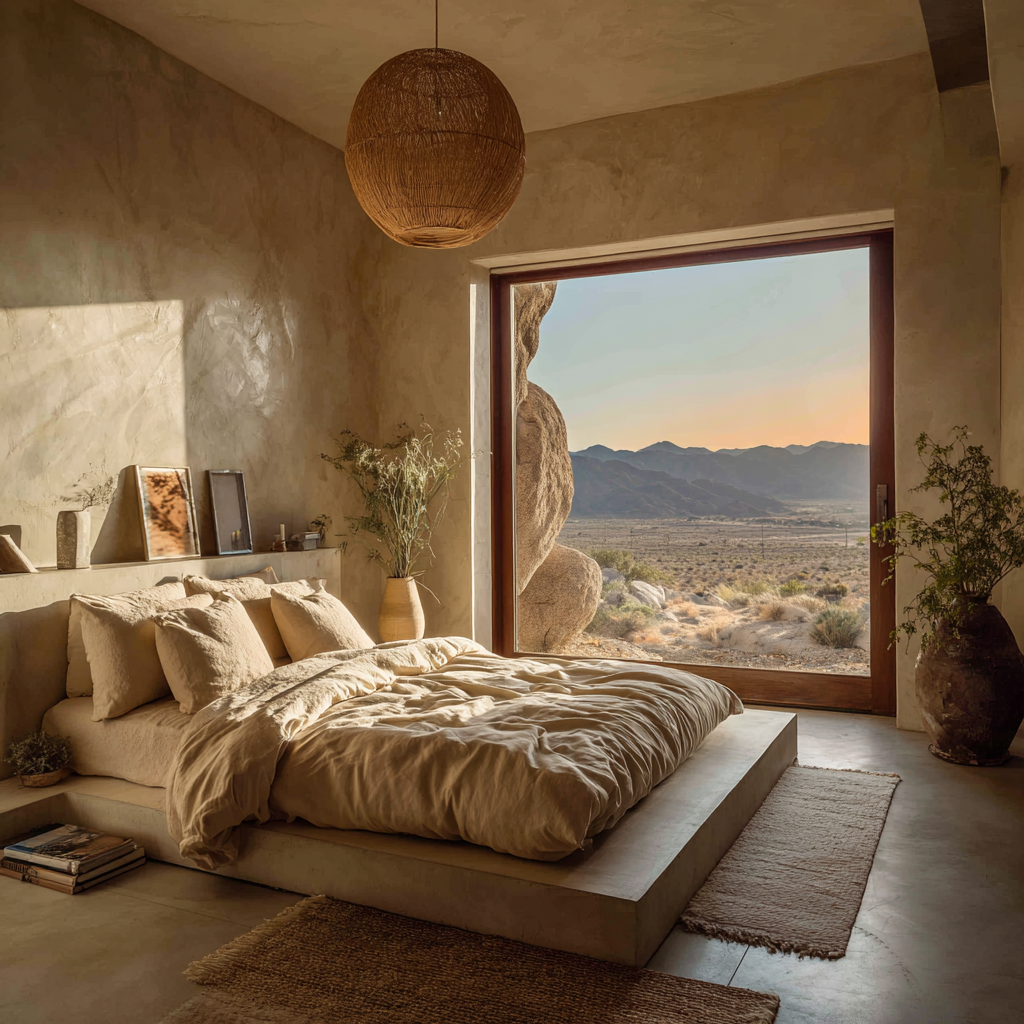
Furniture Characteristics
Low profile.
Organic forms.
Mid-century influence.
Natural finishes.
Multifunctional pieces.
Specific Selections
Low-profile linen sofas.
Leather accent chairs in camel or cognac.
Live-edge dining tables.
Concrete or stone side tables.
Floating shelves.
Platform beds.
Layout Principles
Open floor plans.
Zoning through furniture and rugs.
Conversation clusters.
Generous negative space.
Balanced symmetry.
Lighting and Textures
Natural Lighting
Maximize daylight.
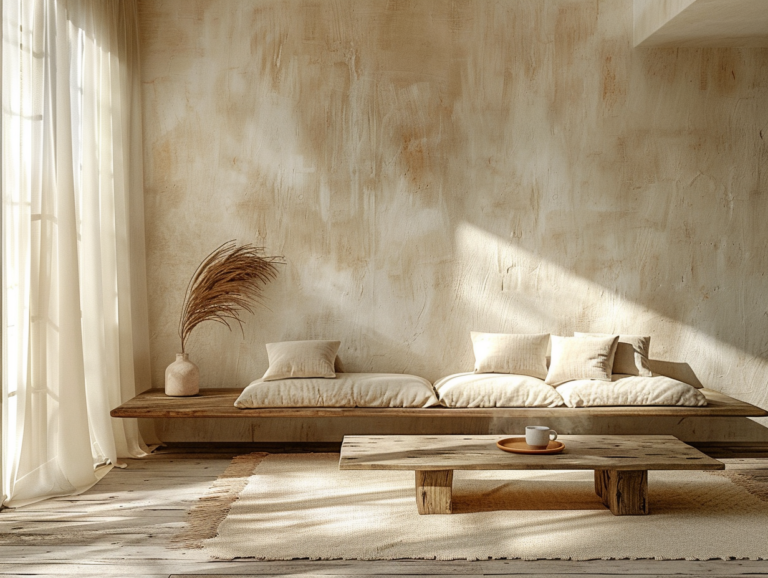
Diffuse harsh sun with sheer linen curtains.
Use skylights and clerestory windows.
Artificial Lighting
Layer ambient, task, and accent lighting.
Use warm color temperature (2700–3000K).
Geometric brass pendants.
Table lamps with linen shades.
Dimmers essential.
Textural Layering
Rough stone + smooth leather.
Linen bedding + jute rug.
Woven baskets + polished wood.
Natural imperfections embraced.
Accessories and Decor: Minimal but Meaningful
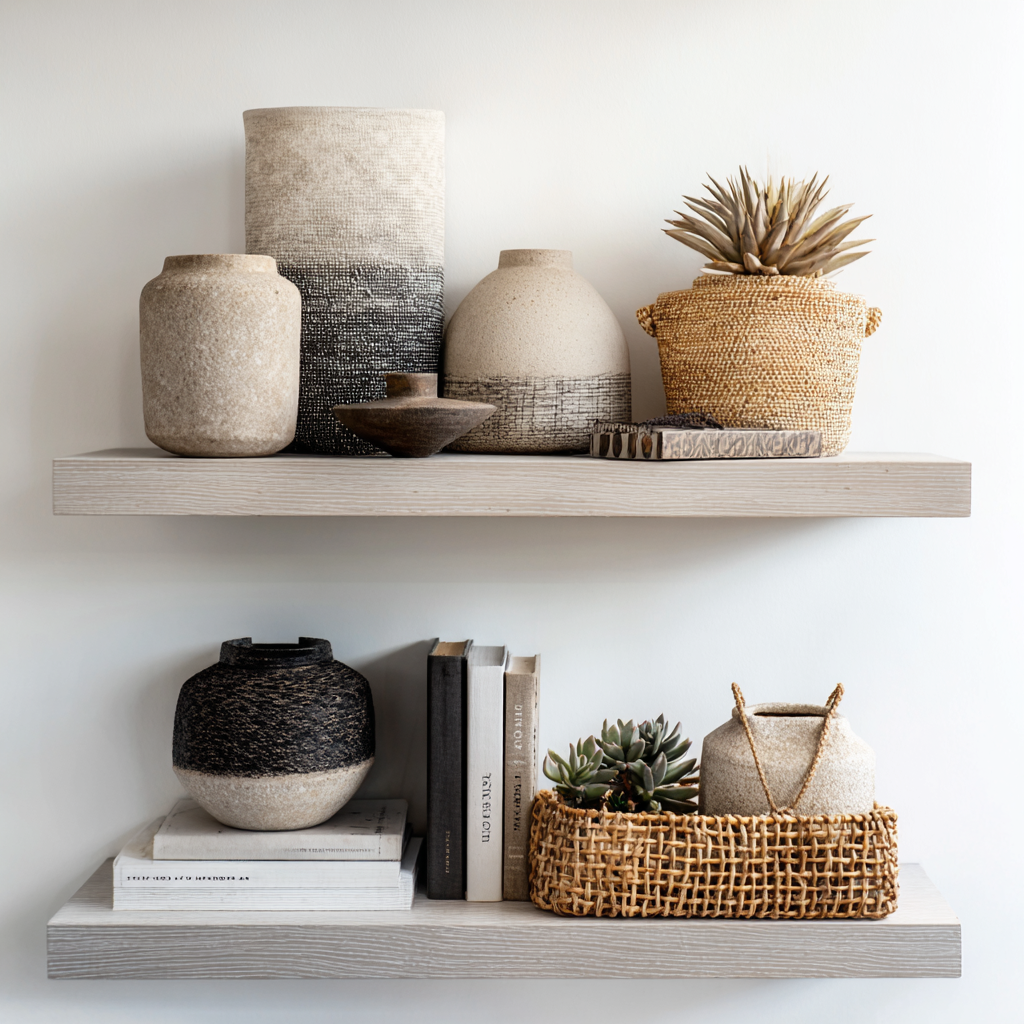
Guiding Principles
Quality over quantity.
Functional beauty.
Natural materials.
Artisan craftsmanship.
Specific Accessories
Hand-thrown pottery.
Woven baskets.
Abstract desert-inspired artwork.
Vintage Southwestern textiles.
Design books.
Driftwood and stones.
Sculptural wood or metal pieces.
Styling Tips
Group in odd numbers.
Vary heights.
Leave negative space.
Rotate seasonally.
One statement piece per room.
How to Incorporate Desert Modern Design into Your Home
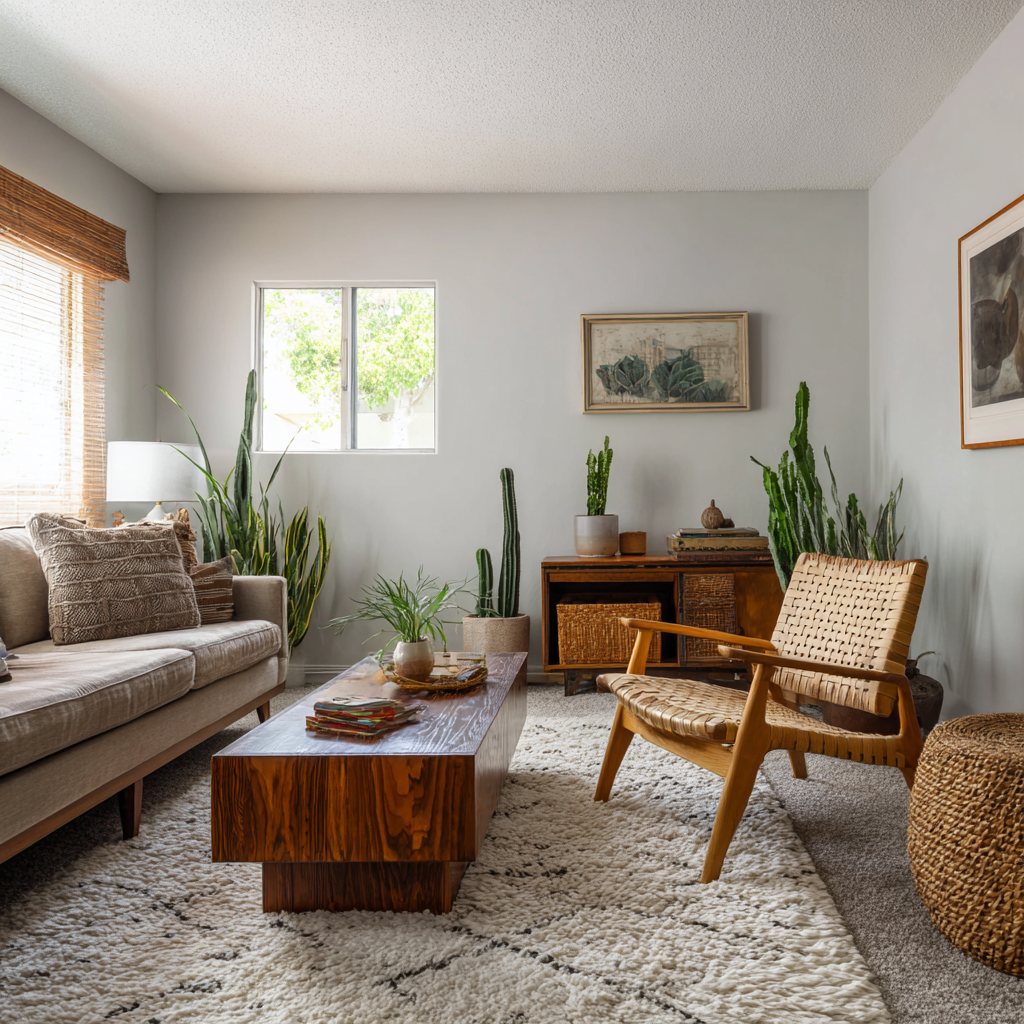
Step 1: Neutral Base
Paint warm white or pale sand.
Use neutral rugs if repainting is not possible.
Step 2: Layer Natural Textures
Jute rug.
Linen curtains.
Wood furniture.
Stone accessories.
Step 3: Select Intentional Furniture
Invest in key pieces.
Choose low-profile designs.
Prioritize natural materials.
Step 4: Maximize Natural Light
Replace heavy curtains.
Add mirrors.
Keep windows unobstructed.
Step 5: Integrate Plants
Start with succulents.
Use terracotta planters.
Group thoughtfully.
Step 6: Add Warm Accents
Terracotta textiles.
Warm lighting.
Ceramics and art.
Step 7: Edit and Curate
Remove unnecessary items.
Maintain clear surfaces.
Resist filling empty space.
Sustainability and Intentional Living
Passive Cooling and Heating
Thermal mass walls.
Strategic orientation.
Cross-ventilation.
Covered outdoor areas.
Energy Efficiency
Solar panels.
LED lighting.
High-performance glazing.
Cool roofing materials.
Water Conservation
Xeriscaping.
Rainwater harvesting.
Greywater reuse.
Low-flow fixtures.
Sustainable Materials
Locally sourced stone and earth.
Reclaimed wood.
Recycled metal and glass.
Natural finishes.
Conclusion: Creating Your Desert Modern Sanctuary
Desert Modern offers a vision of simplicity infused with warmth.
It honors connection to place.
It prioritizes sustainability.
It reduces excess while increasing meaning.
Desert Modern complements other warm minimalist styles:
• Scandinavian Design shares its simplicity and emphasis on natural light.
• Japandi Design shares its restraint and appreciation for quiet space.
•Organic Modern Design shares its strong connection to nature and materials.
• Rustic Modern Design shares its honesty of texture and form.
• Modern Mediterranean Design shares its sun-drenched warmth and earth tones.
Each style expresses the same philosophy through a different cultural lens.
Whether in the Southwest or elsewhere, Desert Modern principles can transform your home into a restorative sanctuary.
Start small.
Let the style evolve.
Prioritize connection to nature, sustainable choices, visual calm, textural warmth, and intentional living.
The goal is not perfection.
The goal is alignment.
Your home becomes a personal oasis—grounded, serene, and deeply intentional.
Join the Circle of Warmth
A quiet letter on warm, intentional living — delivered occasionally.