Warm Minimalism Concepts
Ideas for Living Well
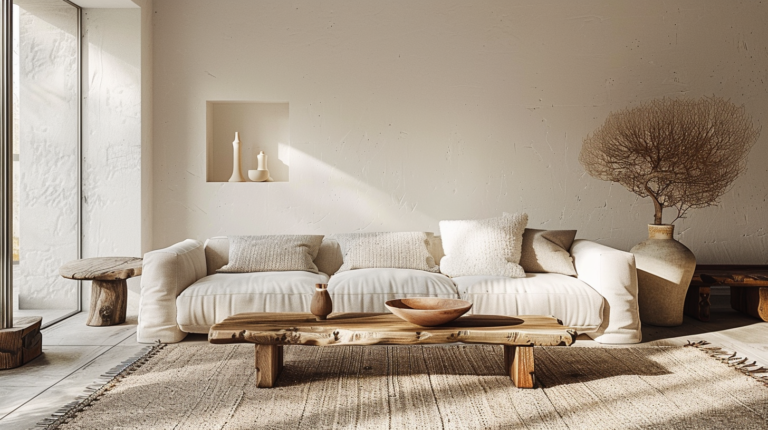
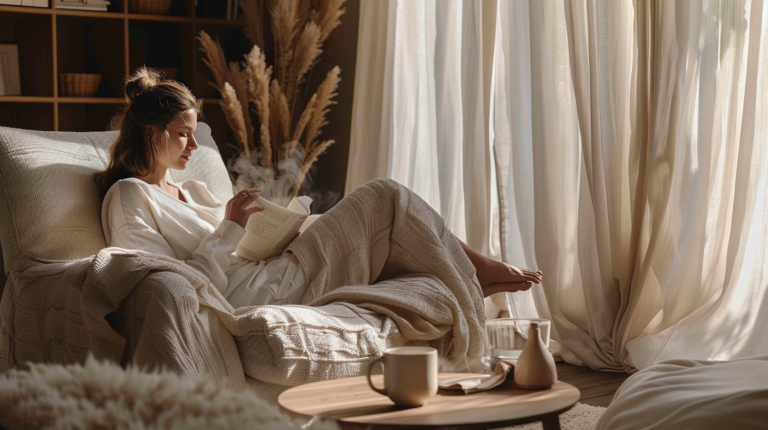
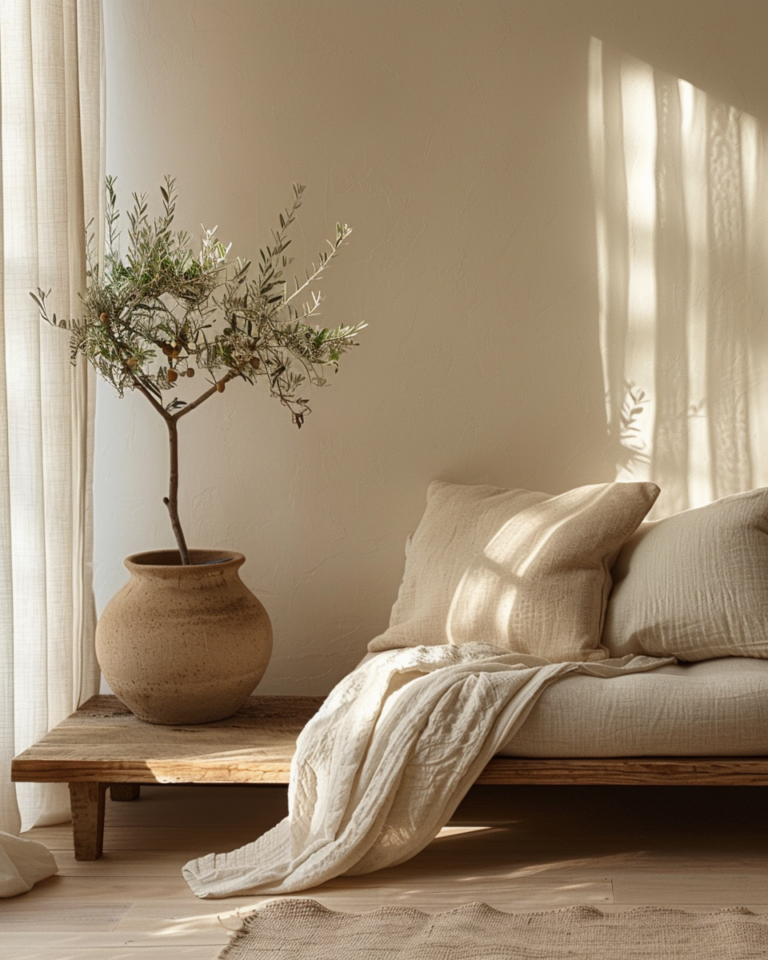
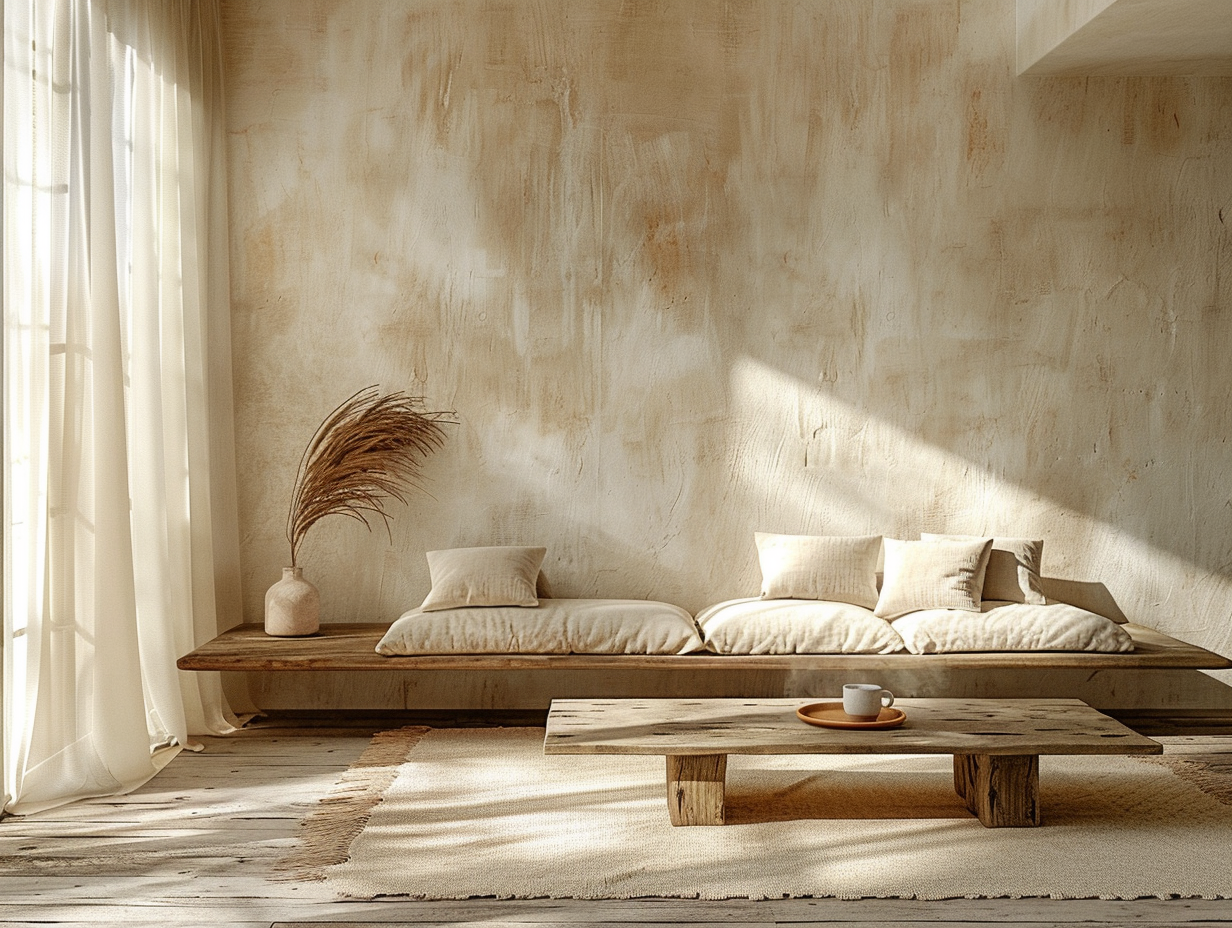
Imagine stepping into a room that immediately exhales. The walls are the colour of warm stone. A single linen throw is folded over the arm of a low, rounded sofa. Light filters through sheer curtains and falls in slow, golden bars across a wooden floor worn smooth with use. A candle burns on the windowsill — not for atmosphere, but because someone lit it and forgot to do anything else. A ceramic mug, still steaming, sits on a side table beside a single open book. Nothing is missing. Nothing is too much.
This is warm minimalism — and it is not a trend. It is a way of being.
In a world that constantly pushes us toward more — more stimulation, more acquisition, more optimisation — the quiet appeal of warm minimalism feels almost radical. It is a design philosophy and, increasingly, a life philosophy, built on the belief that less can be not only sufficient but deeply nourishing. Unlike the cold, clinical minimalism of stark white interiors and hard surfaces, warm minimalism wraps restraint in texture and humanity. It pairs the discipline of fewer things with the generosity of natural materials, soft light, and intentional ritual.
But where does this sensibility come from? Its roots are not arbitrary. Warm minimalism, as we practise it today, is a conversation between two great traditions of thoughtful living: the Japanese philosophy of finding beauty in impermanence and negative space, and the Scandinavian tradition of coziness, balance, and the restorative power of everyday ritual. These traditions didn’t emerge in design studios — they emerged from centuries of grappling with what it means to live well.
Think of concepts like wabi-sabi, the Japanese reverence for imperfect, aged beauty. Or hygge, the Danish art of creating warmth and togetherness. Or lagom, the Swedish idea that the right amount is always just enough. These are not aesthetic preferences — they are philosophical stances toward life itself. And it is from these stances that warm minimalism draws its soul.
In the sections that follow, we’ll explore eight foundational concepts — four from Japan, three from Scandinavia, and two from the broader tradition of conscious living — and discover how each one contributes something essential to the warm minimalist home and life. Whether you’re redesigning a room, simplifying your possessions, or simply looking for a quieter, richer way to move through your days, these ideas offer both philosophy and practice.
Ask yourself, as you read: What would it feel like to live in a space that truly reflected your values?
1. Zen: The Discipline of Stillness
Origins and History
Zen is a school of Mahayana Buddhism that traces its lineage to the teachings of the Indian monk Bodhidharma, who is believed to have brought his practice to China around the 5th or 6th century CE. There, it took root as Chan Buddhism — a tradition emphasising direct experience over scriptural study, and meditation over doctrine. When Chan Buddhism traveled to Japan in the 12th and 13th centuries, it became Zen, and over the following centuries it would profoundly shape Japanese culture, art, architecture, poetry, and daily life.
Zen practice centres on zazen — seated meditation — and the cultivation of present-moment awareness. Rather than seeking truth through intellectual analysis, Zen points toward direct, unmediated experience. The famous Zen koans, such as the paradoxical “What is the sound of one hand clapping?”, are tools not for logical resolution but for breaking the habit of conceptual thinking altogether.
By the medieval period, Zen aesthetics had influenced everything from the tea ceremony and ikebana (flower arranging) to garden design and ink painting. The Zen aesthetic is characterised by restraint, asymmetry, emptiness, and the profound beauty of unadorned form. It is, at its heart, a practice of subtraction — of removing everything that is not essential until what remains is luminous with meaning.
What Zen Teaches Warm Minimalism
Zen gives warm minimalism its foundational discipline: the understanding that clarity and spaciousness are not emptiness, but a kind of fullness. In Zen thought, the mind is compared to still water — only when it is undisturbed can it perfectly reflect reality. The same logic applies to a room. When a space is uncluttered, it doesn’t feel bare; it feels present.
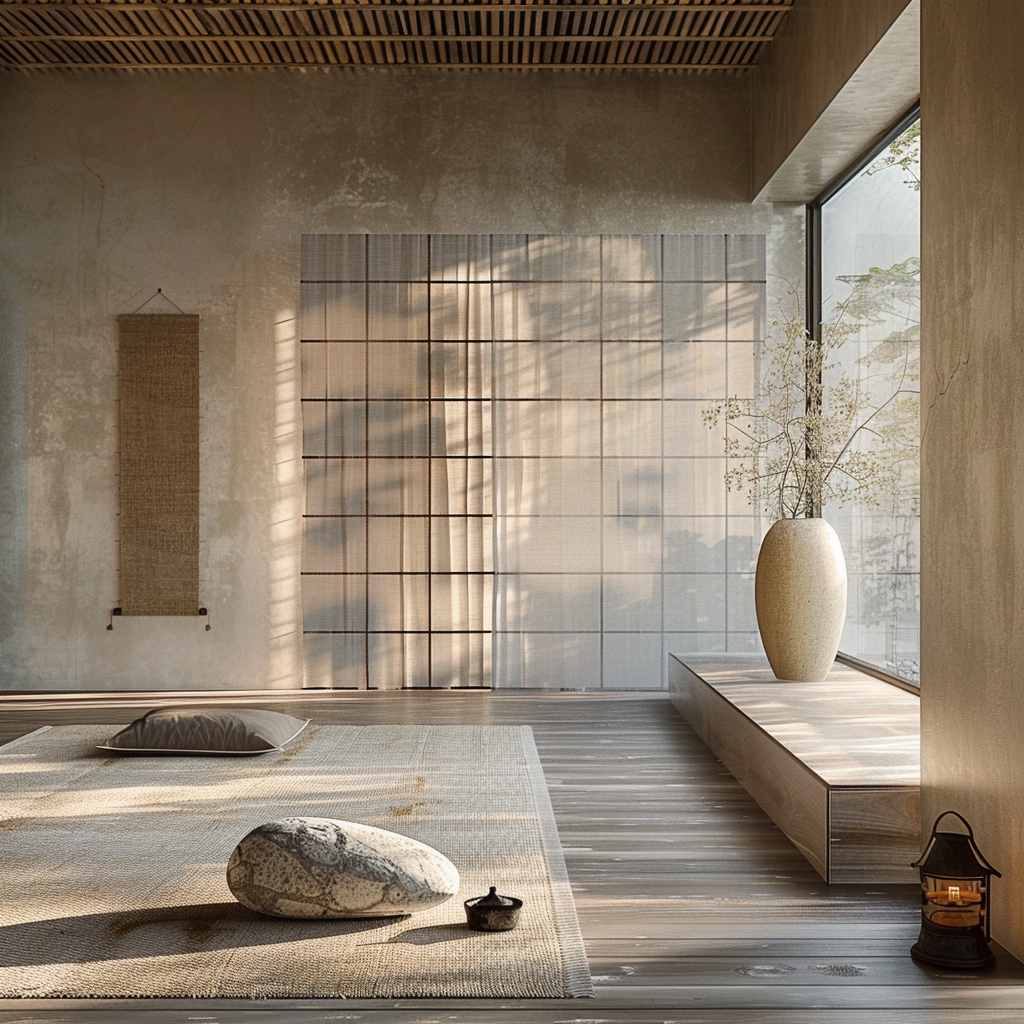
This is why Zen-influenced interiors tend to feature very few objects — but each object is chosen with extraordinary care. A single piece of pottery on a shelf. A scroll painting in an alcove. A low platform bed with unbleached linen. These are not decorating choices; they are meditative acts. Each thing is there because it has earned its place.
For the warm minimalist home, Zen offers three practical insights. First, empty space is not wasted space — it is breathing room, both for the room and for the mind. Second, routine and ritual bring depth to ordinary life: the careful way you fold a blanket, make your tea, or arrange flowers on a table is itself a form of practice. Third, beauty is found in simplicity, not complexity. A rough wooden bowl, handmade and slightly asymmetrical, holds more presence than a hundred ornate objects.
What single object in your home do you love most completely — and what would it feel like if that object had more space around it?
2. Ma: The Art of the Interval
Origins and History
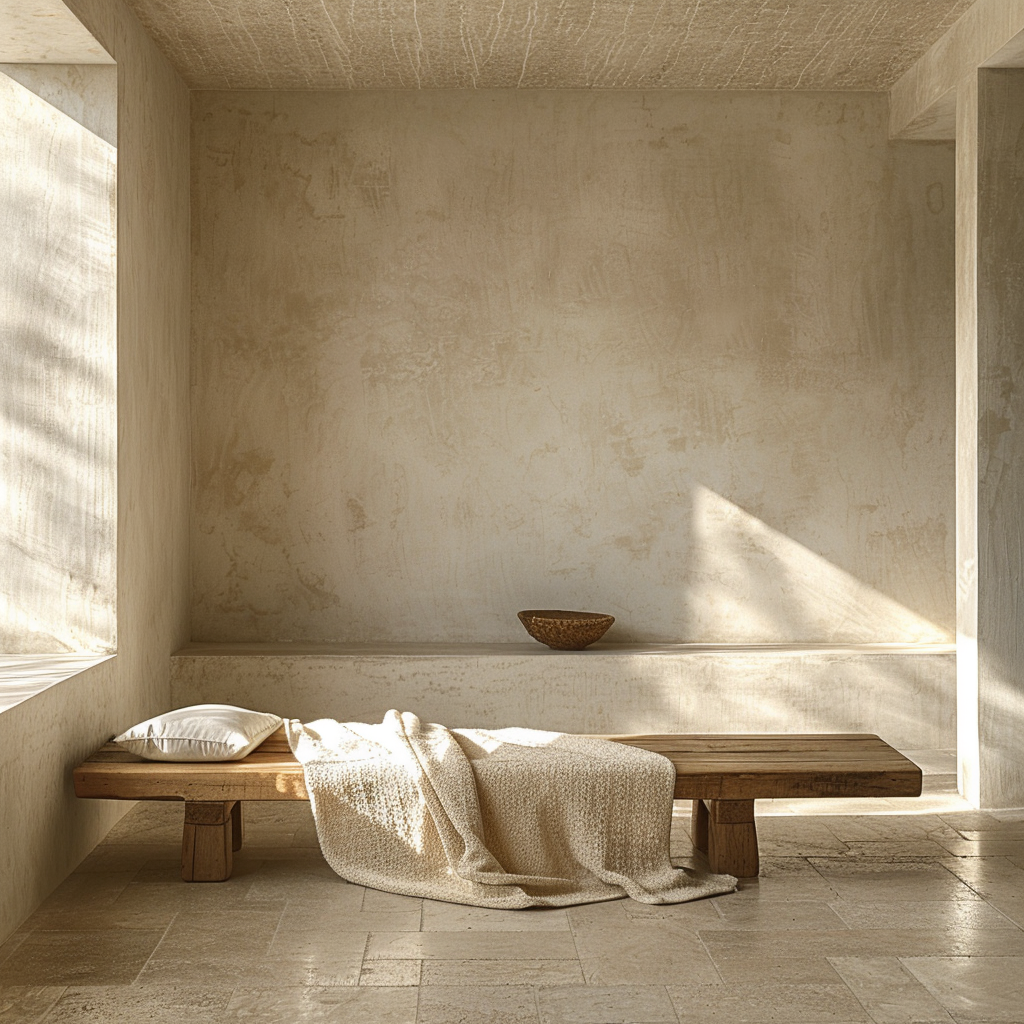
Ma (間) is one of the most distinctive and untranslatable concepts in Japanese aesthetics. The character itself is composed of two elements: a gate and a sun — light shining through a doorway. In its broadest sense, ma refers to interval, pause, or negative space — not the absence of something, but the presence of a gap that is itself meaningful.
The concept permeates Japanese culture at every level. In music, ma is the silence between notes — the pause that gives a melody its shape and tension. In theatre, particularly Noh drama, ma is the suspended moment between actions, charged with unspoken meaning. In architecture and garden design, ma is the space between elements: the void in the garden that draws the eye toward a stone lantern, or the empty tokonoma alcove that makes the single hanging scroll inside it sacred.
Japanese architect Tadao Ando, known for his luminous concrete spaces and dramatic use of light and shadow, has spoken extensively about ma as central to his practice. The concept became more widely known in the West through a 1978 exhibition titled Ma: Space-Time in Japan held in Paris, which introduced international audiences to this way of understanding space not as background but as active presence.
What Ma Teaches Warm Minimalism
If Zen is the philosophical foundation for minimalism, then ma is its spatial grammar. Ma teaches us that space is not what is left over after you’ve arranged your furniture — space is itself a design element, as deliberate and potent as any object within it.
In practical terms, this means that the warm minimalist home doesn’t just edit objects; it choreographs the intervals between them. The gap between two chairs. The clear section of a windowsill. The unhung wall above a bed. These spaces are not mistakes waiting to be filled — they are intentional pauses in the visual rhythm of a room, and they are essential to the sense of calm the space evokes.
Ma also applies to time. There is a Japanese phrase, ma wo toru, which means “to take ma” — to allow a pause, a breath, a moment of non-action. In the warm minimalist lifestyle, this translates to resisting the urge to fill every moment with productivity or stimulation. Leaving space in the day. Letting a Saturday morning be slow. Allowing silence at the dinner table.
The interior design applications are specific: leave breathing room around every significant object. Resist the pull to add “one more thing” to a shelf. Design rooms not for maximum use of space, but for maximum quality of experience within it.
What spaces in your home — or your schedule — might benefit from more deliberate emptiness?
3. Wabi-Sabi: The Beauty of Imperfect Things
Origins and History
Wabi-sabi (侘寂) is perhaps the most poetic — and the most frequently misunderstood — of the Japanese aesthetic concepts. It has become something of a shorthand in Western design circles for “rustic” or “handmade,” but its roots go much deeper than surface texture.
The term is a compound of two words. Wabi originally referred to the loneliness of living in nature, apart from society — and over time came to describe a simple, rustic beauty found in that solitude. Sabi originally meant desolation or chill, and evolved to describe the beauty of aged, weathered, time-worn things. Together, they form a single aesthetic ideal: the beauty of things that are imperfect, incomplete, and impermanent.
Wabi-sabi emerged as a distinct aesthetic philosophy in the 15th century, closely linked to the Japanese tea ceremony as refined by the master Sen no Rikyū. Rikyū deliberately turned away from the ornate Chinese ceramics then fashionable among the wealthy, favouring instead rough, irregular Korean rice bowls — humble objects that seemed to carry the traces of their making and the weight of time. The tea ceremony became, under his influence, a celebration of simplicity and transience, held in small thatched tea houses designed to evoke a kind of refined rusticity.
What Wabi-Sabi Teaches Warm Minimalism
Wabi-sabi is the concept that gives warm minimalism its permission to be human. It is the philosophical antidote to the pursuit of perfection that makes so many minimalist spaces feel sterile, intimidating, or impossible to actually live in.
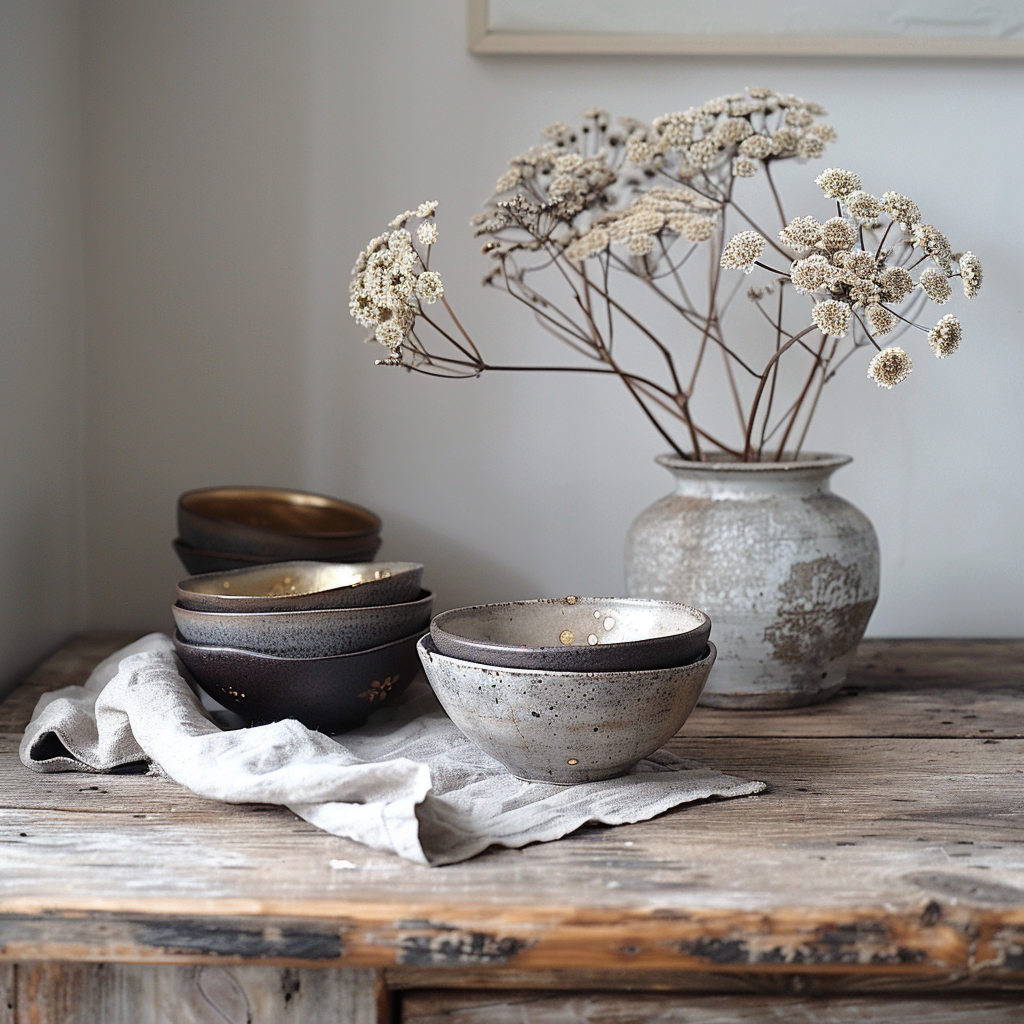
A wabi-sabi home is not a showroom. It is a living record of time and use. The linen pillow cover that has softened with washing. The wooden dining table marked by years of meals. The hand-thrown mug with a slightly uneven rim. The cracked glaze on an old piece of pottery, filled with gold in the Japanese art of kintsugi, transforming the damage into the most beautiful part of the object. These imperfections are not flaws to be hidden or replaced — they are evidence of life, and they are beautiful precisely because of that.
For warm minimalism, wabi-sabi provides the crucial counterweight to perfectionism. It says: the linen doesn’t need to be pressed. The timber doesn’t need to be uniform. The wall can show its texture. The patina of age has its own elegance. This is what separates a warm minimalist space from a cold minimalist one: the willingness to let materials be themselves, to let things bear the marks of time and use, to allow the home to feel genuinely inhabited.
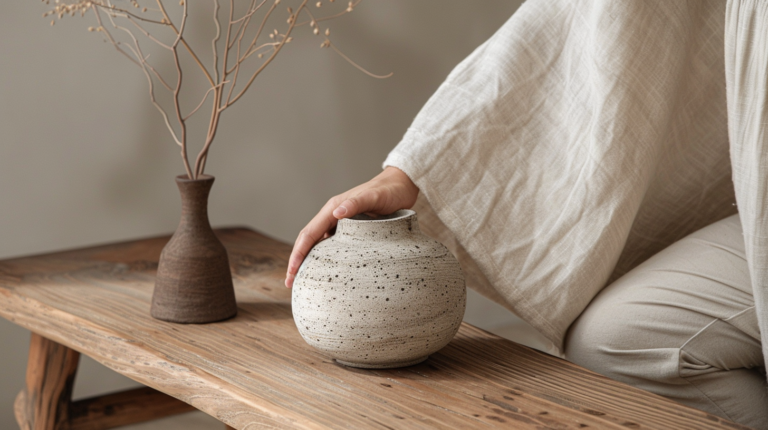
In practice, wabi-sabi inspires material choices: unfinished timber, raw linen, hand-thrown ceramics, stone with natural variation, aged leather, beeswax-finished wood. It also inspires an attitude toward possessions: instead of replacing things the moment they show wear, we care for them, repair them, and let their history become their character.
Is there an object in your home that you’ve been meaning to replace — but that might actually be more beautiful for its age and use?
4. Lagom: Just the Right Amount
Origins and History
Lagom (pronounced “lah-gom”) is a Swedish word with no direct English equivalent, though it is often translated as “just the right amount,” “not too much, not too little,” or simply “enough.” It is one of the most culturally pervasive concepts in Swedish life — a kind of social and personal compass that points always toward balance and moderation.
The word’s etymology is disputed, but one popular (if unverified) origin story links it to the phrase laget om, meaning “around the team” — referring to the Viking custom of passing a shared drinking horn around a group, with each person drinking exactly their fair share. Whether or not this origin is accurate, the story captures something true about lagom: it is inherently relational, concerned not just with personal sufficiency but with the right relationship to community and to resources.
Lagom as a cultural value shapes nearly every aspect of Swedish life, from workplace culture (where it discourages both boasting and excessive modesty) to urban planning, social welfare policy, and design. Swedish design — think IKEA at its most thoughtful, or the clean functionalism of Scandinavian midcentury furniture — is deeply inflected by lagom: functional without excess, beautiful without ostentation, accessible rather than elite.
What Lagom Teaches Warm Minimalism
While wabi-sabi gives warm minimalism its heart, lagom gives it its measure. It is the practical philosophy of enough — and in a consumer culture that defines success by accumulation, this is genuinely radical thinking.
Lagom applied to interior design asks a persistent question: How much is truly enough? Not how little can I tolerate, and not how much can I afford — but what is the right amount for a life that is rich in experience rather than in things? This is the question that drives every good decluttering session, every considered purchase, every moment when you put something back on the shop shelf because, actually, you already have what you need.
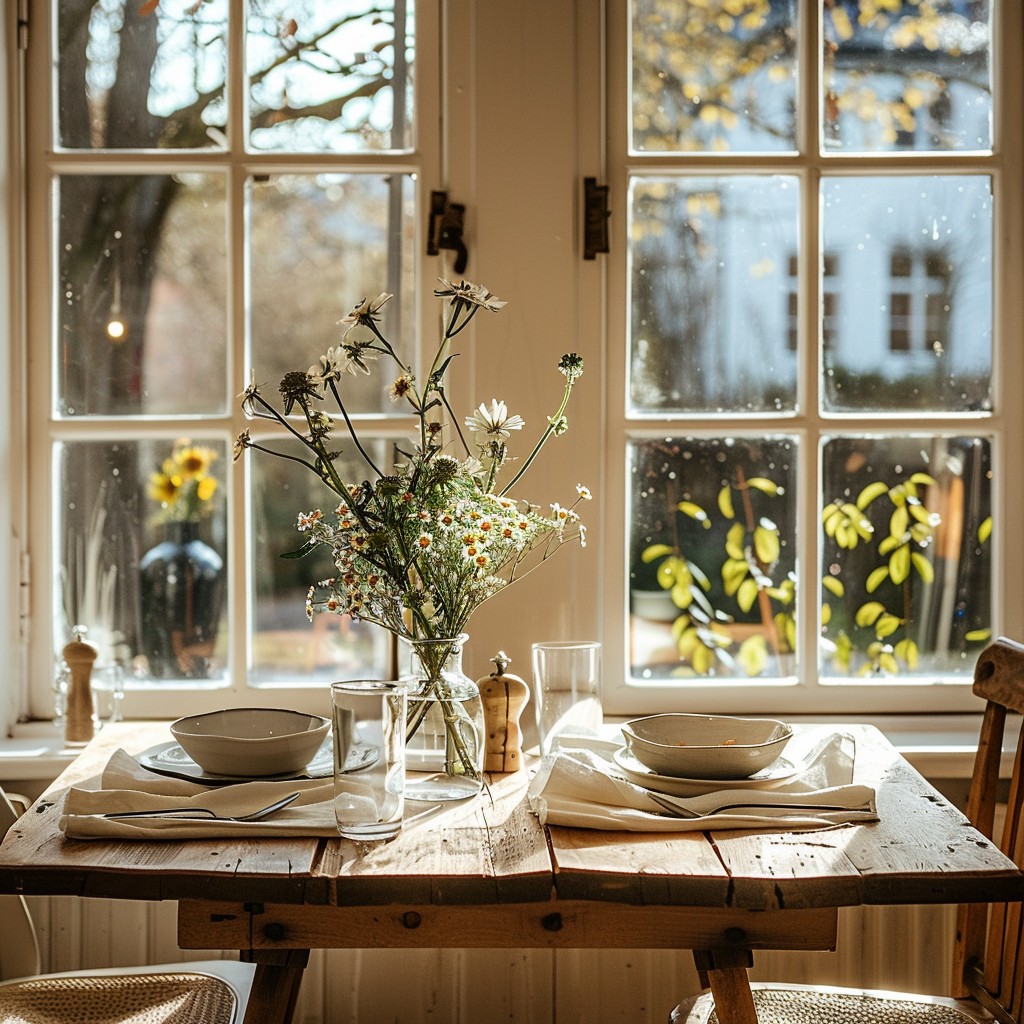
In the warm minimalist home, lagom manifests as a commitment to enough: enough seating for the people you actually welcome into your home, not aspirational seating for imaginary dinner parties. Enough lighting to be comfortable and cosy, not theatrical. Enough cushions to be inviting, not so many that the sofa becomes its own storage problem. Enough art on the walls to reflect who you are, without turning the space into a gallery.
Lagom also applies to the pace of change. The warm minimalist doesn’t restyle a room every season following trends — they choose well, choose once, and live with their choices long enough to discover whether they truly bring contentment.
Where in your home — or your life — do you tend to overshoot “just enough”? And what would it mean to pull back to lagom?
5. Fika: The Ritual of Pause
Origins and History
Fika is a Swedish institution that is simultaneously very simple and profoundly important. At its most basic, fika is a coffee break — specifically, the Swedish tradition of pausing in the middle of the day to drink coffee and share something sweet with others. But to describe it only as a coffee break is to miss almost everything that matters about it.
The word itself is a syllabic reversal of kaffi, an older Swedish word for coffee — a linguistic playfulness that hints at the informal, warm character of the practice itself. Swedish coffee culture dates to the 18th century, and by the 20th century fika had become a cornerstone of both workplace and domestic life. Swedish offices, schools, and workshops have long built fika into the formal structure of the workday — not as a luxury, but as a necessity.
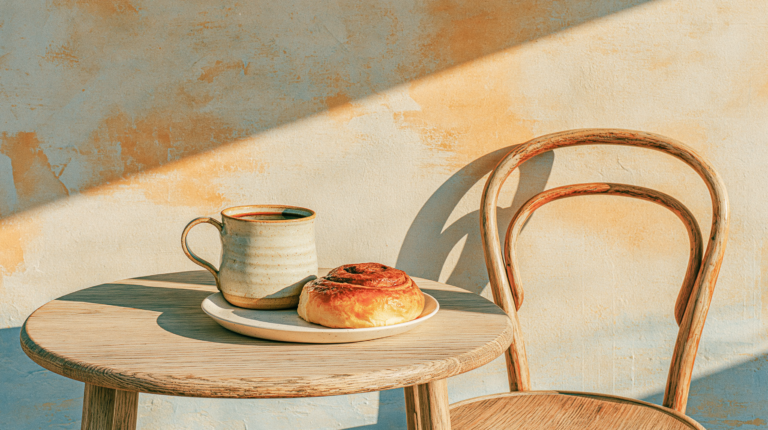
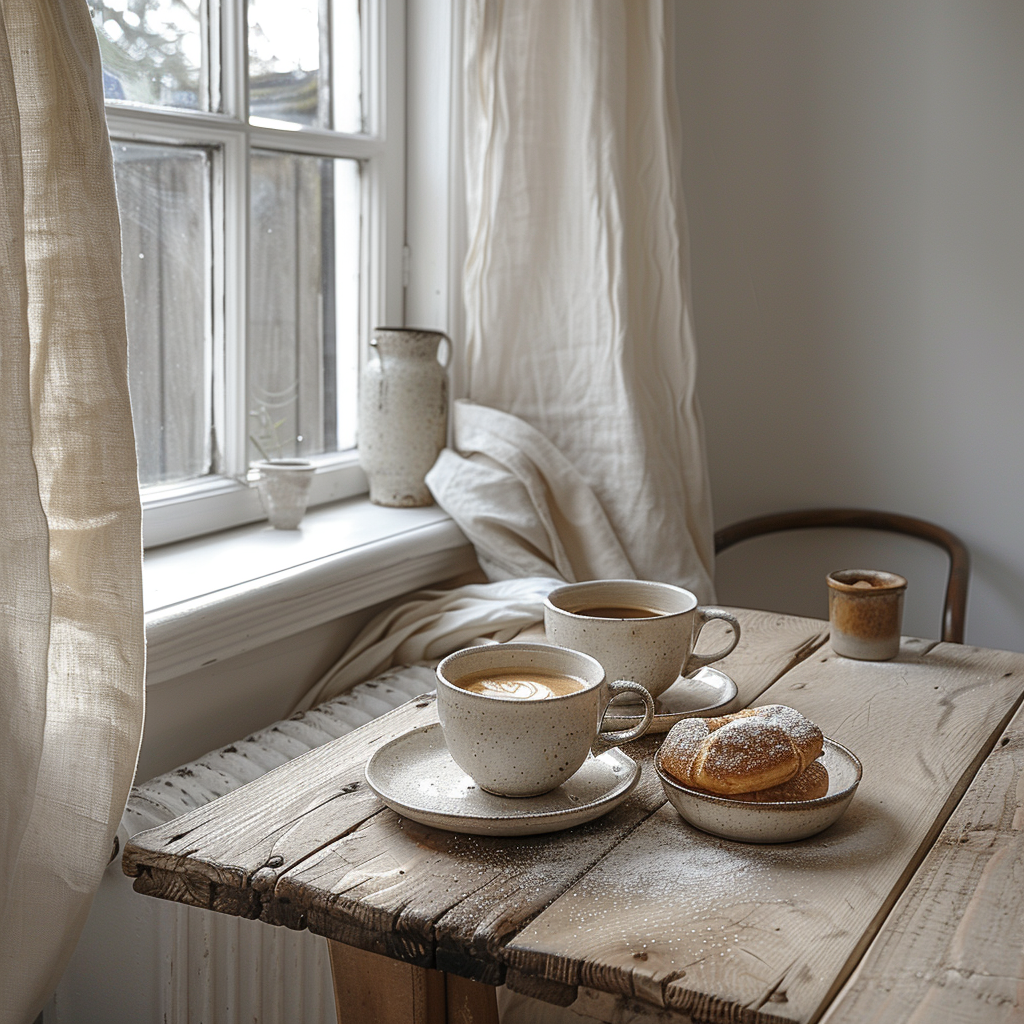
What distinguishes fika from a mere caffeine break is its relational and intentional quality. Fika is not eaten at a desk while checking email. It is a genuine pause: sitting down, being present, connecting with whoever you’re with (or with yourself, if you’re alone). It is accompanied by something baked — a kanelbullar (cinnamon bun) is the classic choice — and it is never rushed. In Sweden, to offer someone fika is an act of care and hospitality. To refuse it is almost impolite.
What Fika Teaches Warm Minimalism
Fika is where warm minimalism becomes a daily practice rather than just an aesthetic. It is the embodiment of the idea that beauty is found not in grand gestures but in the small, recurring rituals that punctuate an ordinary day.
For the warm minimalist home, fika offers a template for what it means to use a space with intention. The corner of a kitchen designed for morning coffee. The small table by the window where afternoon light is best. The tray on a sideboard holding a candle, a ceramic sugar bowl, and two mismatched cups that feel right in the hand. These are not decorating choices — they are the infrastructure of daily ritual, and they matter.
Fika also gently insists on the value of the handmade. The cinnamon bun baked at home. The coffee brewed slowly. The table set with the things you love, even for an ordinary Tuesday. There is a warm minimalist principle here: it is not the expense of things that makes them meaningful, but the care brought to using them.
In designing for fika, the warm minimalist home might include a dedicated spot — not a room, not an elaborate installation, but a corner, a nook, a particular chair by a window — where the daily pause can happen with a sense of ceremony and pleasure.
Do you have a place in your home — and a moment in your day — that you have claimed as a true pause?
6. Hygge: The Architecture of Warmth
Origins and History
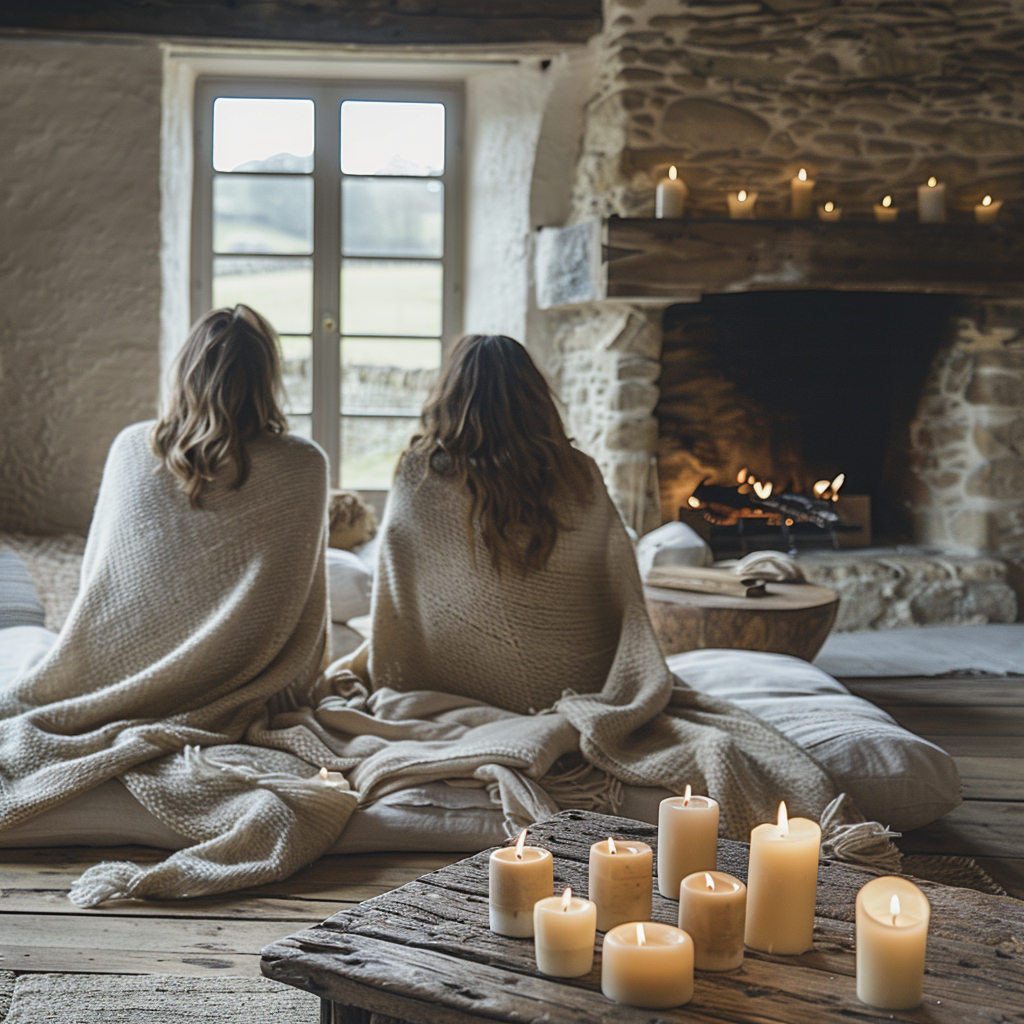
Hygge (pronounced roughly “hoo-guh”) is the Danish and Norwegian concept of coziness, conviviality, and the special kind of contentment that comes from being comfortable, present, and connected — usually with other people, sometimes alone. It has become, in recent years, the Scandinavian concept most widely adopted by non-Scandinavians, and with that popularity has come significant misrepresentation. Hygge is not simply candles and blankets, though it often includes both.
The word derives from an Old Norse root meaning “well-being” or “consolation,” related to the English word “hug.” It appears in Danish writing from the 18th century and has remained central to Danish life and culture ever since. Denmark consistently ranks among the happiest countries in the world, and hygge is frequently cited as a significant cultural contributor to that well-being — a shared practice of creating and protecting moments of warmth, especially during the long, dark Scandinavian winters.
Meik Wiking, CEO of the Happiness Research Institute in Copenhagen, has written extensively about hygge, describing it as a feeling and an atmosphere rather than a thing. It is democratic and unpretentious: hygge can happen around a bonfire or at a kitchen table, in a grand house or a student flat. What it requires is not money or a particular aesthetic, but presence, permission to relax, and the deliberate creation of an environment that feels safe and warm.
What Hygge Teaches Warm Minimalism
If wabi-sabi gives warm minimalism its acceptance of imperfection and lagom gives it its sense of measure, then hygge provides its emotional purpose. Hygge is the answer to the question: Why does any of this matter? The warm minimalist home is not an end in itself — it is a container for human connection, rest, and the particular pleasure of being genuinely at ease.
Hygge’s influence on warm minimalist design is both practical and atmospheric. Practically: soft, layered lighting (never overhead fluorescents; always lamps, candles, the warm glow of firelight). Natural materials that invite touch — sheepskin, wool, worn leather, rough linen. Low furniture that brings bodies closer to the ground. Spaces arranged for conversation rather than presentation. A home that says “come in, sit down, you are welcome here.”
Atmospherically: hygge asks that a home feel genuinely lived in, not curated. The books out on the coffee table because someone is actually reading them. The board game left set up on the dining table. The kitchen where something is always baking. These details are not mess — they are evidence of a life being actively, joyfully lived.
Hygge is also, crucially, about the absence of pressure. A hygge home is one where guests feel they can put their feet up, where children feel free to be loud, where adults feel free to do nothing. The warm minimalist home, with its uncluttered surfaces and deliberate simplicity, creates precisely this kind of ease: there is nothing precious to break, nothing ornate to be careful around. The space is generous, and generosity breeds relaxation.
Think of the last time you felt truly at ease in someone’s home — or your own. What was it about that space that created that feeling?
7. Slow Living: The Counter-Speed Revolution

Origins and History
Slow living as a movement has identifiable roots in the Slow Food movement founded by Italian activist Carlo Petrini in 1989, in protest against the opening of a McDonald’s near Rome’s Spanish Steps. Petrini and his colleagues argued for a return to traditional food practices — local, seasonal, handcrafted, and savoured. From this specific act of resistance grew a broader philosophy: that the culture of speed, standardisation, and efficiency was impoverishing human experience, and that there was profound value in slowing down and paying attention.
The Slow Movement spread quickly beyond food into work (Slow Work), cities (Cittaslow), parenting (Slow Parenting), education, travel, and eventually the home and interior design. Carl Honoré’s 2004 book In Praise of Slowness brought these ideas to a wide global audience, arguing that speed had become an addiction with measurable costs to health, relationships, creativity, and happiness.
Today, slow living is less a political movement and more a personal philosophy — an ongoing commitment to making choices that prioritise depth over speed, quality over quantity, and presence over productivity. It is closely allied with digital minimalism, voluntary simplicity, and the environmental consciousness of choosing fewer, better things made to last.
What Slow Living Teaches Warm Minimalism
Slow living provides warm minimalism with its temporal dimension — its understanding that the way we use time is as important as the way we use space. A warm minimalist home is not a backdrop for a frantic life; it is a space designed to support a slower, more deliberate one.
In practical terms, slow living influences how a warm minimalist home is used day to day. Meals cooked from scratch and eaten at the table, not in front of a screen. Mornings that begin with quiet rather than a phone. Weekends that include long walks, handwork, creative projects, or simply the luxury of reading for an entire afternoon. The home becomes a refuge from the speed of the world rather than an extension of it.
Slow living also informs purchasing decisions. Rather than buying cheaply and often, the slow living minimalist saves and buys once — a piece of furniture that will last decades, a ceramic bowl made by hand, a textile woven from natural fibre. These objects are more expensive upfront, but they are less expensive over time, they are more beautiful, and they carry a kind of meaning that fast, mass-produced objects rarely achieve.
The slow living home might include a workshop corner for making and mending, a kitchen garden on the windowsill, or a dedicated reading chair positioned to catch the afternoon light. It is a home designed not for Instagram but for inhabiting — fully, daily, with pleasure.
Where has speed crept into your home life without your conscious permission — and what would you choose to do differently?
8. Mindfulness: The Practice of Full Presence
Origins and History
Mindfulness, as practised in the contemporary West, draws primarily from the Buddhist concept of sati — a Pali word often translated as “awareness” or “remembrance.” In Buddhist practice, sati refers to a quality of clear, non-judgmental attention to present-moment experience: what is happening right now, in this body, in this environment, without the overlay of judgement, story, or desire for things to be different.
The Buddha’s teachings on mindfulness are elaborated in the Satipatthana Sutta, which outlines four foundations of mindful attention: the body, feelings and sensations, the quality of mind, and the nature of phenomena. These teachings have been practised in Buddhist communities across Asia for over 2,500 years.
Mindfulness entered Western mainstream consciousness through the work of Jon Kabat-Zinn, who in 1979 developed Mindfulness-Based Stress Reduction (MBSR) at the University of Massachusetts Medical School. Kabat-Zinn stripped mindfulness of its explicitly religious context and demonstrated its clinical efficacy for stress, anxiety, chronic pain, and depression. From there, mindfulness spread rapidly into psychology, education, business, and popular culture.
Today, mindfulness is practised by hundreds of millions of people worldwide, in forms ranging from traditional Buddhist meditation to secular apps and workplace wellness programs. At its core, across all these contexts, it remains the same fundamental practice: the intentional cultivation of present-moment awareness.
What Mindfulness Teaches Warm Minimalism
Mindfulness is perhaps the most foundational of all the concepts explored here, because it addresses not the arrangement of things but the quality of attention we bring to our lives. Without mindfulness — without the capacity to be actually present in a space, to notice and appreciate what is there — even the most beautifully designed room is just a backdrop to a distracted life.
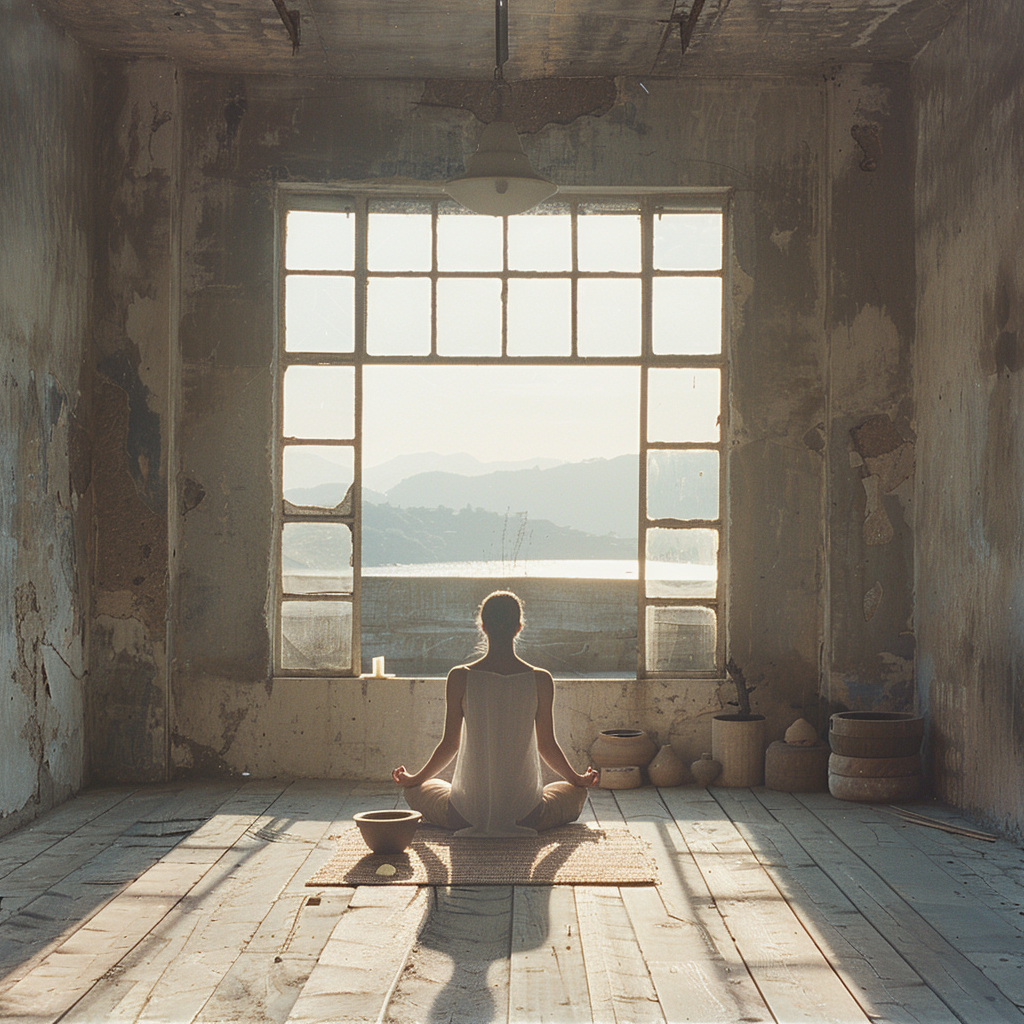
In the warm minimalist home, mindfulness operates at every scale. At the macro level, it is the awareness that motivates decluttering: the recognition, clear-eyed and without self-judgement, of what genuinely serves your life and what you are holding onto out of habit, guilt, or anxiety. At the micro level, it is the quality of attention you bring to ordinary moments: the warmth of a mug in your hands, the particular quality of afternoon light across a wooden floor, the sound of rain against a window.
Mindfulness also changes the relationship to possessions. A mindful approach to the home asks, of each object: Does this thing bring genuine value to my life when I actually use it, or does it simply represent a version of myself I imagine being? This is the spirit behind Marie Kondo’s famous “Does it spark joy?” — a question that is fundamentally a mindfulness practice, asking you to feel the actual, present-moment experience of holding something, rather than thinking abstractly about whether you “should” keep it.
The warm minimalist home, designed for presence rather than performance, becomes a space that supports mindfulness: quiet enough to hear your own thoughts, uncluttered enough to feel at ease, beautiful enough to reward close attention. It is a home that invites you to notice what is already here, rather than reaching always for what might be acquired.
If you were to walk through your home right now with completely fresh eyes, what would you notice — truly notice — for the first time?
Where Philosophy Becomes Home
It would be easy to treat these eight concepts as a design checklist — add candles for hygge, rough pottery for wabi-sabi, clear the shelves for Zen, and call it warm minimalism. But that would be to misunderstand everything these traditions are pointing toward. These are not aesthetic prescriptions; they are philosophical orientations. They are different cultures’ answers to the same timeless question: How do we live well?
What is extraordinary is how deeply these eight concepts resonate with one another, across centuries and continents. Zen’s call to presence rhymes with mindfulness. Ma‘s embrace of negative space echoes lagom‘s wisdom of enough. Wabi-sabi’s acceptance of impermanence softens into the gentle warmth of hygge. Fika’s daily ritual of pause finds its fuller expression in the broader philosophy of slow living. These traditions did not emerge in conversation with each other — and yet they converge, as if from different directions, on the same understanding: that a good life is a present, deliberate, and essentially simple one.
Warm minimalism, at its best, is the spatial expression of this understanding. It is the home that has been designed — and continually tended — not to impress but to support. A home that makes it easier to be present, easier to rest, easier to connect with others and with yourself.
Practical Takeaways: Beginning Your Warm Minimalist Journey
You don’t need to redesign your home from scratch. Warm minimalism is built through small, considered changes over time. Here are ten ways to begin:
1. Start with one surface. Choose a shelf, a windowsill, or a side table and clear everything from it. Then return only what you genuinely love. Practice ma: leave more space than feels comfortable at first.
2. Introduce one natural material. A rough linen cushion cover, a small basket, a piece of driftwood, a beeswax candle. Let the material be itself — unvarnished, untreated, textured.
3. Audit your lighting. Replace at least one overhead light with a lamp. Add a candle to your evening routine. Notice how the quality of light changes the quality of your presence in the room.
4. Create a fika corner. Identify a spot in your home — even a small one — as the place for the daily pause. Equip it simply: a good mug, a comfortable seat, the morning light.
5. Repair instead of replace. The next time something breaks or shows wear, consider whether it might be repaired rather than replaced. Practice kintsugi in spirit, if not in gold.
6. Practise a five-minute Zen declutter. Each morning, before you leave a room, spend five minutes returning everything to its place. Notice how this simple ritual changes the quality of the space.
7. Let “enough” be enough. The next time you’re about to add something to a room — a new cushion, another print on the wall — pause and ask: does this genuinely improve the space, or am I filling a space because emptiness makes me uncomfortable?
8. Schedule a slow morning. Once a week, protect one morning from screens, schedules, and productivity. Let the morning be entirely without agenda. Notice what arises in the space of ma.
9. Choose one object that tells a story. Place it somewhere you’ll see it daily. Let it remind you that the things we live with carry meaning — and that fewer, more meaningful things enrich a home more than many things do.
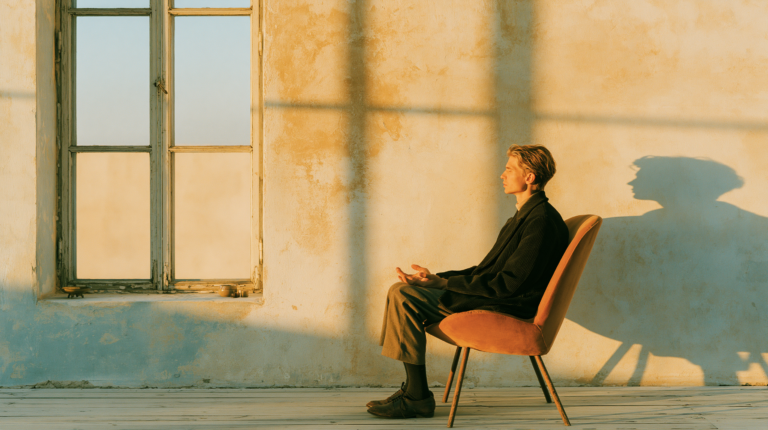
10. Sit still in your own home. This might be the most radical act of all. Sit in a room you’ve lived in for years and simply look at it, with fresh, mindful attention. What do you see? What do you feel? What does this space tell you about the life you are living — and the life you want to live?
Warm minimalism is not an arrival. It is a practice, an ongoing orientation toward a certain quality of life — one that values presence over possession, depth over display, and the quiet, irreplaceable beauty of an ordinary day fully inhabited. The concepts explored here are not rules. They are invitations.
The question, always, is not “How should my home look?” but “How do I want to live?”
Begin there. The rest will follow.
Found this post inspiring? Save it to return to, share it with someone who might need it, and remember: the best time to begin is always exactly now.
Join the Circle of Warmth
A quiet letter on warm, intentional living — delivered occasionally.