The Space Between Things: Why Negative Space Isn’t Empty
The Crowded Calm
There’s a particular kind of exhaustion that comes from a room that should feel beautiful but somehow doesn’t.
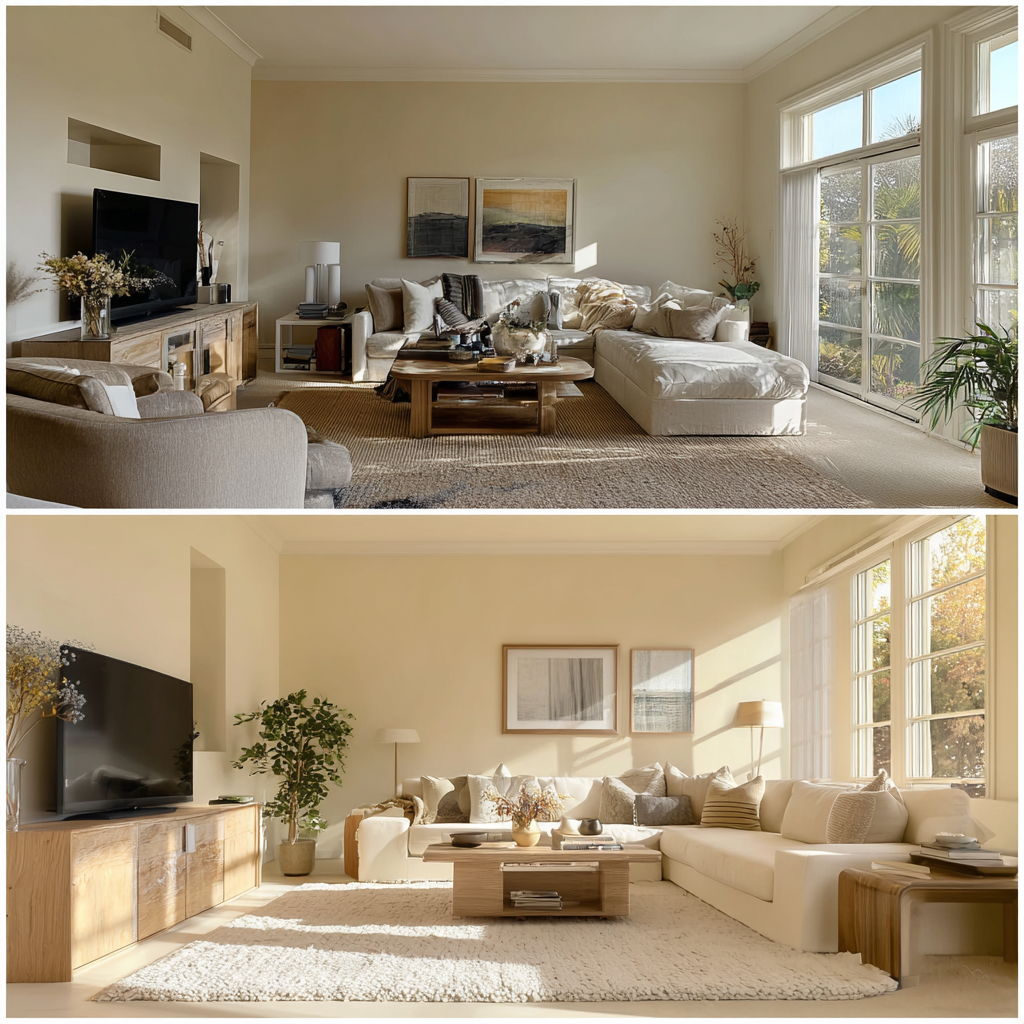
Maybe you’ve experienced it. You’ve done everything “right” — the throw pillows are layered just so, the shelves are styled with books and candles and little ceramic things you genuinely love, the gallery wall is full and curated and perfectly cohesive. By every measure, the room is done.
And yet you walk in, look around, and feel… nothing. Or worse — a low, quiet hum of overwhelm you can’t quite name.
This is one of the great myths of home design: that a beautiful, intentional space means a full one. That warmth comes from abundance. That if a little is good, more must be better.
Warm minimalism gently, firmly disagrees.
The truth is that some of the most peaceful, alive, deeply felt spaces in the world aren’t defined by what’s in them. They’re defined by what isn’t. By the pause between objects. The breath between walls. The quiet that makes the beautiful things matter.
Negative space isn’t emptiness. It isn’t coldness, or laziness, or an unfinished room. It is, in the most literal sense, the breathing room your mind has been quietly begging for — the place where your nervous system finally gets to set down its bags and rest.
In warm minimalism, this is the central secret: peace doesn’t live in the things. Peace lives in the space between them.
What Negative Space Really Is
Let’s start simple, because this concept is often misunderstood — even by people who have been pursuing a calmer home for years.
Negative space is any area that isn’t occupied by a focal object. It’s the wall around a single painting. The empty half of a shelf. The floor visible beside a piece of furniture. The gap between a lamp and a stack of books.
In design schools, they call it “white space.” But that term makes it sound clinical — like a technical tool used by professionals. Negative space, as a lived experience, is something far warmer and more personal than that.
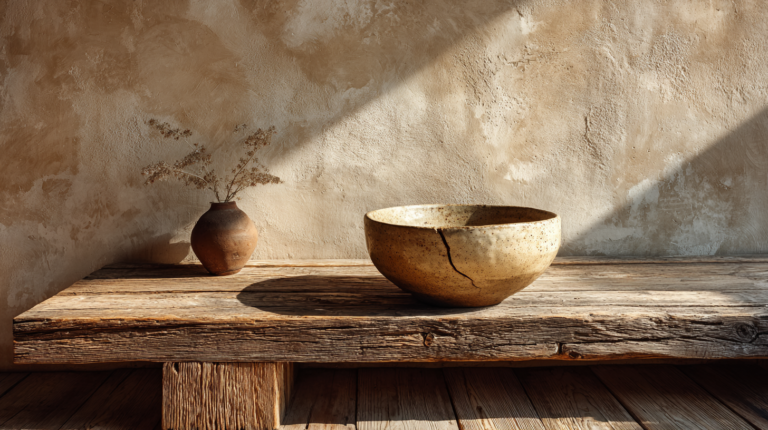
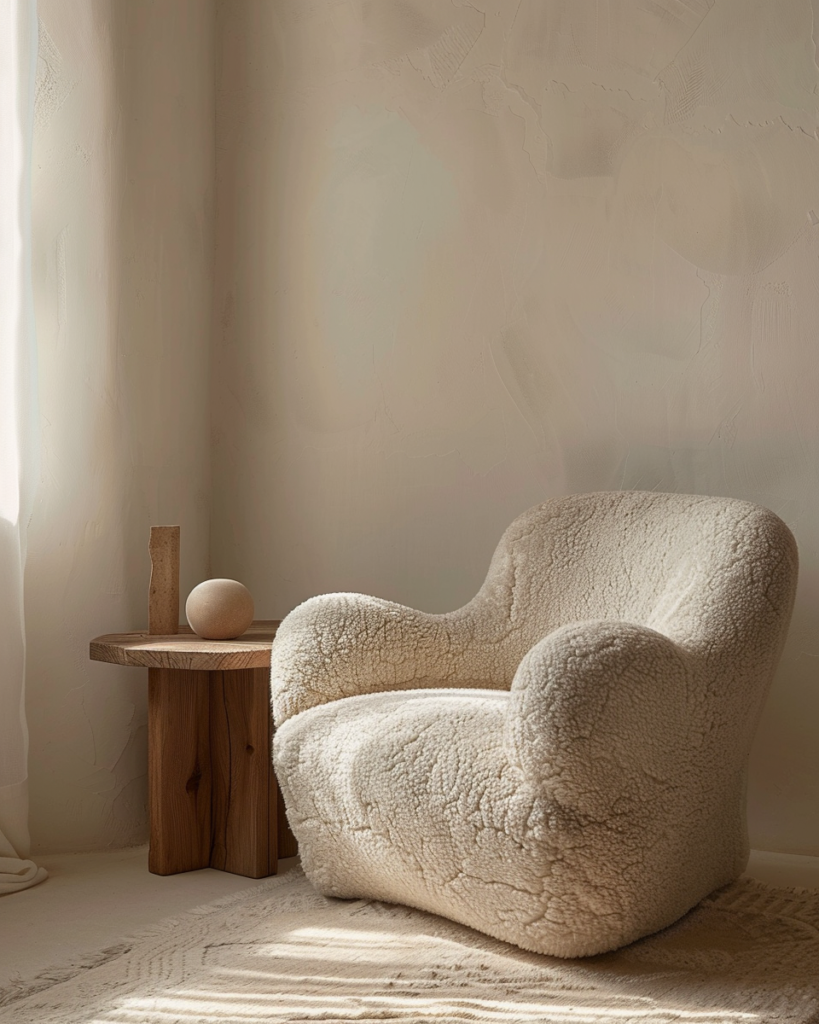
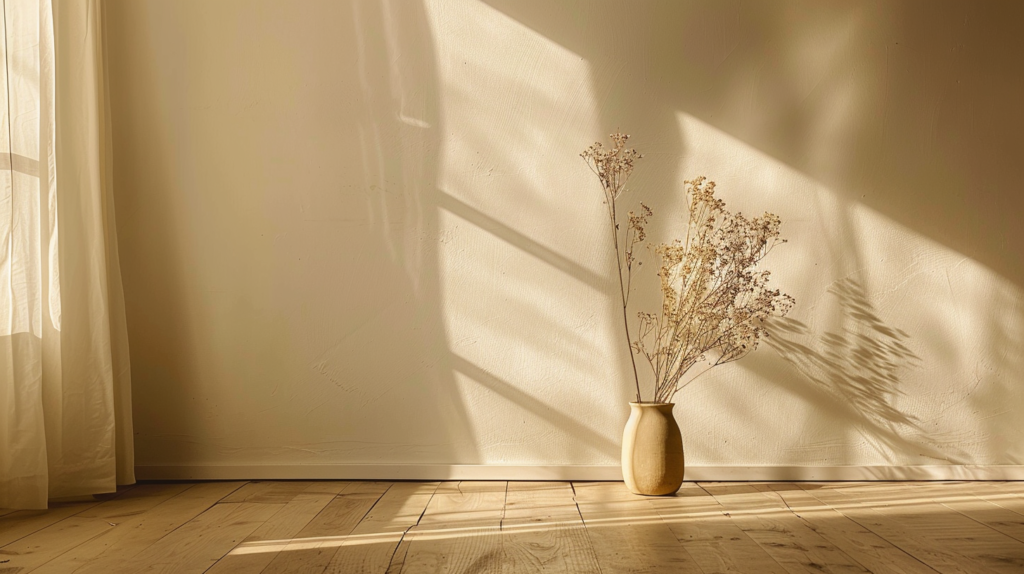
It’s the feeling of walking into a room and having your eyes land somewhere soft instead of somewhere cluttered. It’s the gentle pause your gaze takes before it finds the beautiful thing you actually want to notice. It’s the reason a single branch in a vase can feel more alive than a tightly packed bouquet — because the space around it gives it room to speak.
Most of us were never taught to see space this way. Culturally, we’ve been conditioned to equate fullness with comfort, abundance with love, and decorated with done. Empty walls feel like neglect. Sparse shelves feel like poverty. A simple room feels like we haven’t tried hard enough.
But here’s the gentle reframe that warm minimalism offers: space isn’t absence. Space is invitation.
When you leave room around a beautiful object, you’re inviting the eye to actually see it. When you leave a corner of a room open, you’re inviting the body to breathe there. When you resist the urge to fill every surface, you’re inviting a quality of quiet that no candle or throw blanket can manufacture on its own.
Think of it like music. The notes are lovely, yes. But it’s the silence between them that makes a melody mean something.
The same is true of a room you truly love coming home to.
The Quiet Science: How Space Soothes the Nervous System
This isn’t just philosophy. There is real, accessible science behind why space makes us feel better — and understanding even a little of it can help you trust your instincts the next time you’re tempted to fill a shelf that already feels right.
Start with your eyes.
Visual processing is genuinely tiring work. Every time your gaze lands on something — an object, a pattern, a color — your brain registers it, categorizes it, decides whether it requires attention. In a cluttered room, this happens dozens of times per minute, whether you’re conscious of it or not. By the time you’ve sat on the couch for twenty minutes, your brain has quietly processed hundreds of micro-decisions about all the things on the shelves across from you.
No wonder we feel drained.
Negative space gives the eyes somewhere to rest. A blank wall, an open corner, a shelf with one object and breathing room on either side — these are places where the brain can briefly pause its classification work. Visual fatigue eases. Attention steadies. The quiet hum of overstimulation fades.
Researchers in environmental psychology call this attention restoration — the idea that certain kinds of environments actively replenish our capacity for focus and calm. Natural settings do this beautifully, which is why a walk in the woods can feel so restorative. But so can a thoughtfully spare interior: a space with fewer competing demands, gentler visual rhythms, and intentional openness.
There’s also the cortisol question. Cluttered environments have been associated with elevated stress hormones — not because mess is morally wrong, but because visual complexity signals to the nervous system that there is more to process, more to manage, more to do. A simpler visual field sends the opposite signal: you are safe. You can rest. Nothing here requires urgent attention.
Have you ever noticed how a cluttered shelf feels somehow louder than a tidy one? That’s not imagination. That’s your nervous system accurately reading the room.
When we talk about warm minimalism, we’re not talking about austerity or deprivation. We’re talking about creating environments where the nervous system can genuinely exhale — where beauty doesn’t come at the cost of peace.
Creating Breathing Room: Practical Ways to Use Negative Space at Home
Here’s where this becomes something you can actually do — not as a dramatic overhaul, but as a series of small, intentional choices that add up to a home that holds you differently.
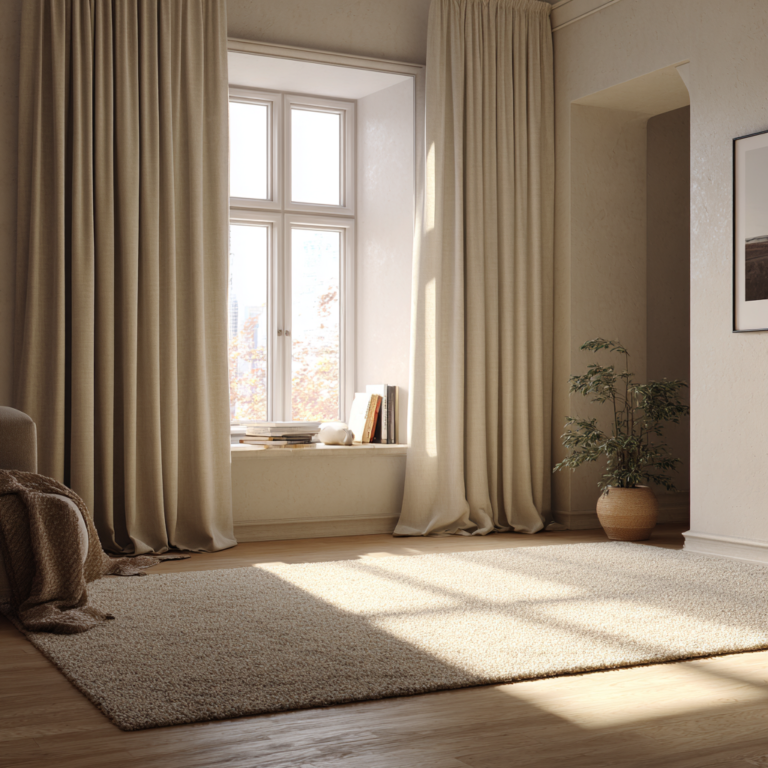
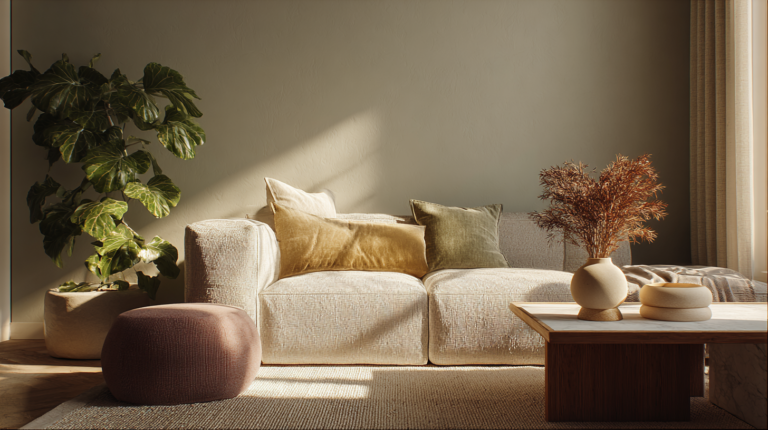
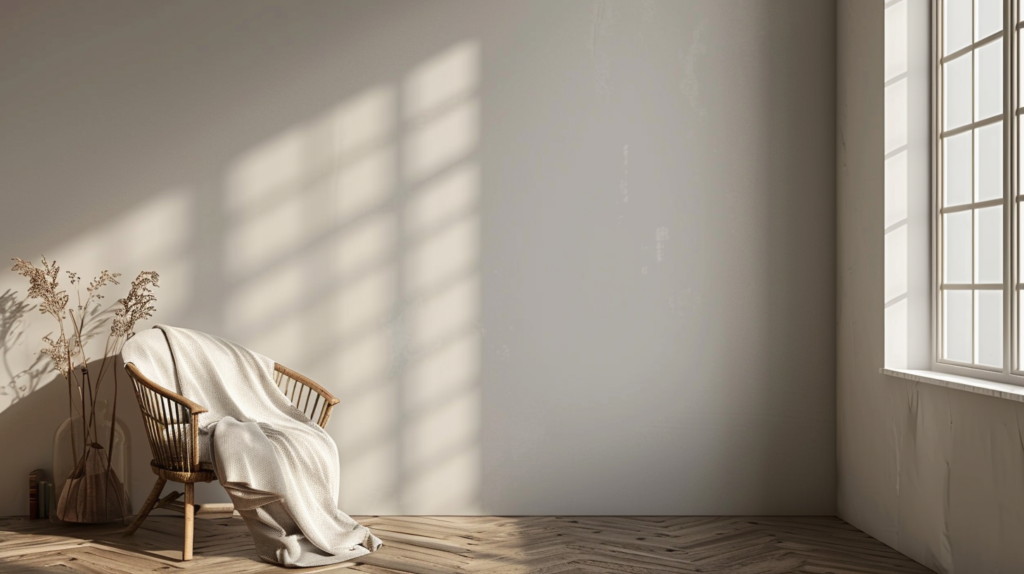
Let furniture float. One of the most common mistakes in small spaces is pushing every piece of furniture flush against the walls. It feels logical — more floor space, right? But it often creates a cramped, tense energy. Try pulling a sofa or armchair a foot or two away from the wall. The small gap of visible floor behind it creates a sense of depth and ease that changes the entire feel of the room. Air around furniture signals spaciousness, even in compact rooms.
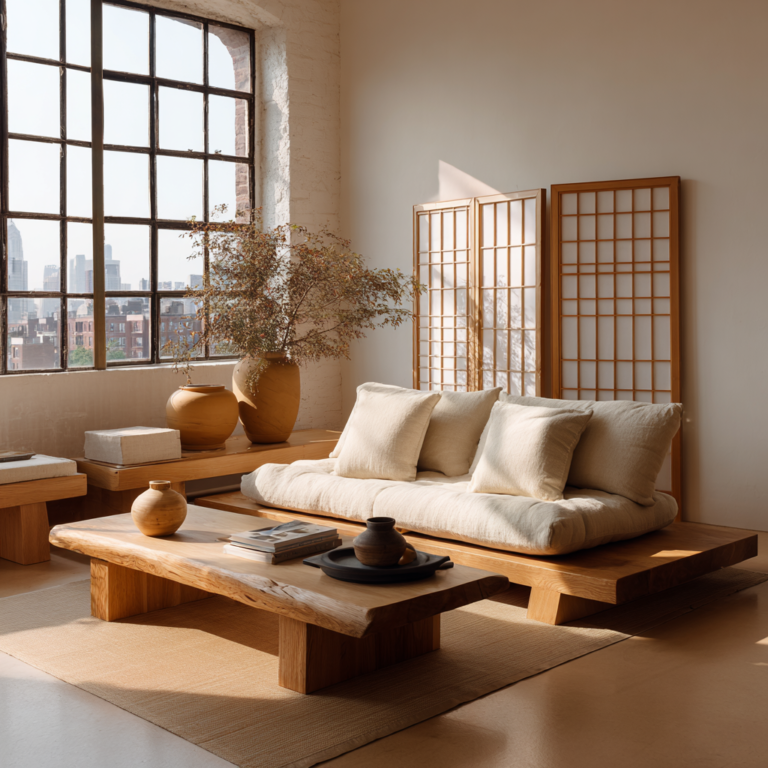
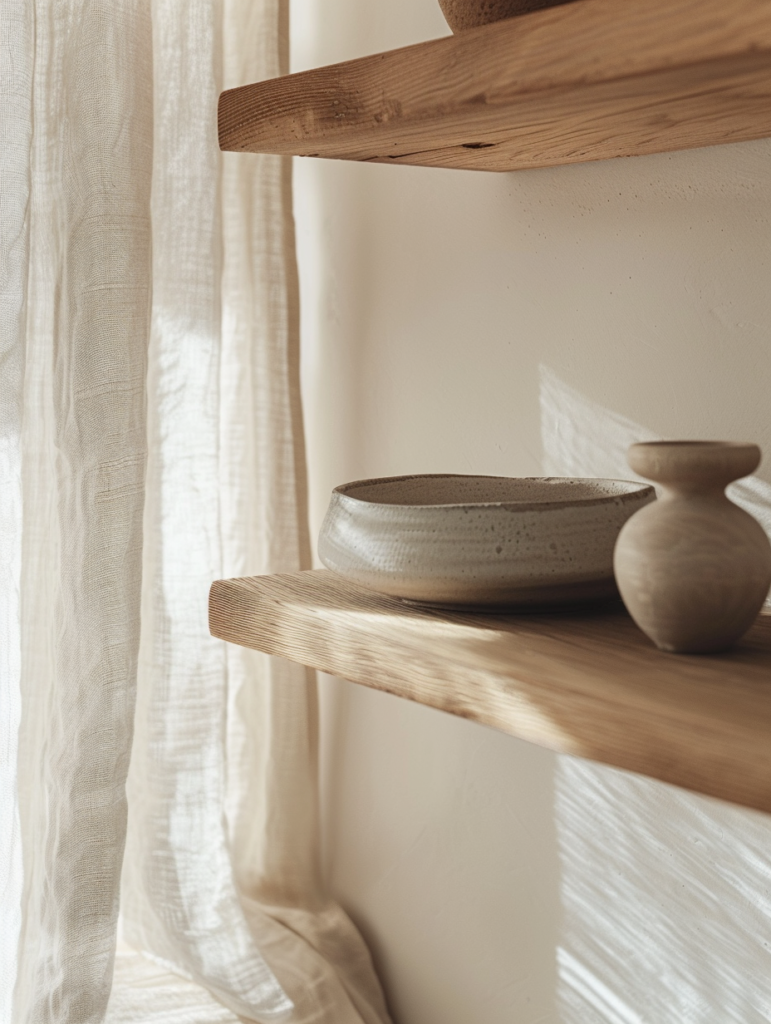
Practice the art of the single beautiful object. Look at one of your shelves. Chances are it’s working hard — holding books, small plants, a candle, a meaningful trinket or two. Now imagine removing everything except the one thing you love most. Just that one piece, with generous empty shelf on either side. This isn’t cold or unfinished — it’s a gallery. You’re giving that object the honor of being truly seen. And you’re giving your eyes the honor of genuinely resting.
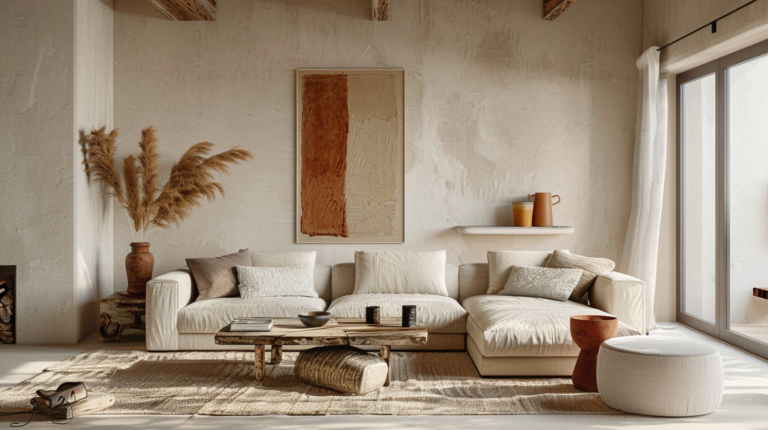
Let your walls breathe. Art deserves space. A single painting or print surrounded by generous wall space will almost always feel more intentional and alive than a tightly packed gallery wall — even a beautifully curated one. If you love multiple pieces, consider grouping them with real breathing room between frames, or choosing one wall to be your “statement” and leaving others simpler. The blank wall isn’t a failure. It’s the silence that makes the music audible.
Use light to carve out softness. Warm, directional lighting — a floor lamp angled into a corner, a soft table lamp on a side table — does something beautiful: it creates pockets of illuminated space surrounded by gentle shadow. These soft edges of light and dark are a form of negative space, giving your eye a place to rest and making the lit areas feel intentional and warm. Overhead lighting illuminates everything equally; warm lamps create a quiet visual landscape.
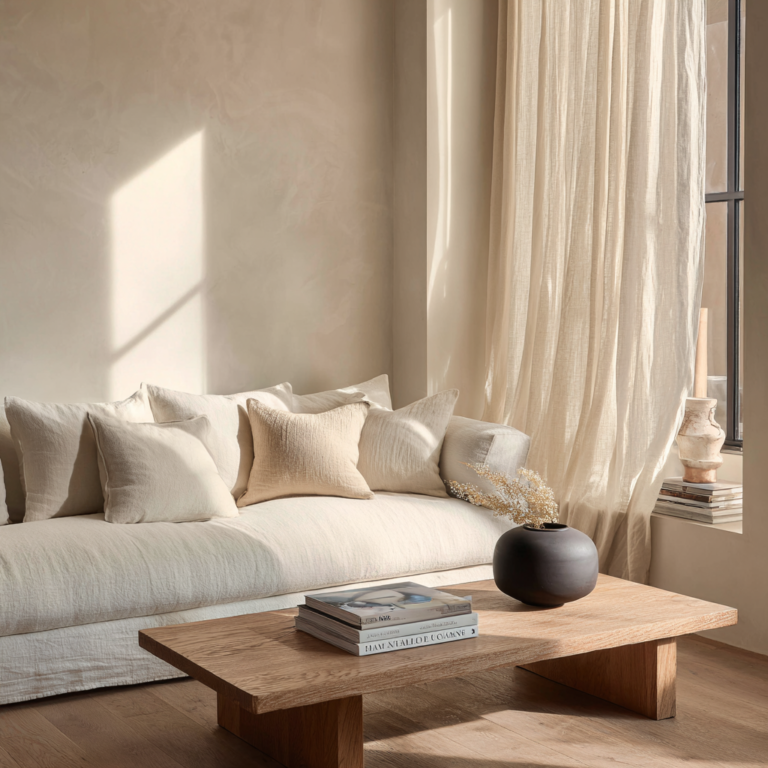
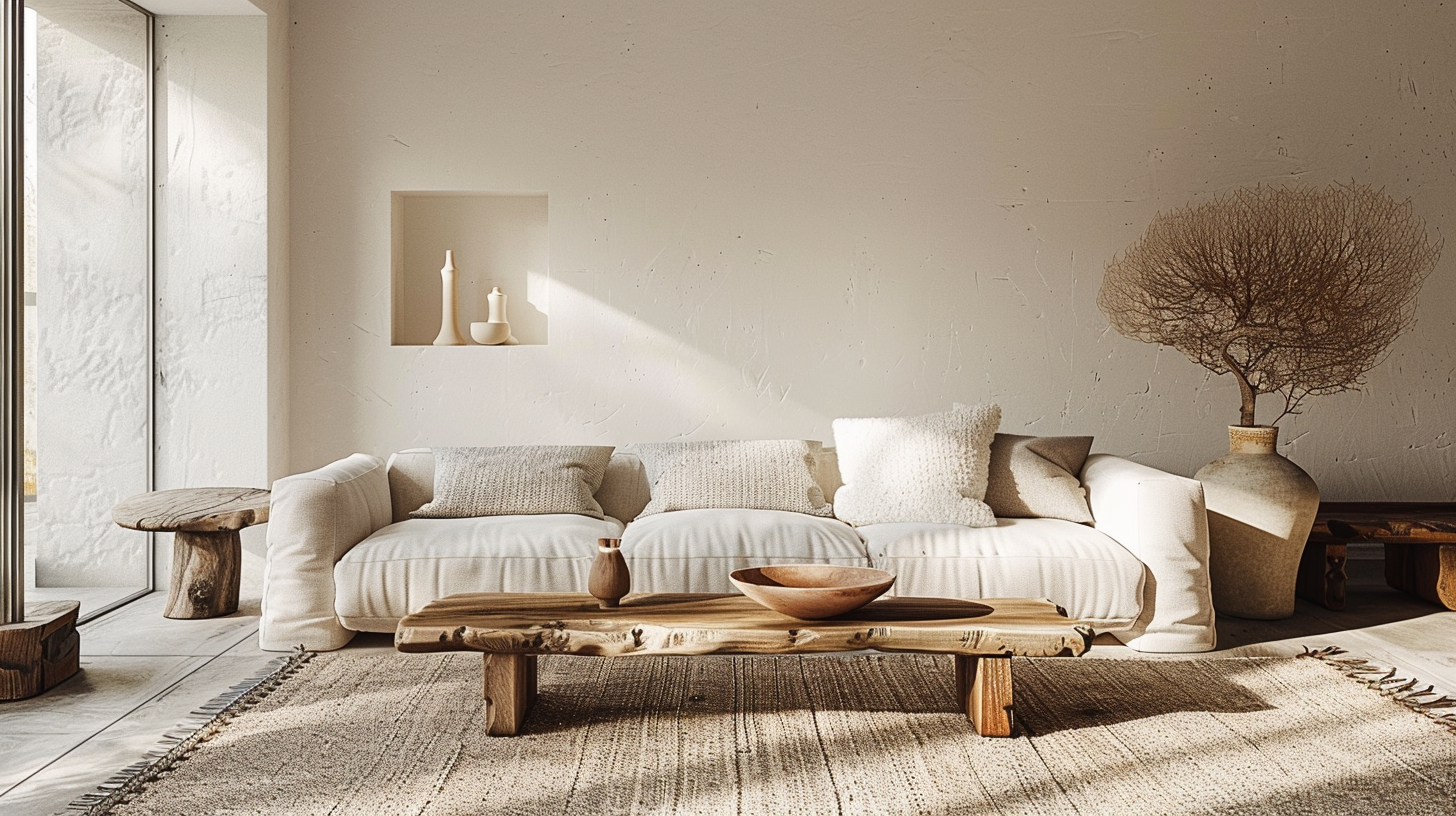
Let texture do the talking. In a warm minimalist space, a linen pillow against a wooden bench, a woven basket on a white shelf, a stone bowl on a natural oak table — the contrast between textures creates richness without requiring more objects. Fewer pieces with varied, honest textures will always feel warmer than many pieces of the same visual weight. Simplicity, here, becomes a kind of abundance.
None of these changes need to be permanent. Think of them as experiments — quiet invitations to see what the room feels like when it can breathe.
Common Mistakes That Fill the Space (and How to Fix Them Gently)
We fill spaces for good reasons. Because we love beautiful things. Because bare walls make us nervous. Because a matching set felt like a complete solution when we bought it. None of this is something to be ashamed of — it’s deeply human.
But some of the most common habits quietly work against the peace we’re trying to create.
Over-accessorizing is usually born from love, not carelessness. The fix isn’t to throw things away — it’s to rotate. Choose a few pieces to display this season, and store the rest. Suddenly the things you do keep feel special again, and the space feels intentional.
Fear of blank walls is a real and understandable thing. A blank wall can feel unfinished, like something’s missing. But try sitting with it for a week before filling it. You may find the blankness begins to feel like a gift — a visual pause in a room that might have been working a little too hard.
Matching sets — the coordinated throw-pillow-and-blanket combos, the five-piece decorative collections — can flatten a space rather than enrich it. Try breaking up the set. Use one piece, donate another, tuck the rest away. Curated mismatches almost always feel warmer and more alive than perfectly matched collections.
The goal isn’t perfection. It’s permission — permission to do less, and trust that less can be genuinely, quietly more.
The Emotional Payoff: From Crowding to Spaciousness
Here’s what nobody tells you about negative space: it doesn’t just change how a room looks. It changes how you feel inside it.
Imagine coming home after a long day. You open the door, set down your bag, and look around the room. Instead of a dozen small things each quietly competing for your attention, your eye finds a soft landing place. A single plant on an open windowsill. A lamp glowing in a quiet corner. Space — real, honest, intentional space — between the things you love.
You take a breath. A real one.
This is what intentional living actually feels like in practice. Not a perfect, magazine-ready room — but a space that receives you. One that doesn’t ask anything of you the moment you walk in. One where the visual quiet becomes emotional quiet, and emotional quiet becomes the foundation for everything you actually want to do and feel and think.
When our environments are calmer, our inner lives tend to follow. Not because space solves problems, but because it stops creating them. The subtle, constant low-grade drain of a visually busy environment is something many of us have normalized for years — until we finally experience the alternative, and realize how much energy we were spending just existing in a crowded room.
Negative space is where clarity lives. Where creativity surfaces. Where, at the end of a long and demanding day, you finally get to put yourself down and just be for a while.
That’s not emptiness. That’s everything.
The Space That Holds You
Here is the quiet truth that warm minimalism keeps returning to: the things we love are made more meaningful by what surrounds them. A beautiful object in a crowded room disappears. The same object in a spare, intentional space becomes a moment of genuine pleasure every time your eyes find it.
Space doesn’t take away from warmth. Space is warmth — a different kind, softer and steadier than the warmth of abundance.
The goal was never a cold room. It was always a room that holds you.
Your small experiment for this week: Choose one surface — a shelf, a side table, a windowsill — and remove everything from it. Live with it empty for three days. Then, slowly, return only the things that genuinely belong. Notice how the space feels. Notice how you feel in it.
You might be surprised by how much peace was waiting there all along — not in the things, but in the room you made for them.
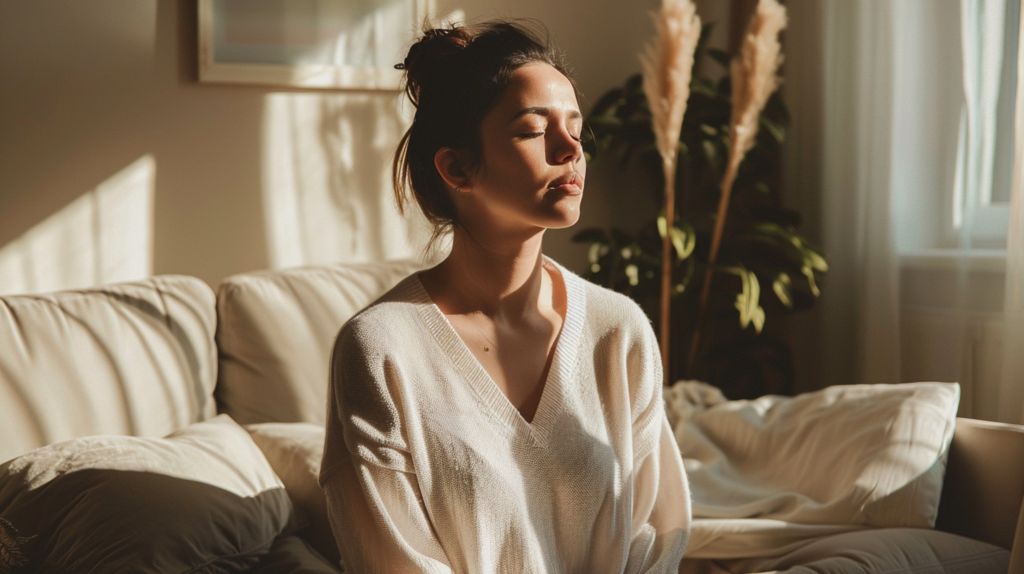
We would love to see how you are using negative space in your own home. Share your warm minimalist spaces in our community gallery and let your home’s unique story inspire others.
Join the Circle of Warmth
A quiet letter on warm, intentional living — delivered occasionally.