The Texture of Calm: Why Touch Matters More Than We Think
The Overlooked Sense
Notice what your hands are resting on right now.
Is it smooth? Slightly cool? Does it give a little, or is it firm and flat? Does touching it feel like anything at all — or does your hand simply register surface and move on?
Most of us don’t think much about touch in our homes. We spend hours choosing paint colors and lighting and the right rug for a room, but we rarely stop to ask: how does this place feel under my hands? How does it feel against my bare feet in the morning, or against my cheek when I sink into the couch at the end of the day?
There’s a particular flatness to a room full of glossy surfaces. Lacquered cabinets, polished stone, synthetic upholstery — visually, it can look very clean, very intentional. But something about it keeps the body slightly on edge. The hands find nothing to sink into. The nervous system gets no signal that says softer now, slower now, you’re home.
This is where warm minimalism quietly parts ways with the colder versions of minimal design. In a warm minimalist home, texture isn’t decoration. It isn’t the final styling layer added to make a room photograph well. It is, in the truest sense, nervous-system regulation — a way of speaking directly to the body in a language that bypasses thought entirely.
Natural, imperfect textures — worn linen, dense wool, wood with visible grain, ceramics that still carry the memory of a hand that shaped them — create a deeper, more embodied sense of calm than any visual arrangement alone ever could.
Because real peace isn’t just something we see. It’s something we feel.
Why Touch Matters: The Body’s Silent Language
Your skin is your largest organ. It covers nearly two square meters of surface area, and every inch of it is in constant, quiet conversation with the world around you.
Most of that conversation happens below the level of conscious thought. You don’t decide to relax when you wrap your hands around a warm mug — your body simply does it. You don’t choose to tense up slightly when a cold, hard surface meets your palm — it just happens. Touch is one of the most direct lines into the nervous system we have, and yet it’s one we almost never think about when creating our homes.
The difference between a grounding surface and an alerting one is something the body knows immediately. Natural textures — the slight give of a wool cushion, the warmth a wooden tabletop holds even in cool weather, the gentle irregularity of handmade ceramic under your fingers — send a particular kind of signal. This is safe. This is real. You can slow down here. These surfaces ask nothing from you. They simply receive.
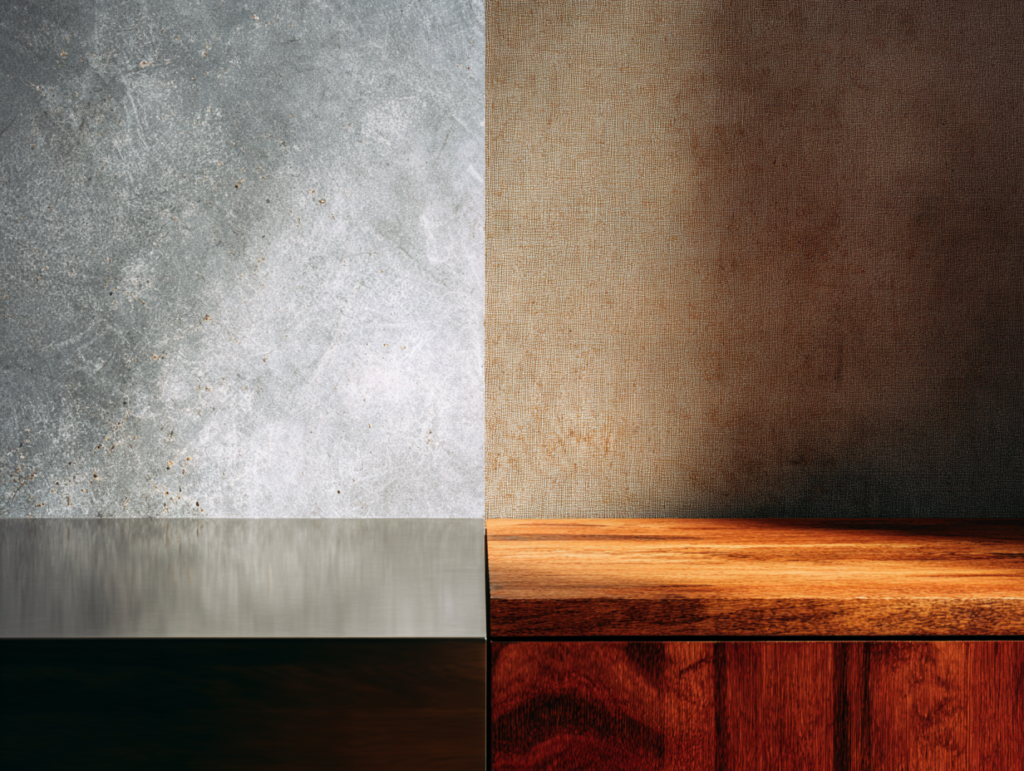
Synthetic and high-gloss surfaces speak a different language. Not a bad one, exactly — but a flatter, cooler one. Smooth plastic, high-shine laminate, perfectly uniform upholstery: these materials are visually tidy, but they offer the hands nowhere to land. The tactile experience is neutral at best, and faintly alerting at worst. The body registers hard, cool, unchanging — and stays, just slightly, on guard.
This is part of the mystery of why some beautifully styled, technically “minimal” homes still feel unrestful. The visual simplicity is there. The clutter has been cleared. But if every surface the body encounters is flat, hard, and synthetic, the nervous system never quite receives the message that it’s allowed to settle.
Calm isn’t just a visual experience. The body needs to be told, through touch, that it has arrived somewhere safe and soft and human.
Natural textures are one of the gentlest ways to say that.
The Textures That Calm
Warm minimalism has its own quiet material vocabulary — a small, honest collection of surfaces that, for very good reason, appear again and again in spaces that feel genuinely peaceful.
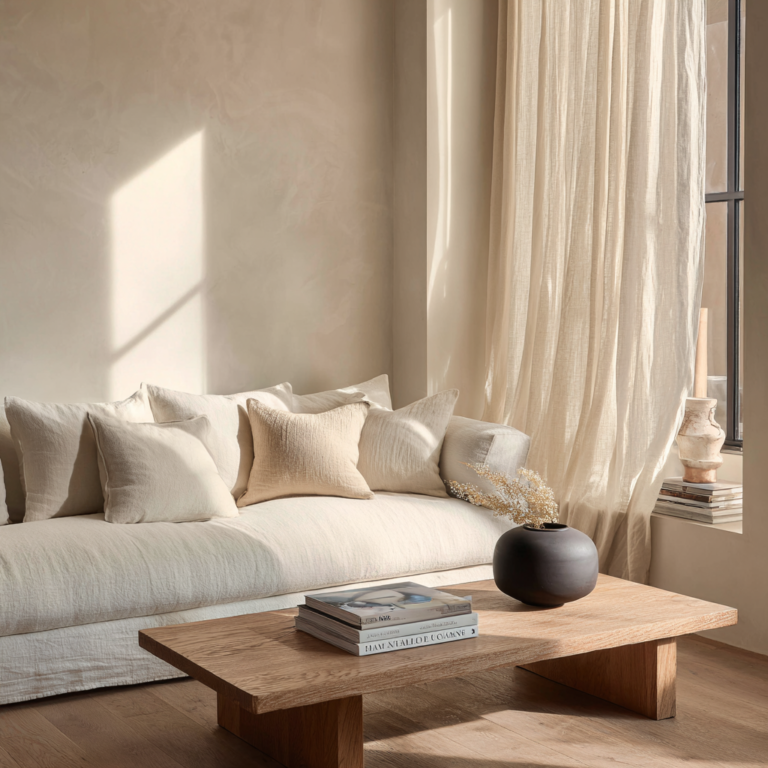
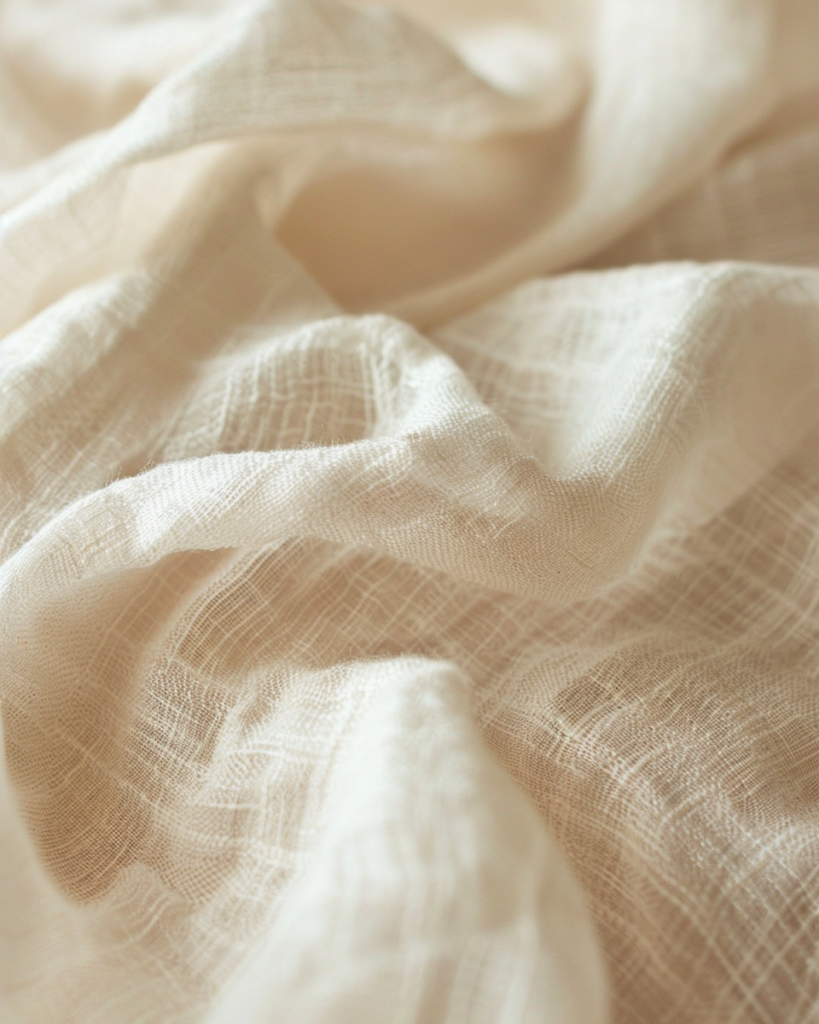
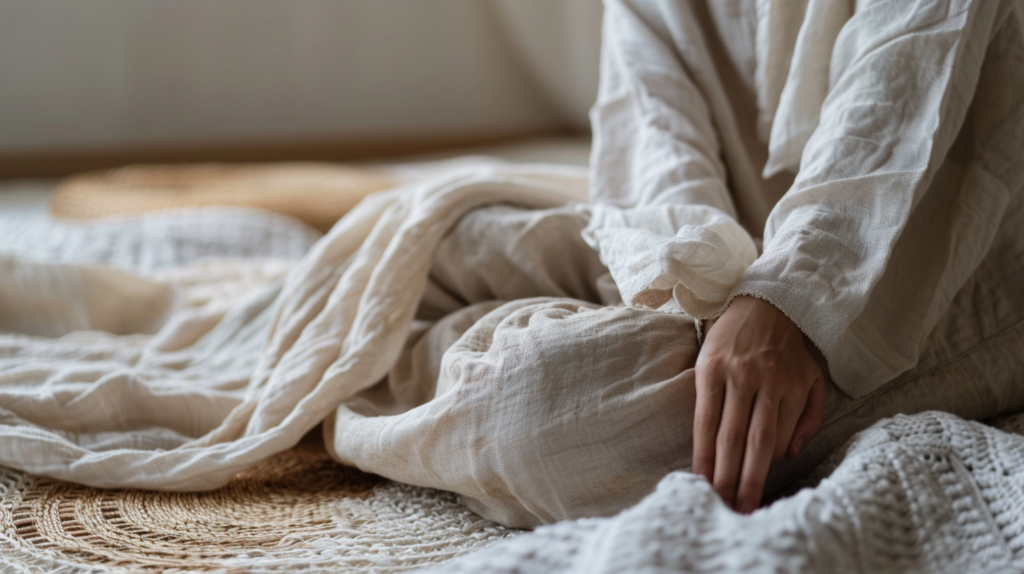
Linen is perhaps the most characteristic of all. It’s soft without being plush, lightweight without feeling insubstantial, and it wears beautifully — developing a gentle rumple that more structured fabrics would call a flaw, but that linen wears as character. Running your hand across a linen pillow or curtain panel is a particular kind of pleasure: there’s a slight breathable texture to it, a give that feels both simple and deeply satisfying. It doesn’t demand anything. It just drapes, softens, rests. In a warm minimalist bedroom, linen sheets don’t just look calm — they feel like permission to sleep.
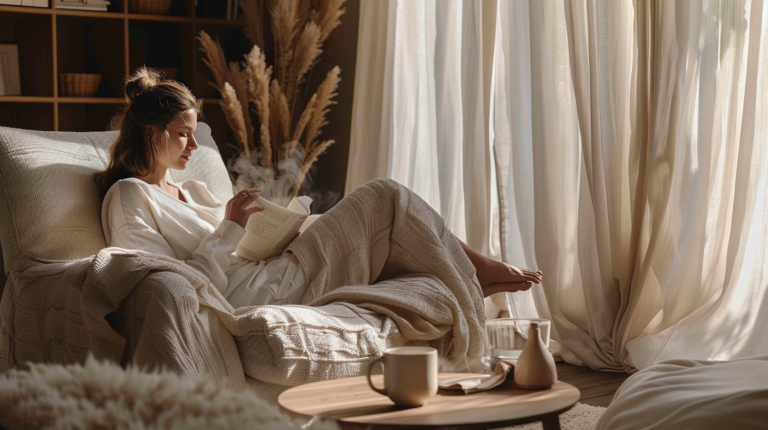
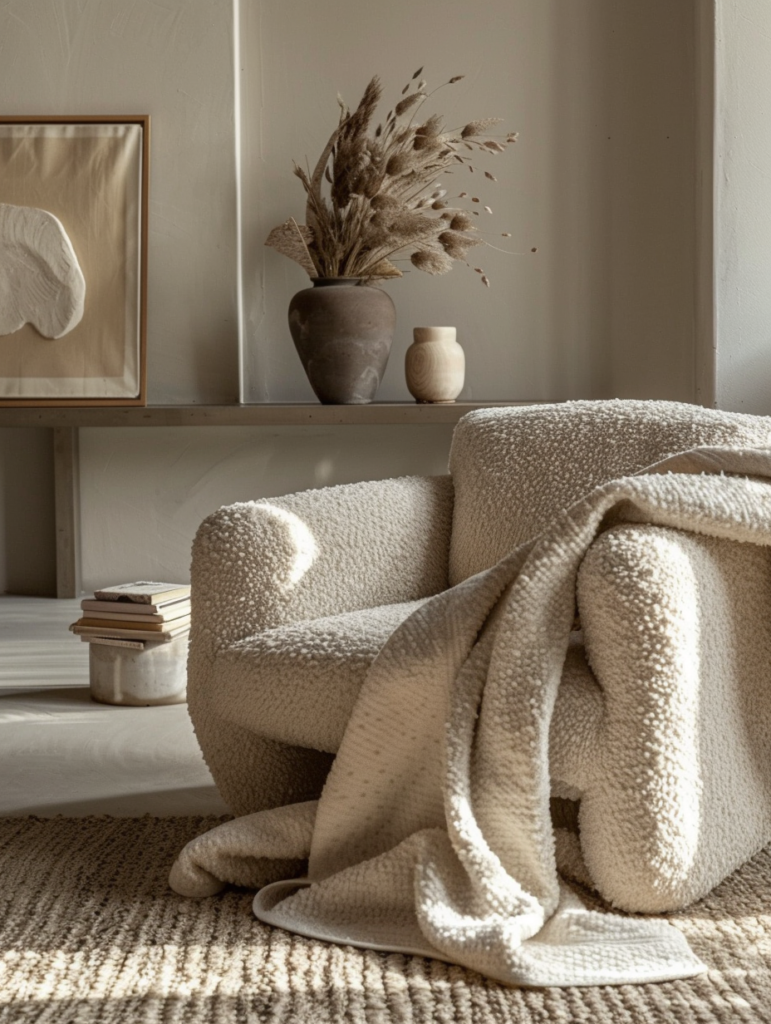
Wool and boucle bring a different quality: density and warmth. A wool throw, a boucle armchair, a woven cushion — these are the textures you instinctively reach for when you want to feel held. There’s a gentle insulation to wool, a sense of being buffered from the world. Boucle’s loopy, irregular surface is endlessly tactile — the kind of thing you find your hand absentmindedly stroking, the way you might pet a cat. This is not incidental. It’s the body doing what it knows: seeking comfort through touch.
Matte wood with visible grain is one of the most grounding materials a home can contain. Not lacquered, not overly sanded into smoothness — but wood that still tells its story. The slight ridge of grain under a fingertip. The warm weight of a wooden bowl. A dining table worn smooth in the places where hands have rested for years. Wood is honest in a way that few materials are, and the body recognizes it immediately. It’s warm to the touch even when the room is cool. It carries a quality that is almost impossible to fake.
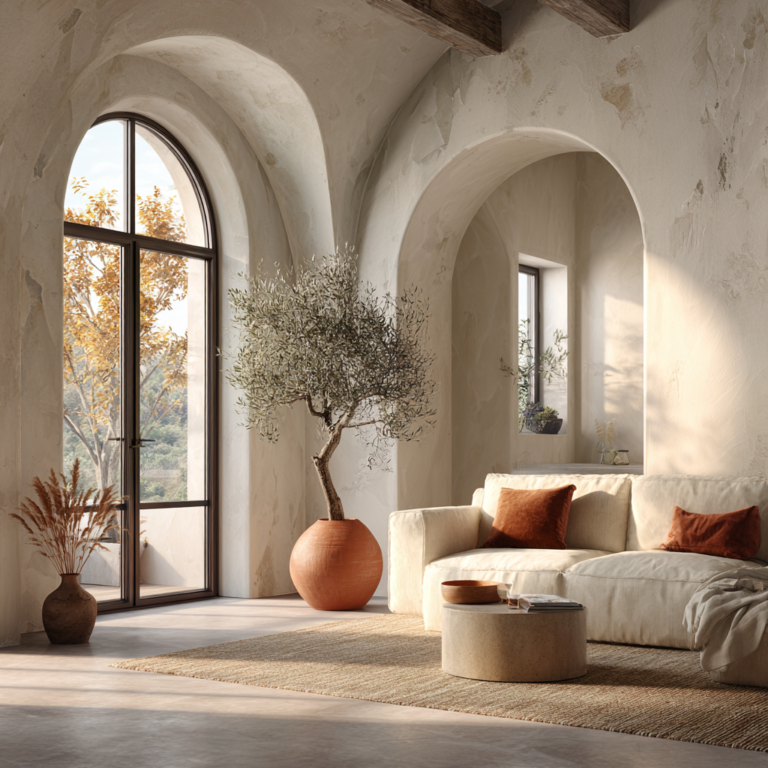
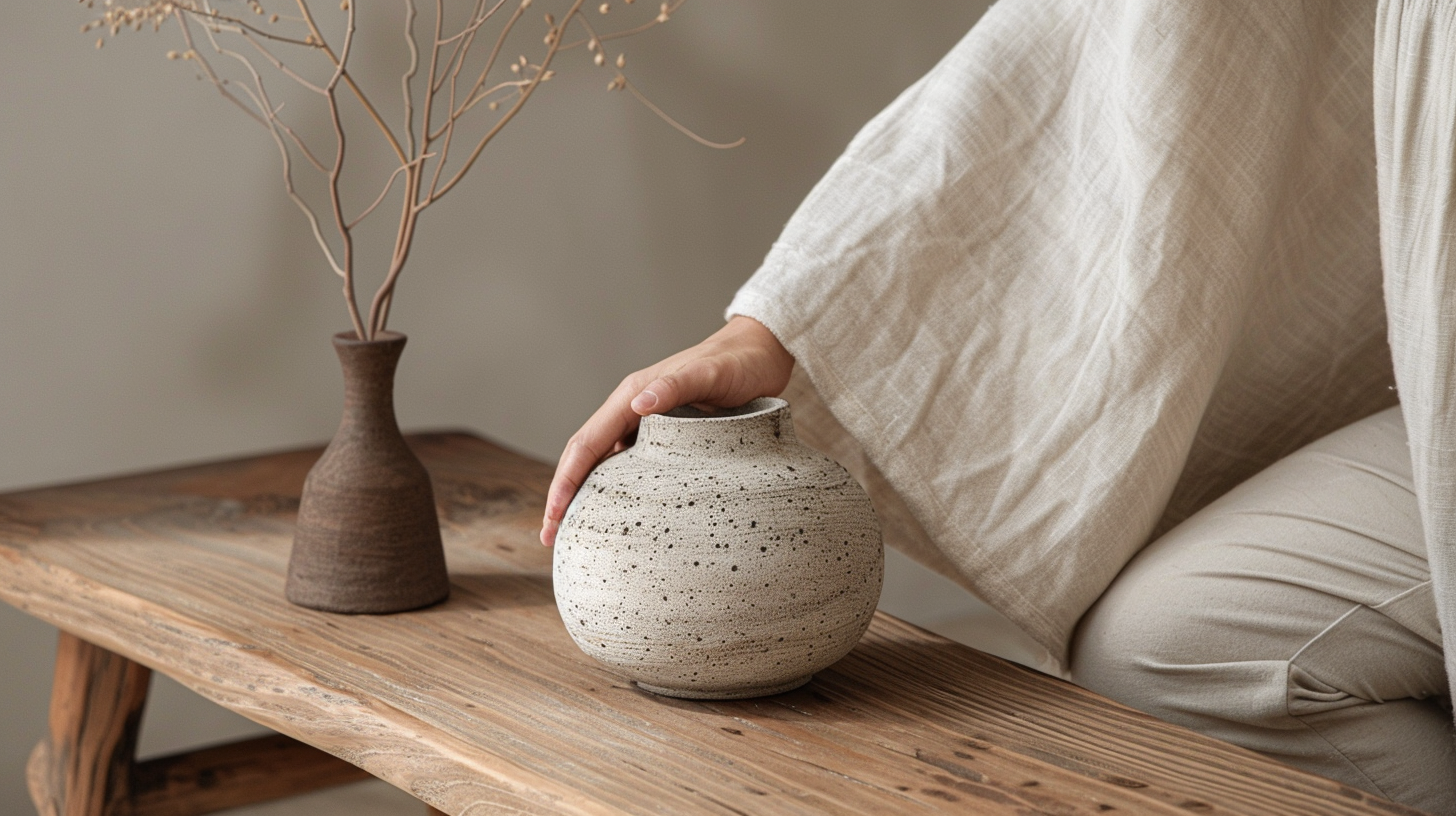
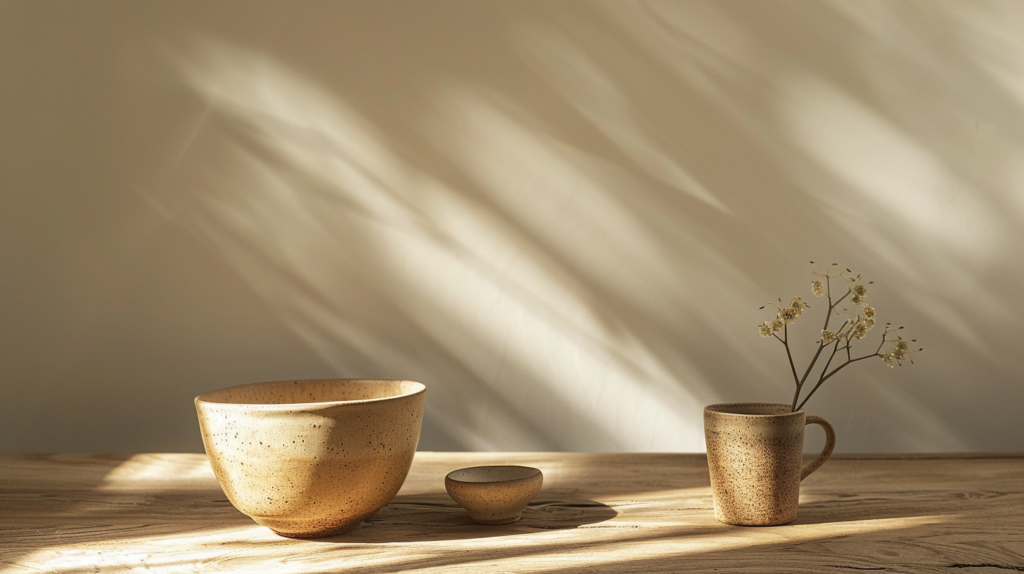
Unglazed or hand-thrown ceramic brings something else entirely: earth. A matte mug that still carries faint fingerprint impressions from the potter who made it. A rough-edged bowl. A planter where the clay shows its true color rather than hiding beneath a uniform glaze. These objects are quietly radical in a world of mass production. They are imperfect, and that imperfection is precisely what makes them soothing. The body knows the difference between something made by a machine and something made by hands. It responds to the human trace with something that feels like recognition.
Each of these materials works because it is variable — slightly different in every place your hand lands. And that variability, that gentle unpredictability, is what tells the nervous system: this is a living space. You are in the right place.
Sensory Flatness vs. Tactile Richness
Have you ever walked into a home that looked stunning in photographs but felt somehow distant in person? Everything perfectly matched, every surface gleaming, every cushion unrumpled. Beautiful to look at. But slightly cold to inhabit.
This is sensory flatness — and it’s more common than we realize in contemporary interiors.
High-gloss finishes, shiny plastics, perfectly smooth synthetic fabrics: these materials are visually consistent, easy to clean, and often less expensive than their natural counterparts. There’s nothing wrong with them as functional objects. But as the primary tactile language of a home, they leave the body with very little to hold onto.
“Perfectly smooth” is a quality that doesn’t exist much in nature. Real wood has grain. Real stone has variation. Real linen has texture. When everything in an environment is uniformly smooth and reflective, something in the nervous system registers it as slightly off — too controlled, too finished, not quite alive. The hands find no variation, and the mind, taking its cues from what the body reports, stays faintly alert.
Natural imperfection, by contrast, is deeply grounding. The slight roughness of a linen weave. The tiny dimple in the side of a handmade ceramic. The knot in a wooden floorboard. These variations are tiny, often barely noticed consciously — but they accumulate into something the body recognizes as real. As safe. As human.
This is the grounding power of tactile richness: not that it’s more or louder or more stimulating, but that it’s alive. It speaks in a frequency the nervous system was built to receive. And when a home speaks that language consistently — through its furniture, its fabrics, its objects — the body can finally do what it’s been wanting to do all along.
Let go.
Bringing Texture into a Warm Minimalist Home
The goal here isn’t to layer on more things until a space feels busy. It’s almost the opposite: to choose fewer things, more intentionally, with touch as one of the primary criteria.
Shop with your hands, not just your eyes. This sounds obvious, but it changes everything. Before buying a cushion, a curtain, a blanket — touch it. Drag your palm across it slowly. Does it feel like something you’d want to encounter at the end of a hard day? Does it feel alive and honest, or flat and forgettable? Your hands will tell you things that photographs never can.
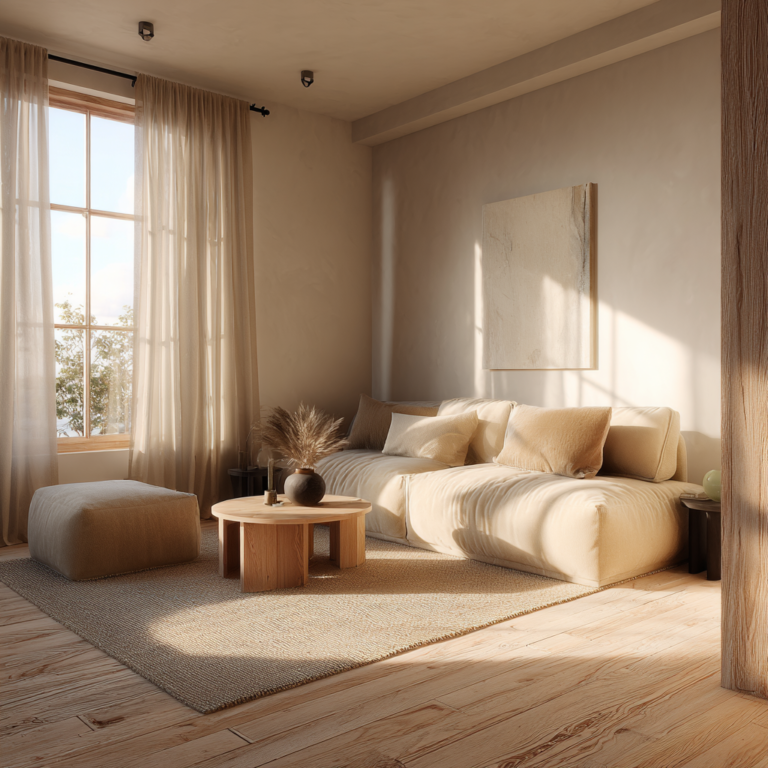
Layer textures without adding clutter. The secret to tactile richness without visual noise is contrast and restraint. A wooden side table beside a linen sofa. A wool throw over a simple bench. A matte ceramic lamp on a smooth surface. Each pairing lets the different textures speak to each other — the contrast between them is what creates interest, not sheer quantity. Two or three well-chosen textures will always feel richer than six similar ones.
Make small, considered swaps. You don’t need to renovate to shift the tactile quality of your home. Linen curtains instead of polyester sheers. A wooden cutting board that stays on the counter. A boucle cushion on the reading chair. A matte ceramic mug to replace the smooth glass one. These are quiet changes, but they’re cumulative — and over time, they shift the entire felt quality of daily life.
Create intentional touch points throughout the day. Think about the moments when your hands meet your home: the kitchen counter in the morning, the door handle, the chair you sit in to read, the pillow you reach for at night. These are opportunities. A wooden handle instead of a metal one. A textured runner under your feet in the kitchen. A rough linen hand towel in the bathroom. Each small encounter, repeated daily, either grounds you a little or doesn’t. The choice is always there.
Let imperfection stay. The slightly rumpled linen throw. The ceramic mug with the uneven rim. The wooden table that’s acquired a few marks over the years. These are not failures of minimalism — they are its soul. They tell the story of a home that’s actually lived in, actually touched, actually used. And that story is one the body finds deeply reassuring.
Cultivating Tactile Awareness
Here’s the gentle practice that underlies all of this: simply noticing.
Not fixing. Not immediately shopping for better textures or rearranging furniture. Just — pausing, once in a while, to feel what your hands are resting on. To notice whether a surface grounds you or leaves you feeling slightly disconnected. To walk barefoot across different rooms and pay attention to what the floor communicates through the soles of your feet.
This is a form of mindfulness that doesn’t require a cushion or a timer. It requires only the willingness to slow down for a moment and let your body tell you something about where you are.
Over time, this awareness deepens your relationship with your home in a way that no amount of decorating can replicate. You begin to know which corner of the house reliably soothes you, and why. You start to recognize the objects that feel like old friends — that you reach for not because they’re beautiful, but because they feel right in your hands. You notice, perhaps for the first time, how much of your home you’ve never really touched.
The emotional benefits are real and accumulative. Reduced anxiety. Greater physical presence. The quiet, grounding sense of being in a body, in a home, in a life that feels genuinely yours. Tactile awareness pulls you out of your head and into your hands — and your hands, it turns out, have always known the way home.
A Home You Can Feel
Real calm in a warm minimalist home is never only visual. It lives in the weight of a wool blanket, the grain of a wooden table, the earthy roughness of a ceramic bowl warming between your palms.
These things are not luxuries. They are the quiet language through which a home tells your body it is safe to rest.
You don’t need to change everything. You don’t need to throw out the glossy or the smooth. You only need to begin noticing — and then, slowly, gently, introducing more of what feels honest and alive into the spaces you touch most.
Your small experiment for this week: Choose one object in your home to swap for something with a natural texture. A mug, a cushion, a hand towel, a small bowl. Hold it. Notice how it feels. Let that be enough for now.
A home you can truly feel is a home that will hold you in ways you didn’t know you needed.
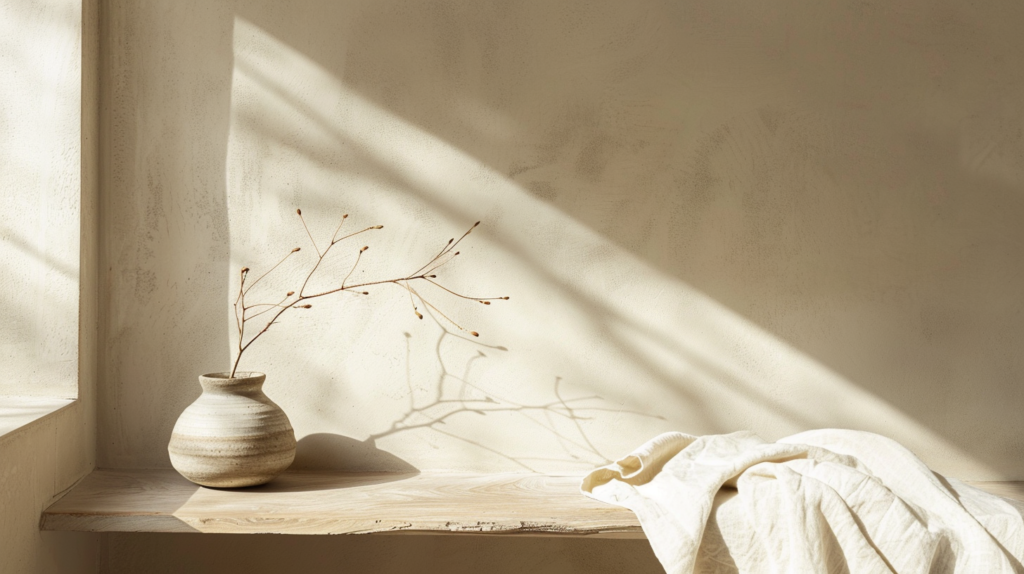
Our homes can be quiet, restorative places — not perfect ones. If this piece made you reach out and touch something nearby, it did exactly what it was meant to do.
Join the Circle of Warmth
A quiet letter on warm, intentional living — delivered occasionally.