Lagom: The Swedish ‘Just Enough’
On balance, sufficiency, and the quiet satisfaction of exactly right.

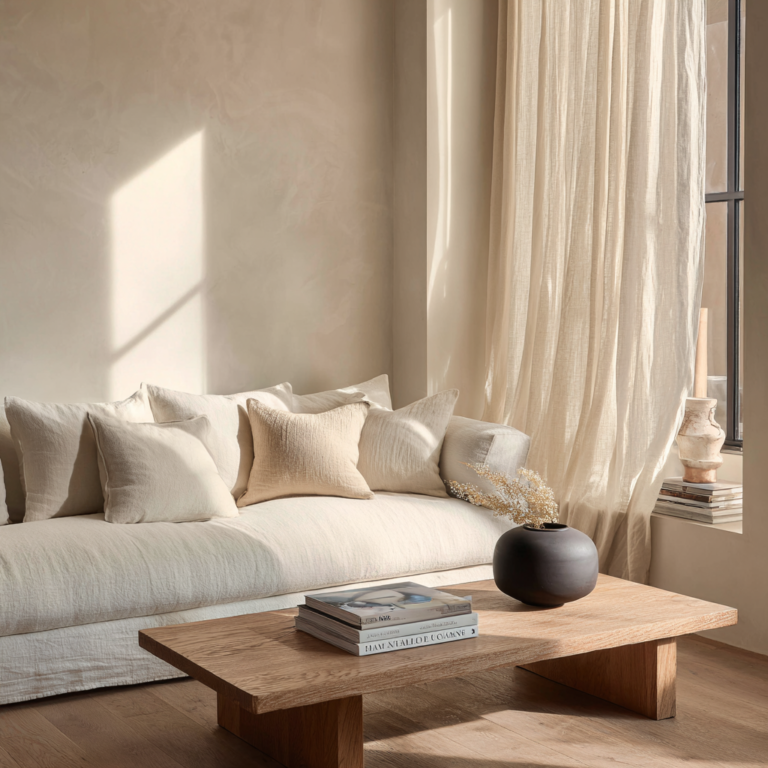
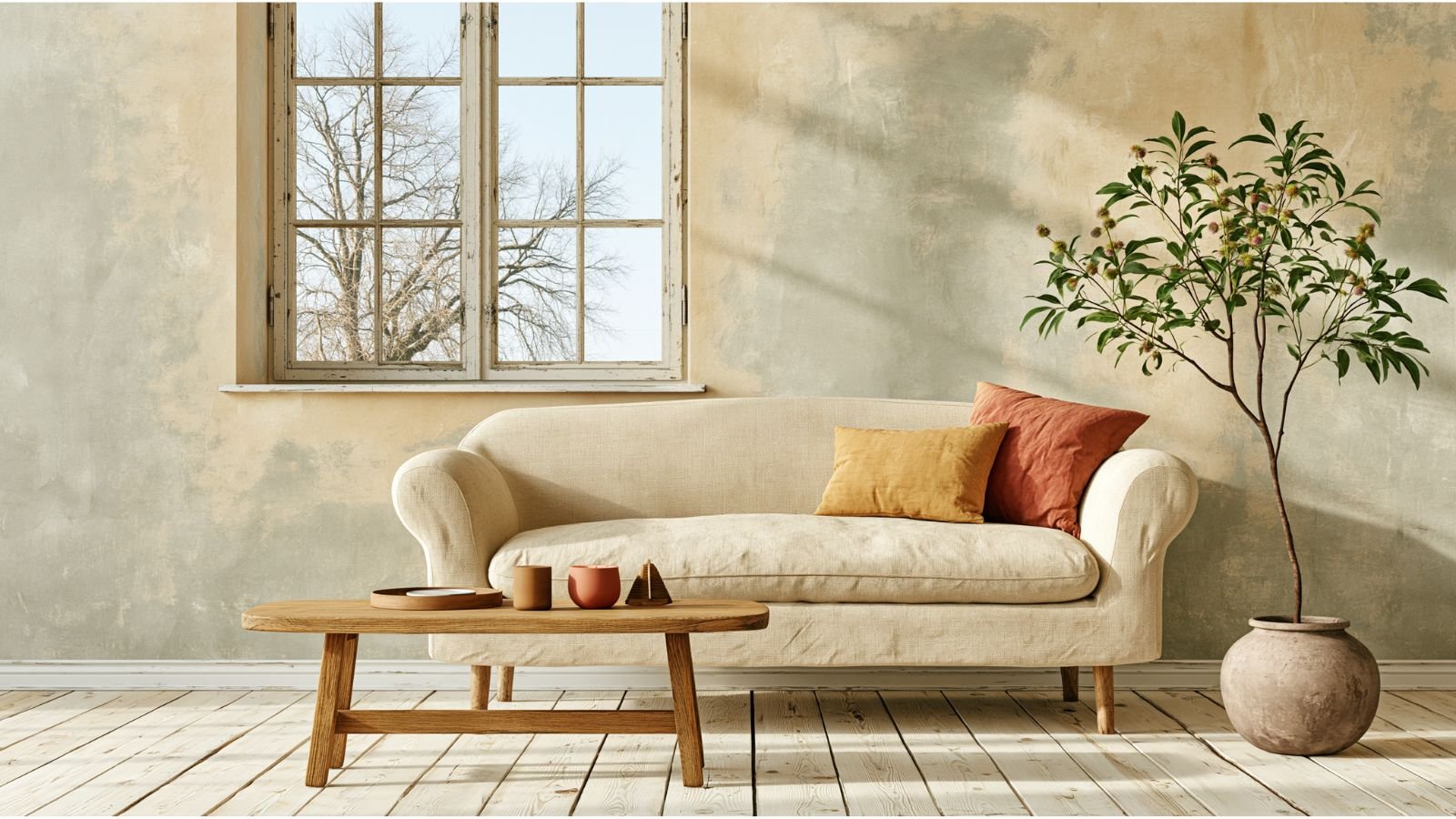
There is a room that stays with you. Not because it dazzled you or overwhelmed you with beauty, but because it felt — and this is the only word for it — right. The furniture was neither sparse nor crowded, arranged with an ease that seemed natural rather than labored. The palette was quiet but not colorless, warm but not loud. Every surface held what it needed and nothing it didn’t. Light moved through it freely. You could sit anywhere and feel comfortable. You could enter it after a long day and feel, immediately, that some internal adjustment was happening — a settling, a coming back to center.
That quality — the feeling of a space calibrated to exactly what is needed, no more and no less — is what the Swedish concept of lagom reaches toward. It is one of the most untranslatable words in a language full of them: not a word for lack, not a word for abundance, but a word for the particular rightness of the middle way. Not too much, not too little. Just enough. Just right.
In Warm Minimalism, lagom is the philosophy that holds everything in balance — the principle that keeps a carefully edited space from tipping into severity on one side or comfortable clutter on the other. It is not a compromise. It is a calibration.
The History of Lagom
The etymology of lagom is itself a kind of story. The most widely cited account traces it to the Old Norse phrase laget om — meaning “around the team” or “according to the group.” In Viking-era drinking culture, a communal vessel of mead would be passed around the circle, and each person was expected to drink their fair share: enough to participate, not so much as to deprive others. To drink lagom was to drink with social awareness. The word carried, from its very beginning, a sense of reciprocity and collective responsibility.
This social dimension never fully left the word. In Swedish culture, lagom became woven into a broader set of cultural values sometimes described through the concept of the Law of Jante — an informal Scandinavian social code that prizes equality, modesty, and the avoidance of conspicuous excess. In Sweden, this translated into a cultural sensibility that viewed both ostentation and deprivation with equal suspicion. The good life was neither lavish nor austere. It was balanced, sustainable, shared.
Sweden’s design heritage reflects this deeply. The clean lines and honest functionalism of Swedish design — furniture built to last, objects designed to serve, beauty found in simplicity of form — are expressions of lagom thinking. IKEA, for all its mass-market scale, grew from this tradition: the idea that good design should be accessible to everyone, that function and beauty are not at odds, that the everyday home deserves consideration without extravagance.
In recent decades, lagom has found new resonance in conversations about sustainability and conscious consumption. When the question becomes not “how much can I have?” but “how much do I actually need?”, lagom offers a centuries-old answer: exactly enough to live well.
What Lagom Means
Lagom is most simply translated as “just the right amount” — but this simplicity conceals real depth. It is not about settling for less than you want. It is about discovering that what you actually want, when you pay close attention, is usually far closer to “enough” than to “more.” It is a philosophy that trusts sufficiency: that a life calibrated to what genuinely serves you is more satisfying than one perpetually reaching for the next thing.
“Lagom är bäst.” — The right amount is best.
— Swedish proverb
This proverb — perhaps the most Swedish sentence ever formed — is not a counsel of mediocrity. It is a counsel of discernment. It asks: have you thought carefully about what “best” actually looks like for you? Not for your neighbor, not for an imagined version of your life, not for an Instagram feed — but for the actual hours of your actual days?
Lagom operates across domains. In work, it is the discipline of working well without burning out — giving full effort within sustainable hours. In relationships, it is the balance between togetherness and solitude, between generosity and self-preservation. In consumption, it is the practice of acquiring what serves you and releasing the rest. In design, it is the arrangement of a space that is neither too bare to feel human nor too full to feel calm.
Lagom as calibration — finding the midpoint in each dimension of home life

Too sparse
Too cluttered
Lagom: considered, purposeful, alive
Cold & stark
Warm & overwhelming
Lagom: warmth without heaviness
Severe minimalism
Consuming maximalism
Lagom: curated with intention
“The Swedes have a profound sense of proportion — in aesthetics, in social life, in the way they approach work and rest. Lagom is not a limitation. It is a form of wisdom.”
— Lola Akinmade Åkerström, In Every Mirror She’s Black
What makes lagom genuinely difficult — and genuinely rewarding — is that it cannot be applied from the outside. No one can tell you what your lagom is. It requires honest self-knowledge: an understanding of what actually serves your life, what you return to with pleasure, what simply occupies space. That discernment, once developed, changes how you shop, how you arrange a room, how you spend a Sunday.
If you removed everything from your home that you use less than once a month, what would remain? And would that remainder feel like loss — or like relief?
Lagom’s Relevance to Warm Minimalism
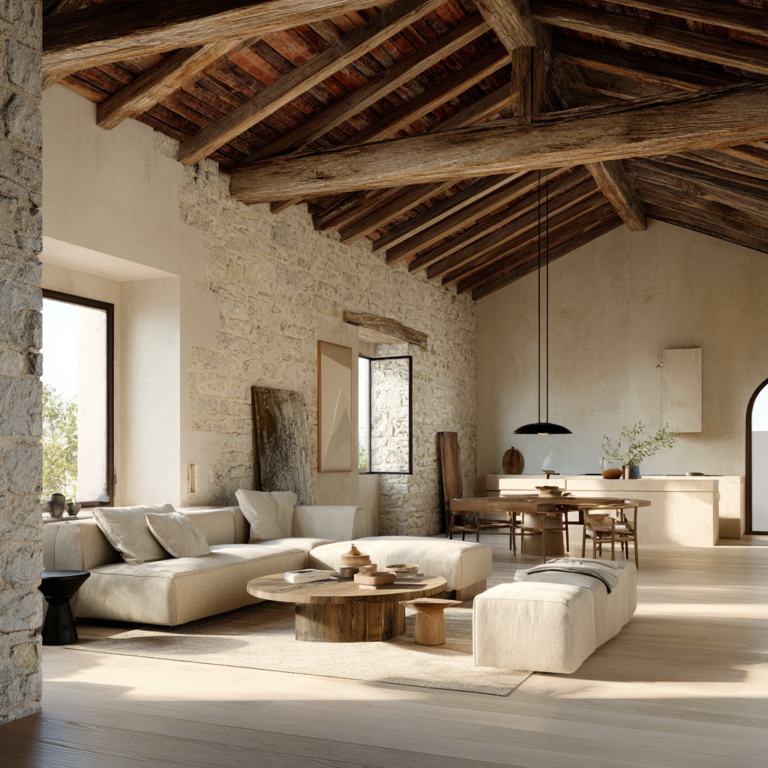
Warm Minimalism exists in the space lagom describes. It is not the minimalism of the gallery — where objects are isolated, untouchable, performing their own meaning at a distance from ordinary life. Nor is it the abundance of the fully furnished room, where every surface is spoken for and the eye has nowhere to rest. It is the calibrated middle: a home with enough in it to feel genuinely human, and enough space in it to breathe.
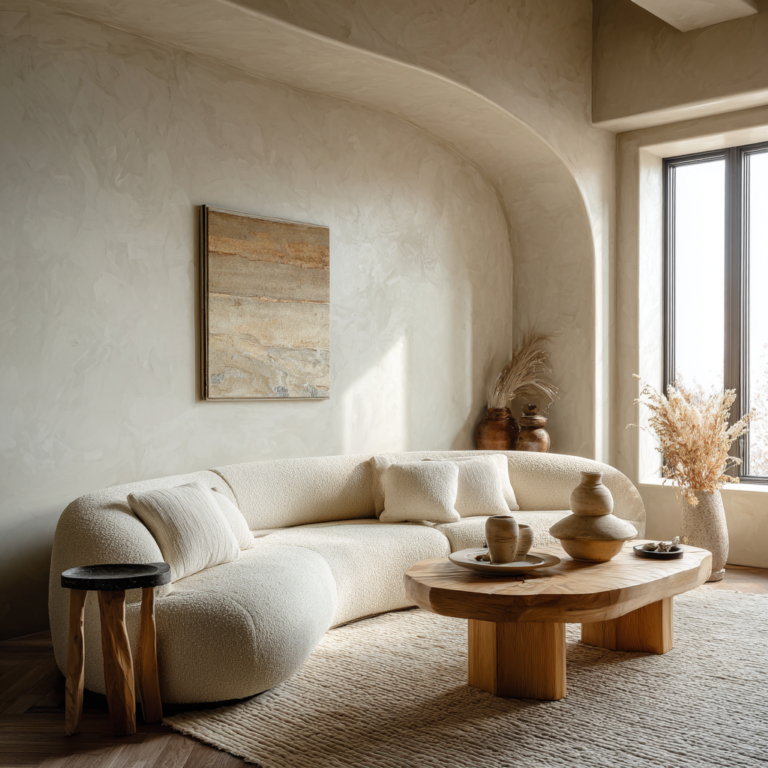
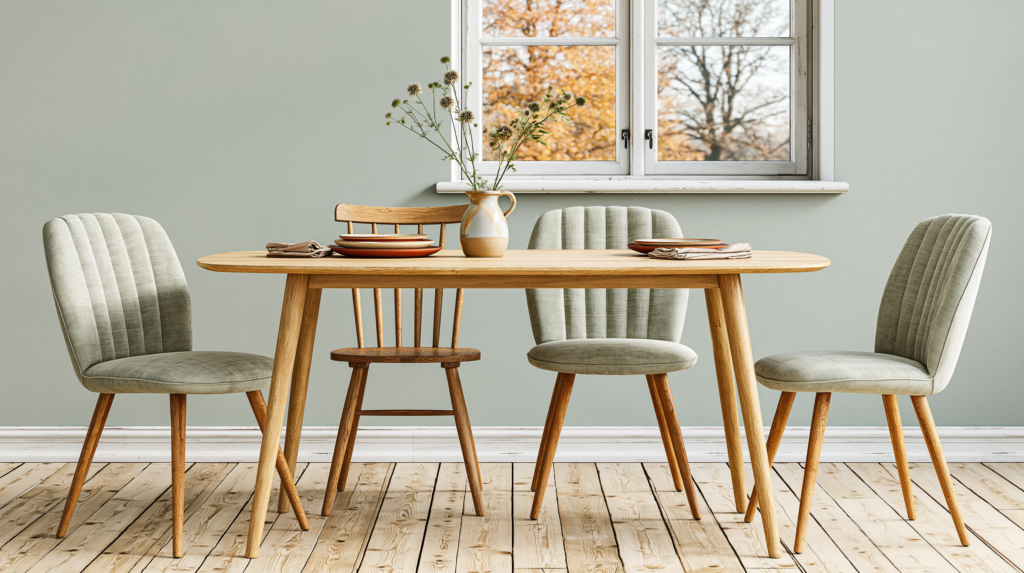
Lagom thinking shapes this from the first decision. When choosing furniture, it asks not “what is the most beautiful option?” but “what serves both beauty and function, and will continue to do so in five years?” A well-proportioned sofa in natural linen. A dining table sized to the meals you actually eat rather than the dinner parties you occasionally imagine. A bookshelf filled to three-quarters rather than overflowing — with room to add what comes next, without removing what you love.
Lagom also governs what goes on surfaces. A single object on a shelf is a statement. Two or three, well-chosen, form a composition. Five becomes a collection. Eight becomes a problem. The lagom question — at each stage of adding — is simply: does this addition improve what is already here, or does it begin to compete with it? The moment the answer becomes “compete,” you have passed your lagom.
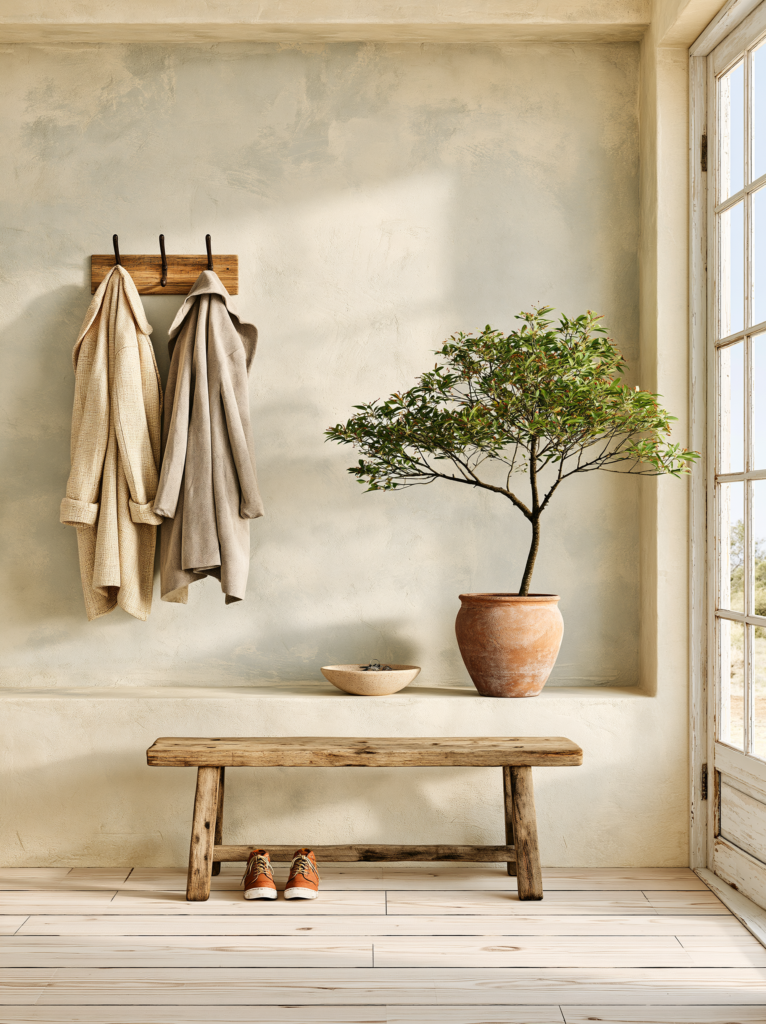
🪑
Furniture
Choose pieces sized to how you actually live — not to an idealized version of your life. Well-proportioned and versatile over statement-making and singular.
🌿
Objects
Curate to the point where each piece has room to be itself. Stop adding when what is present feels complete rather than merely full.
☀️
Light & Space
Preserve enough negative space for light to move freely and for the eye to settle. The empty areas are part of the design, not gaps waiting to be filled.
Lagom also informs the Warm Minimalist approach to consumption itself. Swedish design culture has long held that it is better to buy one good thing than three adequate ones — that quality and longevity are more sustainable, more satisfying, and ultimately more economical than the cycle of replacement. A well-made oak stool will outlive ten flat-pack versions of itself and acquire character in the process. This is lagom as ecological wisdom: enough, and made to last.
In daily life, lagom manifests as rhythm rather than rigidity. It is the practice of working until the work is genuinely done, then stopping — rather than working until collapse or stopping prematurely. It is the dinner that is satisfying rather than excessive. The weekend that holds both activity and rest in equal measure. The morning routine that is considered enough to ground you without being so elaborate that it becomes its own burden.
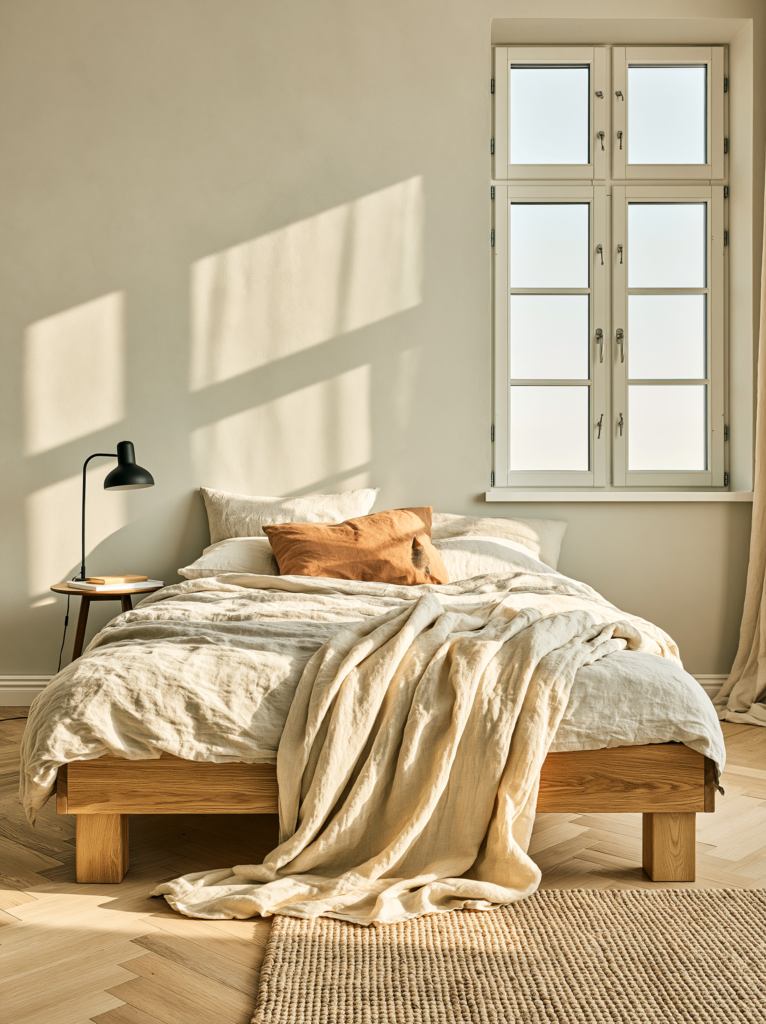
Perhaps most importantly for Warm Minimalism, lagom removes the anxiety of the unfinished room. Many people feel that their home is always one purchase away from being complete. Lagom reframes this: your home is complete when it serves your life well. Not when it matches a particular vision, not when every corner has been addressed, but when you can move through it with ease and inhabit it with genuine comfort. That is the measure. And it is, it turns out, entirely achievable.
Where in your home — or your life — have you gone past your own lagom? Where have you, perhaps, not yet quite reached it?
Exactly Right
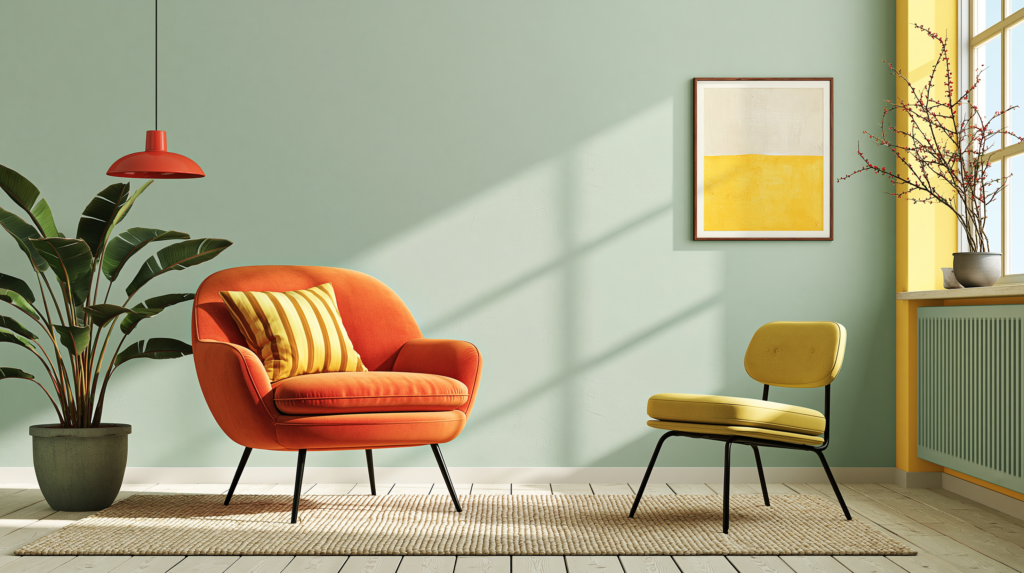
There is a particular contentment that comes with lagom — not the excitement of acquisition or the satisfaction of achievement, but something quieter and more durable: the sense of having landed in the right place. Of a life and a home that fit you, rather than one you are perpetually adjusting yourself to fit into.
It is a contentment that takes practice to find, because so much of contemporary culture pushes us toward more — more stimulation, more options, more accumulation, more optimization. Lagom asks us to pause that motion long enough to ask: what is actually enough? And to trust that the answer, when found honestly, will feel like something very close to freedom.
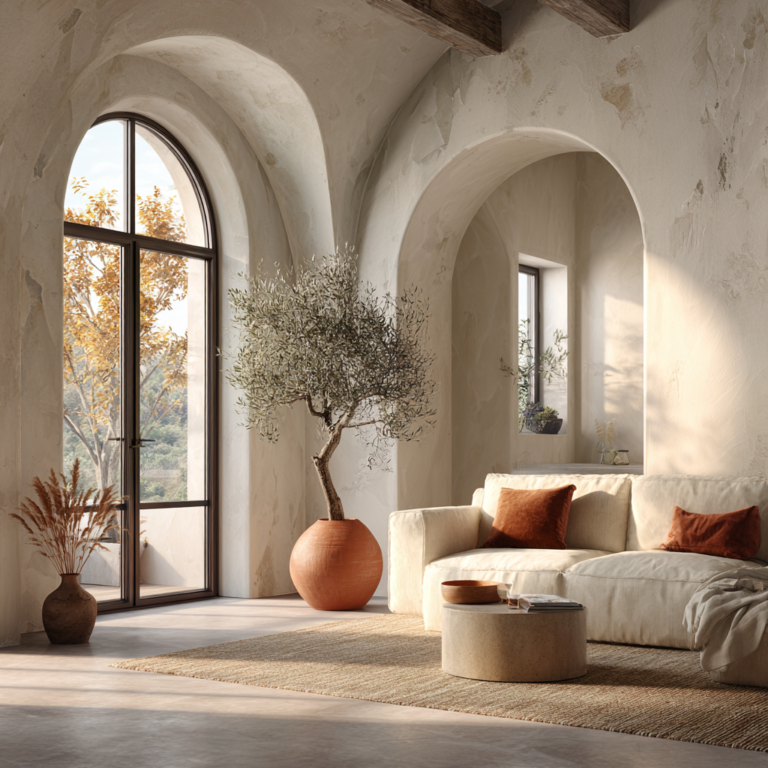
A warm minimalist home shaped by lagom is not a perfect home. It is not a finished home. It is a home in which everything present earns its place, in which the balance between fullness and space has been thoughtfully struck, and in which the people inside it can move and breathe and rest without the subtle friction of excess. That is what lagom — at its most generous — ultimately offers: not the right amount of things, but the right conditions for a life.
Four ways to bring lagom into your warm minimalist home
Join the Circle of Warmth
A quiet letter on warm, intentional living — delivered occasionally.