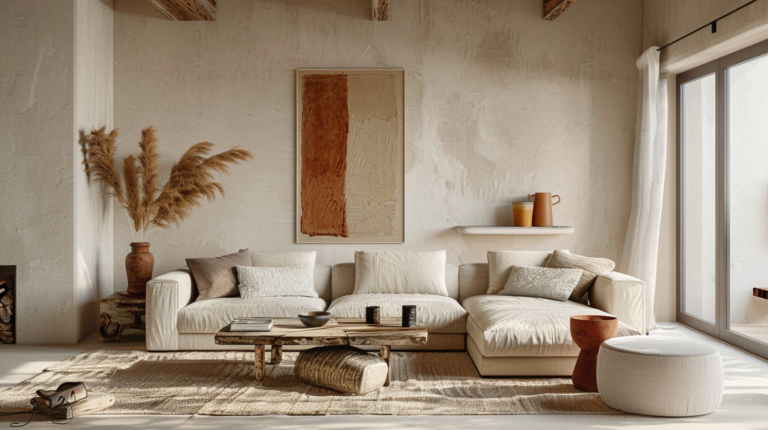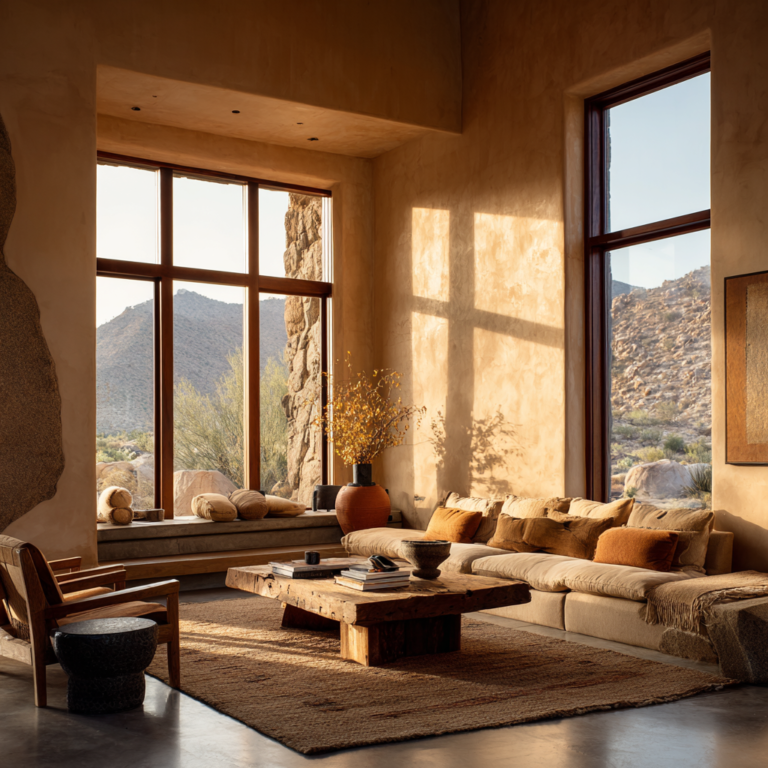
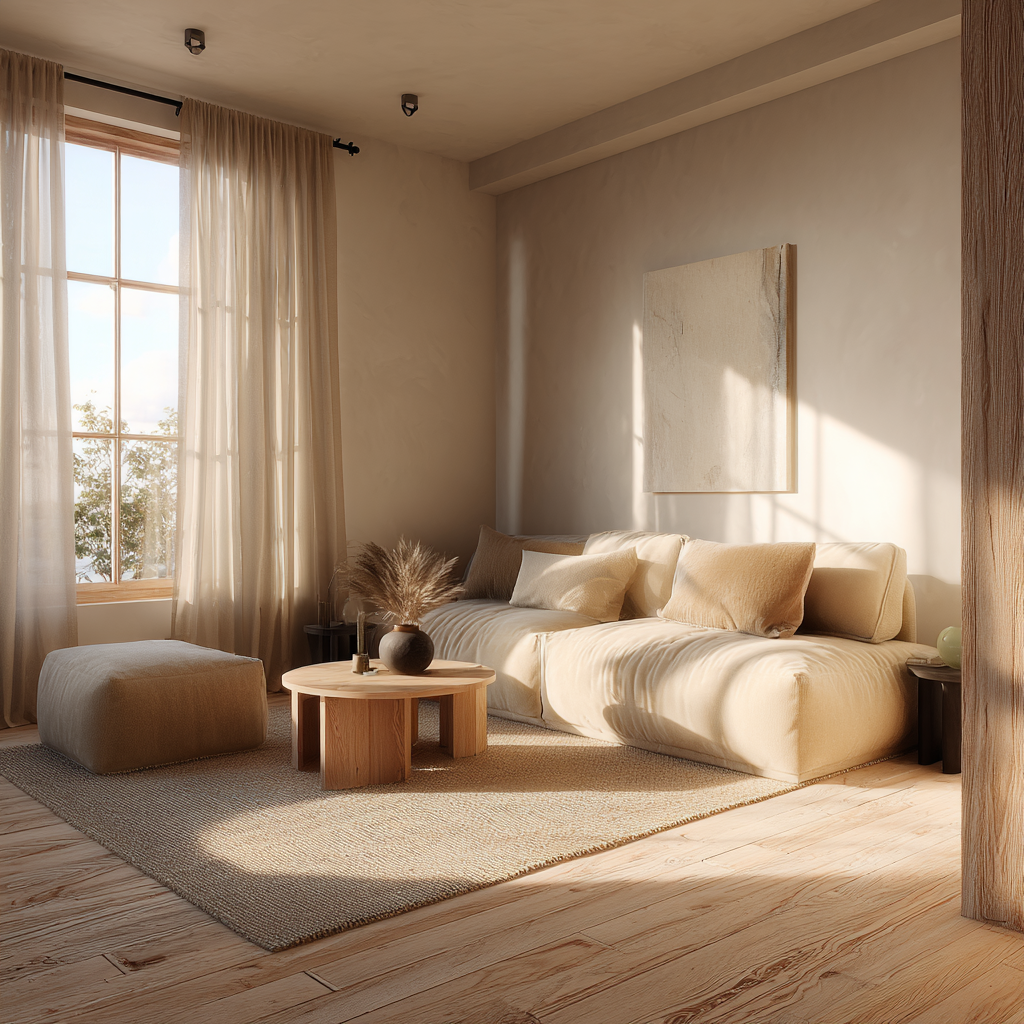
Why Some Homes Feel Calm — and Others Don’t
There are rooms that look beautiful in photographs.
The palette is neutral.
The furniture is minimal.
The surfaces are clean.
And yet, when you stand inside them, something feels slightly tense.
Nothing is obviously wrong.
But your body doesn’t quite settle.
Then there are other spaces — sometimes simpler, sometimes less styled — where you feel it immediately.
Your shoulders soften.
Your breathing slows.
You linger without trying to.
What creates that difference?
It isn’t price.
It isn’t square footage.
It isn’t even minimalism itself.
It’s something quieter.
Calm Is Not the Same as Minimal
Minimalism removes.
Calm regulates.
A room can contain very little and still feel sharp, echoing, or exposed.
Another can contain more — layered textiles, books, natural materials — and feel deeply steady.
Calm has less to do with quantity and more to do with coherence.
Your nervous system does not respond to trends.
It responds to light, texture, proportion, and rhythm.
Before we name any style, it helps to understand that.
The Nervous System Is Always Reading the Room
Whether you notice it consciously or not, your body is interpreting your environment.
Harsh light signals alertness.
Hard edges signal tension.
Visual clutter signals stimulation.
Cold materials signal distance.
Soft light signals safety.
Natural textures signal grounding.
Visual breathing room signals rest.
You don’t need scientific language to understand this.
You’ve already felt it.
Think of a space where you naturally exhaled.
What was happening there?
The calm was likely sensory — not decorative.
Light That Moves Gently
Light is often the quiet architect of calm.
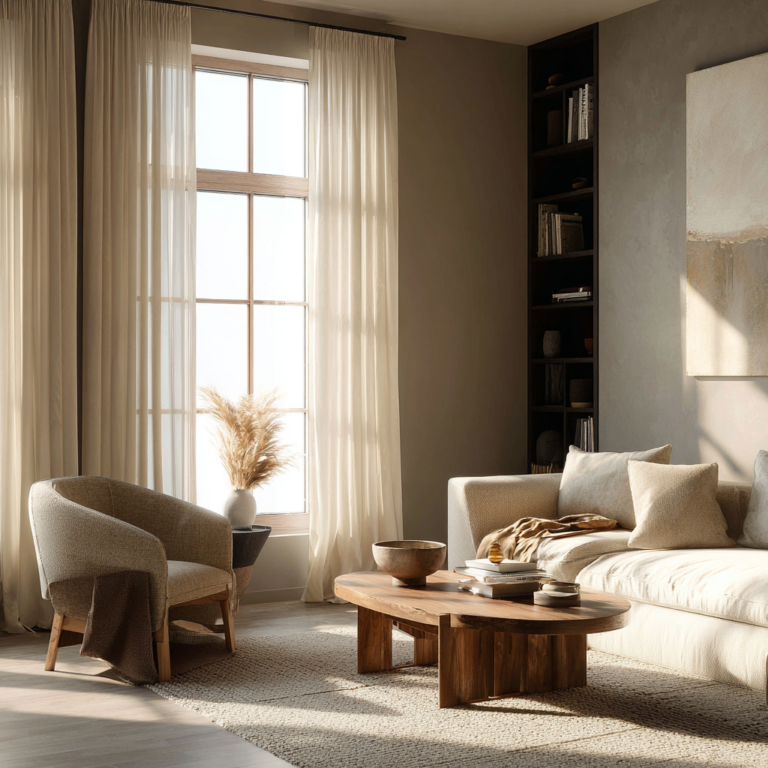
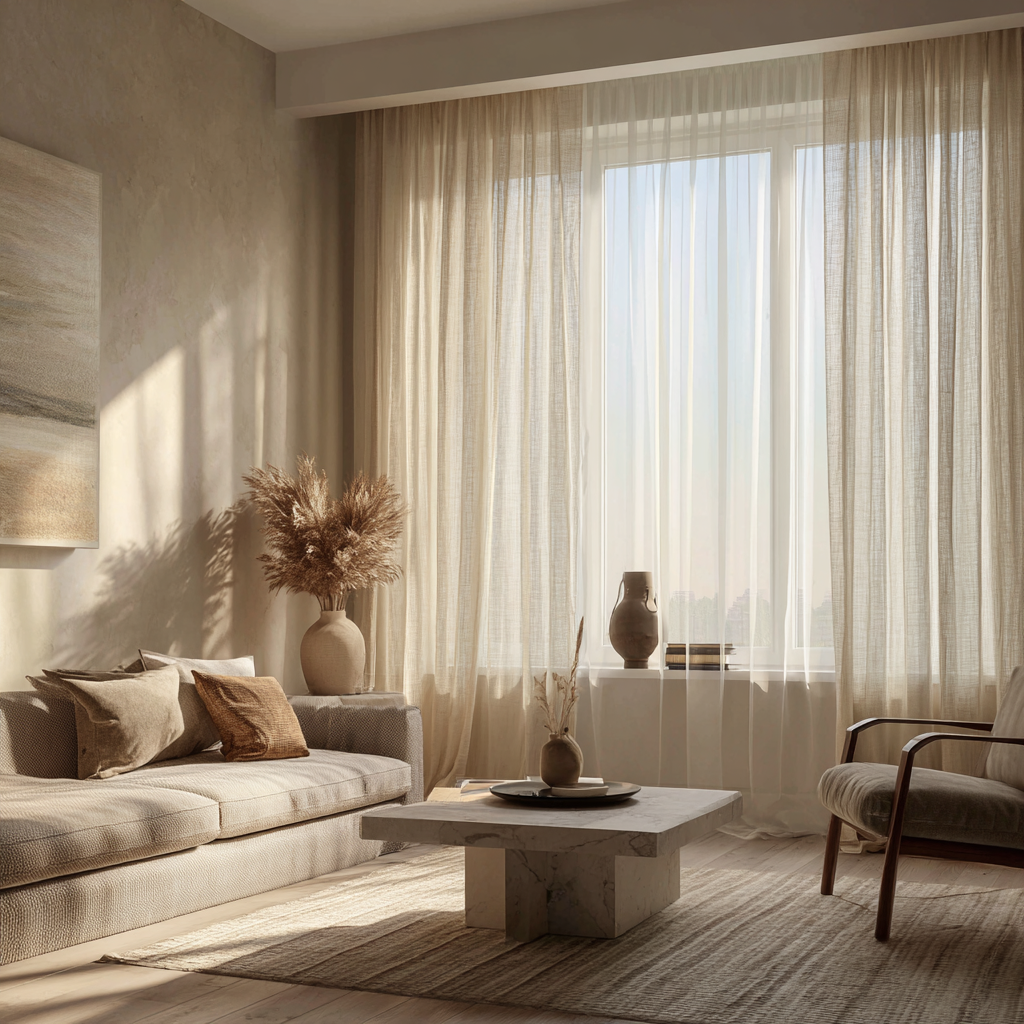
Diffuse daylight through linen curtains.
Shadows that soften corners instead of flattening them.
Evenings lit by lamps instead of overhead glare.
Rooms that feel calm tend to let light move rather than dominate.
It isn’t brightness that soothes us.
It’s softness.
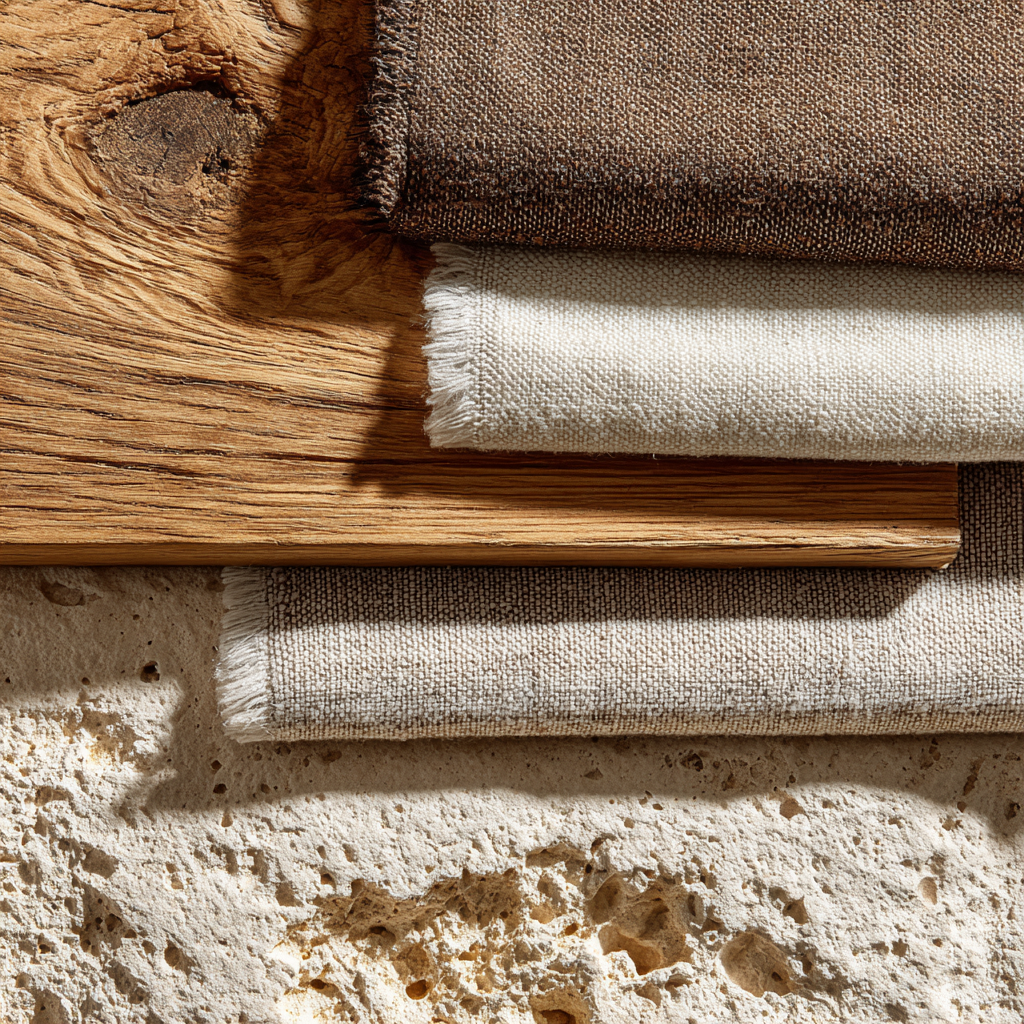
Materials That Feel Alive
Your body recognizes natural materials immediately.
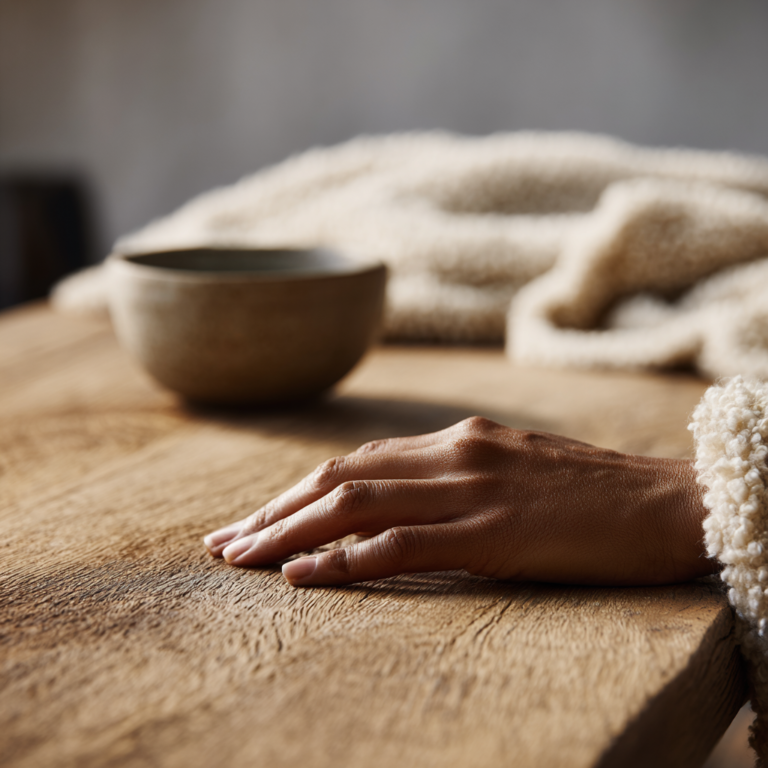
Wood with visible grain.
Linen that wrinkles softly.
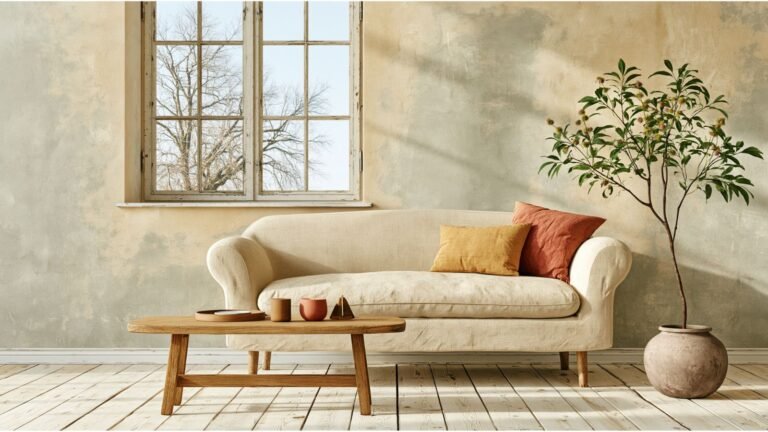
Clay that absorbs light.
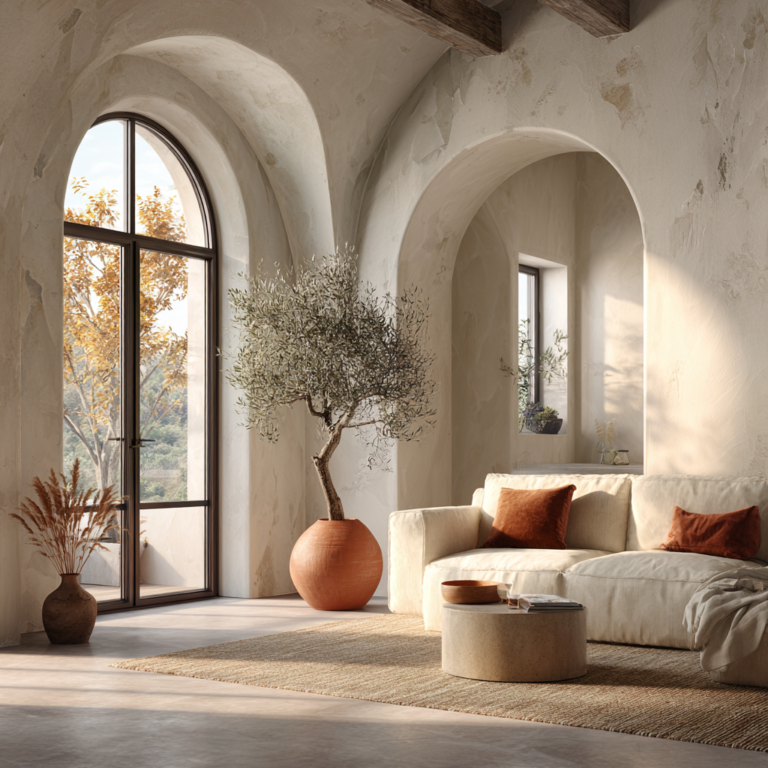
Stone that carries subtle variation.
These materials feel stable because they are.
Gloss, plastic, and overly polished surfaces reflect light sharply. They amplify energy.
Organic materials absorb it.
Calm spaces tend to choose materials that soften rather than reflect.
Visual Breathing Room
Calm does not require emptiness.
But it does require pacing.
When every surface holds an object, the eye works harder.
When every wall competes for attention, the mind stays alert.
Breathing room allows the eye to rest.
Not blankness.
Not sterility.
Just space between elements — enough for each object to belong.
Rooms that feel calm are edited, but not stark.
They allow pauses.
Emotional Coherence
Perhaps the most overlooked element of calm is coherence.
When a room tries to express too many identities at once, it feels unsettled.
But when materials, tones, and proportions speak the same quiet language, the space feels grounded.
This doesn’t mean everything must match.
It means everything must relate.
Calm is relational.
From Styling to Supporting
Many homes are arranged to look complete.
Calm homes are arranged to support life.
The difference is subtle but important.
One performs.
The other regulates.
A calm home considers:
- Where you land at the end of the day
- How your body moves through a room
- What your eyes meet first in the morning
- Whether the space asks something from you — or gives something back
When design becomes emotional infrastructure, calm stops being accidental.
It becomes intentional.
How to Begin Noticing
You do not need to redesign everything.
Begin smaller.
Notice where your shoulders drop.
Notice which rooms feel slightly tense.
Notice how light shifts throughout the day.
Move one lamp.
Remove one object that interrupts.
Add one material that softens.
Calm rarely arrives through overhaul.
It arrives through adjustment.
And once you begin paying attention to how a room feels — not just how it looks — you start building a home that supports you quietly, every day.
If this reflection resonated, you may want to explore:
• What Is Warm Minimalism?
• 6 Styles Within Warm Minimalism — And How to Know Which One Is Yours
Because before choosing a style, it helps to understand the feeling you’re designing toward.
Join the Circle of Warmth
A quiet letter on warm, intentional living — delivered occasionally.