Zen: Finding Calm
On stillness, emptiness, and the art of coming home to yourself.
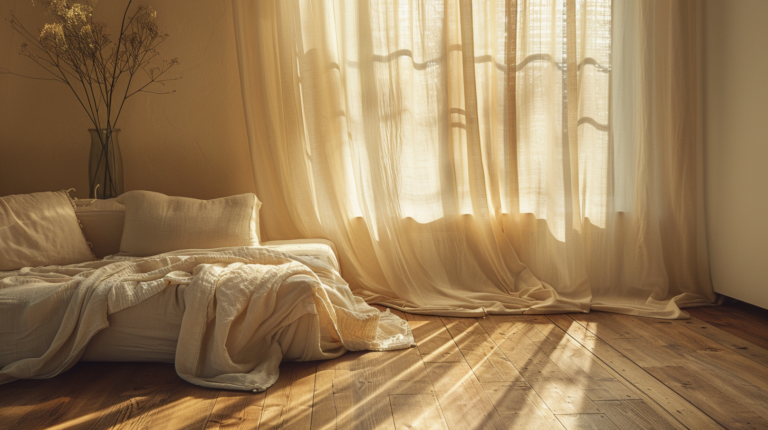
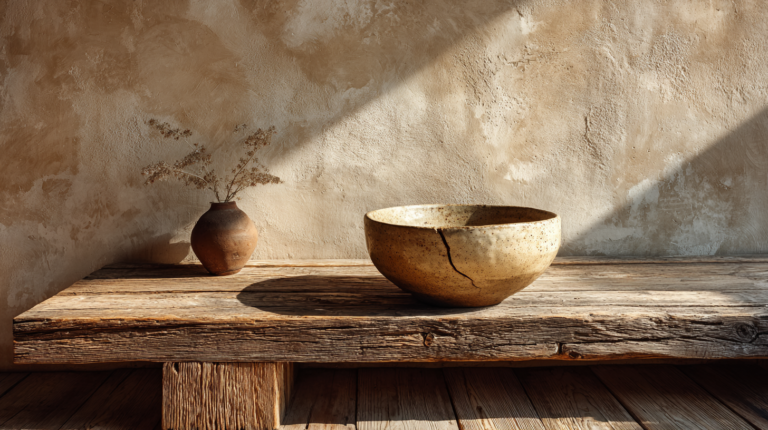
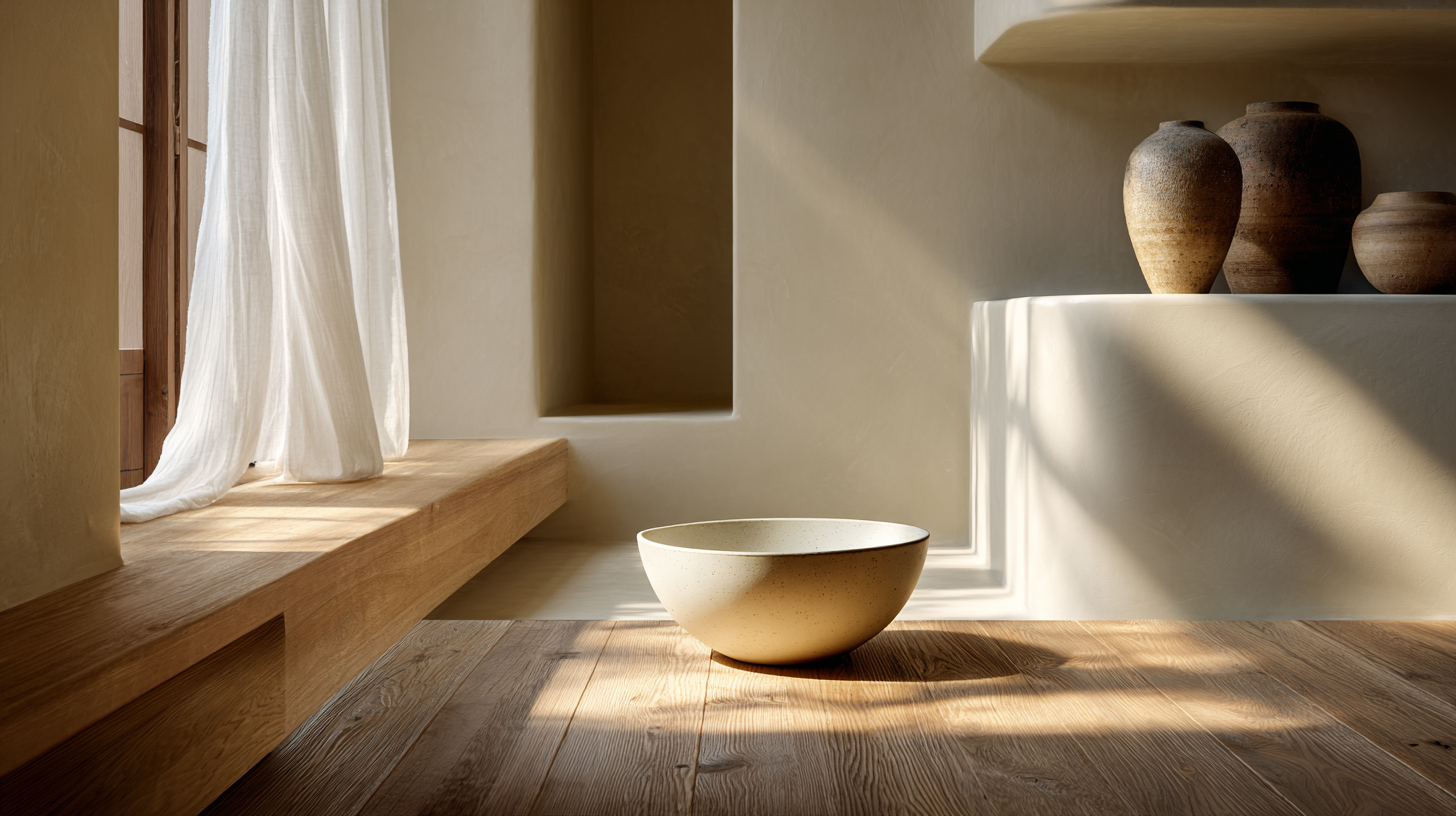
There is a particular quality of quiet that certain rooms hold. Morning light finds its way across a bare wooden floor. A single clay vessel sits on a shelf — its glaze uneven, its shape imperfect, entirely itself. The air feels easy to breathe. There is nothing demanding your attention, no surface asking to be looked at or admired. And yet the space is full — of warmth, of presence, of something that asks nothing of you but to slow down and simply be.
If you have ever walked into a room and felt, without quite knowing why, that you could exhale — that feeling has roots. It has a philosophy. Much of what we experience in a warm, minimal space carries the quiet fingerprints of Zen: an ancient tradition that has shaped not only how we think about design, but how we think about living.
Zen is not a decorating style. It is a way of meeting the world. But it has informed, perhaps more than any other philosophy, the principles at the heart of Warm Minimalism — and understanding it can change the way you see every room you walk into, including your own.
The History of Zen
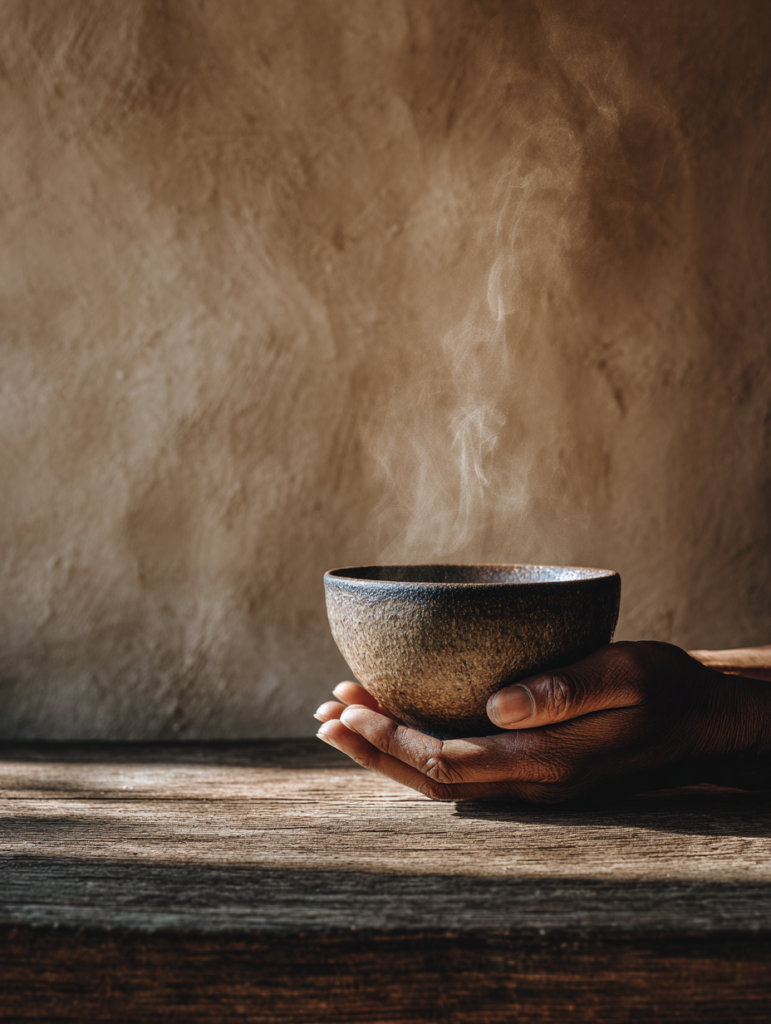
Zen’s origins lie in India, in the earliest teachings of the Buddha — in particular, his emphasis on direct experience over doctrine, on seeing clearly rather than accumulating knowledge. The tradition traveled along trade routes into China around the 5th century CE, carried in part by the legendary monk Bodhidharma, who is said to have sat in meditation for nine years facing a cave wall. In China, it became Chan, a school that prized simplicity of practice, skepticism of ritual, and the primacy of direct, unmediated awareness.
Chan found fertile ground in Chinese culture, blending with the quieter currents of Taoism — the belief in natural flow, in yielding rather than forcing, in the wisdom of what is left unsaid. It moved to Japan in the 12th and 13th centuries, where it was received and shaped by figures like Dogen, the philosopher-monk who founded the Soto school of Zen. Dogen taught that enlightenment was not a destination to be reached but a quality of attention to be cultivated in each moment — in sitting, in walking, in washing a bowl.
In Japan, Zen quietly transformed the arts. It informed the spare beauty of the tea ceremony, the meditative practice of calligraphy, the restrained elegance of garden design. It shaped architecture — rooms built around silence, around negative space, around the quality of light through a paper screen. These were not aesthetic choices alone. They were philosophical ones, expressing the belief that our surroundings could support awareness rather than distract from it.
What Zen Means
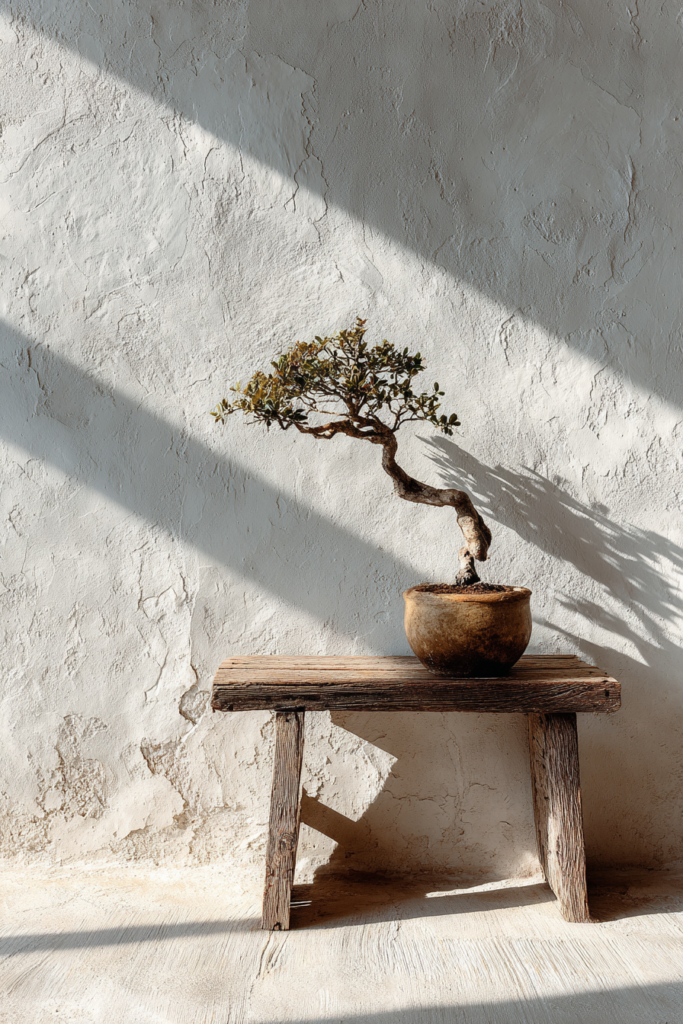
Zen resists tidy definition, and this resistance is part of its nature. But at its heart, Zen is a practice of presence — of arriving fully in the moment you are actually in, rather than drifting through memory or anticipation. It asks a surprisingly difficult thing: that we pay attention.
Central to Zen is the practice of zazen — seated meditation. Not meditation as productivity hack or stress reliever, but as the simple, radical act of sitting still and watching the mind without being carried away by it. Zazen cultivates a particular quality of awareness: alert, open, undisturbed. Over time, this quality of mind begins to seep into ordinary life — into the act of making tea, of walking to the kitchen, of folding a cloth.
“Before enlightenment, chop wood, carry water. After enlightenment, chop wood, carry water.”
— Zen Proverb
This teaching points toward something essential: that Zen does not promise escape from ordinary life. It promises a transformed relationship with it. The mundane becomes the sacred. Enlightenment is not elsewhere; it is in the task in front of you, approached with full attention.
Other principles weave through Zen’s fabric. Non-attachment — the practice of holding lightly, of not clinging to outcomes, objects, or identities. Impermanence — the recognition that everything passes, and that this passing is not loss but the natural rhythm of things. Simplicity — not as self-denial, but as a clearing away of what obscures. Mindfulness — the cultivation of gentle, steady awareness in each small act of daily life.
“To study the self is to forget the self.”
— Dogen, Genjo Koan
Dogen’s words are paradoxical by design: in turning your full attention outward — to the bowl, to the floor, to the quality of morning light — you stop performing yourself. And in that forgetting, something opens.
What would it feel like to move through your home with that quality of attention — not rushing past each room, but arriving in each one?
Zen’s Relevance to Warm Minimalism
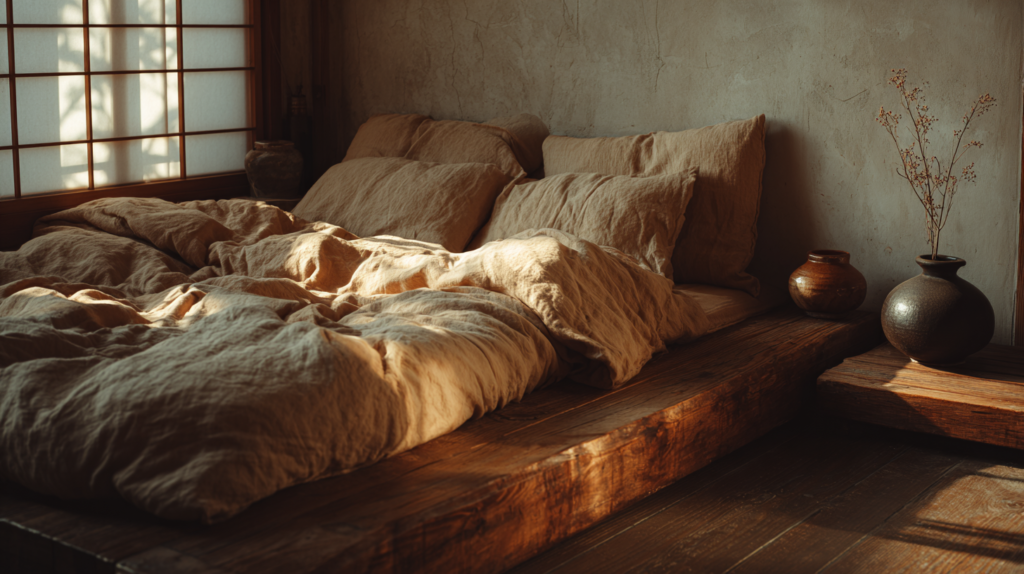
Warm Minimalism is not Zen Buddhism. It makes no spiritual claims, and it does not ask you to sit in meditation or study ancient texts. But it draws, quietly and naturally, from the same well — because Zen has already done so much of the work of articulating what a supportive, livable space actually requires.
The most visible connection is emptiness. In Zen aesthetics, empty space is not absence — it is presence. The Japanese concept of ma (間) names this precisely: the meaningful pause, the breath between things, the space that gives objects and moments their shape. A room with too much in it cannot breathe. A room with carefully curated negative space invites the eye to rest, the body to settle, the nervous system to soften.
This is why decluttering, in Warm Minimalism, is never only about tidiness. It is a practice of attention — asking, of each object, whether it genuinely serves your life or simply occupies it. This is non-attachment made practical. Not deprivation. Not performance. A quiet discernment about what is worth sharing your home with.
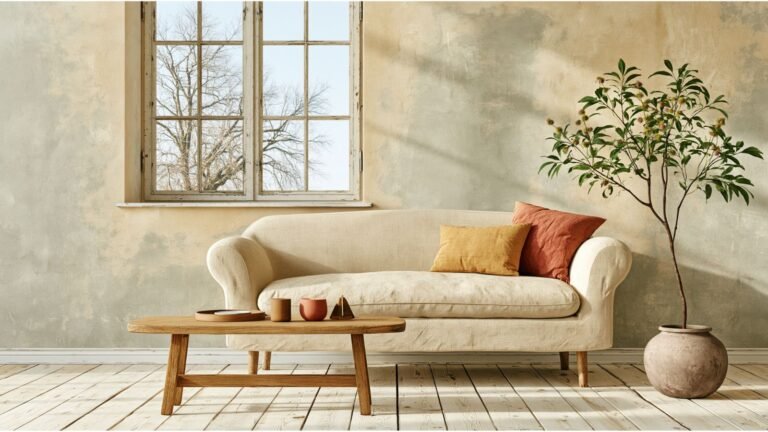
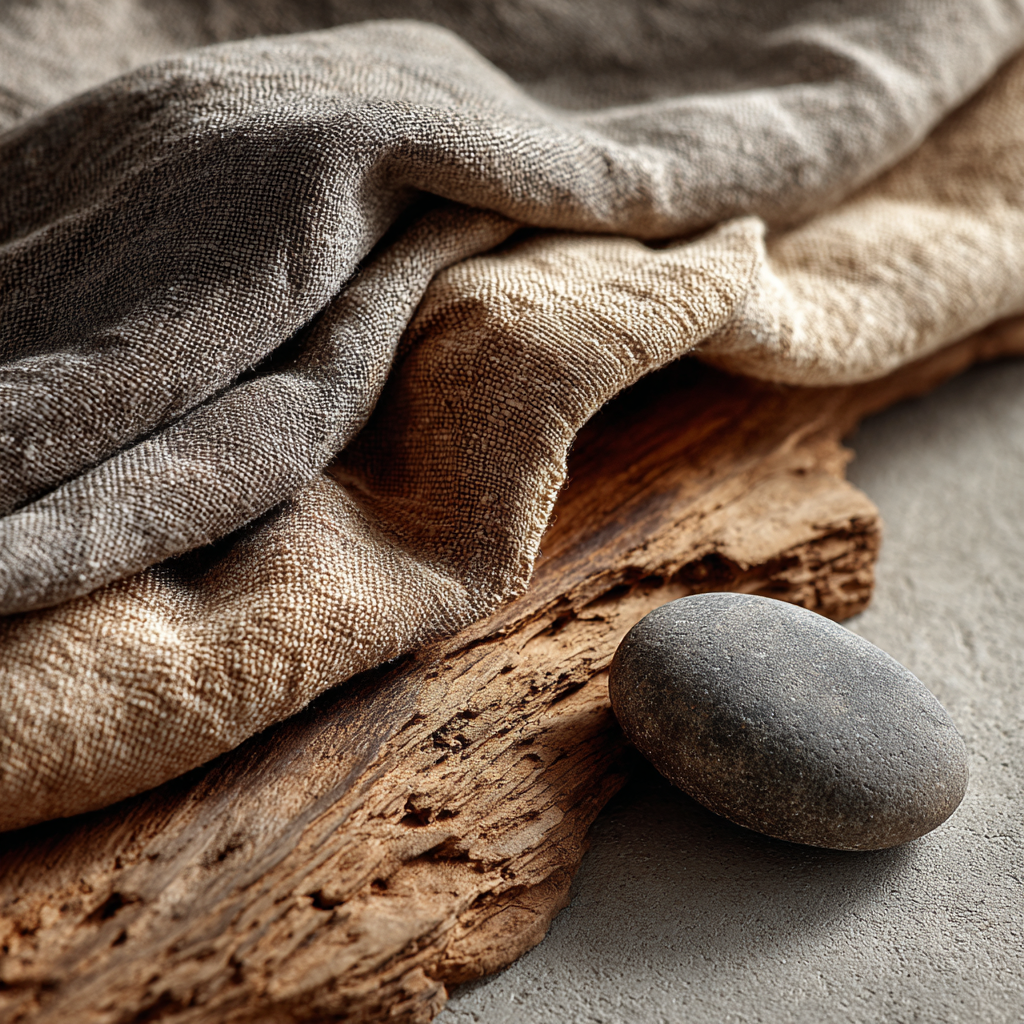
Zen also shaped our understanding of natural materials. The worn grain of unfinished oak. The irregular surface of a handmade vessel. The way linen drapes, unhurried. These are not merely beautiful; they are honest. They carry the marks of time, of making, of natural process. In Zen’s aesthetic vocabulary — the concept of wabi-sabi — beauty is found in the imperfect, the aged, the incomplete. A space full of such materials feels genuinely inhabited, not staged for admiration.
When you look at your home as it is right now, what do you notice? What is speaking to you, and what is simply making noise?
Zen’s influence also appears in the Warm Minimalist approach to daily ritual. In the Japanese tea ceremony, the act of making and sharing tea is inseparable from its setting: a spare room, a considered arrangement, a particular quality of silence. The ceremony teaches that how we do ordinary things shapes how we experience ordinary life. The same is true at home. A morning that begins with a deliberately made cup of coffee, drunk slowly at an uncluttered table, is a different morning than one swallowed in noise and rush.
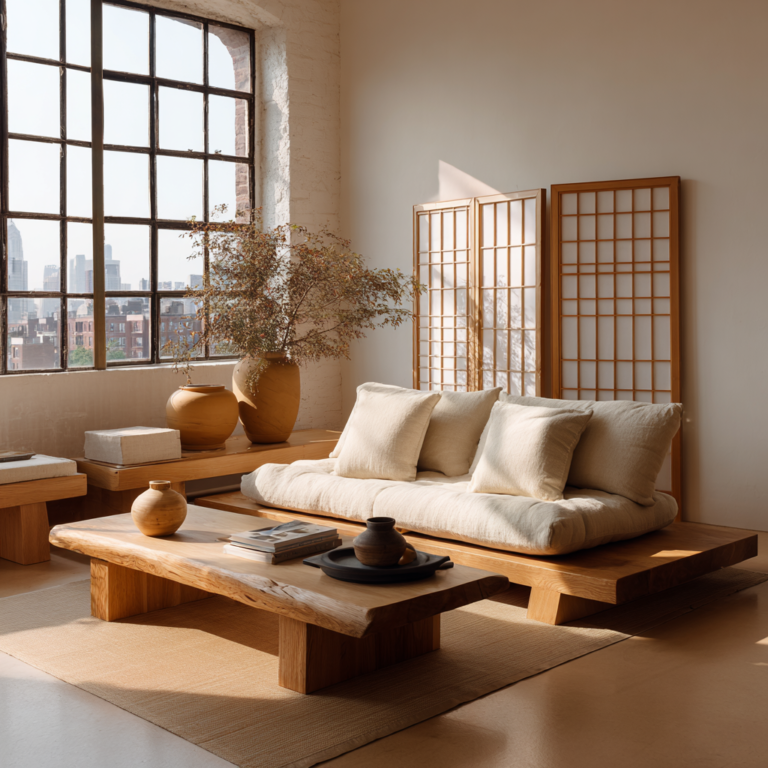
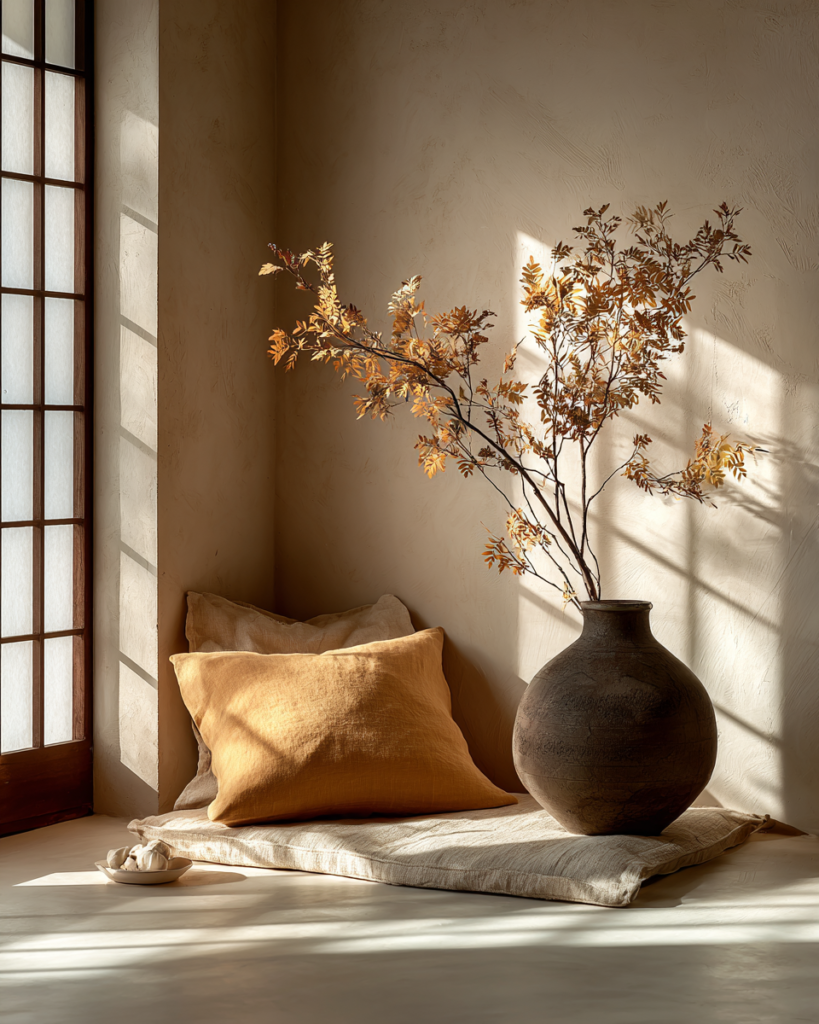
Practically, this might mean: resisting the impulse to fill every surface, choosing one meaningful object rather than several decorative ones, designing a corner of your home with genuine stillness in mind. It means selecting furniture that functions beautifully rather than simply looks interesting in a photograph. It means honoring the quality of light in your rooms rather than layering them with artificial brightness.
None of this requires wealth or a particular aesthetic education. It requires only attention — the same quality Zen has always pointed toward. The home as a place not to perform a life, but to live one.
Coming Home to Yourself
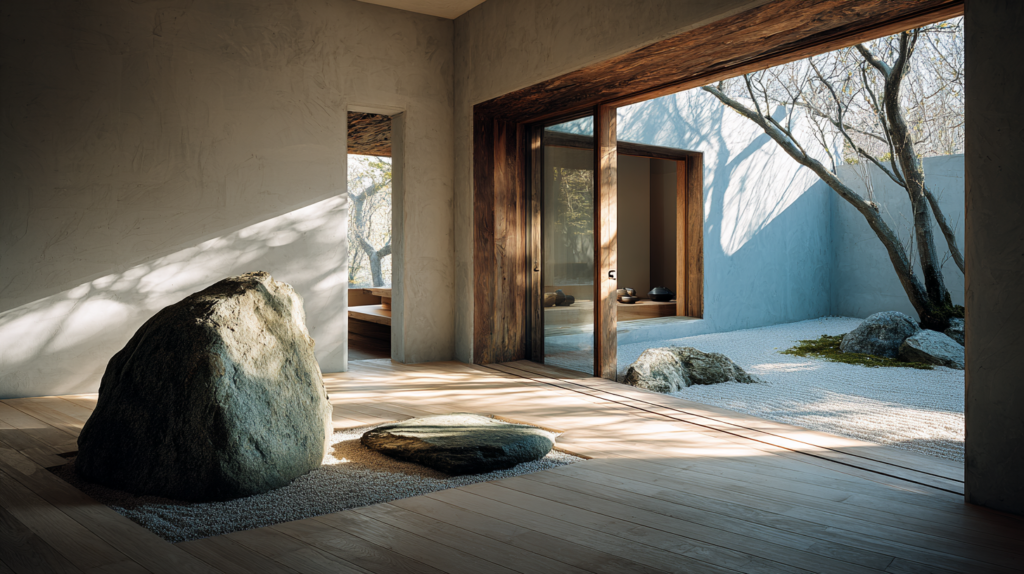
Zen has survived seventeen centuries because it answers something persistent in the human experience: the desire to feel at home in one’s own life. Not at ease with everything — not numb or detached — but grounded. Present. Able to meet the day without bracing against it.
A home shaped by Zen’s quiet logic can support that feeling — not by being sparse or severe, but by being thoughtful. By holding space. By asking less of your attention and offering more in return. By surrounding you with what is genuine, what is useful, what is genuinely yours.
This is, in the end, what Warm Minimalism reaches toward: not a look, but a feeling. Not a style, but a quality of life. And Zen — ancient, unhurried, still — offers some of the clearest guidance we have for finding it.
Four gentle starting points
Join the Circle of Warmth
A quiet letter on warm, intentional living — delivered occasionally.