Slow Living: A Gentler Pace
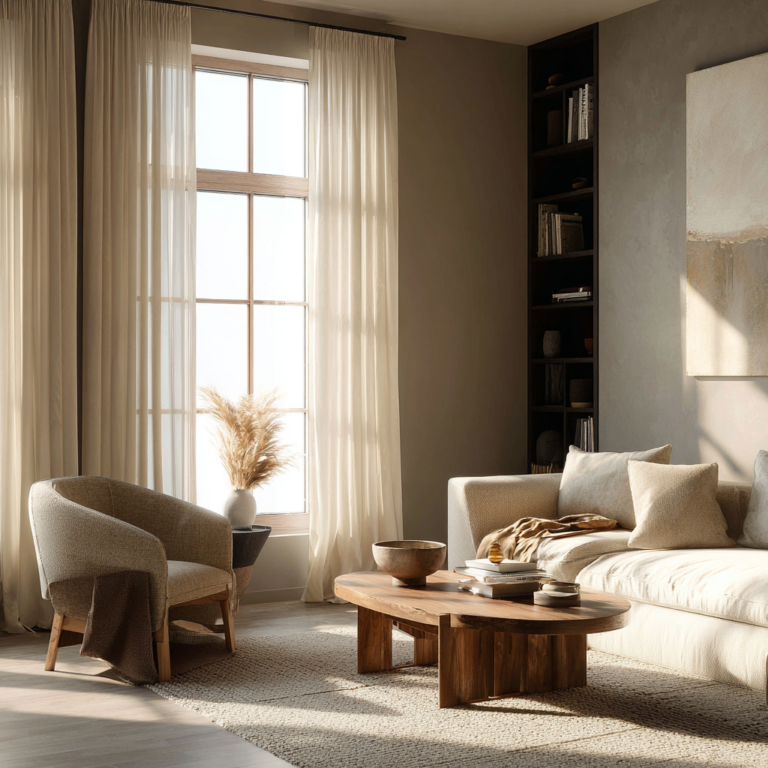
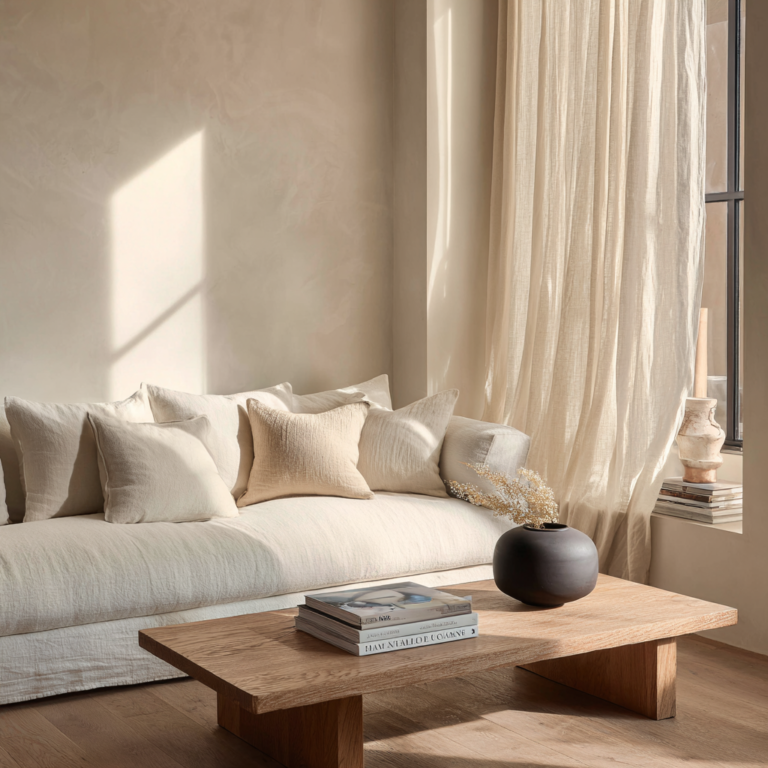
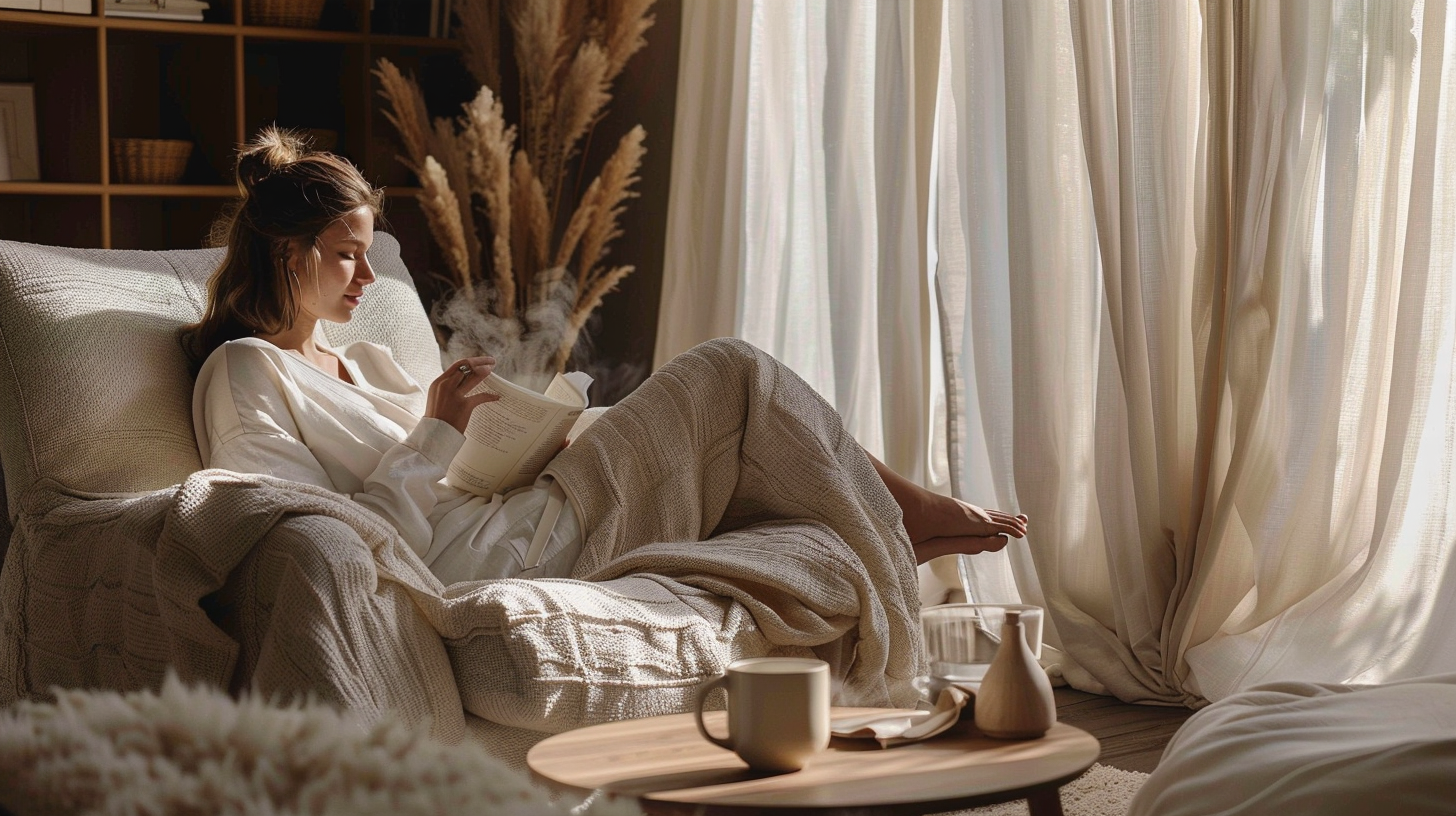
There is a particular kind of morning worth knowing by heart: soft light coming low through linen curtains, a cup of tea cooling slower than usual because there is, for once, nowhere else to be. A book rests open on a lap, though a page hasn’t turned in several minutes. Nothing is happening, and everything feels full. This is not a lack of productivity. It is a different kind of richness entirely — one that warm minimalism, at its best, is always quietly pointing us toward.
We often talk about warm minimalism in terms of objects: natural materials, soft neutral palettes, a handful of pieces chosen with care instead of a room full of things chosen in haste. But a home can be beautifully edited and still feel frantic if the life inside it never slows down to actually inhabit the space. That’s where slow living comes in. It isn’t a separate philosophy bolted onto warm minimalism — it’s the rhythm that makes the aesthetic true. Slowness is what lets a well-designed room become a well-lived one.
The History of Slow Living
Slow living traces its most visible modern roots to Rome, in 1986, when a McDonald’s opened near the Spanish Steps and a journalist named Carlo Petrini organized a protest — not with anger, but with a bowl of penne. That protest became the Slow Food movement, built on a simple but radical idea: that food, and by extension life, deserved to be approached with pleasure, care, and regional rootedness rather than speed and standardization.
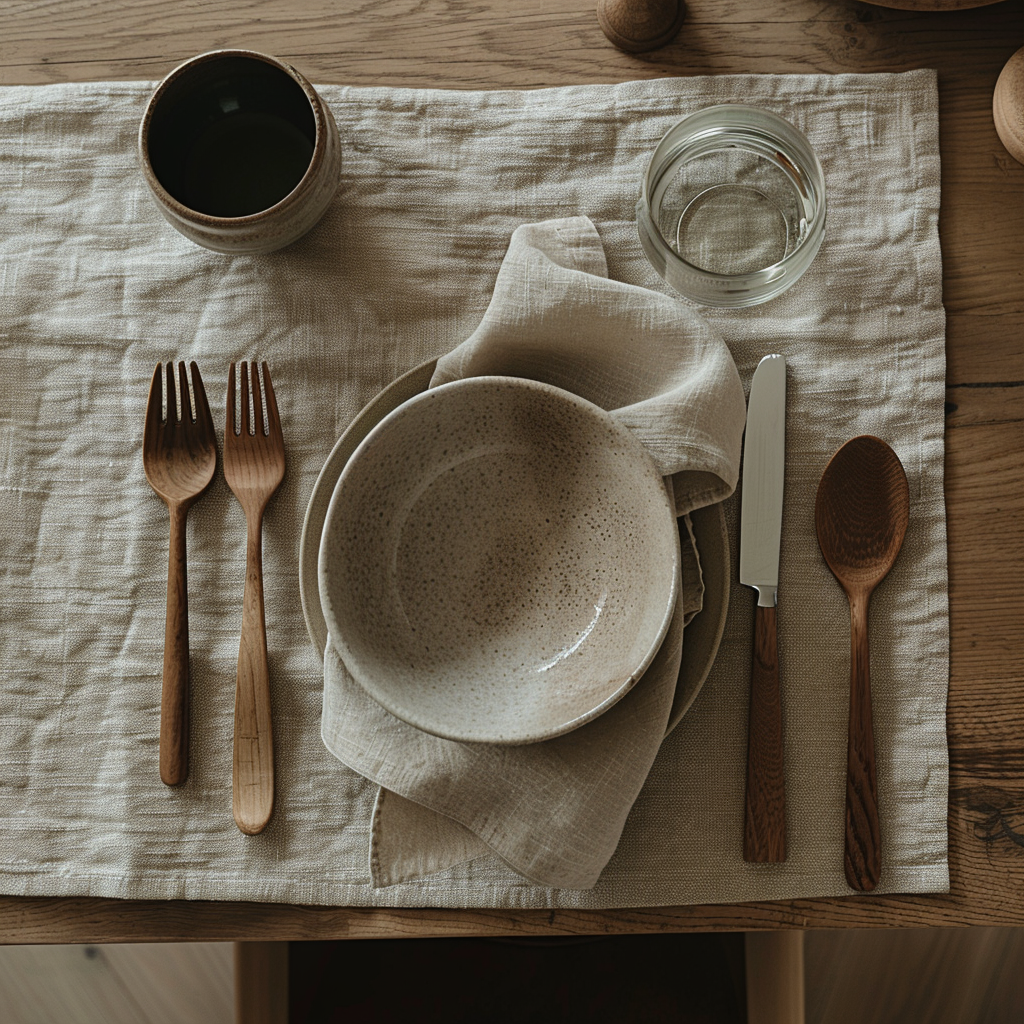
From there, “slow” became a lens applied far beyond the dinner table. Slow Cities (Cittaslow) emerged in Italy in the late 1990s, encouraging towns to preserve local character and human-scaled living instead of chasing homogenized growth. Slow Design followed, asking creators to consider the full lifecycle and emotional resonance of what they made, rather than optimizing purely for speed to market. Slow Fashion, Slow Travel, and Slow Parenting all grew from the same root system.
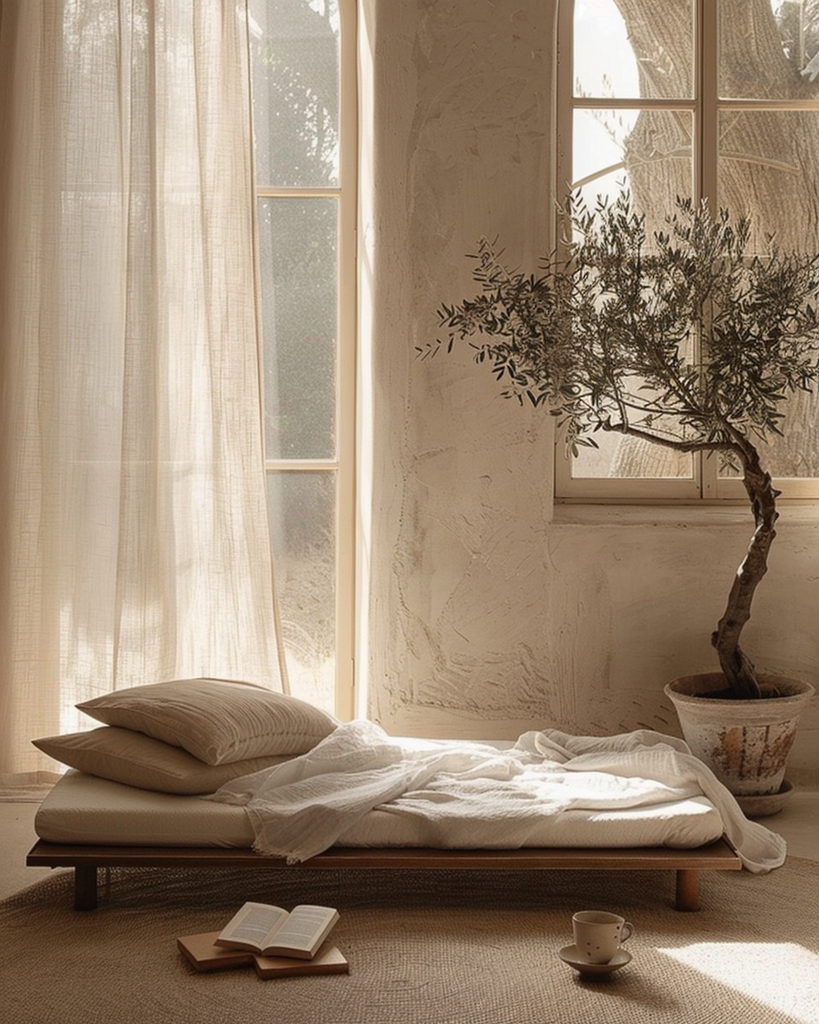
Of course, the impulse toward intentional slowness is far older than any of these movements. It echoes the contemplative traditions of Stoic philosophy, the deliberate simplicity practiced in Zen Buddhism, and the transcendentalist writing of 19th-century thinkers who worried, even then, that a mechanizing world was pulling people away from their own lives. What the modern slow living movement did was give a scattered, ancient instinct a name — and a direct response to the particular acceleration of contemporary life: the always-on workday, the infinite scroll, the sense that stillness has to be earned rather than simply chosen.
What Slow Living Means
At its core, slow living is a mindful approach to life that prioritizes quality over quantity, presence over productivity, and intention over speed. It doesn’t ask you to do less out of guilt or scarcity — it asks you to do less so that what remains can be done, and felt, more fully.
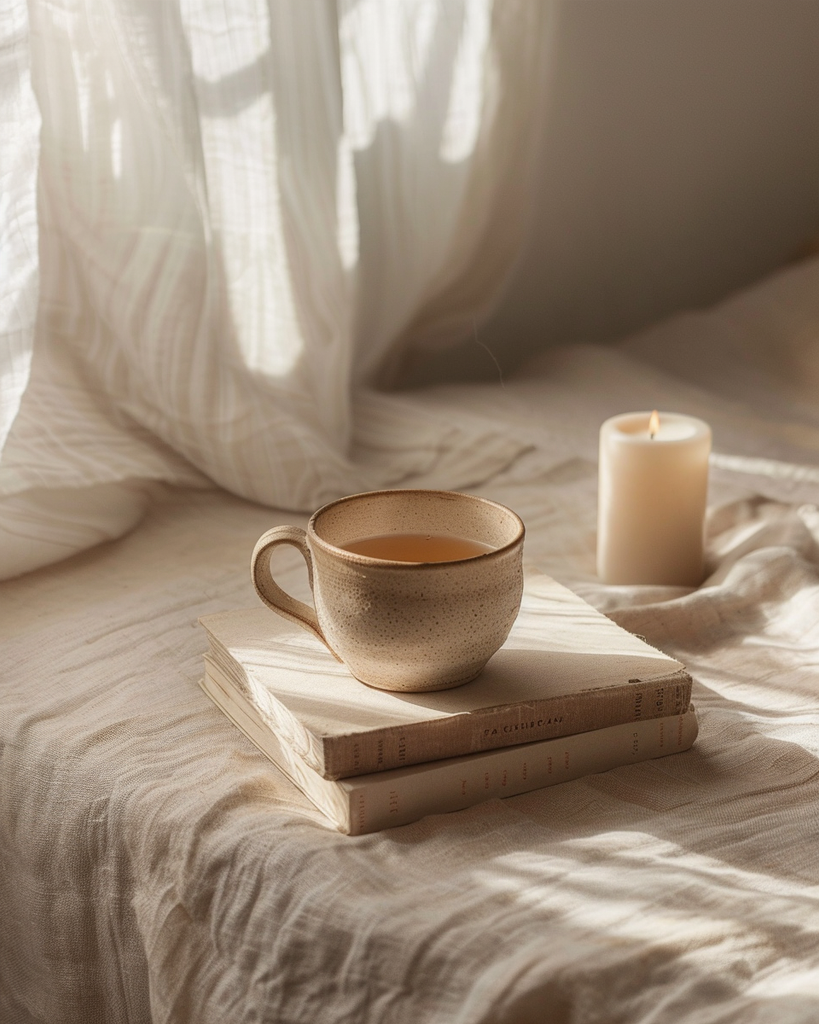
This might look like eating a meal without a screen nearby, not because screens are forbidden, but because a meal eaten with attention actually tastes different. It might mean choosing one evening a week with no plans at all, protected as fiercely as any appointment. It means making conscious choices — about how you spend your hours, who you spend them with, and what you allow to fill the spaces in between — rather than letting a calendar or an algorithm make those choices for you.
Henry David Thoreau, writing from his cabin at Walden Pond nearly two centuries ago, distilled the whole philosophy into three words: “Simplicity, simplicity, simplicity.” He wasn’t arguing for less life. He was arguing for less noise, so that life itself could be heard.
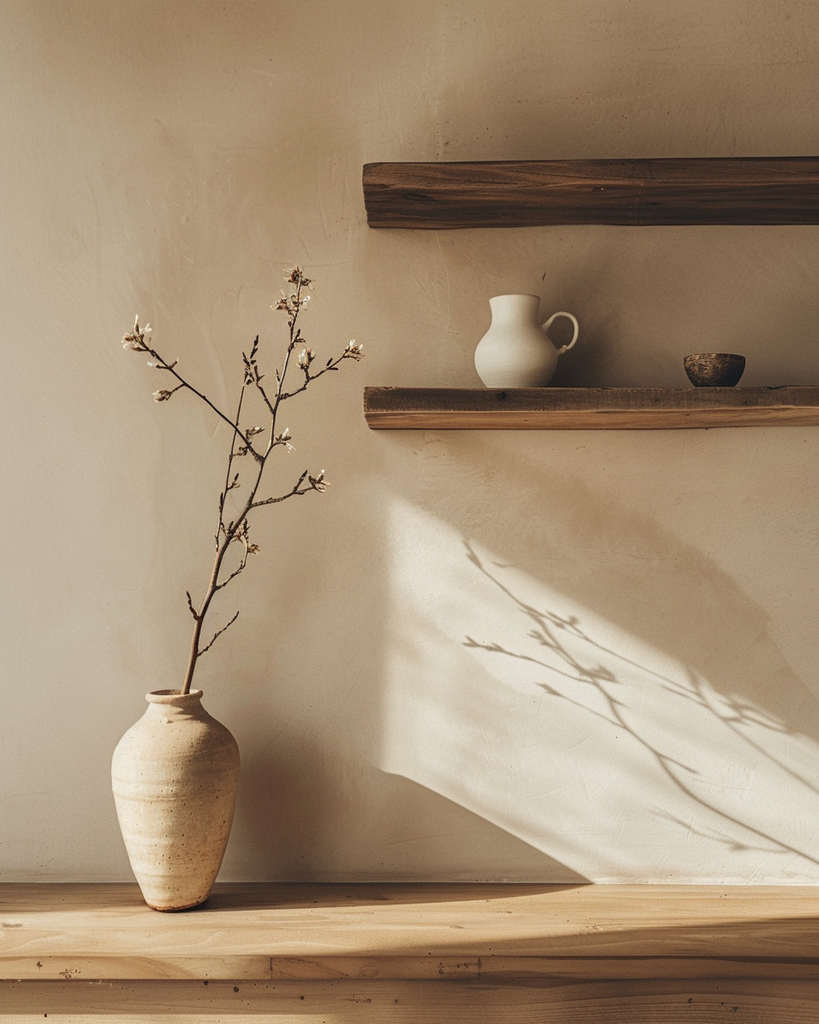
There’s a gentler way to put it, too, one worth sitting with for a moment: slow living isn’t about doing less for the sake of less — it’s about making room for what matters. That distinction changes everything. It reframes rest not as the absence of achievement, but as its own quiet form of attention. It turns a slow Sunday morning from “wasted time” into time spent exactly where it should be.
So here’s a question worth carrying with you today: when was the last time you did something simply because it was pleasant, with no other goal attached?
Slow Living’s Relevance to Warm Minimalism
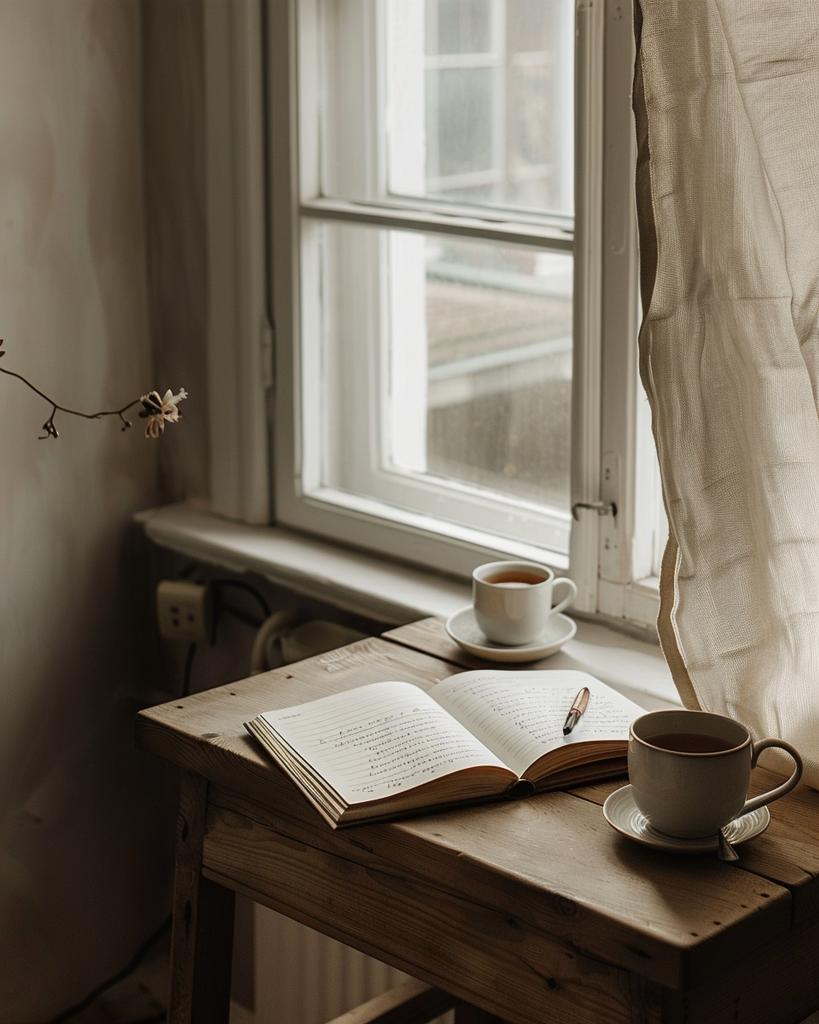
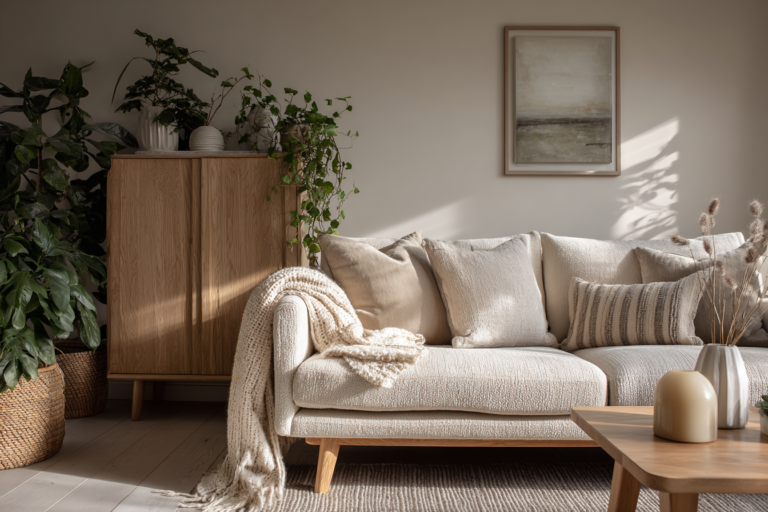
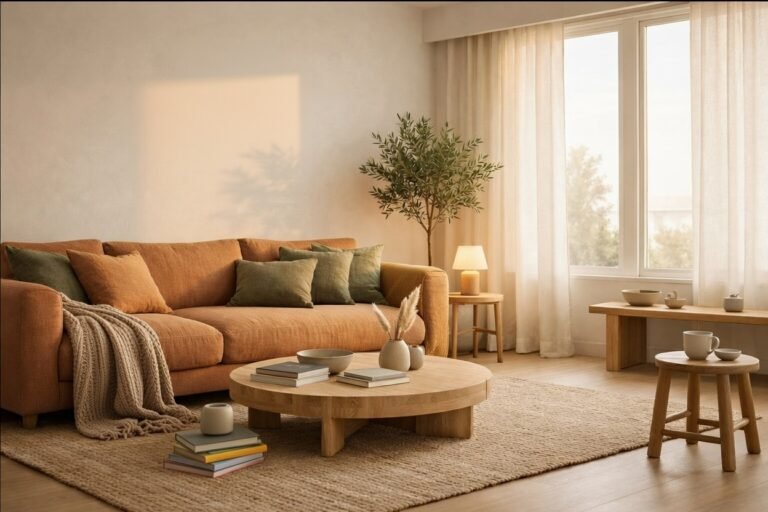
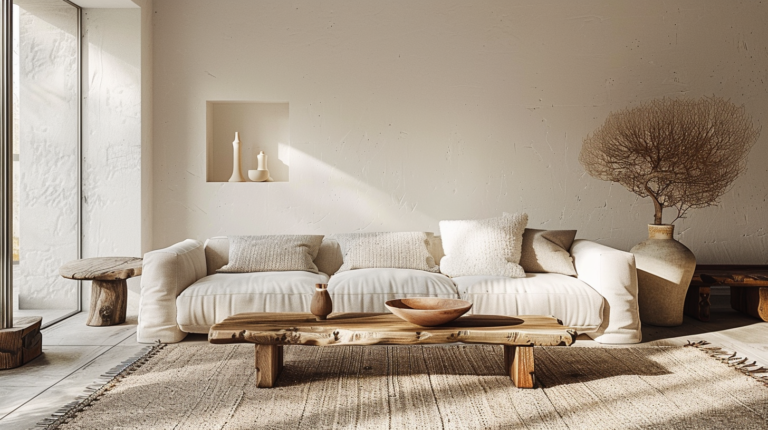
If warm minimalism is the visual language of a calmer life, slow living is its native rhythm. A pared-back, textural space filled with natural light and unhurried materials can only be fully appreciated by someone willing to actually stay in it — to sit in the chair rather than rush past it, to notice the way afternoon light moves across a wood floor over the course of an hour.
This is where decluttering becomes about more than objects. A warm minimalist home also benefits from a temporal decluttering — clearing the calendar the way you’d clear a countertop, so there’s visible, breathable space in your day the same way there’s visible space on your shelves. A home with fewer, better things asks something of the person living in it: slow down enough to notice them.
In practice, this pairing looks like small, repeatable rituals rather than grand gestures:
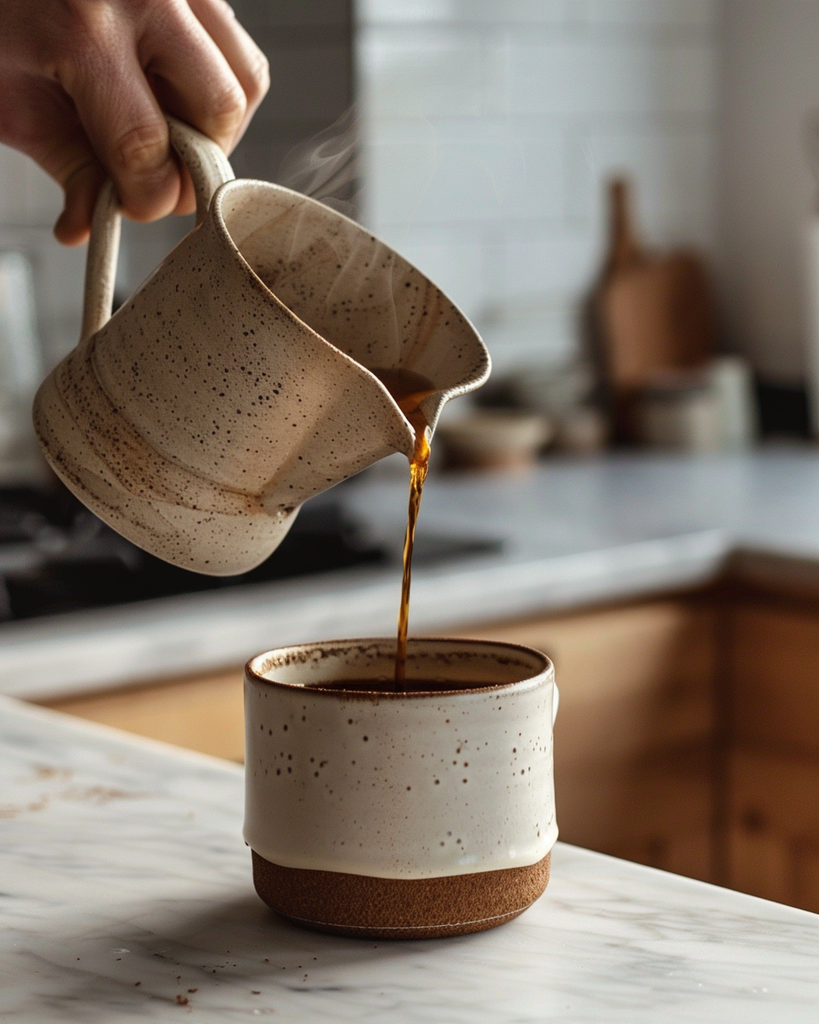
- A mindful morning ritual in an uncluttered kitchen — making tea or coffee slowly, by hand, in a space with nothing competing for your attention.
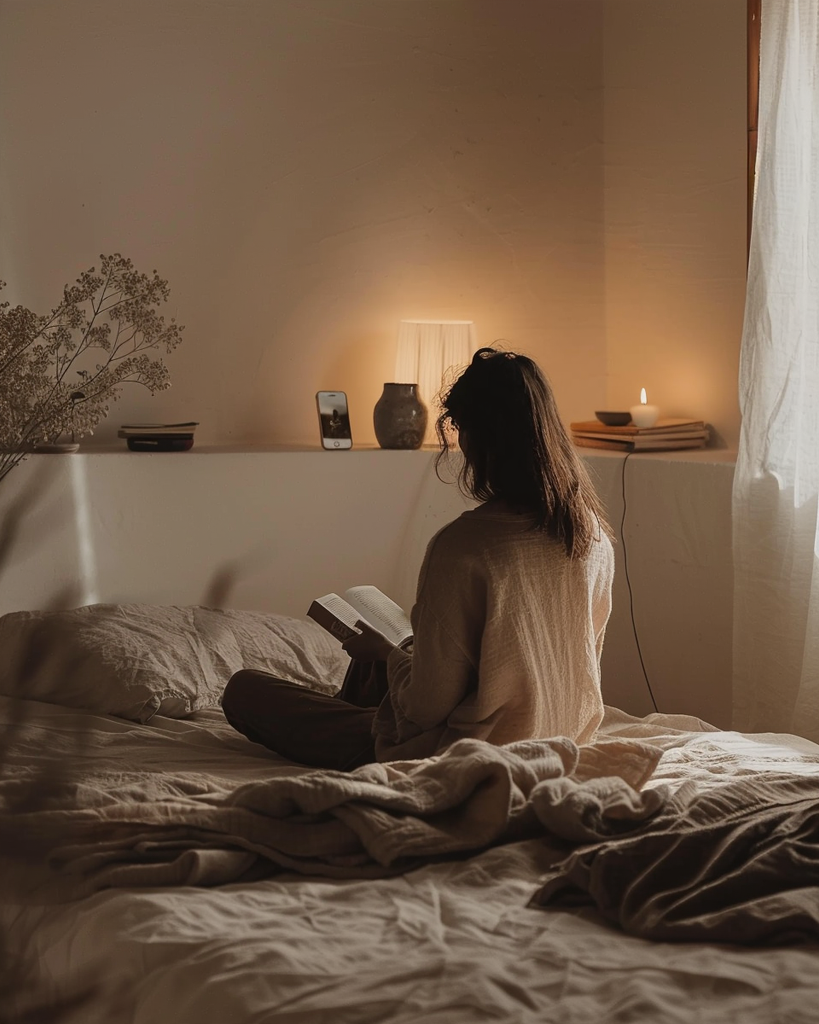
- Curated routines that nourish rather than deplete — a wind-down sequence in the evening (dim lighting, a few pages of a book, phone left in another room) that treats rest as a designed part of the day, not an afterthought.
- Flexible, quiet spaces built for both stillness and creativity — a reading nook, a window seat, a low table where a plant, a journal, and a cup can sit together without clutter, inviting you to pause rather than pass through.
- Resisting the pressure to fill every moment — leaving a shelf empty, an evening open, a weekend unplanned, and trusting that the emptiness is not a problem to be solved.
None of this requires more time than most people already have. It requires reclaiming the time already spent rushing through spaces designed, ironically, for rest.
Conclusion
Warm minimalism gives a home its shape. Slow living gives that home its breath. Together, they form something more sustainable than either could offer alone — a way of living that feels less like a design trend and more like coming home to yourself, one unhurried moment at a time. A beautifully edited room, lived in hastily, still feels like a waiting room. The same room, inhabited slowly, becomes a sanctuary.
If you’d like to bring more of this gentler pace into your own life, consider starting small:
- Protect one unscheduled hour this week — no goal attached, just presence.
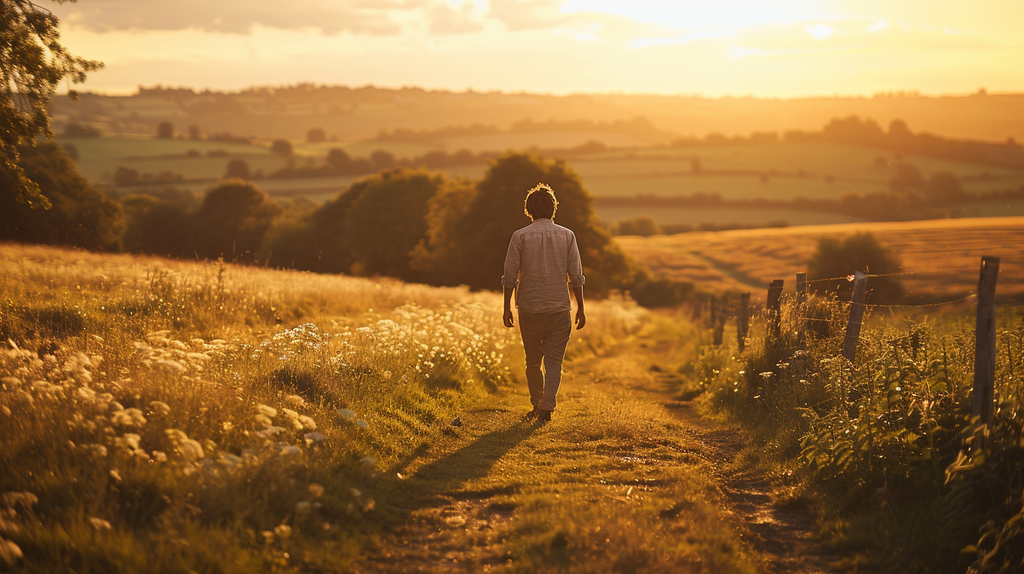
- Choose one daily ritual (your morning coffee, an evening walk) to do without a screen nearby.
- Edit your calendar as intentionally as your shelves — remove one obligation that no longer serves you.
- Sit in a favorite spot in your home for five extra minutes today, simply to notice the light.
Slow living doesn’t ask for a dramatic life overhaul. It asks for permission — permission to move a little more gently through the home, and the life, you’ve worked so intentionally to create.
Join the Circle of Warmth
A quiet letter on warm, intentional living — delivered occasionally.