Wabi-Sabi: Finding Beauty in Imperfection 侘寂
On the grace of things that age, crack, fade — and endure.
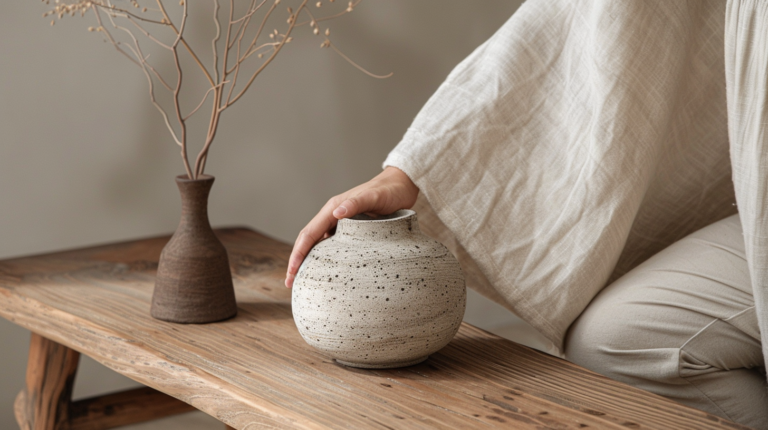
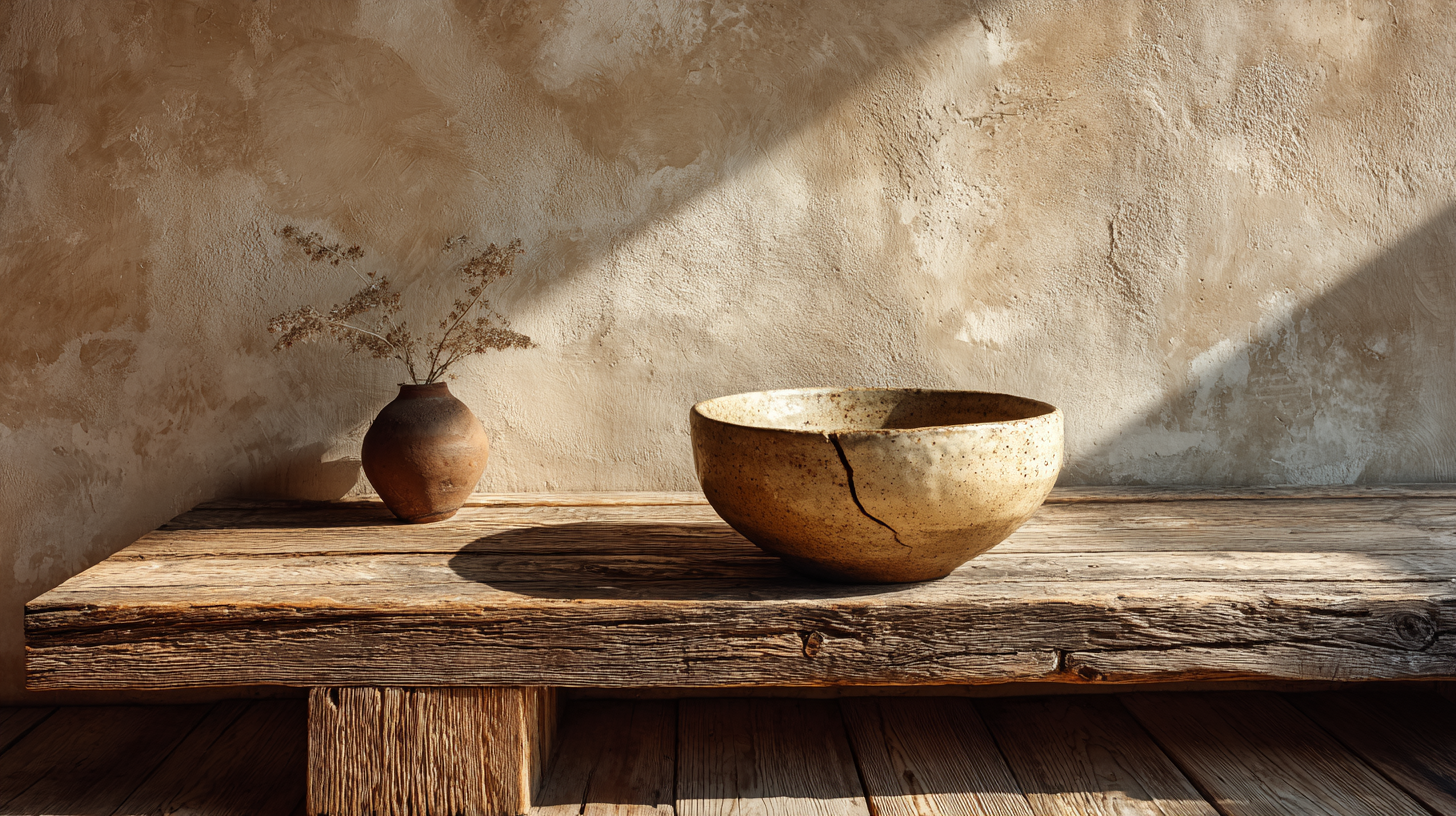
There is a bowl on the shelf that has a crack running along one side. Not a recent one — this crack has been there for years, its edges softened by time, a hairline thread of imperfection that traces the bowl’s history in a way no unmarked surface ever could. It was not thrown away when it broke. It was kept. Not out of sentiment, not out of frugality, but because something about it — its slight lean, the way its glaze pools unevenly at the base, the crack itself — makes it more interesting, more honest, more alive than the flawless pieces beside it.
This is not nostalgia. It is something older and more considered: a Japanese aesthetic philosophy that has been quietly reshaping how we see beauty for five hundred years.
Wabi-sabi does not ask objects to be perfect. It does not ask rooms to be finished, or homes to perform an ideal. It finds beauty precisely where perfection falls short — in the weathered, the asymmetrical, the aged, the quietly worn. And in doing so, it offers something that highly polished interiors rarely can: the feeling that a home is genuinely lived inside.
Wabi-sabi is one of the philosophical roots of Warm Minimalism. Understanding it changes not just how you see your home, but how you see yourself within it.
The History of Wabi-Sabi
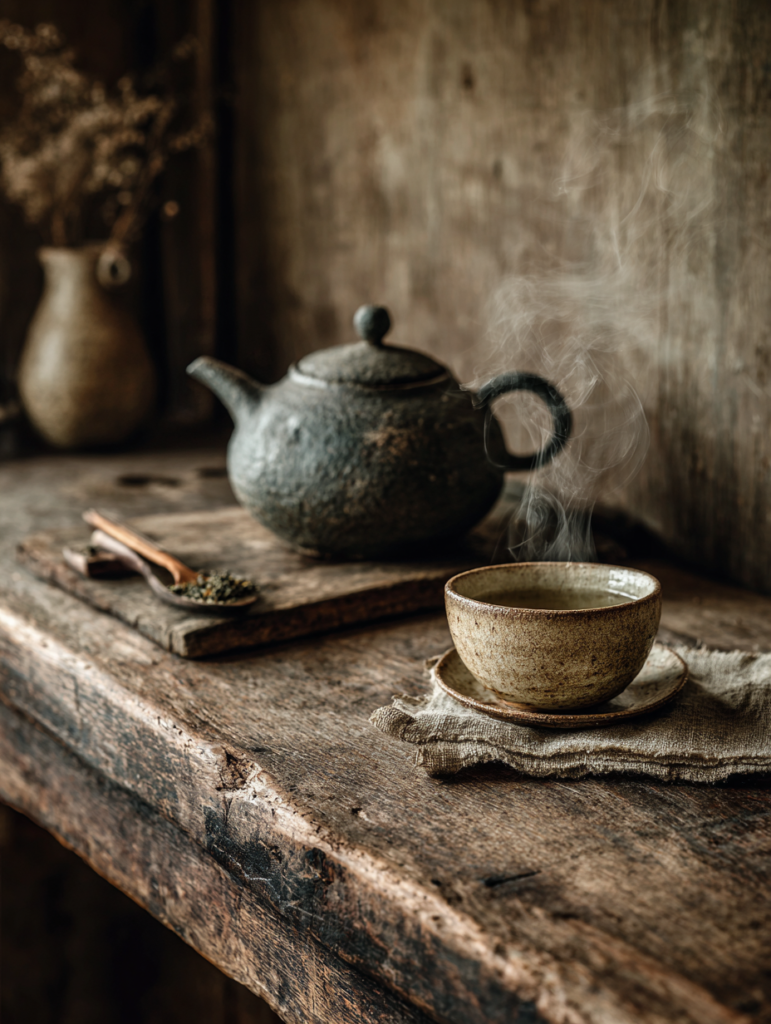
Wabi-sabi did not arrive as a doctrine. It emerged gradually, almost reluctantly, from the intersection of Zen Buddhism, the Japanese tea ceremony, and a growing cultural resistance to the elaborate ornamentation that had dominated Japanese aristocratic taste. It is a philosophy that was, in a sense, found — discovered in the gap between what was valued and what was actually moving.
The word wabi originally carried connotations of poverty, loneliness, and deprivation — the condition of someone living simply and apart from society. Over time, particularly through Zen influence, its meaning shifted. What had been lack became sufficiency. What had been austerity became quiet dignity. Wabi came to name the beauty found in simplicity, in solitude, in the small and the unassuming.
Sabi has its own etymology, related to the Japanese word for rust — sabiru. It spoke originally of loneliness and the cold ache of passing time. But again, Zen transformed it. Sabi became the beauty that time itself creates: the patina on aged bronze, the silver of weathered wood, the way a well-used object carries its history in its surface. Beauty not despite age, but because of it.
The figure most associated with bringing wabi-sabi into conscious cultural practice is Sen no Rikyu, the 16th-century tea master who transformed the tea ceremony into something spare, profound, and achingly human. Rikyu favored rough-hewn clay bowls over imported Chinese porcelain, thatched tea rooms over ornate pavilions, asymmetry over formality. He chose objects that had a quality of quiet imperfection — the kind that invited the hands to hold them rather than the eyes merely to admire. His aesthetic choices were not modest accidents. They were deliberate acts of philosophical vision, and they shaped Japanese culture permanently.
What Wabi-Sabi Means
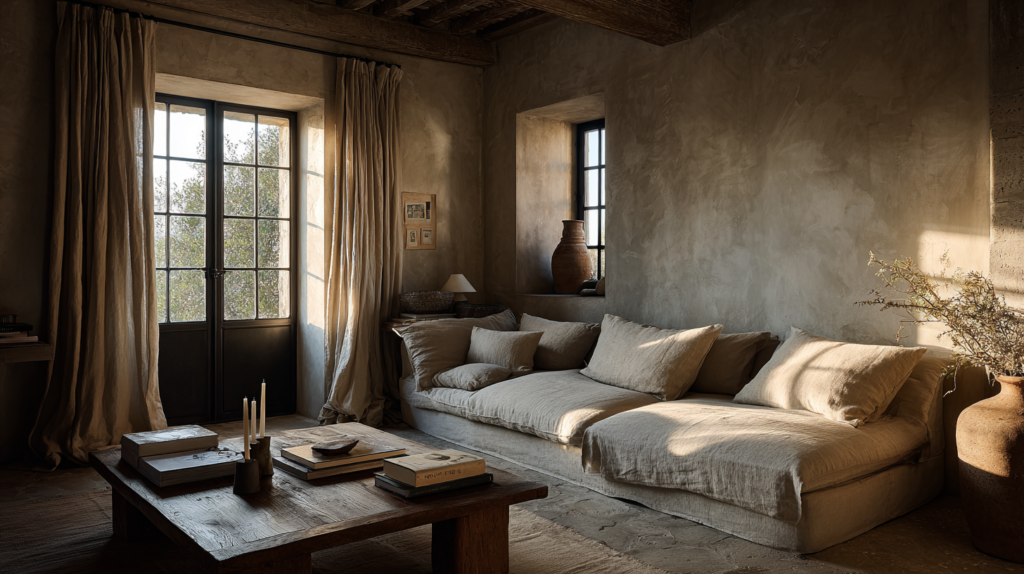
Wabi-sabi is built on three quiet recognitions: that nothing is perfect, nothing is permanent, and nothing is complete. Far from being a cause for anxiety, these are, in the wabi-sabi worldview, the very conditions that make beauty possible. It is precisely because things change, age, and remain somehow unfinished that they carry emotional weight. A perfectly manufactured object is static. A handmade bowl, a worn threshold, a fading linen — these are alive with process.
不完全
Imperfection
Beauty found in what is irregular, asymmetrical, or made by hand — carrying the marks of its own making.
無常
Impermanence
The recognition that all things pass — and that this passing is not loss, but the natural rhythm of life itself.
不完成
Incompleteness
The beauty of what is left open — unfinished, suggesting, inviting the imagination to complete the thought.
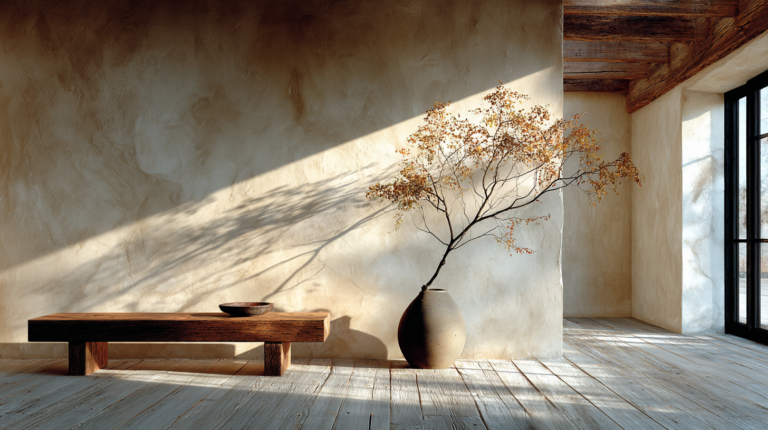
Wabi-sabi aesthetics tend toward the asymmetrical, the textural, the muted. Colors are those of earth and weather — clay, moss, rust, bone, fog. Surfaces bear evidence of time and use. Forms are irregular, slightly off-balance, never quite resolved. This is not carelessness. It is a very precise kind of attention: the kind that looks closely enough at ordinary things to find them extraordinary.
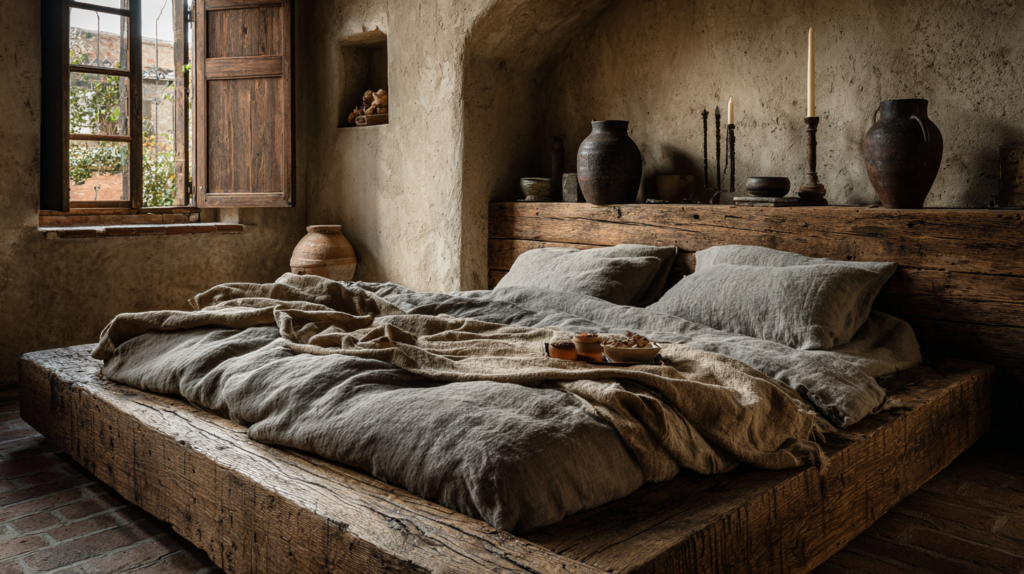
“The beauty of things imperfect, impermanent, and incomplete — this is the soul of wabi-sabi.”
— Leonard Koren, Wabi-Sabi for Artists, Designers, Poets & Philosophers
Koren’s formulation is spare and exact. What wabi-sabi notices is what most aesthetics train us to overlook: the interest of the unresolved edge, the dignity of the worn, the particular beauty of something that has clearly had a life before this moment.
Central to wabi-sabi is also the concept of mono no aware — the bittersweet awareness of transience. The Japanese have long cultivated a sensibility that finds the fleeting more beautiful for its brevity: cherry blossoms are adored in part because they fall so quickly. This is not melancholy but clarity — the recognition that what passes matters, and that paying attention while things are here is a form of gratitude.
“In the tea room it is left for each guest in imagination to complete the total effect in relation to himself.”
— Kakuzo Okakura, The Book of Tea
Is there something in your home right now — something worn, imperfect, or quietly aged — that you have been thinking of replacing? What would it mean to look at it differently?
Wabi-Sabi’s Relevance to Warm Minimalism
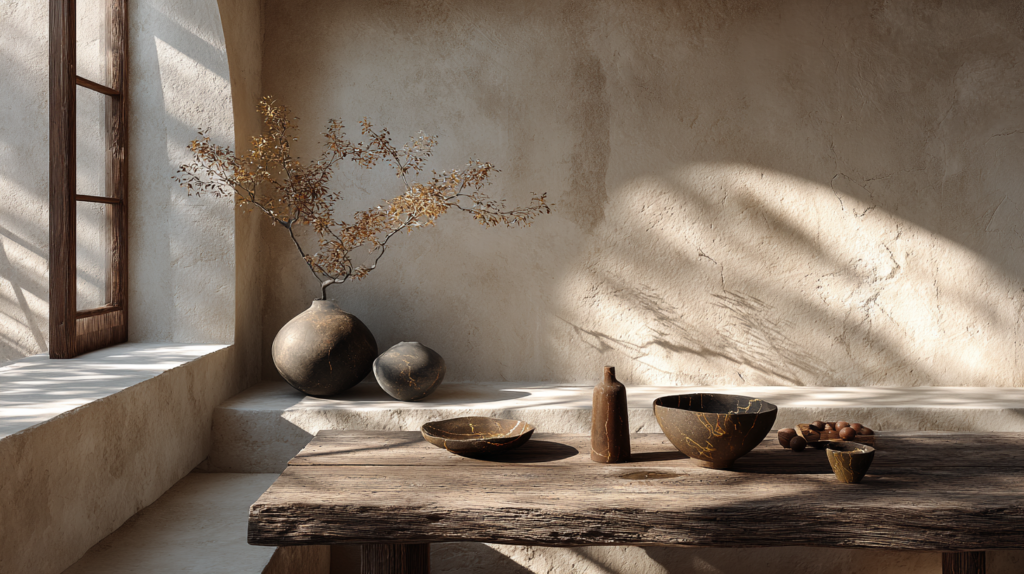
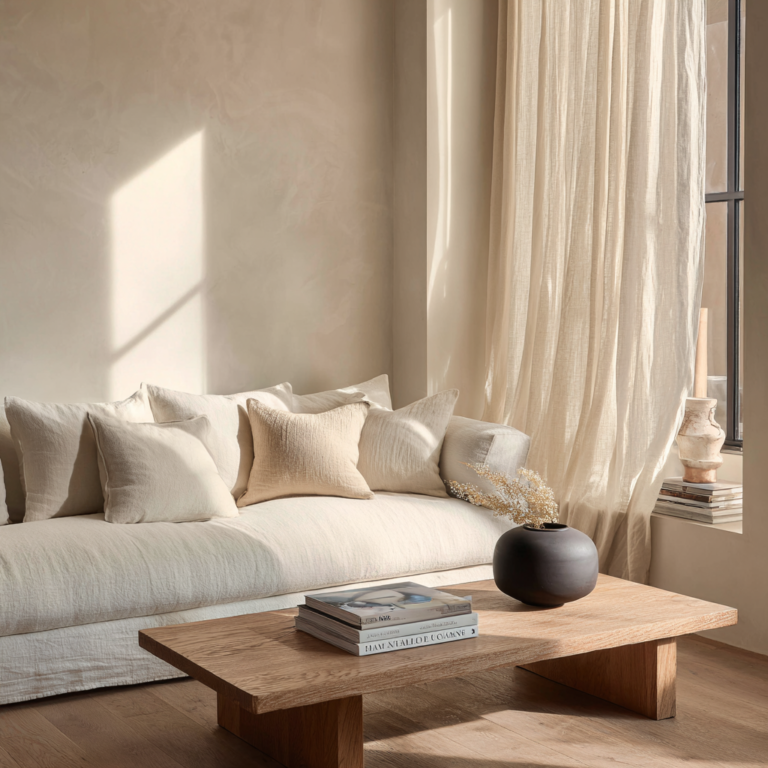
Warm Minimalism does not aspire to the showroom. It aspires to the home — with all that word implies: a place that bears the evidence of actual living, that has been shaped by time and use and the particular habits of the people inside it. Wabi-sabi is the philosophical permission for this. It is the reason that a worn oak table is more interesting than a pristine one, that an uneven handmade cup holds more presence than a machine-made one, that a wall with a little history in its plaster feels warmer than a freshly painted surface.
Natural materials are central to both wabi-sabi and Warm Minimalism — not because they are fashionable, but because they age honestly. Wood darkens and gains depth. Linen softens and drapes differently with every wash. Stone acquires a patina that no factory finish can replicate. These materials do not merely maintain their beauty over time — they develop it. Choosing them is a wabi-sabi act: an investment not in perfection but in character.
金
On Kintsugi — 金継ぎ
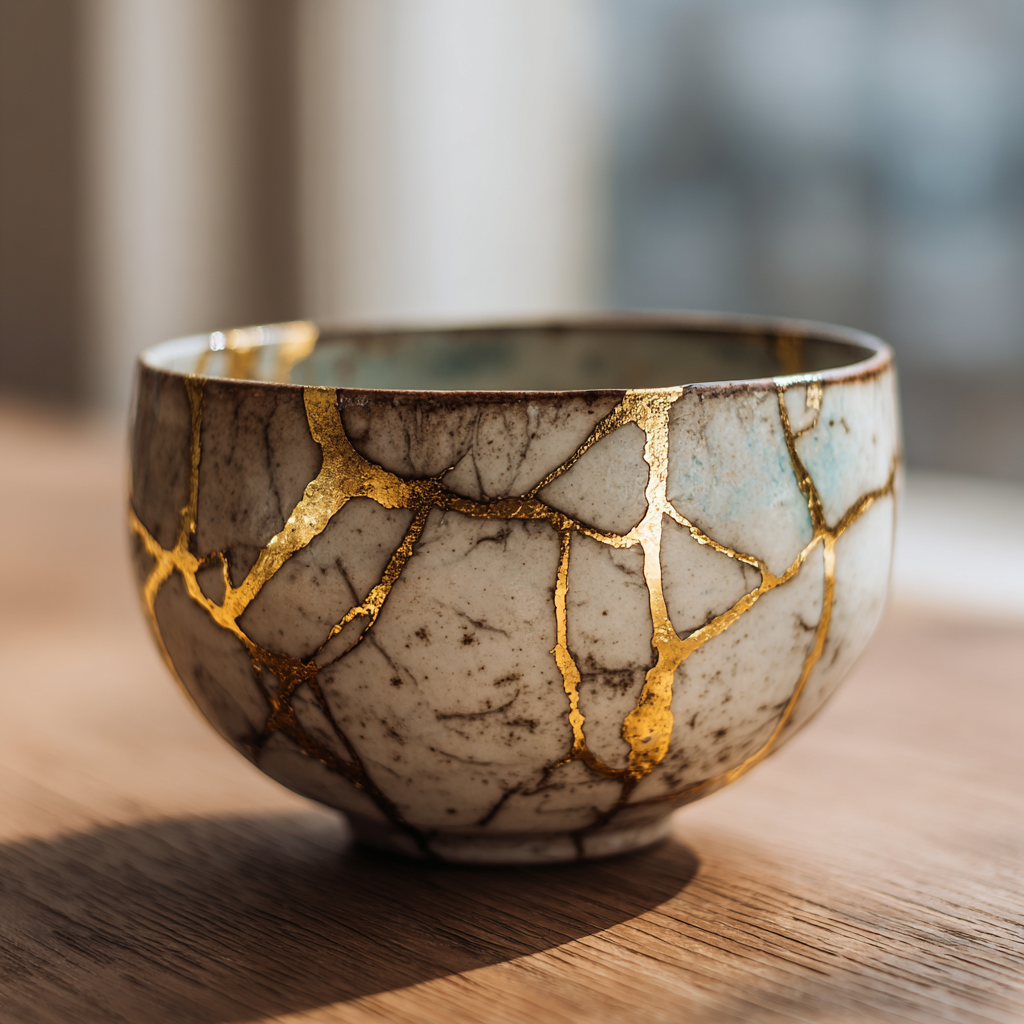
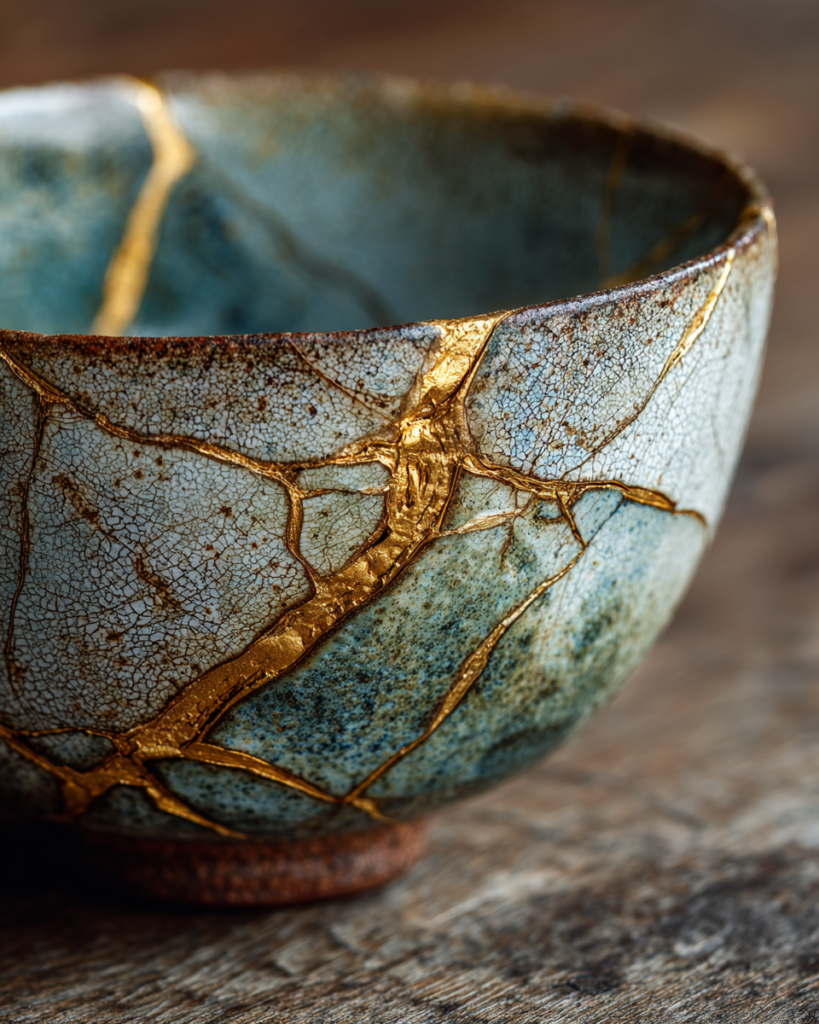
The Japanese art of repairing broken ceramics with gold or silver lacquer — making the fracture itself the most beautiful part of the object. Kintsugi is wabi-sabi made literal: the crack is not concealed but celebrated, the repair not hidden but honored. A kintsugi bowl carries its own history as ornament. This is a radical proposition, and a quietly liberating one: that what has been broken can be more beautiful for having been mended.
This has direct implications for how we approach our homes. Perfectionism — the insistence that every surface be pristine, every piece be new, every room be “finished” — creates a particular kind of fatigue. It turns the home into a performance rather than a sanctuary. Wabi-sabi releases us from this. A scuff on a skirting board, a handprint on a wall, the ring left by a cup on a wooden surface — these are not failures of housekeeping. They are evidence of life being lived. The question is not whether to prevent them, but how to hold them with some equanimity.
Practically, this philosophy reshapes the choices we make. It means reaching for the handmade over the machine-made — for the potter’s bowl with its slight irregularity, the linen that has a visible weave, the timber that shows its grain clearly. It means choosing pieces with provenance over pieces with newness: the found object, the inherited item, the thing that has lived somewhere else before arriving in your home. It means allowing rooms to evolve rather than arriving at them all at once — trusting that a space gains depth slowly, through accumulation of experience rather than decoration.
It also means editing with different eyes. Rather than asking “is this perfect?” wabi-sabi invites the question: “does this have soul?” An object with soul has a quality that is difficult to name but immediately felt — something that makes you look twice, that gives your eye somewhere interesting to land, that carries with it a sense of time and process. These are the objects worth keeping.
The Beauty That Remains
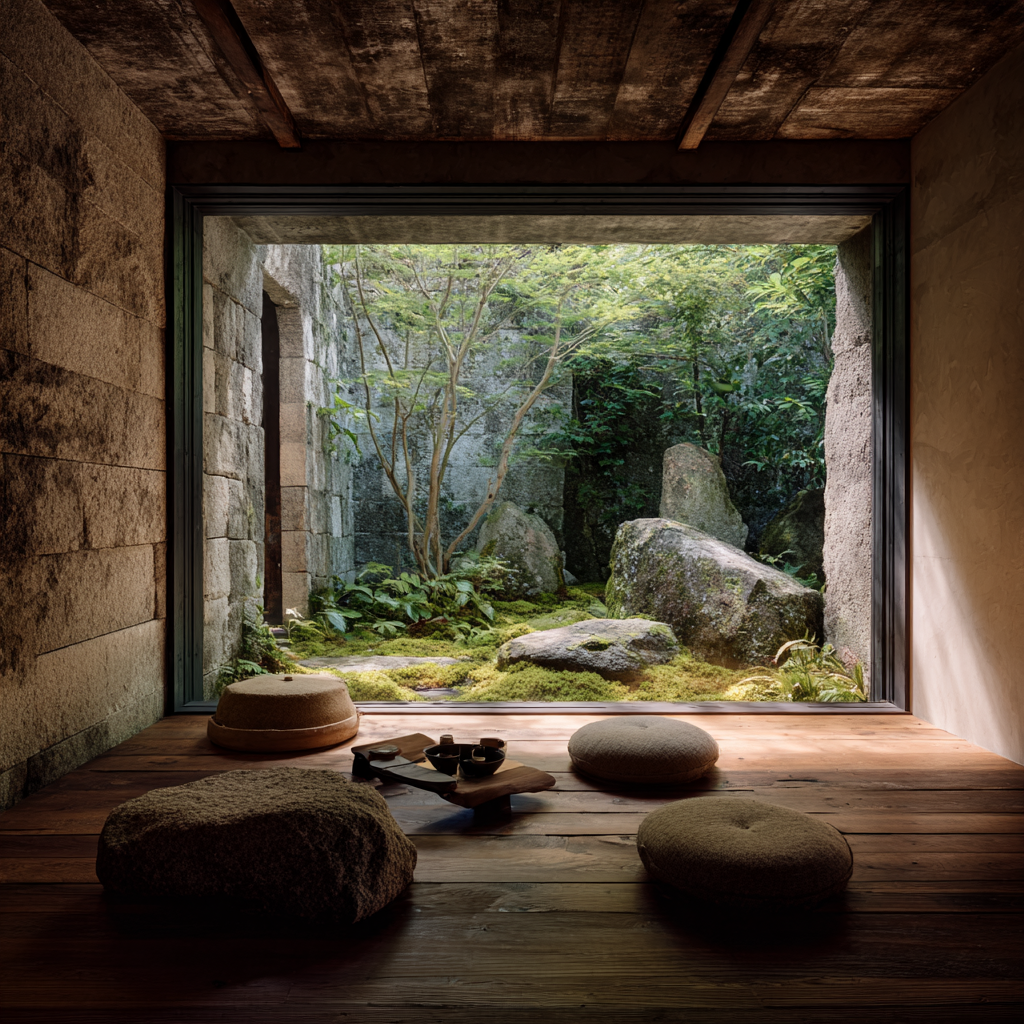
There is a particular kindness in wabi-sabi that extends beyond interior design. It is a philosophy that, once internalized, begins to change the way we see not only our homes but ourselves. Most of us carry some version of the same interior perfectionism we apply to our spaces — the sense that we should be more finished, more resolved, less marked by experience. Wabi-sabi disagrees, quietly and firmly.
It suggests that the cracks are where the character lives. That the worn places are evidence of a life genuinely inhabited. That incompleteness is not failure but possibility — a space still open, still becoming.
A home shaped by wabi-sabi does not look unloved. It looks deeply loved — loved in the way that allows things to be what they are, to age into themselves, to bear the marks of ordinary days without apology. This is the warmth that no new purchase can provide: the particular warmth of a space that has been lived in, tended, and allowed to simply be.
That is what wabi-sabi ultimately offers — not a design direction, but a way of paying attention. And in paying that kind of attention to our homes, we learn to pay it to our lives as well.
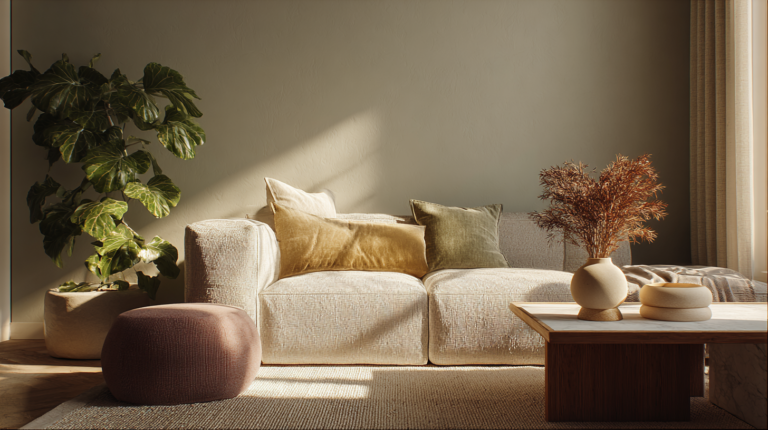
Four ways to bring wabi-sabi into your home and life
Join the Circle of Warmth
A quiet letter on warm, intentional living — delivered occasionally.